Artwork
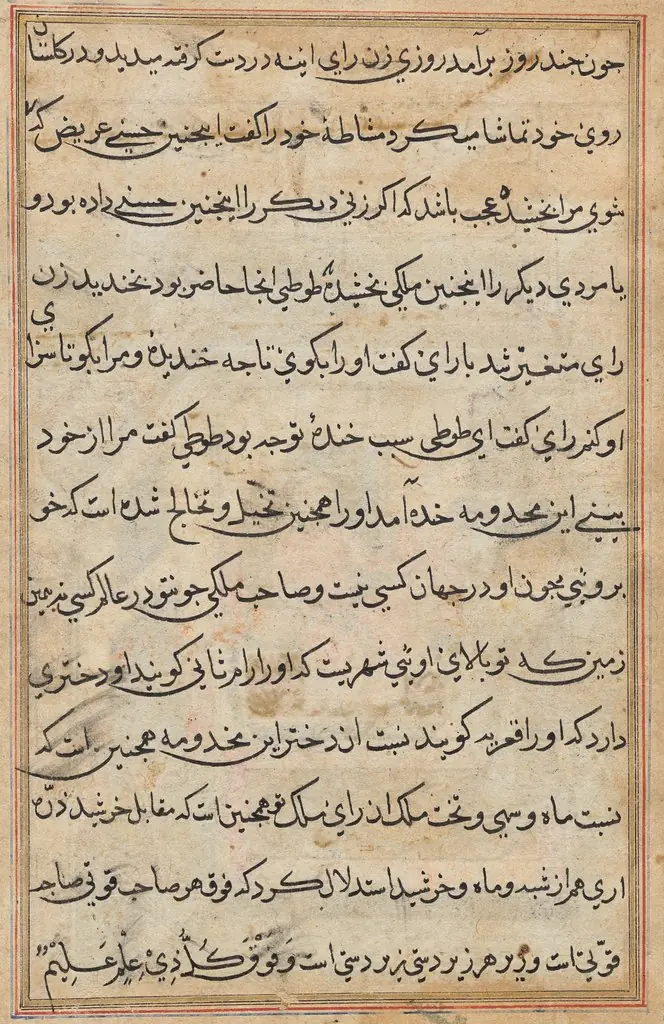
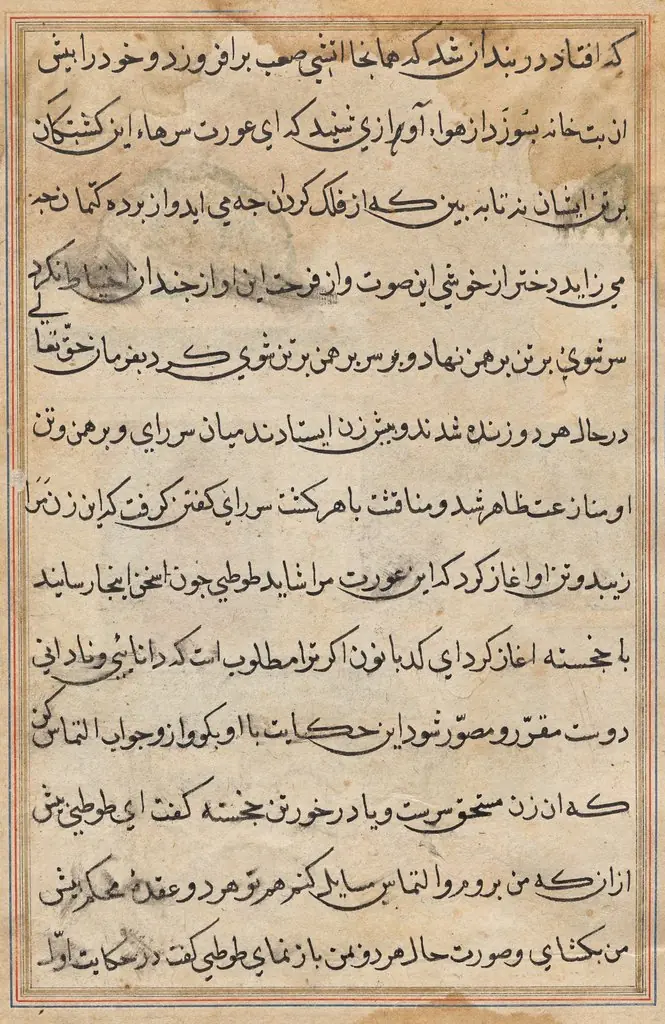
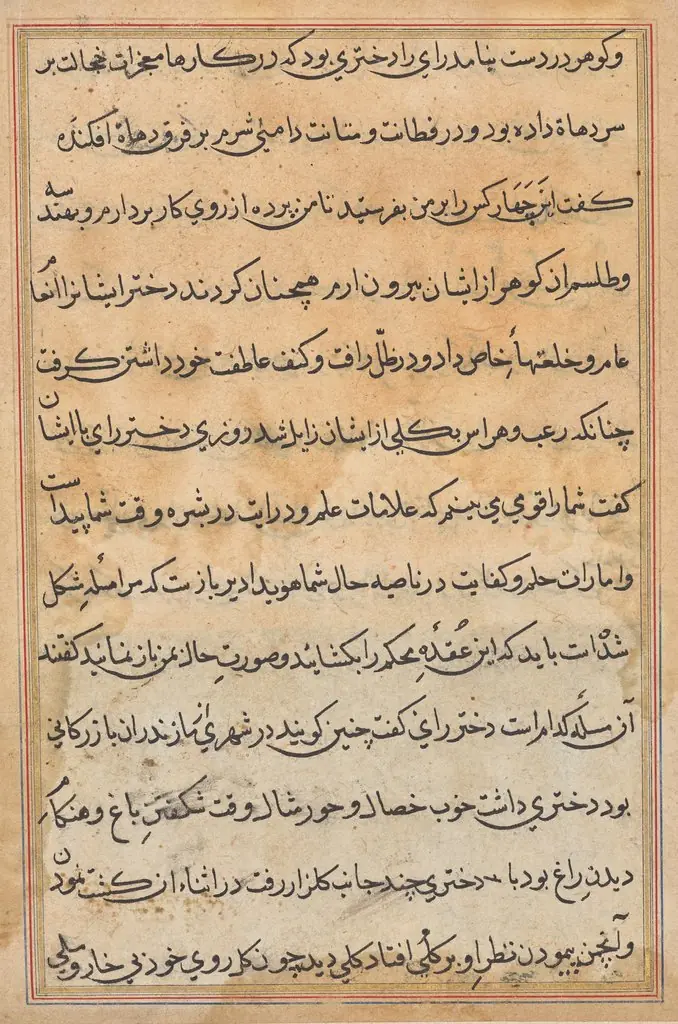
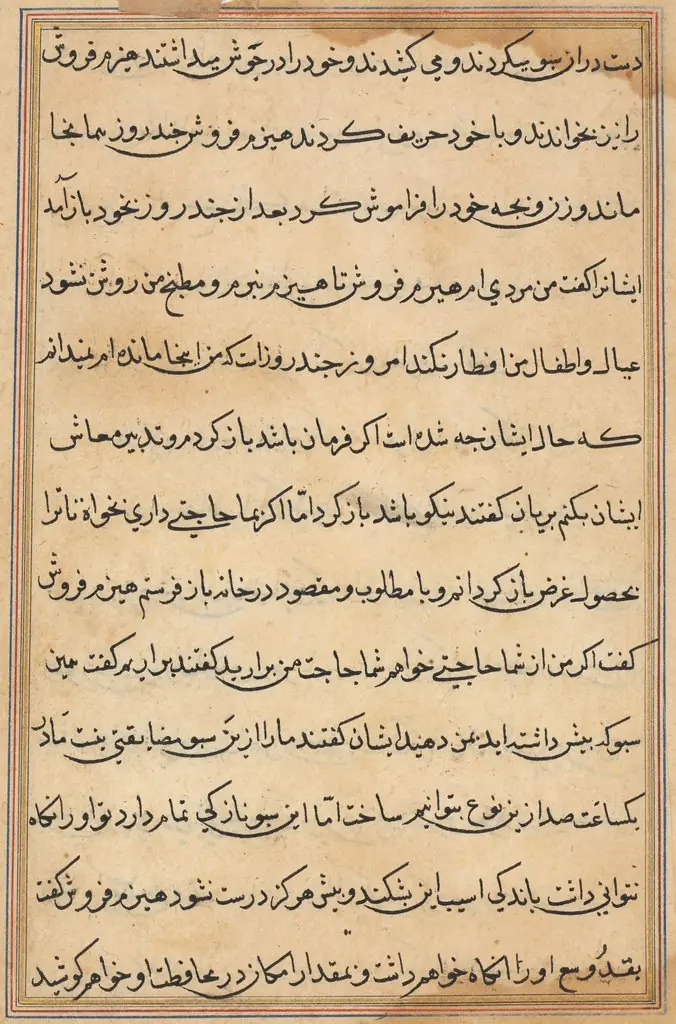
Page from Tales of a Parrot (Tuti-nama): text page
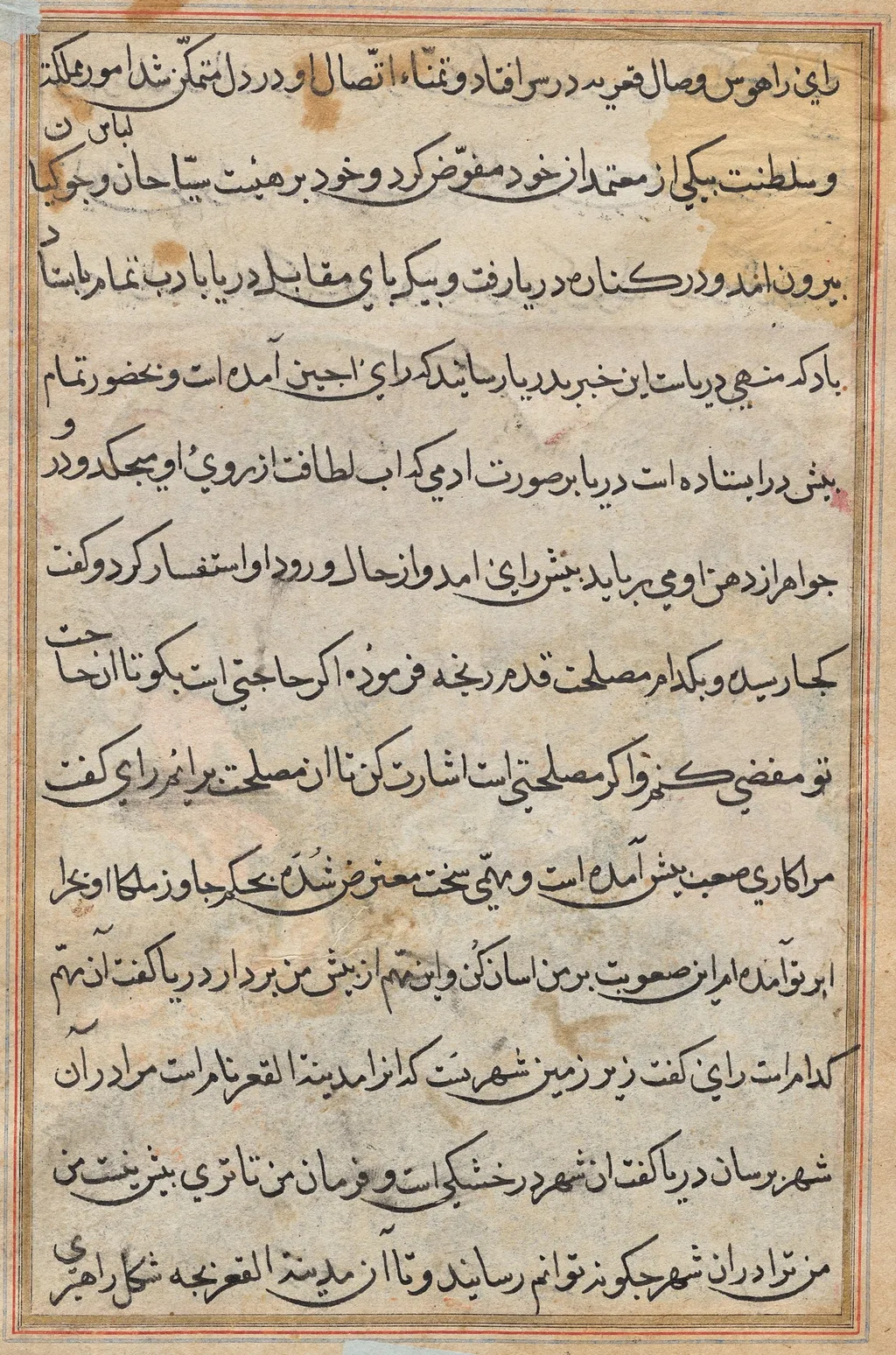
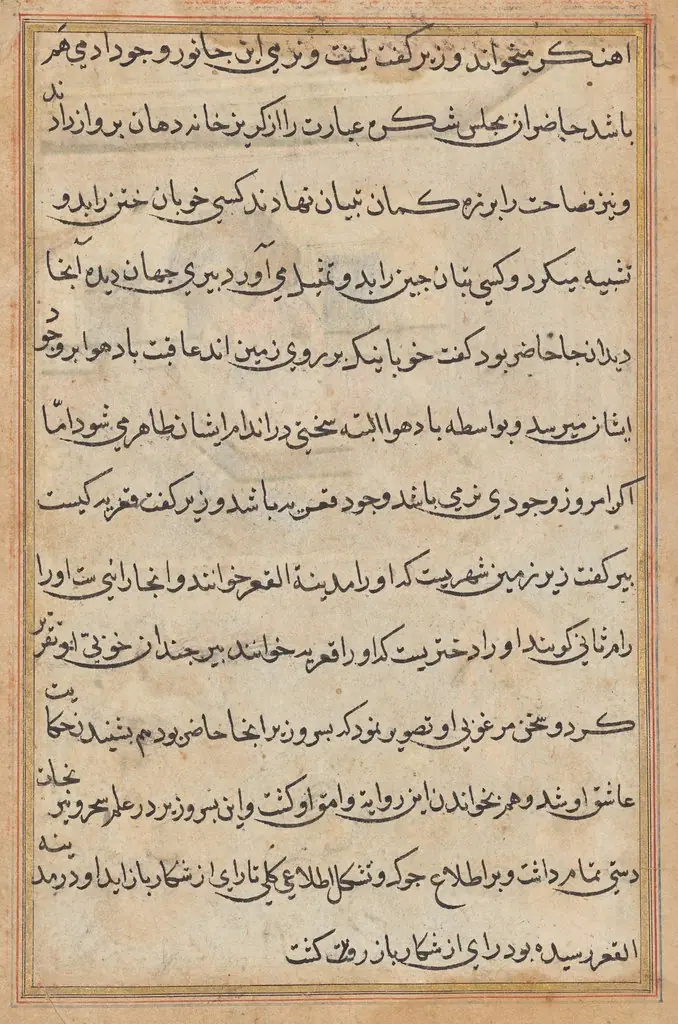
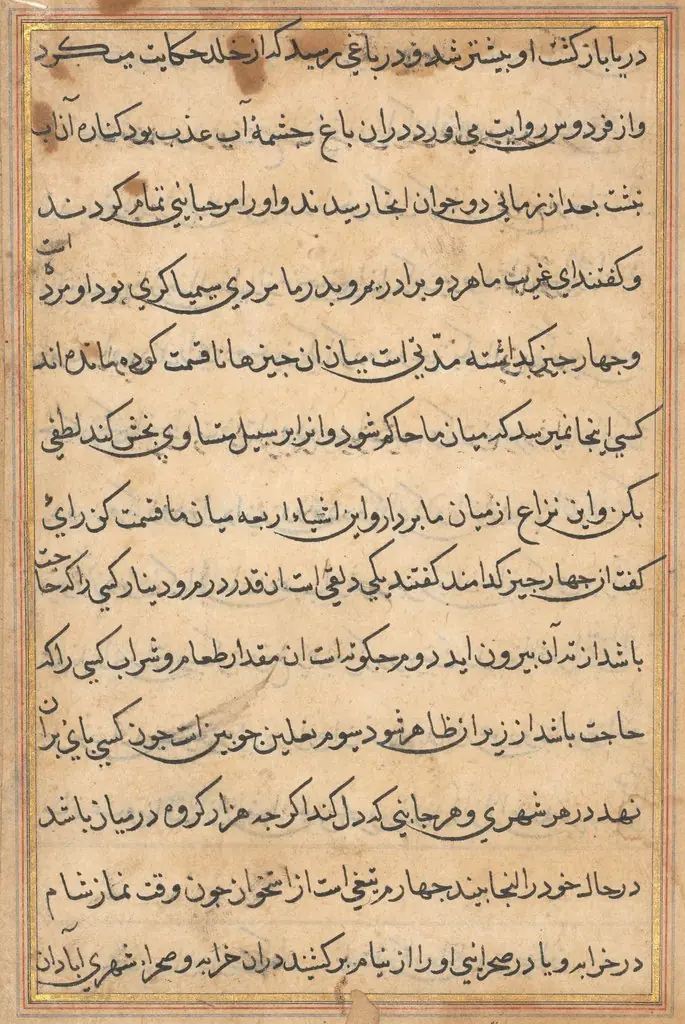
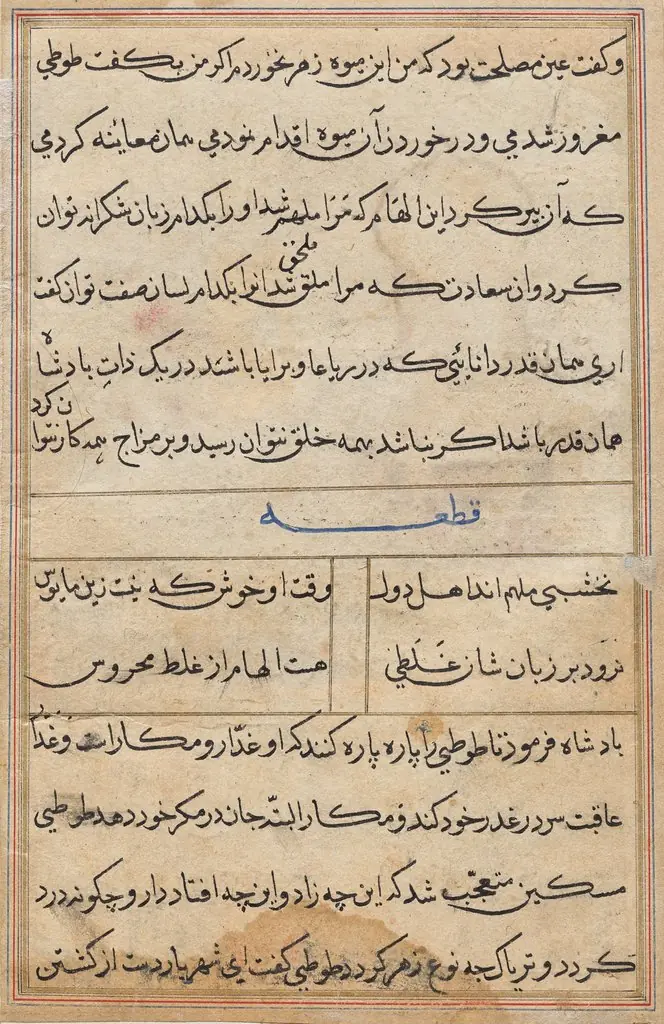
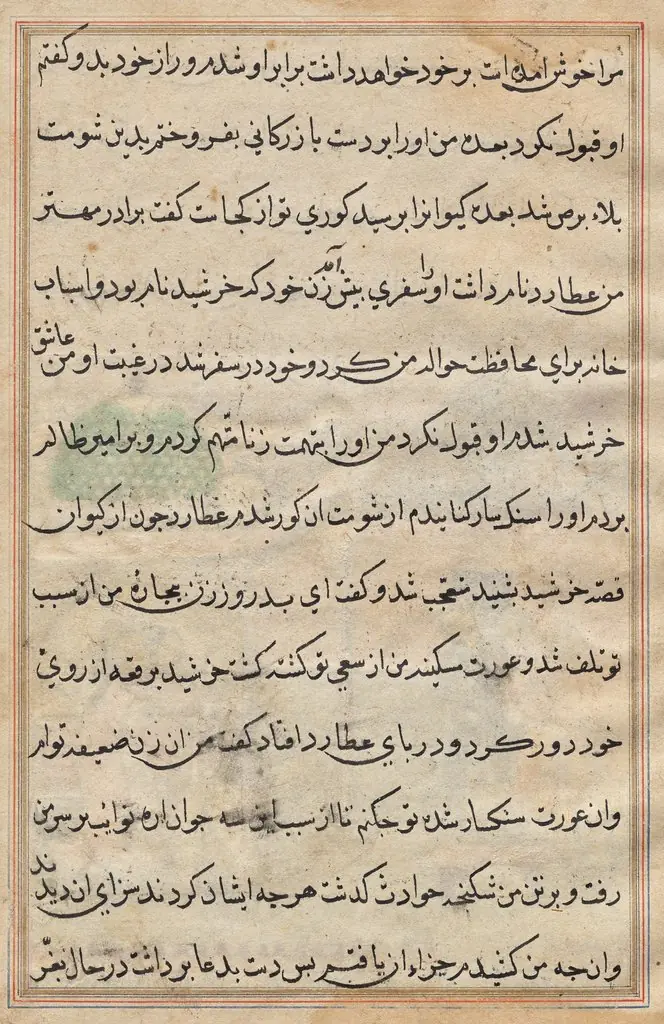
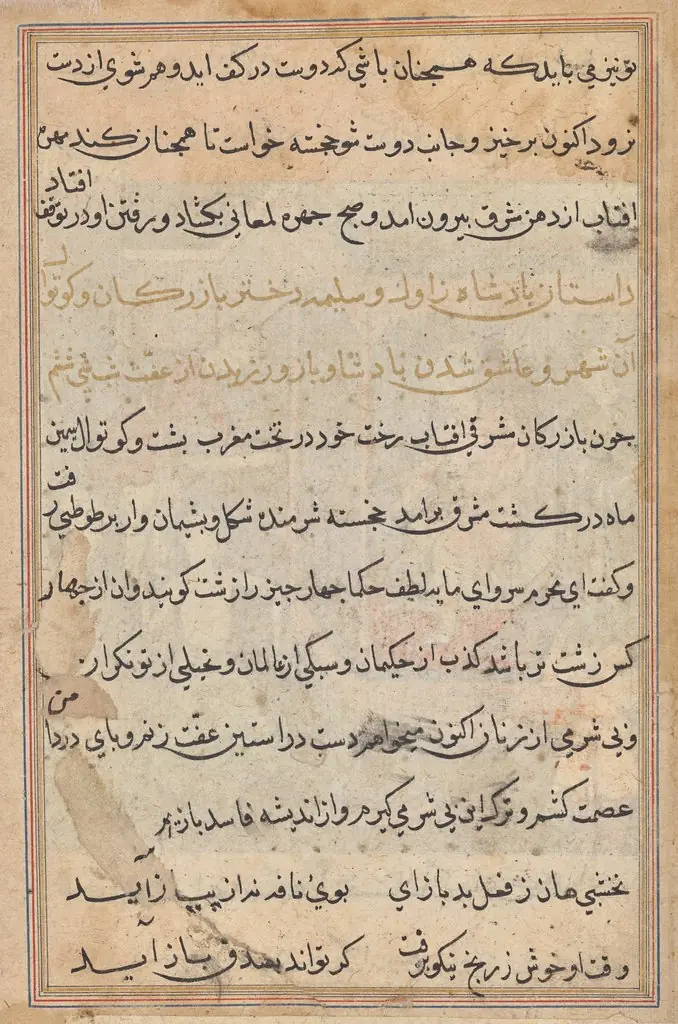
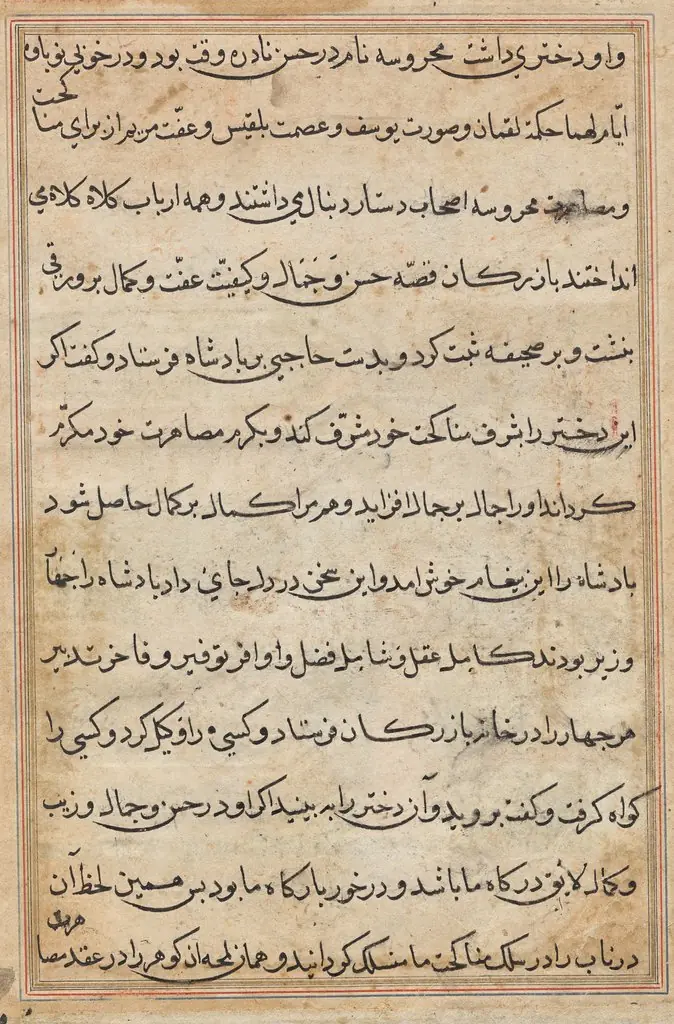
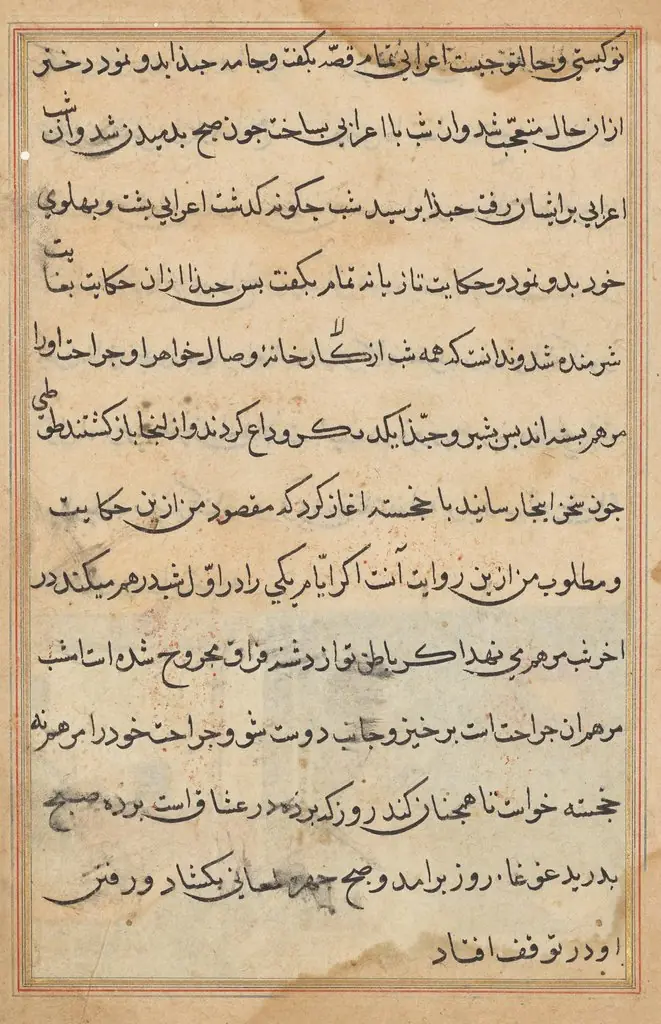
Page from Tales of a Parrot (Tuti-nama): text page is an unspecified painting. It dates from 1560 and is held in the collection of the Cleveland Museum of Art. The object is a single leaf from the manuscript *Tales of a Parrot* (Tuti‑nama), rendered on a light‑yellowed sheet of paper.
About this work
Overview
The object is a single leaf from the manuscript *Tales of a Parrot* (Tuti‑nama), rendered on a light‑yellowed sheet of paper. Black ink fills the surface in tightly set, flowing script organized into orderly lines, while a thin red border runs along the margin. The hand is deliberate, combining connected and isolated letters, reflecting the care given to the production of royal books.
Subject & Meaning
The page contains narrative text from the *Tales of a Parrot*, a collection of stories traditionally recited to entertain and instruct. Though the specific passage is not identified, the work as a whole served to convey moral lessons and courtly values, making it a suitable gift for a young prince and a vehicle for cultural transmission within the royal household.
Technique & Style
The manuscript employs a fine brush‑pen made of soot‑based ink, applied with a pointed reed or bamboo pen to achieve a smooth, continuous flow. The script is arranged in neat, justified columns, a hallmark of Persian book production in the early modern period. The red marginal band, likely applied with a pigment such as cinnabar, frames the text and adds a decorative yet functional element.
History & Provenance
Commissioned for Prince Salim, a member of the Mughal court, the *Tales of a Parrot* exemplifies the tradition of gifting illuminated books to royalty. The leaf eventually entered the collection of the Cleveland Museum of Art, where it is preserved as part of the museum’s holdings of South Asian manuscripts, illustrating the movement of such objects from court to public institutions.
Context
The use of a red border reflects contemporary aesthetic preferences for subtle ornamentation that highlighted the textual content without overwhelming it.
During the Mughal era, manuscript production was a prestigious art form, often supported by imperial patronage. Books like the *Tales of a Parrot* combined literary content with refined calligraphy, serving both educational and ceremonial purposes. The use of a red border reflects contemporary aesthetic preferences for subtle ornamentation that highlighted the textual content without overwhelming it.
Artist & collection

 Page from Tales of a Parrot (Tuti-nama): text page
 Page from Tales of a Parrot (Tuti-nama): text page
 Page from Tales of a Parrot (Tuti-nama): text page
 Page from Tales of a Parrot (Tuti-nama): text page
 Page from Tales of a Parrot (Tuti-nama): text page
 Page from Tales of a Parrot (Tuti-nama): text page
 Page from Tales of a Parrot (Tuti-nama): text page
 Page from Tales of a Parrot (Tuti-nama): text page