Artwork
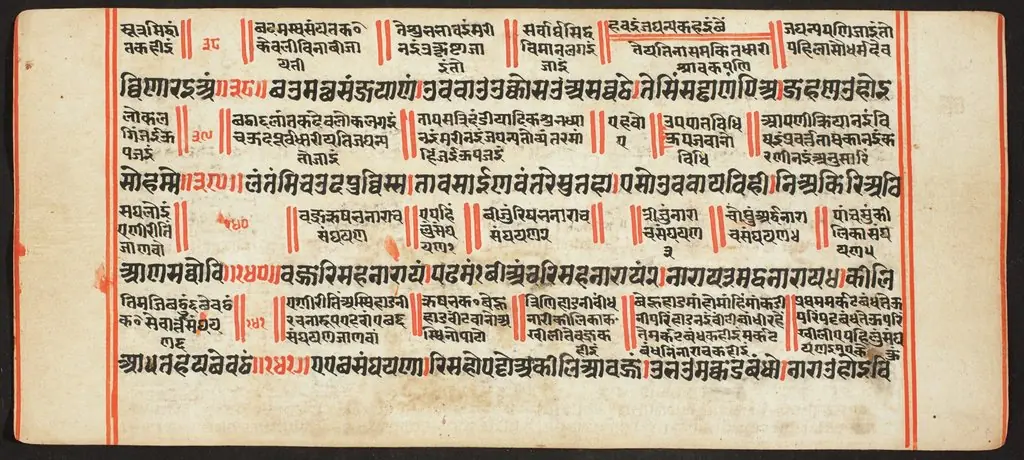
Tantric Manuscript, "Sangrahani Sutra"
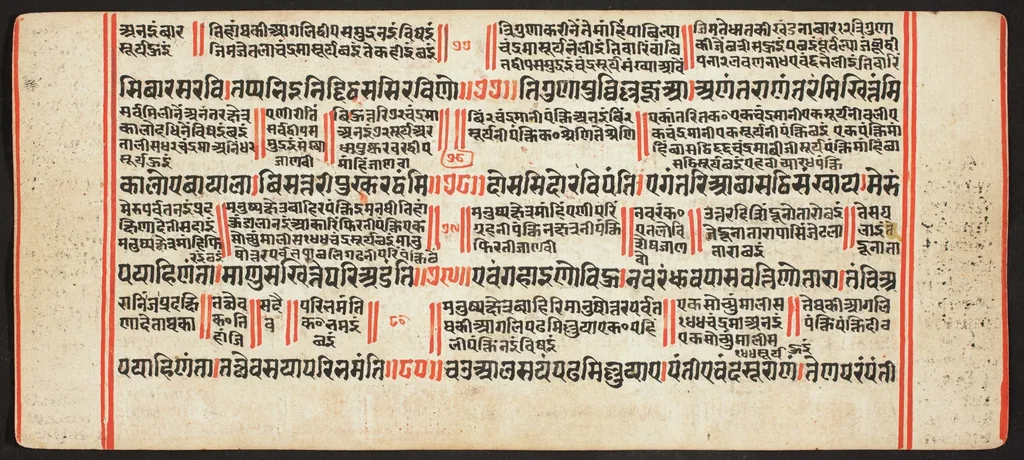
Tantric Manuscript, "Sangrahani Sutra" is an unspecified painting by Unknown. It is held in the collection of the Detroit Institute of Arts. This manuscript page is part of the Sangrahani Sutra, a Buddhist textual tradition composed in Sanskrit.
About this work
Overview
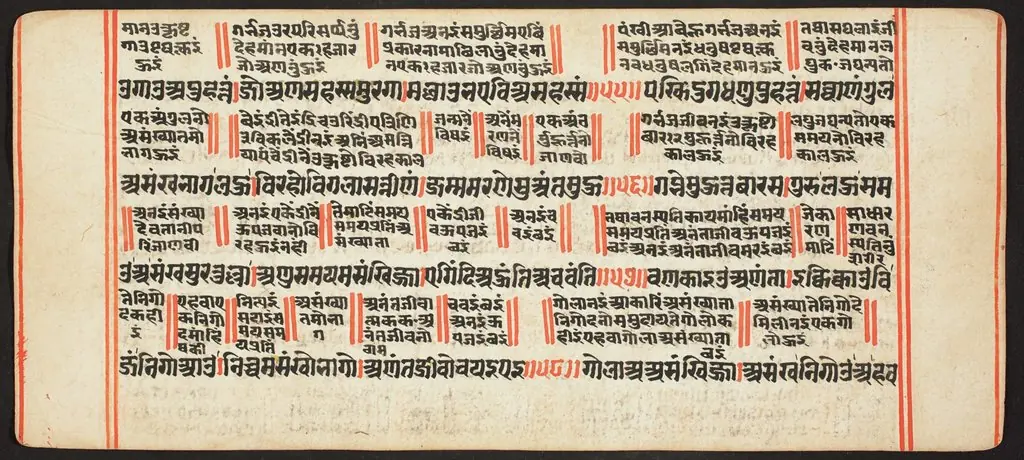
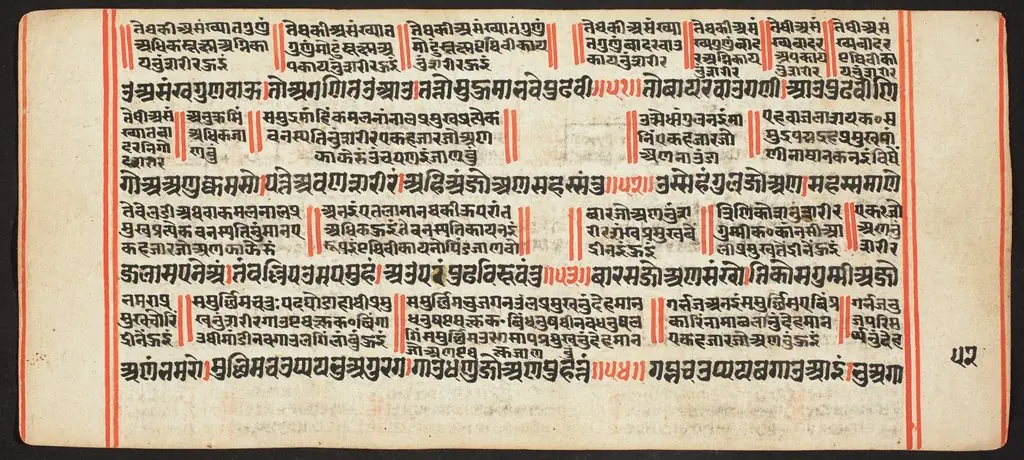
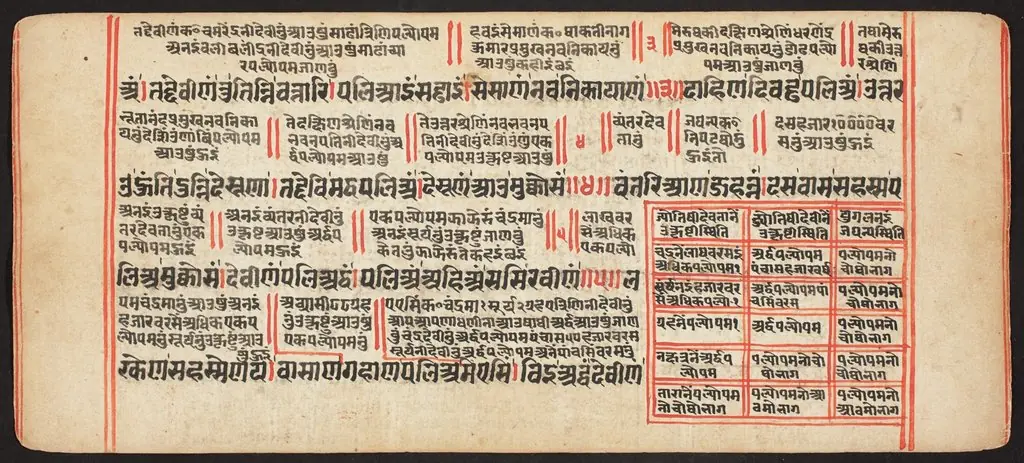
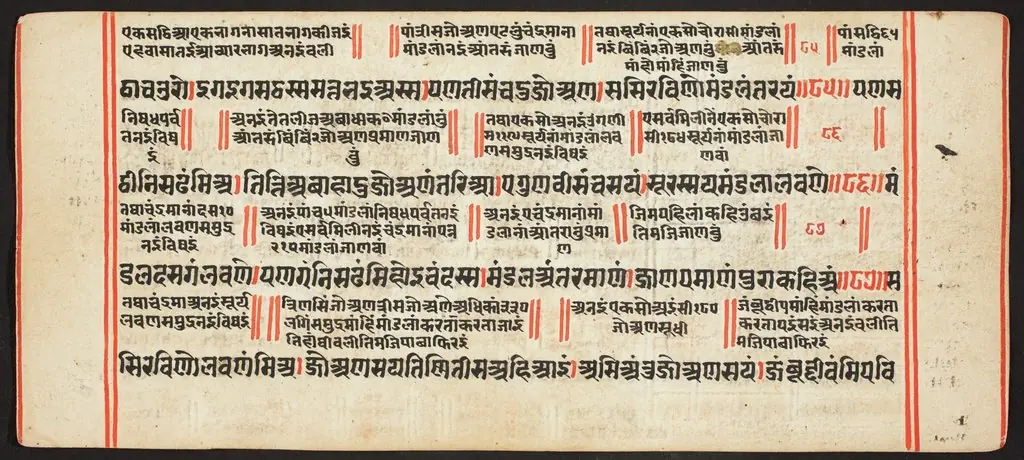
Created on palm leaf or paper, it features dense script in black ink on a faded, yellowed surface, with red ink used to delineate textual divisions.
This manuscript page is part of the Sangrahani Sutra, a Buddhist textual tradition composed in Sanskrit. Created on palm leaf or paper, it features dense script in black ink on a faded, yellowed surface, with red ink used to delineate textual divisions. The calligraphy exhibits fine, flowing strokes typical of medieval Indian scribal practices. Its preservation at the Detroit Institute of Arts reflects its significance as a rare artifact of South Asian religious scholarship.
Subject & Meaning
The Sangrahani Sutra belongs to the Mahayana Buddhist canon, serving as a compendium of doctrinal summaries and ethical guidelines. Its content organizes key teachings for monastic study and recitation. The meticulous script and structured layout suggest use in ritual or pedagogical contexts, where precise transmission of doctrine was essential. The absence of imagery emphasizes textual authority over visual representation in this tradition.
Technique & Style
The script is written in a regional variant of Siddham or Gupta script, characterized by rounded, interconnected letters with subtle flourishes. Ink was applied with a reed or bamboo stylus, and red lines were drawn with precision to mark sections or verses. The surface shows signs of wear from handling, yet the ink remains legible, indicating careful preparation of the substrate and durable materials used by skilled scribes.
History & Provenance
The manuscript likely originated in eastern India or Nepal between the 8th and 12th centuries, a period of flourishing Buddhist textual production. It entered the Detroit Institute of Arts’ collection through early 20th-century acquisitions of South Asian materials, possibly via missionary or colonial-era channels. Its condition suggests prolonged use before being preserved in a monastic or scholarly archive.
Context
During its time, such manuscripts were produced in monastic scriptoria, where scribes copied texts under strict guidelines to preserve doctrinal integrity. The use of Sanskrit, even in regions where vernacular languages were spoken, underscores its role as a liturgical and scholarly lingua franca. Similar manuscripts survive in Tibetan, Chinese, and Southeast Asian collections, reflecting the sutra’s wide circulation across Buddhist networks.
Legacy
This page stands as a physical link to centuries of Buddhist pedagogy and textual preservation. It contributes to ongoing scholarly efforts to reconstruct the transmission history of Mahayana sutras and understand scribal practices across South and Southeast Asia. Its presence in a Western museum enables cross-cultural study while raising questions about the ethics of collecting religious artifacts from their original contexts.
Artist & collection

 Domestic Scene
 Giacomo and Cardinal Marco, investing Andrea, Abbot of San Zeno, with his Benefice
 The Nymph of Fontainebleau
 Portrait of a Woman
 Madonna and Child with Saints in the Enclosed Garden
 Venus and Minerva
 Family Group of Four on Sofa
 Wall painting from Room H of the Villa of P. Fannius Synistor at Boscoreale
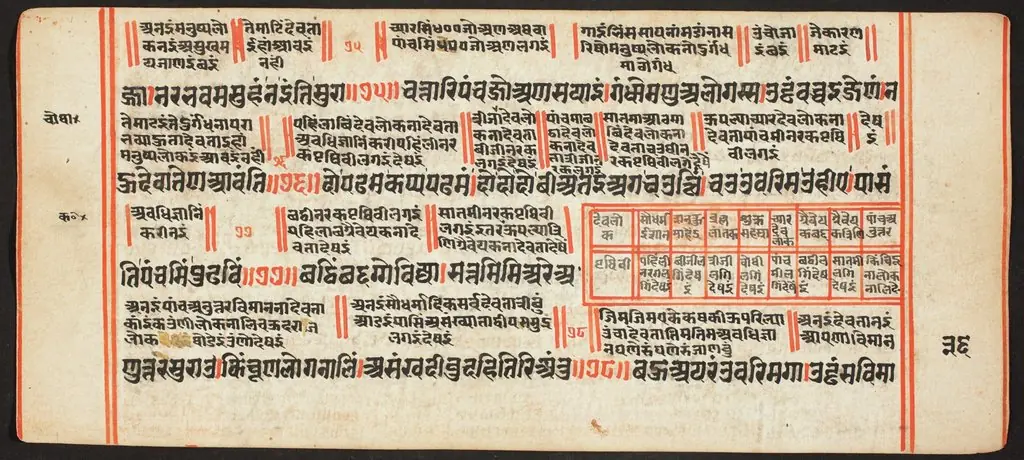 Tantric Manuscript, "Sangrahani Sutra"
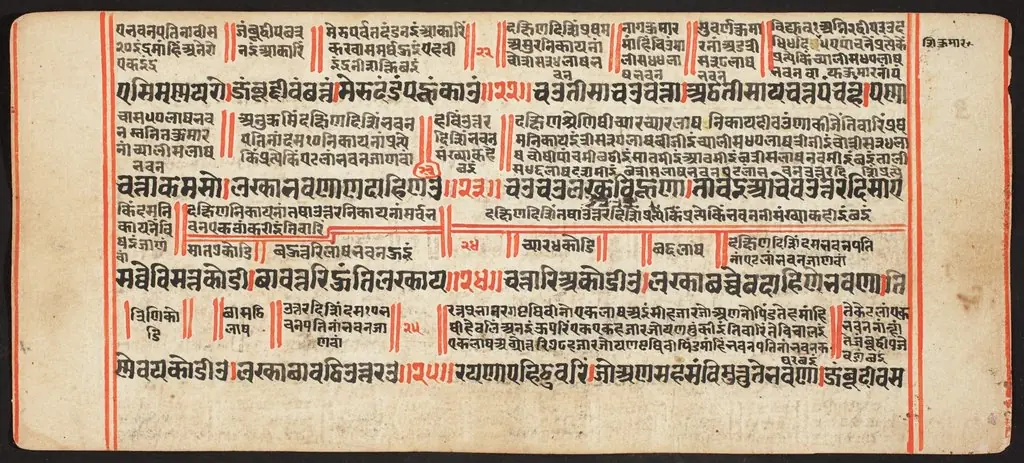 Tantric Manuscript, "Sangrahani Sutra"
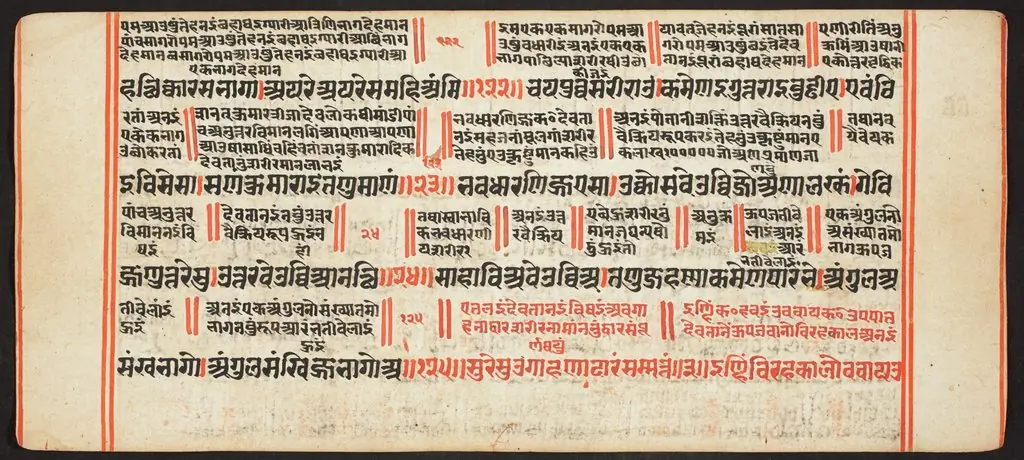 Tantric Manuscript, "Sangrahani Sutra"
 Tantric Manuscript, "Sangrahani Sutra"
 Tantric Manuscript, "Sangrahani Sutra"
 Tantric Manuscript, "Sangrahani Sutra"
 Tantric Manuscript, "Sangrahani Sutra"
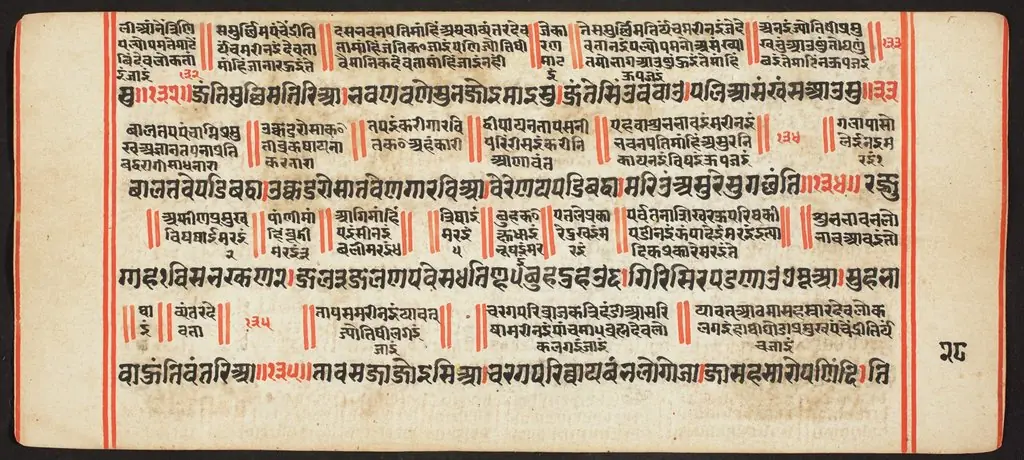 Tantric Manuscript, "Sangrahani Sutra"
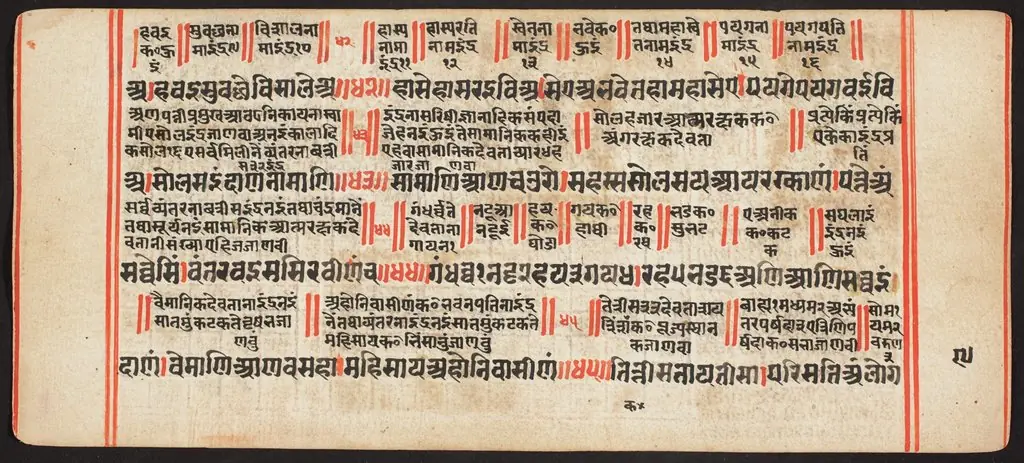 Tantric Manuscript, "Sangrahani Sutra"
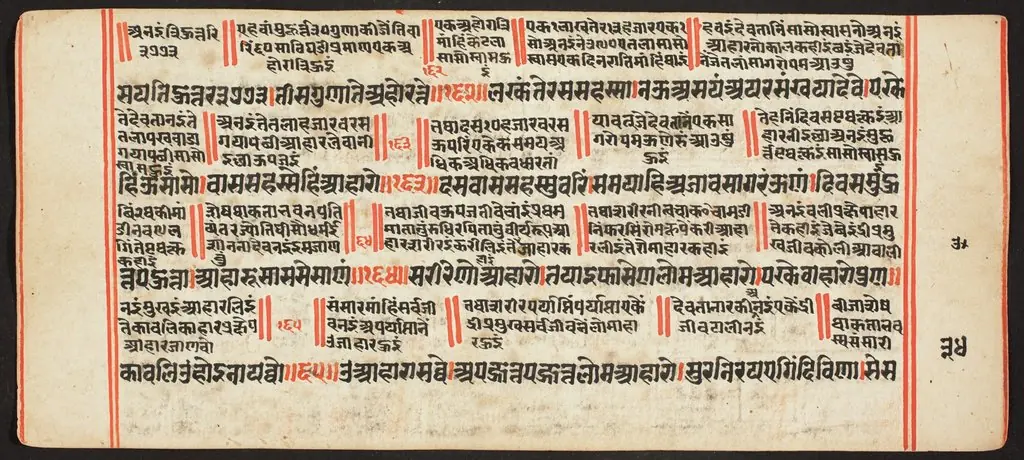 Tantric Manuscript, "Sangrahani Sutra"
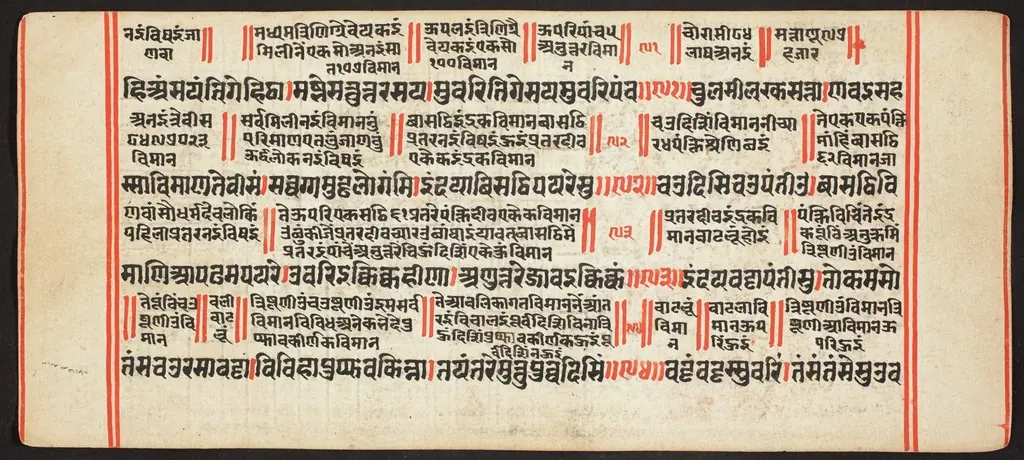 Tantric Manuscript, "Sangrahani Sutra"
 Tantric Manuscript, "Sangrahani Sutra"