Artwork
Tantric Manuscript, "Sangrahani Sutra"
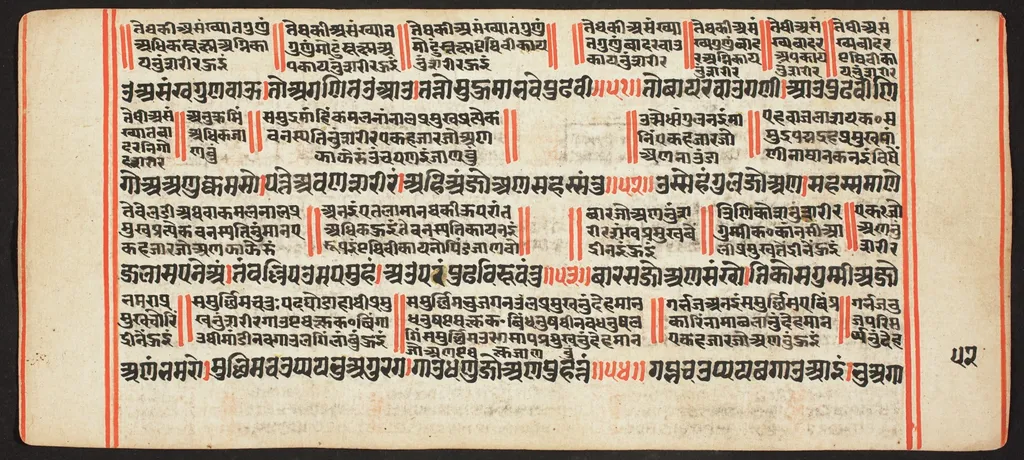
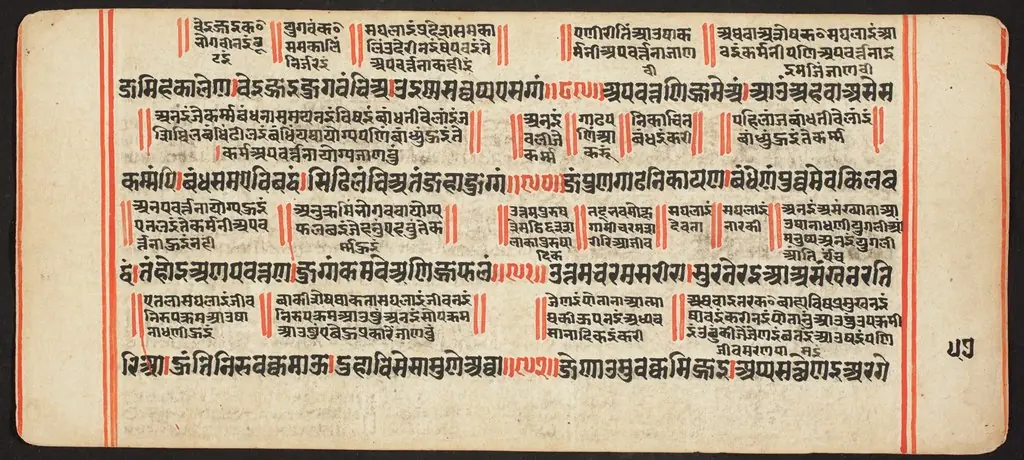
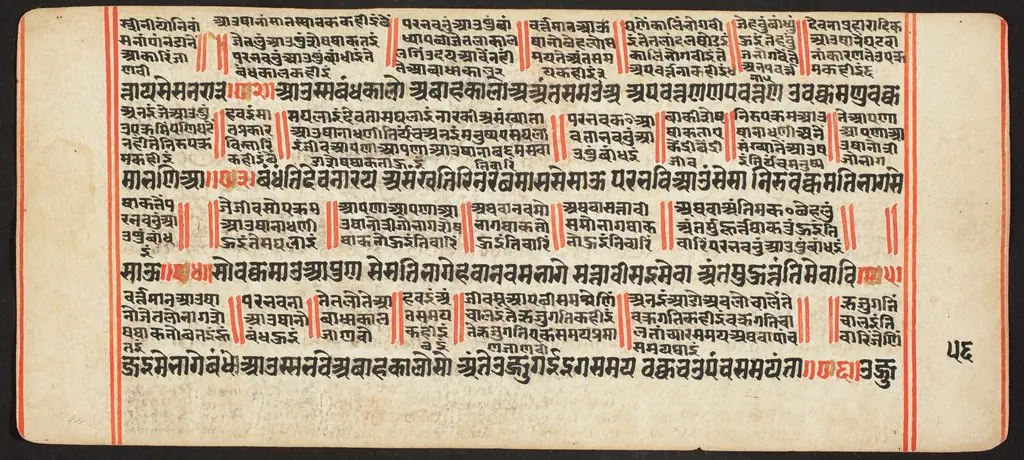
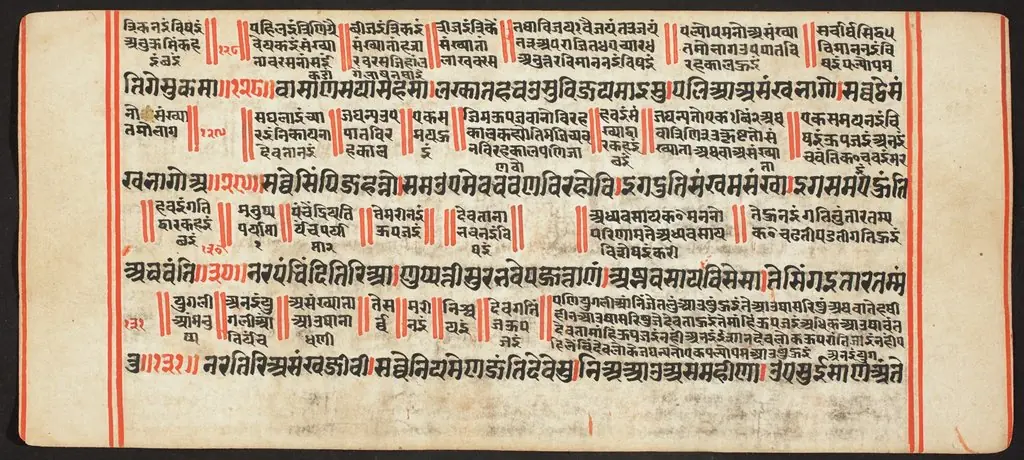
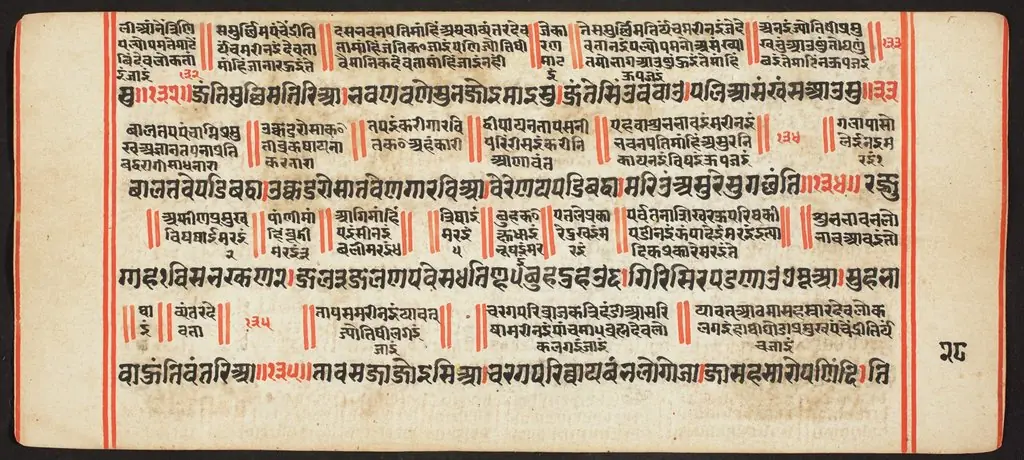
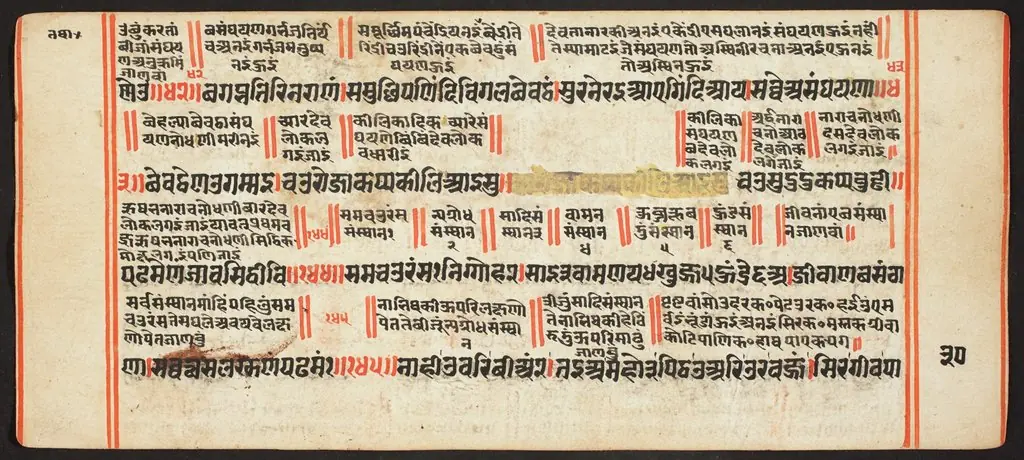
Tantric Manuscript, "Sangrahani Sutra" is an unspecified painting by Unknown. It is held in the collection of the Detroit Institute of Arts. This manuscript page contains the Sangrahani Sutra, a Buddhist text rendered in a dense, unillustrated script.
About this work
Overview
Written in black ink on a light beige surface, the text is organized by vertical red lines that demarcate sections.
This manuscript page contains the Sangrahani Sutra, a Buddhist text rendered in a dense, unillustrated script. Written in black ink on a light beige surface, the text is organized by vertical red lines that demarcate sections. No imagery interrupts the uniformity of the writing, emphasizing textual precision over decorative elements. The composition reflects a tradition valuing scriptural fidelity and disciplined execution.
Subject & Meaning
The Sangrahani Sutra is a doctrinal text within the Buddhist canon, likely used for study or ritual recitation. Its presentation—without illustrations or embellishment—suggests a focus on the purity of the words themselves. The absence of visual motifs reinforces the idea that the sacred content resides in the script, not in imagery, aligning with certain meditative or scholarly traditions that prioritize textual integrity.
Technique & Style
The script is executed in fine black ink with consistent line weight, indicating skilled calligraphic practice. Red vertical rules, applied with precision, structure the text without distracting from it. The background remains unadorned, allowing the ink to dominate. The density of the writing and the uniformity of spacing reflect a methodical approach, typical of manuscripts produced in monastic settings where accuracy was paramount.
History & Provenance
The origin of this manuscript is not precisely documented, but its style aligns with South or Southeast Asian Buddhist scribal traditions. Similar works are held in institutional collections, including the Detroit Institute of Arts, which houses comparable examples from the same cultural milieu. These manuscripts were likely copied by monastic scribes over centuries, preserving doctrinal texts through careful hand reproduction.
Context
In Buddhist monastic communities, handwritten scriptures served both liturgical and educational functions. The lack of illustrations reflects a preference for textual authority over visual representation, a feature common in certain Theravāda and Vajrayāna traditions. Manuscripts like this were often stored in temple libraries, handled with ritual care, and copied repeatedly to ensure doctrinal continuity across generations.
Legacy
This manuscript exemplifies a long-standing practice of textual preservation in Buddhist cultures. Its minimalist aesthetic influenced later scribal traditions that valued clarity and discipline over ornamentation. Surviving examples, though rare, remain important for understanding how religious knowledge was transmitted before print, offering insight into the material culture of Buddhist scholarship.
Artist & collection

 Domestic Scene
 Giacomo and Cardinal Marco, investing Andrea, Abbot of San Zeno, with his Benefice
 The Nymph of Fontainebleau
 Portrait of a Woman
 Madonna and Child with Saints in the Enclosed Garden
 Venus and Minerva
 Family Group of Four on Sofa
 Wall painting from Room H of the Villa of P. Fannius Synistor at Boscoreale
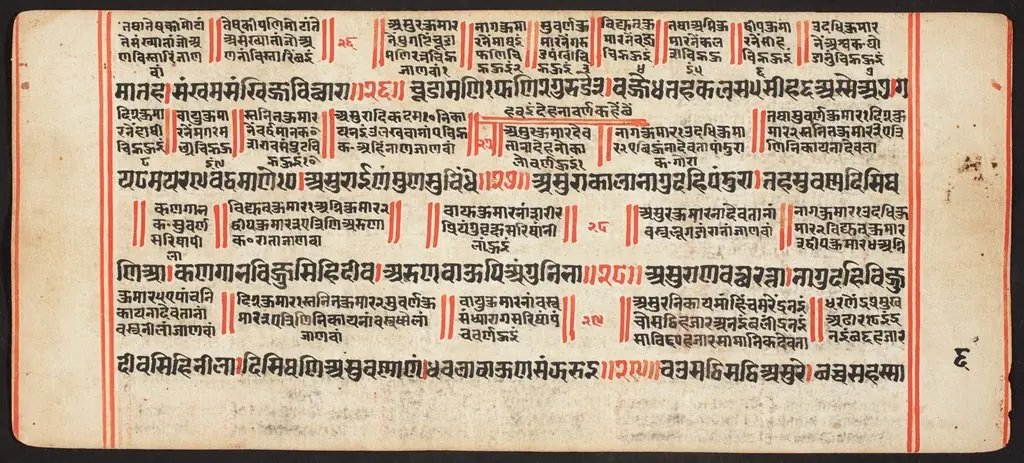 Tantric Manuscript, "Sangrahani Sutra"
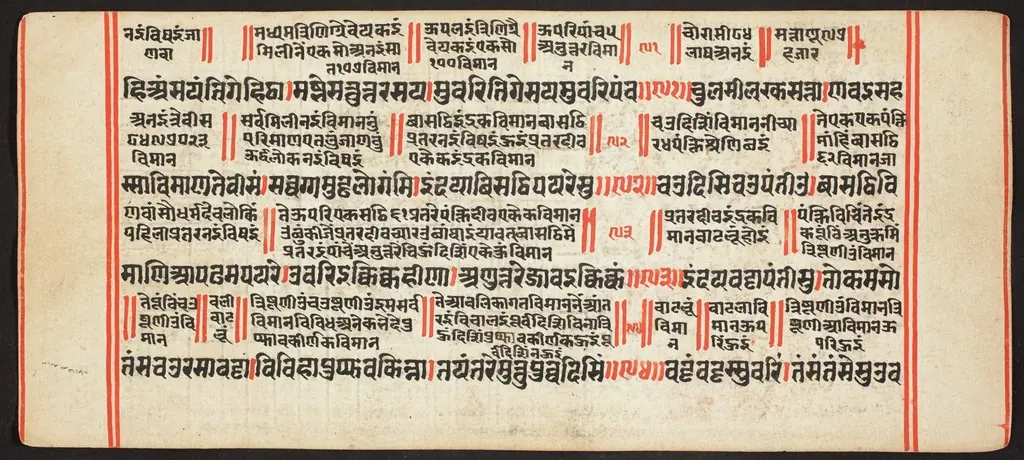 Tantric Manuscript, "Sangrahani Sutra"
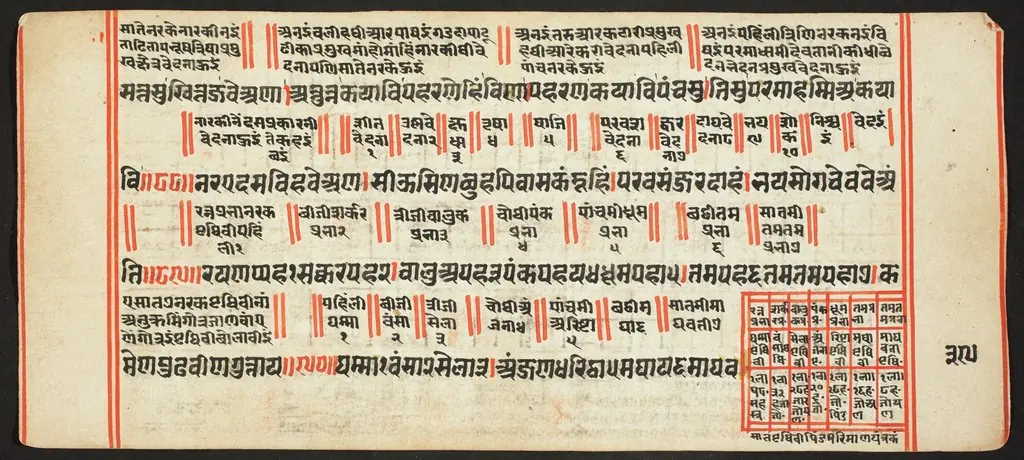 Tantric Manuscript, "Sangrahani Sutra"
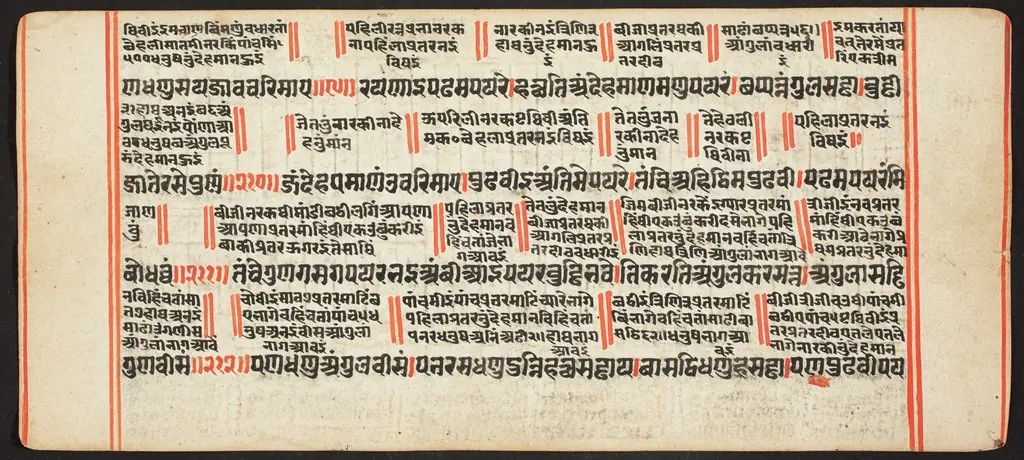 Tantric Manuscript, "Sangrahani Sutra"
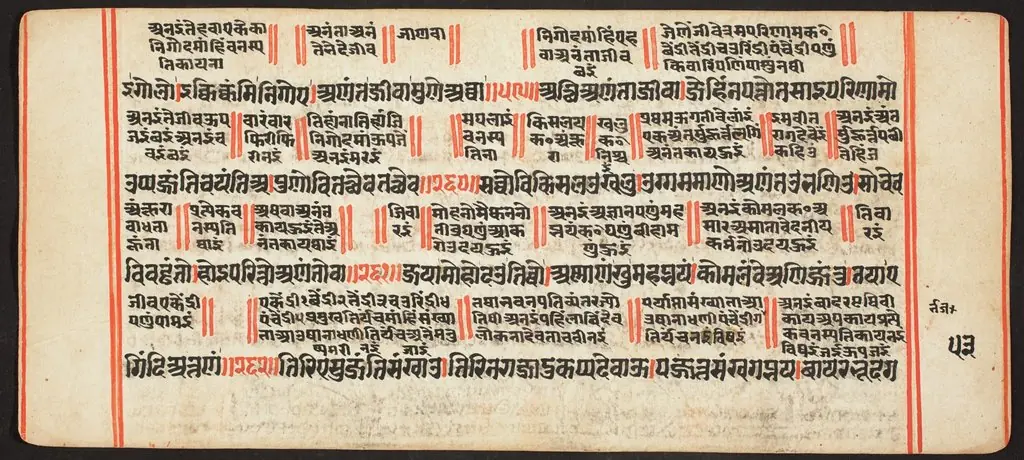 Tantric Manuscript, "Sangrahani Sutra"
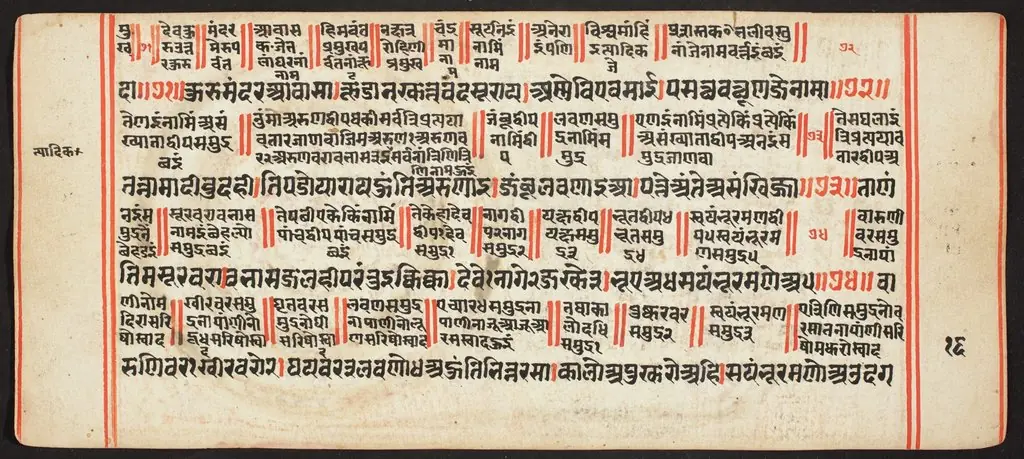 Tantric Manuscript, "Sangrahani Sutra"
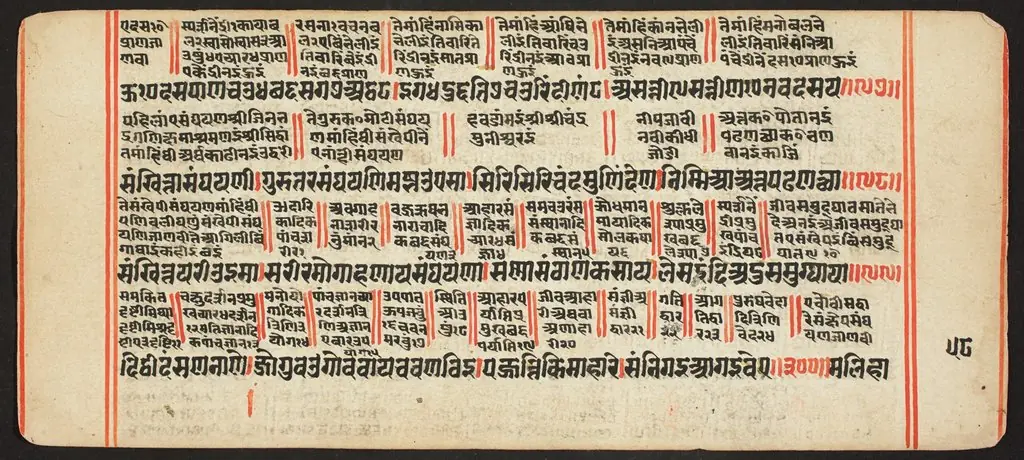 Tantric Manuscript, "Sangrahani Sutra"
 Tantric Manuscript, "Sangrahani Sutra"
 Tantric Manuscript, "Sangrahani Sutra"
 Tantric Manuscript, "Sangrahani Sutra"
 Tantric Manuscript, "Sangrahani Sutra"
 Tantric Manuscript, "Sangrahani Sutra"