Artwork
The Madonna Enthroned
The Madonna Enthroned is a tempera painting by the Byzantine icon painting artist Unknown. It dates from 1350 and is held in the collection of the Brooklyn Museum.
About this work
Overview
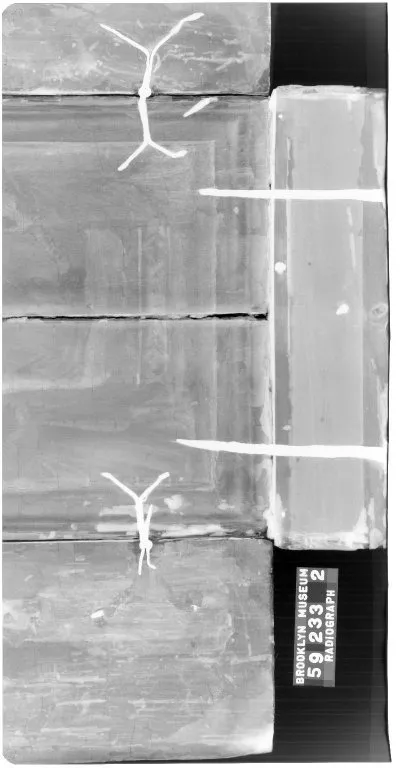
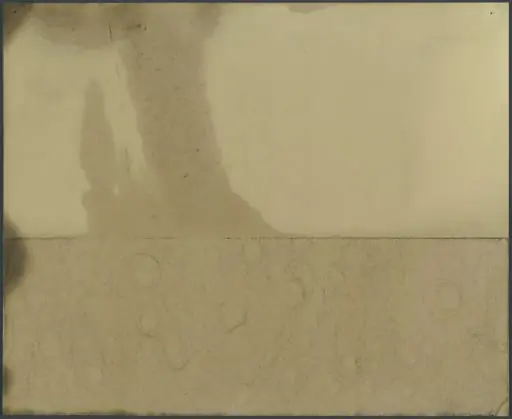
The work titled “The Madonna Enthroned” is a tempera painting whose underlying structure has been examined through radiographic imaging. The X‑ray reveals a skeletal composition of two human figures outlined in white, positioned in the upper‑left and lower‑left zones of the panel, set against a muted gray ground that hints at the original layout before surface layers were applied.
Subject & Meaning
The white silhouettes correspond to the central figures traditionally associated with a Madonna and Child motif, suggesting a devotional intent. Their placement within the composition indicates a hierarchical arrangement, with the Madonna likely occupying the upper outline and the infant or attendant figure below, reflecting common iconographic conventions of the period.
Technique & Style
Executed in tempera, the painting would have involved pigment mixed with a water‑soluble binder such as egg yolk, applied in thin, semi‑transparent layers. The X‑ray’s darker gray zones point to variations in underdrawing or the presence of preparatory sketches, indicating a careful planning stage typical of medieval and early Renaissance panel work.
History & Provenance
Details about the painting’s origin, date, or ownership are not provided in the available documentation. The existence of an X‑ray study suggests that the work has undergone scholarly examination, possibly within a conservation or research context, to better understand its construction and condition.
Context
Madonna enthronement scenes were a staple of religious art, serving both liturgical and private devotional functions. The use of tempera aligns the piece with a long tradition of panel painting before the widespread adoption of oil, situating it within a broader historical framework of medieval iconography.
Artist & collection

 Domestic Scene
 Giacomo and Cardinal Marco, investing Andrea, Abbot of San Zeno, with his Benefice
 The Nymph of Fontainebleau
 Portrait of a Woman
 Madonna and Child with Saints in the Enclosed Garden
 Venus and Minerva
 Family Group of Four on Sofa
 Wall painting from Room H of the Villa of P. Fannius Synistor at Boscoreale
 Curios, curios
 Untitled
 Central, Maica Domnului cu Pruncul ambii încoronați, coroane închise. Fecioara deasupra norilor, înconjurată de o mandorlă. Cu dreapta binecuvintează, în stânga îl ține pe Iisus care binecuvintează la rândul său cu mâna dreaptă, în stânga ținând Cartea Sfântă. Veșminte simple, la Prunc cu borduri aurite. Maria înveșmântată cu stola verde, cu un șir dublu perlat pe poale, maforion auriu. De o parte și de alta grupuri de sfinți: în dreapta Sfinții Haralambie și Nicolae, ambii având câte o Carte Sfântă, în planul superior, Sf. Gheorghe și Ioan, deasupra un sfânt mucenic. În stânga Sfinții Turii? Și Simeon, Vasilie și Serghie,desupra sfântul Iviv?. În partea superioară a icoanei, Dumnezeu Savaot, în veșminte albe, înconjurat cu raze de assist, cu globul cruciger în stânga, cu dreapta binecuvântând.În jurul capului stea cu 8 colțuri proiectată pe nimbul circular. Registrul de nori negri cu margini luminate pune în evidență strălucirea zonei superioare și potențează cromatic compoziția. La mijloc pe nori, Duhul Sfânt ca porumbel alb. Pe nori, în stânga soarele, în dreapta luna, antropomorfizate. Chenar lat, auriu, delimitat de o linie roșie la interior, brună le exterior, în partea de sus tema icoanei cu majuscule roșii. Inscripții cu negru pe aureole sau în dreptul fiecărui motiv iconografic. Cromatica: Fond auriu (foiță de aur), roșu aprins, vișiniu, albastru, verde, galben, nuanțe de roșu, alb. Inscripții cu roșu și negru.
 Compoziție cu ruine și păsări
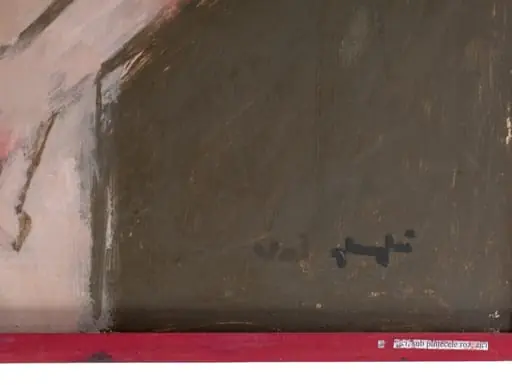 Aici, sub pântecele roz, aici
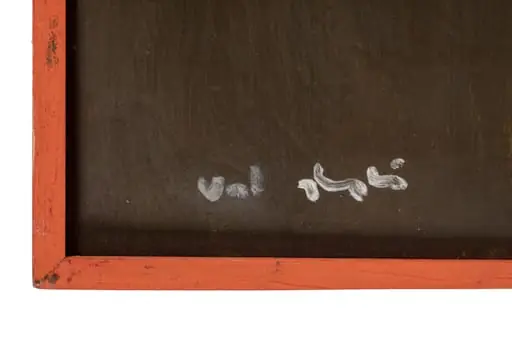 Băăă, cu mâna asta roșie
 Untitled
 Compoziție VII
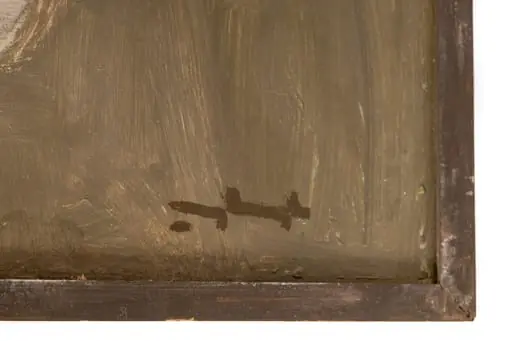 Seară de gală
 Nud
Nud Iisus Hristos
 Nud de femeie