Artwork
Compoziție cu ruine și păsări
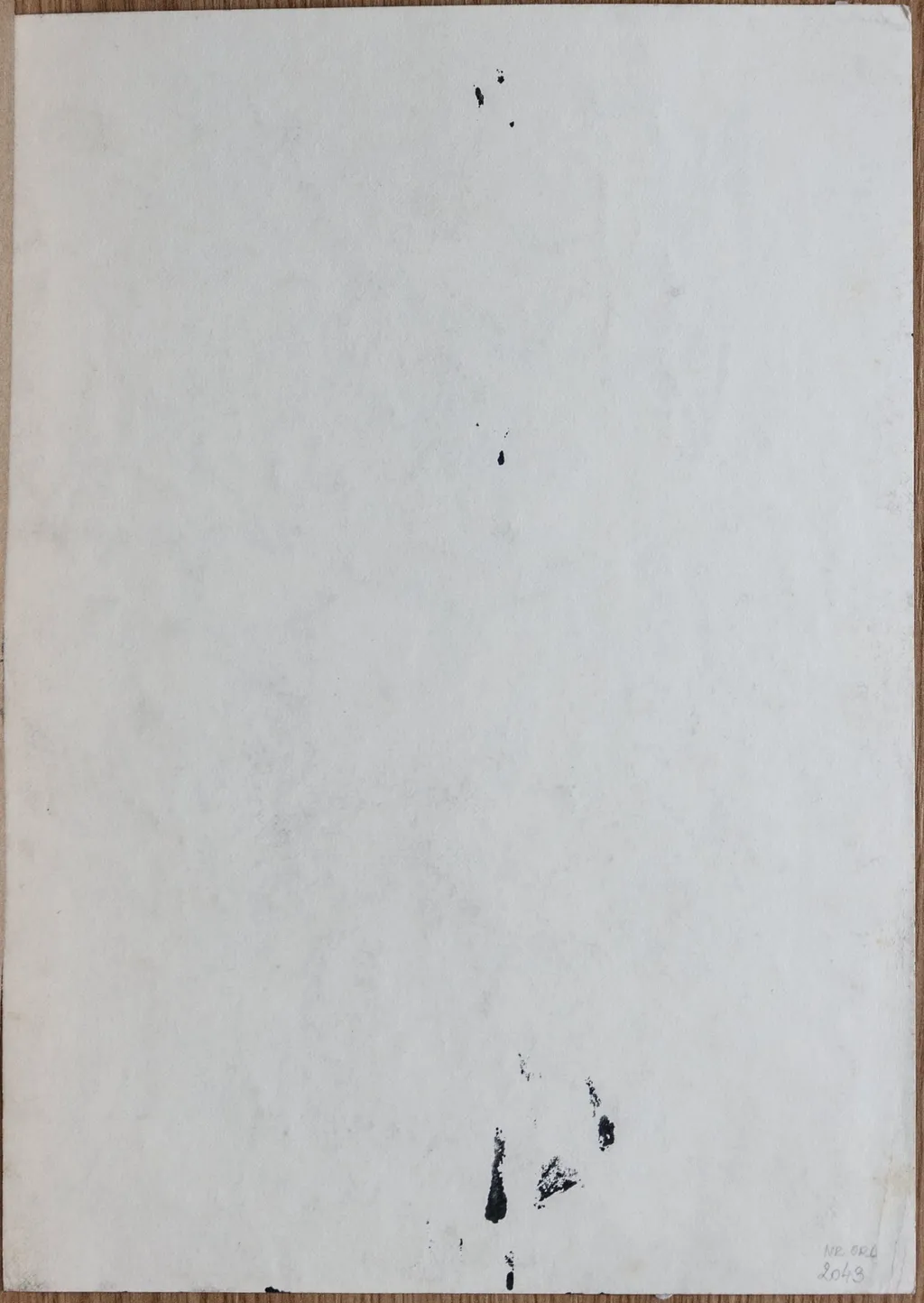
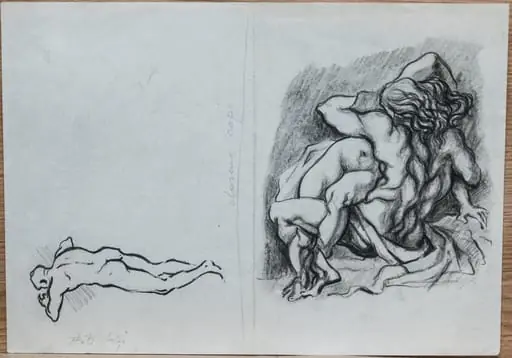
Compoziție cu ruine și păsări is a drawing by Teodor Hrib. It dates from 1950 and is held in the collection of the Gavrila Simion Eco-Museum Research Institute Tulcea.
About this work
Overview
Created around 1950 by Romanian artist Teodor Hrib, this work is a delicate ink drawing on paper, currently held in the collection of the Museum of Ethnography.
Created around 1950 by Romanian artist Teodor Hrib, this work is a delicate ink drawing on paper, currently held in the collection of the Museum of Ethnography. The composition is minimal, featuring abstract black ink splatters at the top and bottom edges of a rectangular sheet. The central area remains blank, suggesting the original image has faded or been removed, leaving only traces of its presence.
Subject & Meaning
Though the central drawing is no longer visible, the residual ink marks imply a prior depiction of ruins and birds—elements often associated with transience and natural cycles in Hrib’s work. The absence of the main image may reflect intentional erosion or material decay, reinforcing themes of memory, loss, and the impermanence of human structures against nature.
Technique & Style
The work was executed with a brush or pen using black ink on a thin, off-white paper. The splatters at the margins suggest a gestural, possibly spontaneous application, contrasting with the restrained, empty center. The paper’s slight discoloration and wear indicate age and handling, contributing to a quiet, contemplative aesthetic that prioritizes suggestion over detail.
History & Provenance
The piece entered the Museum of Ethnography’s collection as part of Hrib’s broader body of work, likely acquired shortly after its creation. Its preservation in a cultural institution underscores its value as a document of mid-20th-century Romanian artistic practice, even in its fragmented state. No record of prior ownership or exhibition history is publicly documented.
Context
Hrib worked during a period of state-enforced artistic conformity in Romania, yet his drawings often retained personal, symbolic themes. This piece aligns with a quieter strand of postwar Romanian art that favored introspection and material simplicity over grand narratives. Its focus on decay and natural elements may reflect a subtle resistance to official aesthetics.
Legacy
Though not widely reproduced, the work contributes to understanding Hrib’s engagement with ephemerality and the poetic potential of absence. Its survival in institutional care ensures its role as a quiet testament to artists who navigated political constraints through understated, material-based expression rather than overt political statements.
Artist & collection
Artist
Teodor Hrib shaped small plaster figures and ink drawings in the 1800s academic tradition.
Museum
Gavrila Simion Eco-Museum Research Institute Tulcea
Continue through works from the same source collection.