Artwork
Portrait of Prince Adam Jerzy Czartoryski (1770–1861)
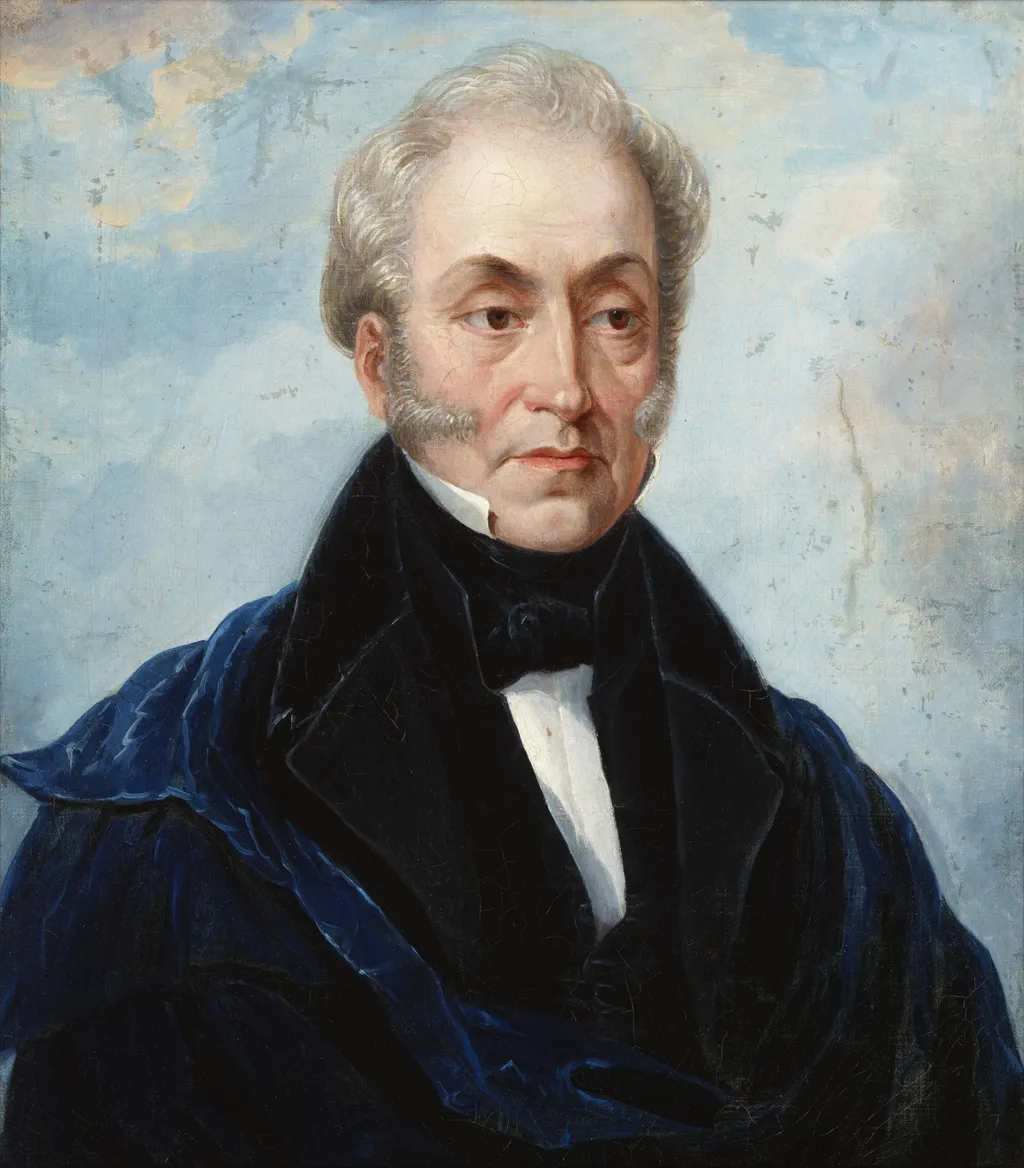
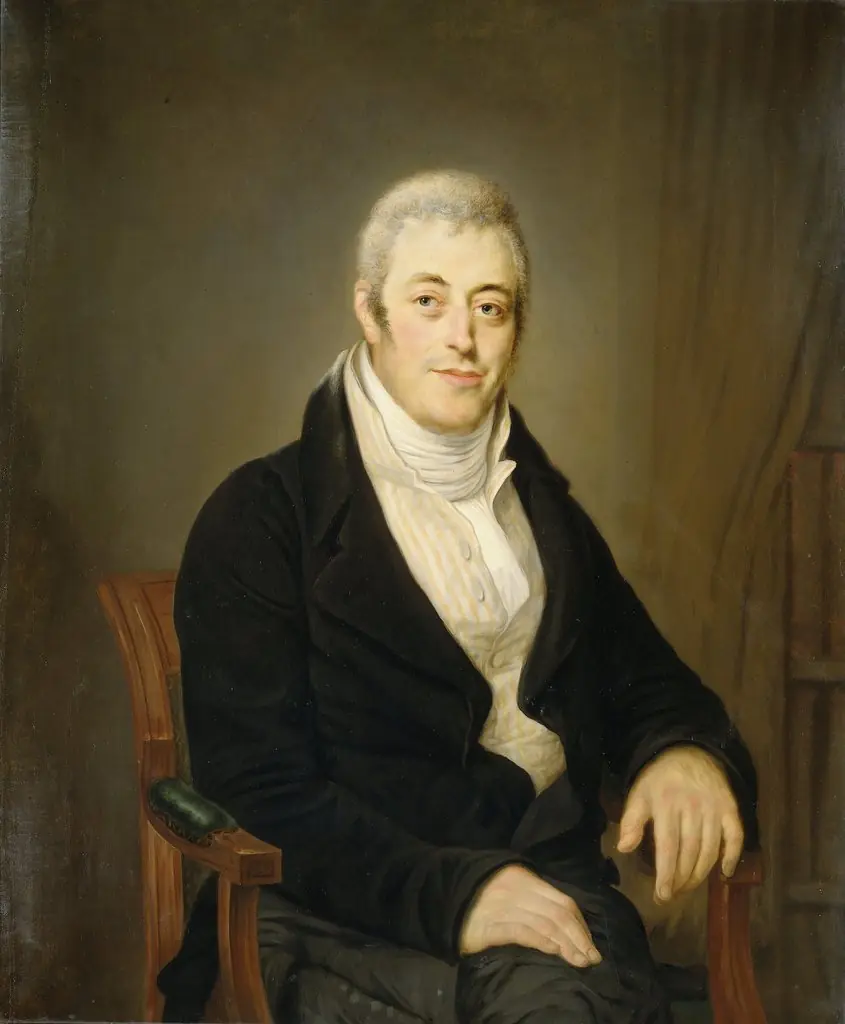
Portrait of Prince Adam Jerzy Czartoryski (1770–1861) is an oil painting by Unknown. It dates from 1845 and is held in the collection of the National Museum in Kraków.
About this work
The painting depicts a man with gray hair, dressed in a dark blue coat over a black jacket and white shirt, adorned with a black bow tie. His gaze is directed to the right side of the image. The subject's attire and hairstyle suggest a formal setting, possibly from the 19th century. The background of the painting features a light blue sky with clouds, adding a sense of depth to the portrait.
Overview
This oil painting presents a formal portrait of Prince Adam Jerzy Czartoryski, a Polish nobleman and political figure active in the early 19th century.
This oil painting presents a formal portrait of Prince Adam Jerzy Czartoryski, a Polish nobleman and political figure active in the early 19th century. Rendered with restrained elegance, the composition focuses on the subject’s composed demeanor and refined attire. The background, softly rendered with a pale sky and drifting clouds, provides subtle spatial depth without distracting from the figure.
Subject & Meaning
The portrait captures Czartoryski during a period of exile following the collapse of the November Uprising. His dignified posture and formal dress reflect his status and enduring political identity, even in displacement. The direct yet reserved gaze suggests introspection, possibly hinting at the weight of his role as a leader of the Polish diaspora and advocate for national restoration.
Technique & Style
The artist employs smooth brushwork to convey the texture of fine fabrics—dark blue coat, black jacket, and crisp white shirt—while the gray hair is rendered with delicate, feathery strokes. The light blue sky behind him is thinly painted, creating atmospheric perspective. Shadows are muted, emphasizing the subject’s presence without dramatic contrast, aligning with early 19th-century academic portraiture.
History & Provenance
Commissioned during Czartoryski’s time in Western Europe, the portrait likely originated in the 1820s or 1830s. It remained within the Czartoryski family collection for generations, later entering the collection of the Czartoryski Museum in Kraków, where it is preserved as part of Poland’s cultural heritage. Its survival through political upheavals underscores its significance to the family’s legacy.
Context
Painted during the aftermath of Poland’s failed uprisings against partitioning powers, this portrait reflects the persistence of aristocratic identity among exiled Polish elites. Similar portraits of the era often served as symbols of continuity and resistance, visually affirming national dignity despite territorial loss. The subdued palette and classical composition echo broader European trends in aristocratic representation.
Legacy
The portrait endures as a visual record of a key figure in Polish political and cultural history. It contributes to the broader archive of 19th-century noble portraiture, illustrating how personal image was used to sustain collective memory. Today, it remains a touchstone in discussions of Polish identity and the role of art in preserving national consciousness.
Artist & collection

 Domestic Scene
 Giacomo and Cardinal Marco, investing Andrea, Abbot of San Zeno, with his Benefice
 The Nymph of Fontainebleau
 Portrait of a Woman
 Madonna and Child with Saints in the Enclosed Garden
 Venus and Minerva
 Family Group of Four on Sofa
 Wall painting from Room H of the Villa of P. Fannius Synistor at Boscoreale
 "Portrait of Alexander Ribopierre"(copy)
 Portrait of Count D.A. Zubov
 Francisco Martínez de la Rosa (copia)
 J.C. Spengler. Warden of the Royal Cabinet of Curiosities
 Self-Portrait
 Portrait of a man with a medal
 Προσωπογραφία του Frederick North
 Προσωπογραφία του Σανταρόζα
 Portrait of Cetner
 Portrait of Jacob de Vos Jacobszoon (1803-1878). Amsterdam Art Collector and Owner of the Historical Gallery De Vos
 Portrait of Mikhail Golitsyn
 Portrait of Jonas Daniel Meijer, Lawyer