Artwork
Orpheus Enchanting the Animals
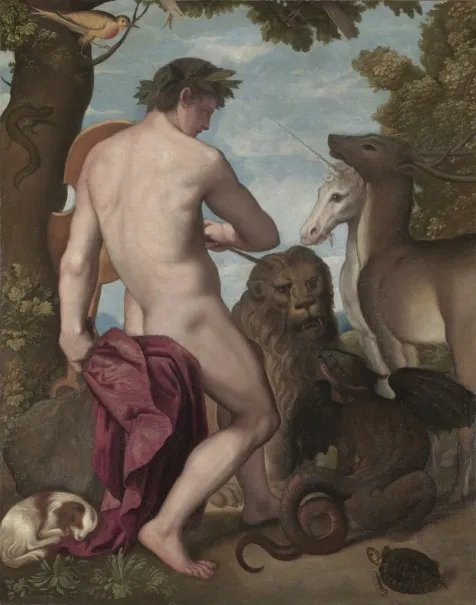
Orpheus Enchanting the Animals is an oil painting by Alessandro Varotari. It dates from 1601 and is held in the collection of the Museo del Prado.
About this work
Overview
This oil painting depicts the mythological figure Orpheus, renowned for his musical abilities, captivating various creatures with his instrument.
Alessandro Leone Varotari, known as Il Padovanino, completed *Orpheus Enchanting the Animals* in 1601. This oil painting depicts the mythological figure Orpheus, renowned for his musical abilities, captivating various creatures with his instrument. The work exemplifies the Venetian artist's engagement with both late-Mannerist and early-Baroque styles. It is currently housed in the collection of the Museo del Prado.
Subject & Meaning
The painting centers on Orpheus, a legendary musician from Greek mythology, shown shirtless in a sylvan setting. He plays a lira da braccio, a stringed instrument, with his right hand while his left rests on a rock. Around him, a diverse assembly of animals—including a lion, deer, unicorn, dog, and bird—appears mesmerized by his melody. This scene illustrates the ancient theme of music's profound power to soothe and influence the natural world.
Technique & Style
Varotari employed oil paint to create this composition, utilizing an earthy color palette dominated by greens and browns, accented by a deep red cloth draped around Orpheus's waist. The artist skillfully manipulated light and shadow, a technique that illuminates Orpheus's skin and the surrounding animals in specific areas, while leaving other parts in darkness. This contrast effectively draws the viewer's attention to the musician's expressive face and hands.
History & Provenance
Painted early in the 17th century, this work reflects the artistic currents of the late-Mannerist and nascent Baroque periods in Venice. Il Padovanino was a significant figure in this transition, following in the footsteps of his father, the painter Dario Varotari the Elder, and working alongside his sister, artist Chiara Varotari. The painting is now part of the esteemed collection at the Museo del Prado.
Artist & collection
Artist
Alessandro Leone Varotari (4 April 1588 – 20 July 1649), also commonly known as Il Padovanino, was a Venetian painter of the late-Mannerist and early-Baroque Venetian school, best known for having mentored Pietro…
