Artwork
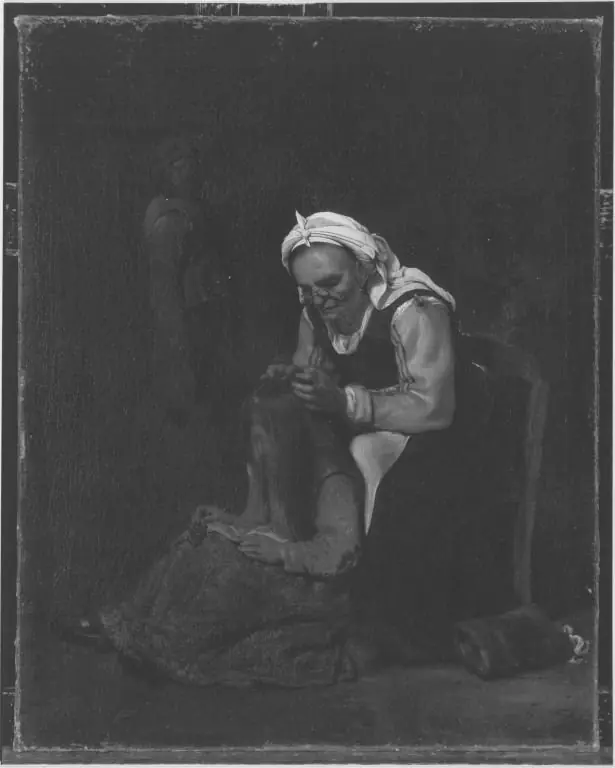
Woman Looking For Fleas
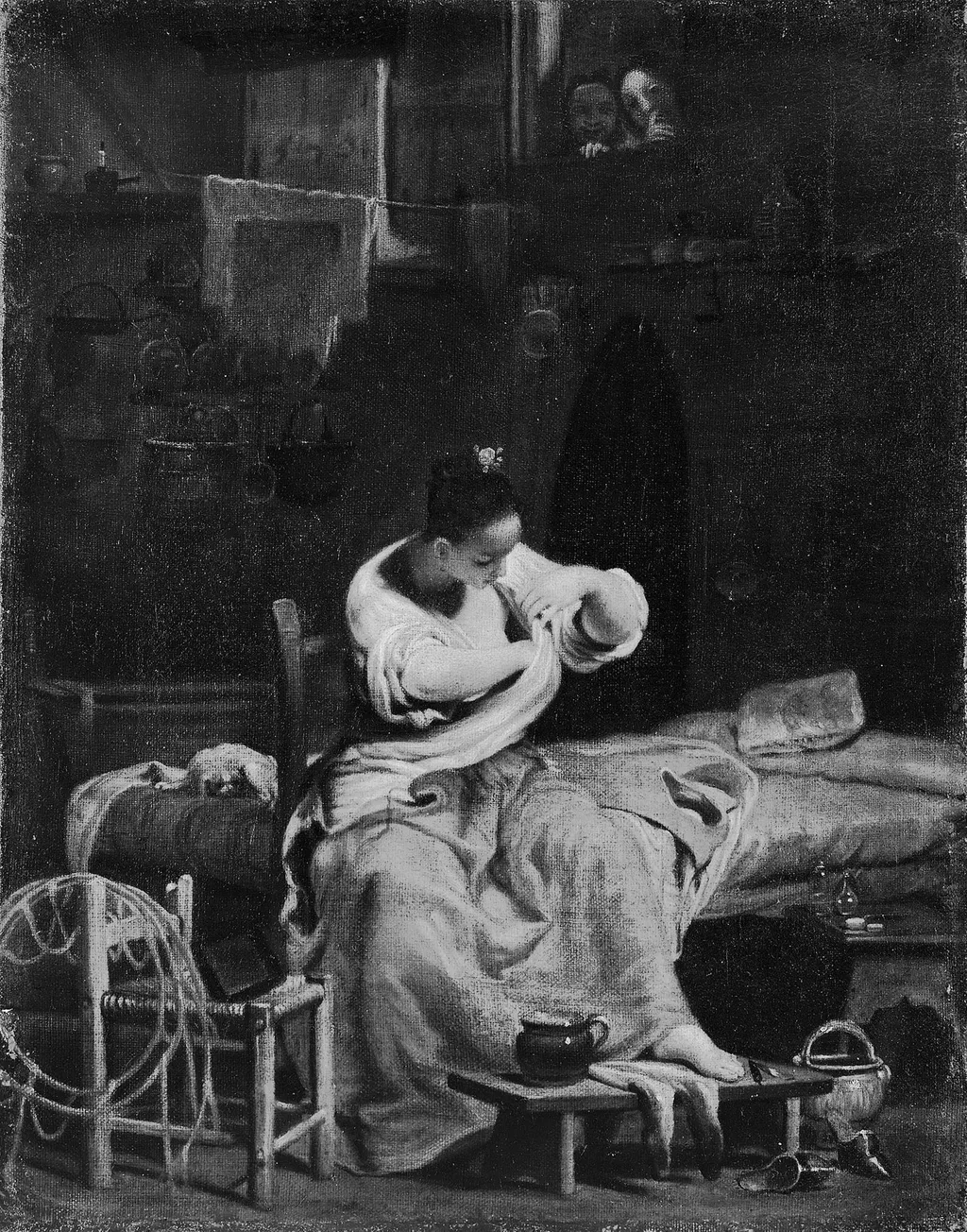
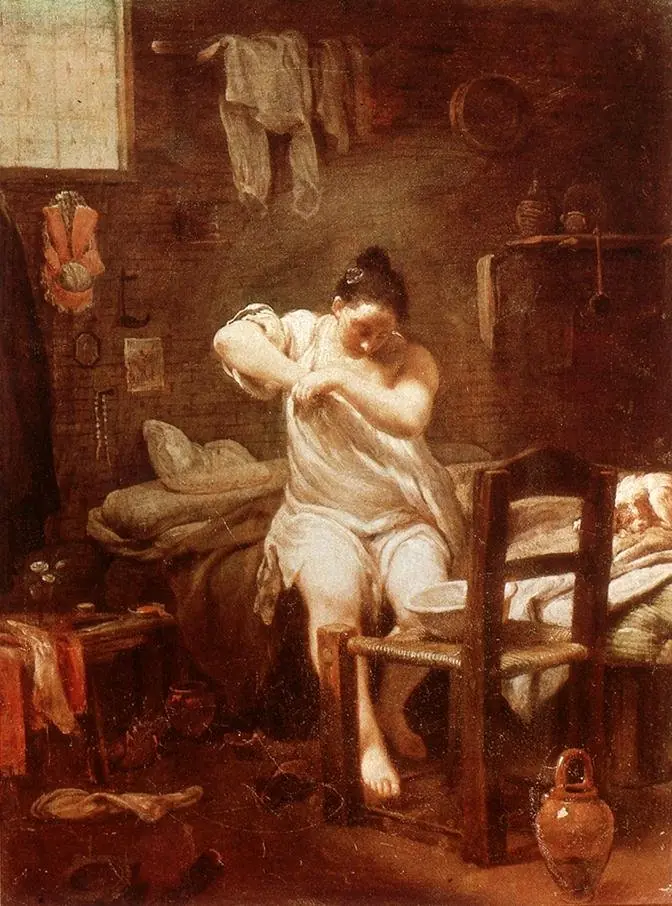
Woman Looking For Fleas is an oil painting by the Rococo painting artist Unknown. It dates from 1715 and is held in the collection of the Art Institute of Chicago. This oil painting by Rembrandt van Rijn depicts a woman seated on a bed, intently examining her hand.
About this work
Overview
The scene is rendered in subdued tones, with minimal lighting coming from the left, casting soft shadows across her form.
This oil painting by Rembrandt van Rijn depicts a woman seated on a bed, intently examining her hand. The scene is rendered in subdued tones, with minimal lighting coming from the left, casting soft shadows across her form. Her white robe and pulled-back dark hair emphasize simplicity, while the dim interior suggests a private, quiet moment. The composition centers on her focused gaze, drawing attention to the subtle action of inspection.
Subject & Meaning
The woman’s concentration on her hand implies a close, possibly intimate act—perhaps searching for fleas, a common concern in domestic settings of the time. The subject avoids grandeur, instead capturing an ordinary, unidealized moment of daily life. This focus on the mundane reflects Rembrandt’s interest in human vulnerability and quiet introspection, elevating the routine into something contemplative.
Technique & Style
Rembrandt employs chiaroscuro to model the woman’s form with subtle gradations of light and shadow, enhancing three-dimensionality without harsh contrasts. The brushwork is restrained yet precise, particularly in the rendering of fabric and skin. The limited palette and soft transitions create a tactile realism, grounding the scene in physical presence while maintaining an atmosphere of stillness and solitude.
History & Provenance
The painting is attributed to Rembrandt van Rijn, likely created during his early to mid-career in the 1630s. It has passed through several private collections before entering a public institution. While its early ownership is not fully documented, its stylistic features align with Rembrandt’s intimate portraiture of the period, supporting its attribution and dating.
Context
In 17th-century Dutch society, domestic interiors were common subjects in genre painting, often reflecting moral or social themes. Scenes of personal hygiene or bodily care, though rarely depicted with such intimacy, were not unheard of. Rembrandt’s treatment of this moment aligns with broader trends in Dutch art that valued authenticity over idealization, even in private, unglamorous acts.
Legacy
This work contributes to Rembrandt’s broader exploration of psychological depth in everyday figures. Its quiet intensity influenced later artists interested in psychological realism and the dignity of ordinary life. Though not widely exhibited, it remains a quiet example of how Rembrandt transformed the mundane into a vessel for human observation and emotional resonance.
Artist & collection

 Domestic Scene
 Giacomo and Cardinal Marco, investing Andrea, Abbot of San Zeno, with his Benefice
 The Nymph of Fontainebleau
 Portrait of a Woman
 Madonna and Child with Saints in the Enclosed Garden
 Venus and Minerva
 Family Group of Four on Sofa
 Wall painting from Room H of the Villa of P. Fannius Synistor at Boscoreale