Artwork
Bowl
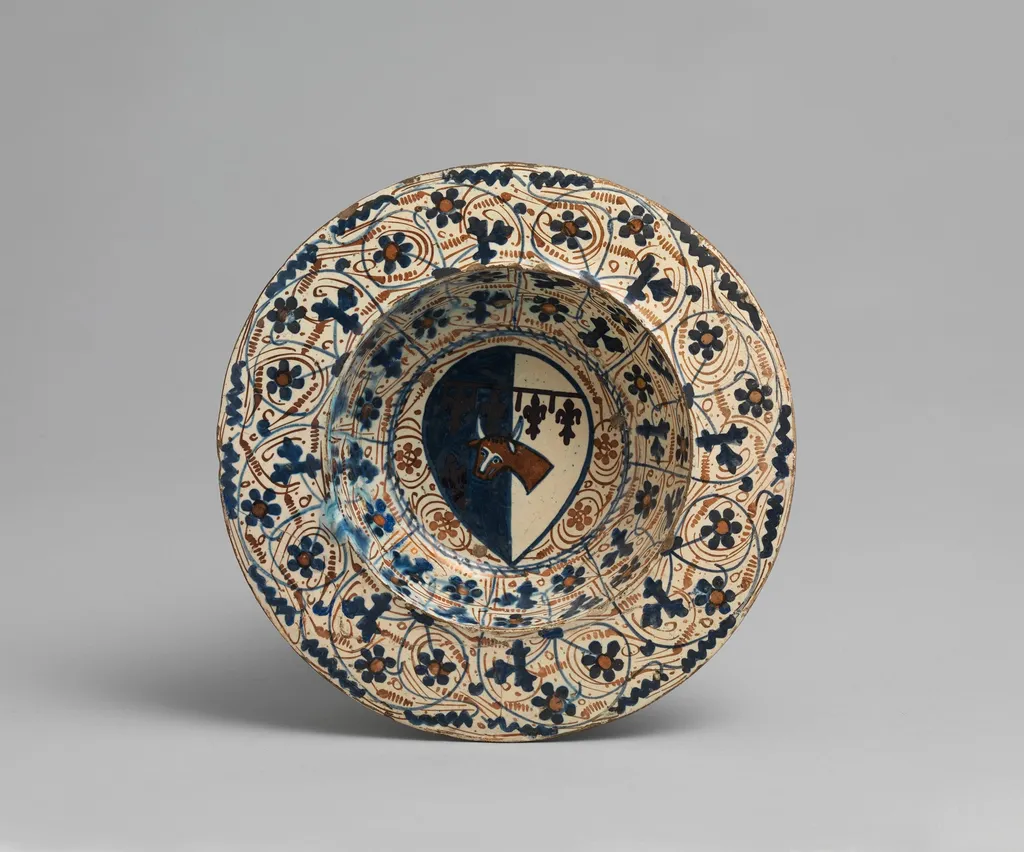
Bowl is an unspecified painting. It dates from 1450 and is held in the collection of the Metropolitan Museum of Art.
About this work
Overview
The work presents a painted ceramic bowl whose surface is dominated by a white background enlivened with blue and brown motifs. Central to the composition is a heraldic shield split into two fields: a blue half on the left and a white half on the right, each bearing a distinct emblem. Surrounding the shield are stylised floral and foliate designs that frame the central device.
Subject & Meaning
The central coat of arms suggests the bowl was intended for a specific family or institution, using heraldic imagery to denote ownership or patronage. The surrounding botanical patterns serve a decorative function typical of medieval domestic wares, providing visual balance while reflecting contemporary tastes for naturalistic ornamentation.
Technique & Style
The blue and brown pigments were applied in layered washes, creating a contrast that highlights both the heraldic charge and the surrounding flora.
The piece exemplifies medieval pottery techniques, likely produced by slip-painting on a glazed white earthenware body. The blue and brown pigments were applied in layered washes, creating a contrast that highlights both the heraldic charge and the surrounding flora. The overall style aligns with the decorative conventions of late medieval ceramic art in which intricate surface painting was prized.
History & Provenance
While the precise origin of the bowl is not recorded, the presence of a heraldic device points to a commission for a noble household or guild. Such objects were commonly circulated within regional trade networks, and the use of blue and brown pigments suggests production in a workshop familiar with the glazing practices of the period.
Artist & collection
