Artwork
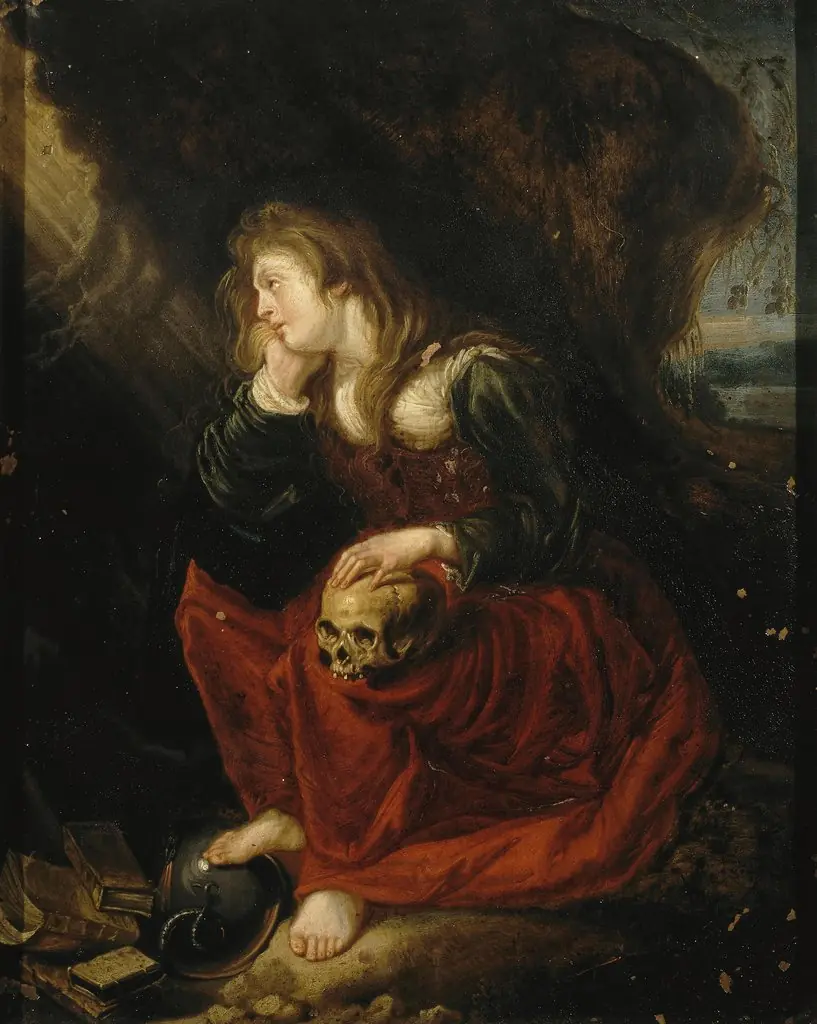
Penitent Magdalene
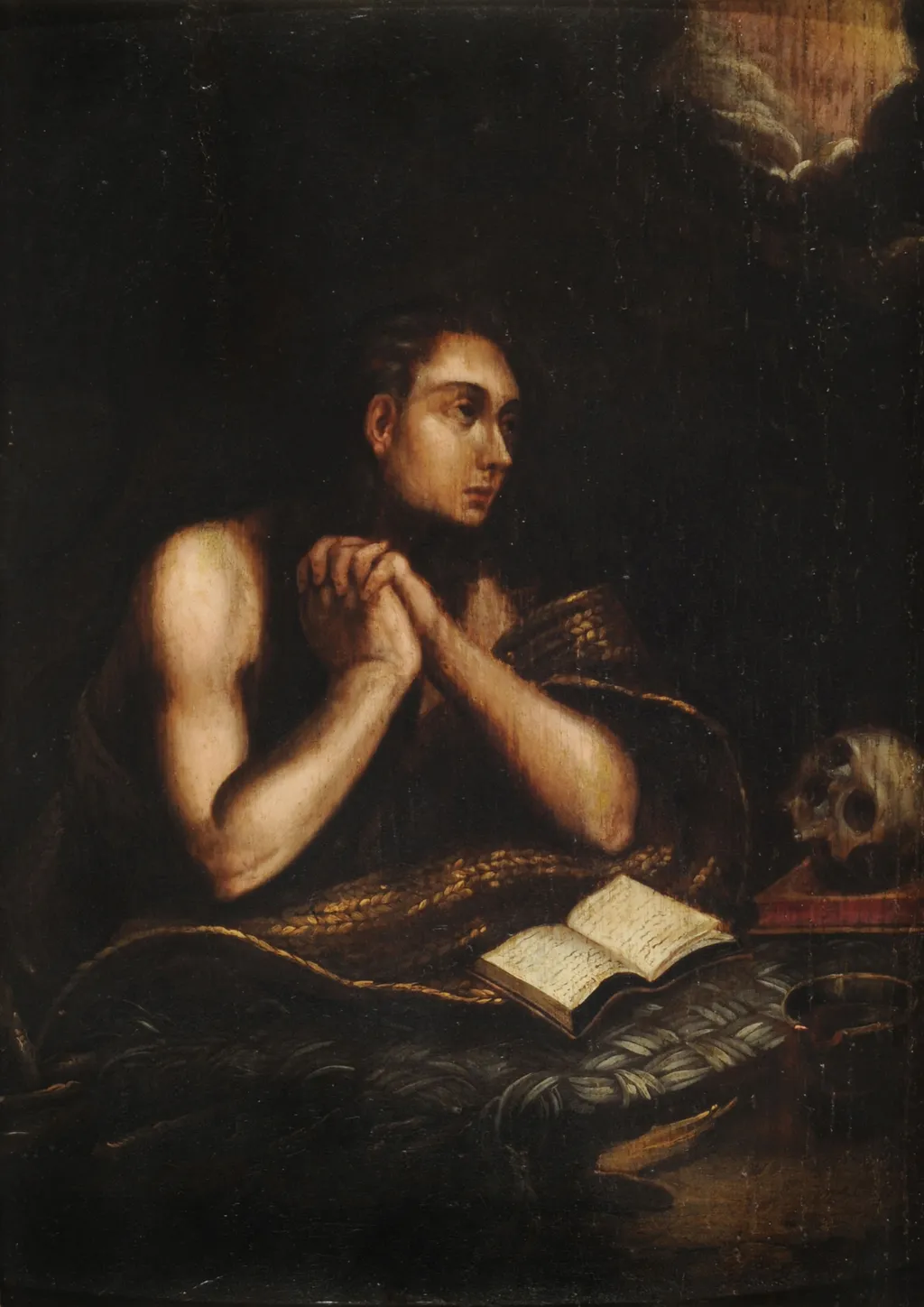
Penitent Magdalene is an unspecified painting by the Early Baroque Italian artist Unknown. It dates from 1650 and is held in the collection of the National Museum of Fine Arts, Argentina.
About this work
Overview
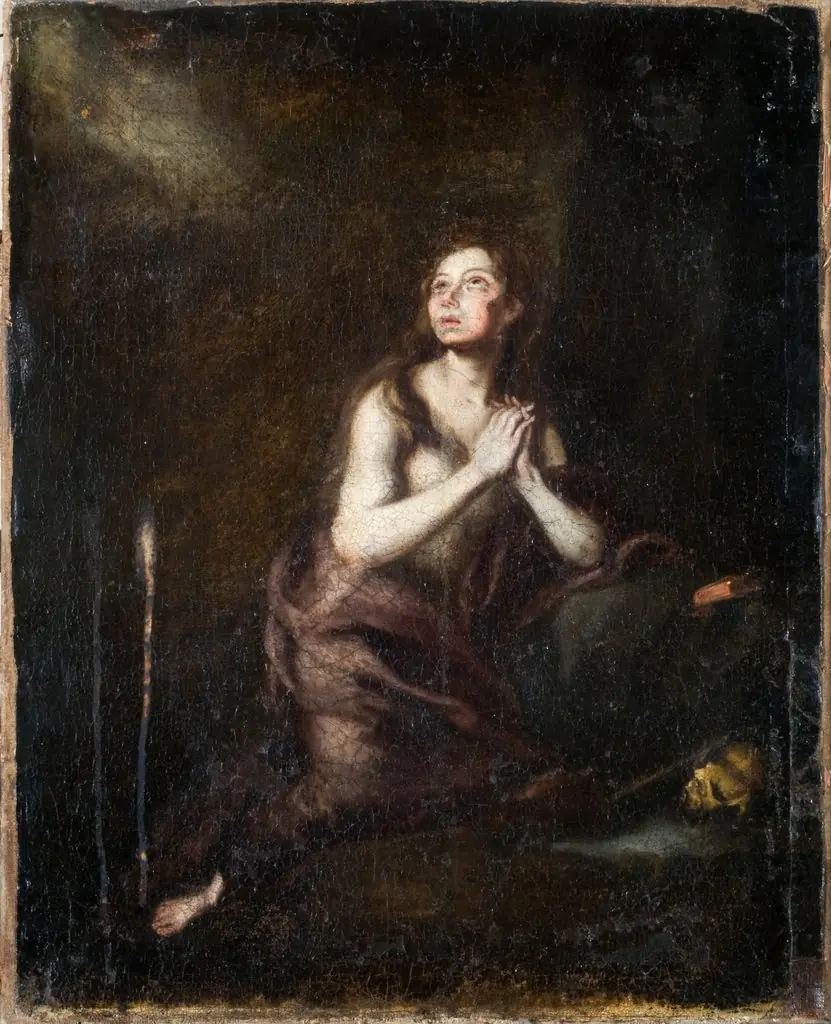
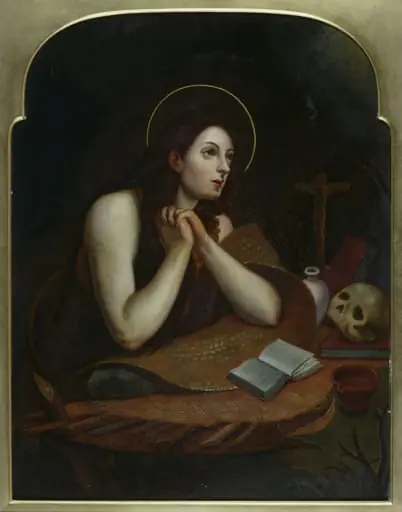
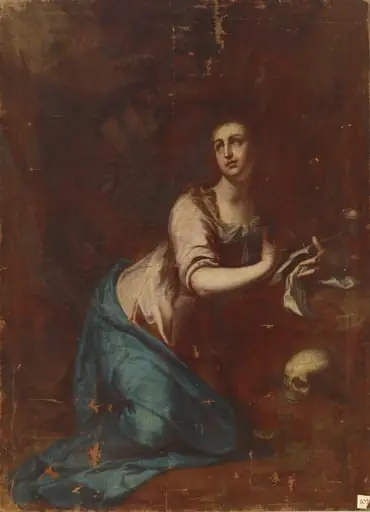
The work portrays a solitary female figure seated against a dark backdrop, her hands pressed together before her chest and her gaze directed downward.
The work portrays a solitary female figure seated against a dark backdrop, her hands pressed together before her chest and her gaze directed downward. She is dressed in a somber robe adorned with a subtle gold motif, while her dark hair is gathered away from her face. An open book rests on the surface before her, and a skull is positioned to her right, contributing to the painting’s contemplative atmosphere.
Subject & Meaning
The composition centers on themes of penitence and mortality. The woman's modest posture and the presence of the skull—a traditional memento mori—suggest reflection on sin, repentance, and the transience of life. The open book may allude to spiritual study or confession, reinforcing the devotional tone of the scene.
Technique & Style
The artist employs pronounced chiaroscuro, allowing a faint light source above the figure’s head to illuminate her form against the enveloping darkness. This contrast creates a three‑dimensional sense of volume and directs attention to the facial expression and symbolic objects. The muted palette and careful modeling of drapery emphasize the solemn mood.
History & Provenance
Details regarding the painting’s creation date, original patron, and subsequent ownership are not provided in the available description, limiting a full provenance narrative.
Context
The imagery aligns with a broader tradition of penitential representations common in European religious art, where female saints or penitent figures are depicted alongside symbols of mortality and contemplation. The use of chiaroscuro reflects the influence of Baroque techniques that sought dramatic illumination to convey spiritual intensity.
Artist & collection

Museum
National Museum of Fine Arts, Argentina
Continue through works from the same source collection.
 Domestic Scene
 Giacomo and Cardinal Marco, investing Andrea, Abbot of San Zeno, with his Benefice
 The Nymph of Fontainebleau
 Portrait of a Woman
 Madonna and Child with Saints in the Enclosed Garden
 Venus and Minerva
 Family Group of Four on Sofa
 Wall painting from Room H of the Villa of P. Fannius Synistor at Boscoreale