Artwork
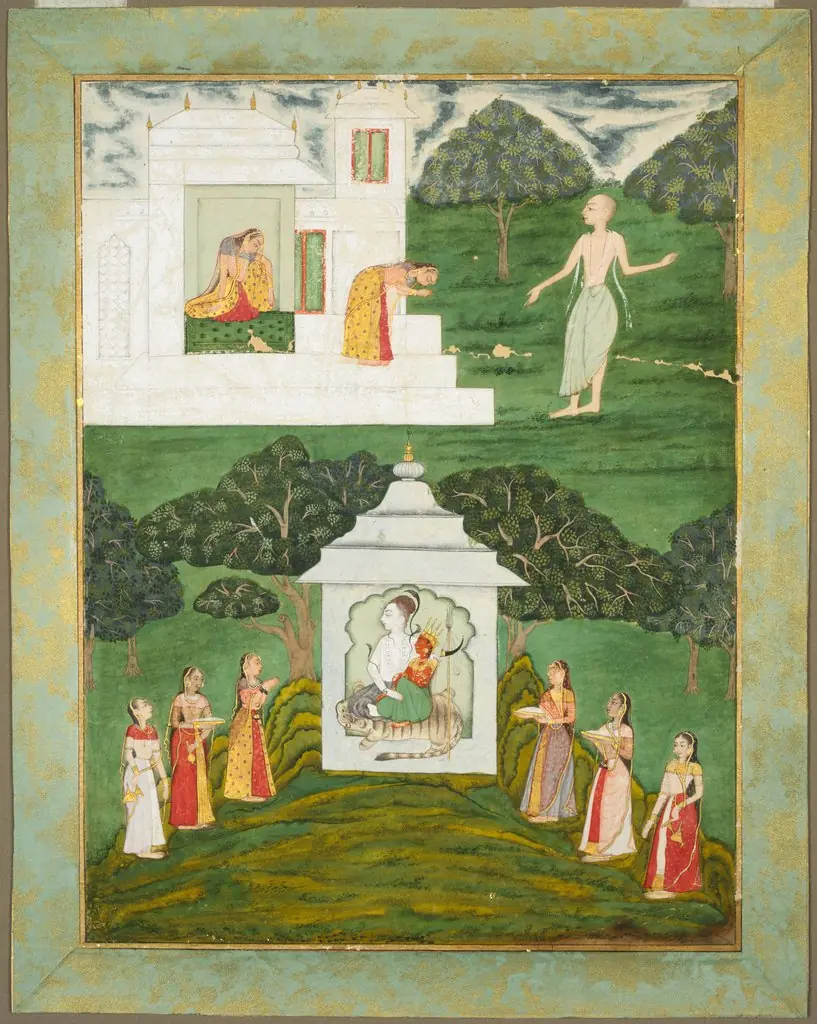
Worship of Stone Image of Shiva and Parvati within a Shrine
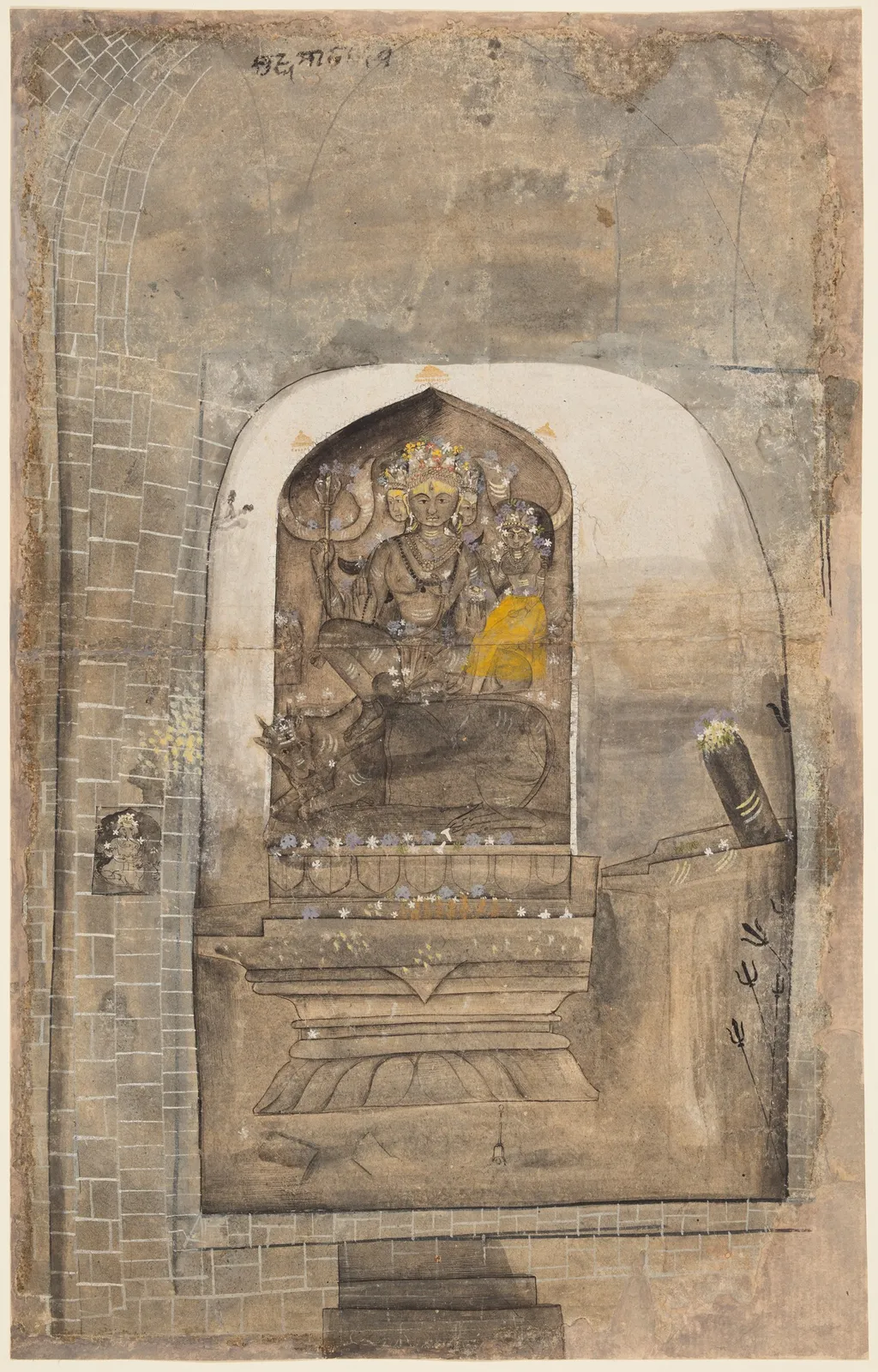
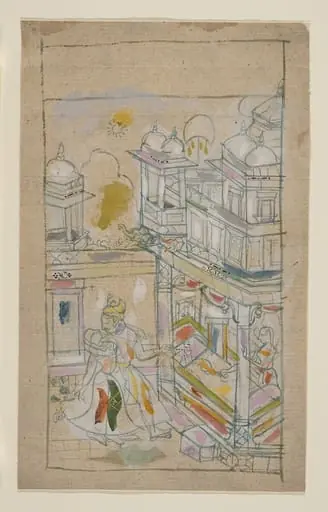
Worship of Stone Image of Shiva and Parvati within a Shrine is an unspecified painting. It dates from 1710 and is held in the collection of the Cleveland Museum of Art. The work depicts an intimate shrine interior in which two seated figures occupy a raised platform beneath a modest arch.
About this work
Overview
The work depicts an intimate shrine interior in which two seated figures occupy a raised platform beneath a modest arch. One figure clutches a yellow object, while the other is adorned with a floral garland. The composition includes peripheral details such as a vase of blossoms and a diminutive figure positioned against the left wall, all rendered in a muted, antiquated palette.
Subject & Meaning
The seated pair are identified as the Hindu deities Shiva and Parvati, suggested by their ritual attire, flower crowns, and solemn posture. Their placement within a shrine underscores themes of devotion and divine union, inviting contemplation of the sacred bond between the masculine and feminine principles in Hindu theology.
Technique & Style
Executed in a traditional Indian painting method, the piece employs flat areas of color and delicate line work to delineate forms. The background’s faded tones and subtle weathering convey an aged appearance, while the precise rendering of ornamental elements—such as the garland and the vase—reflects a careful, decorative aesthetic typical of devotional panel paintings.
History & Provenance
The painting’s provenance traces to a regional workshop that supplied religious imagery for temple contexts. Though the exact date remains uncertain, stylistic cues place it within the late medieval period of Indian art, when such shrine scenes were commonly produced for private worship or small shrine embellishment.
Context
Within the broader corpus of Hindu visual culture, depictions of Shiva and Parvati together serve both liturgical and instructional functions, reinforcing mythological narratives about their partnership. The inclusion of ancillary figures and objects mirrors the ritual environment of a temple sanctuary, situating the work within everyday devotional practice.
Artist & collection