Artwork
Ascetic Princess with Snakes in a Wilderness: Asavari Ragini, from a Ragamala
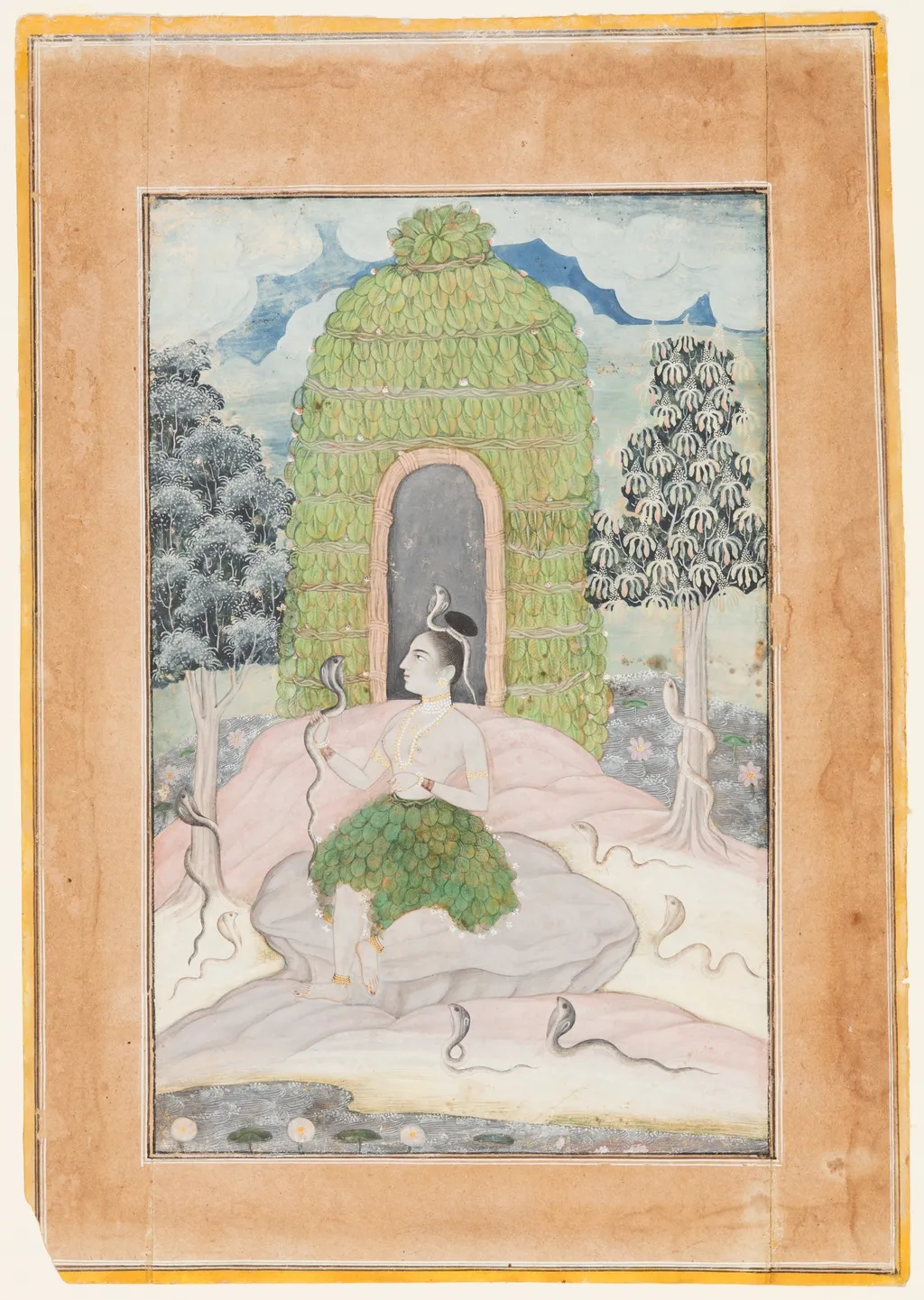
Ascetic Princess with Snakes in a Wilderness: Asavari Ragini, from a Ragamala is an unspecified painting. It dates from 1650 and is held in the collection of the Cleveland Museum of Art.
About this work
Overview
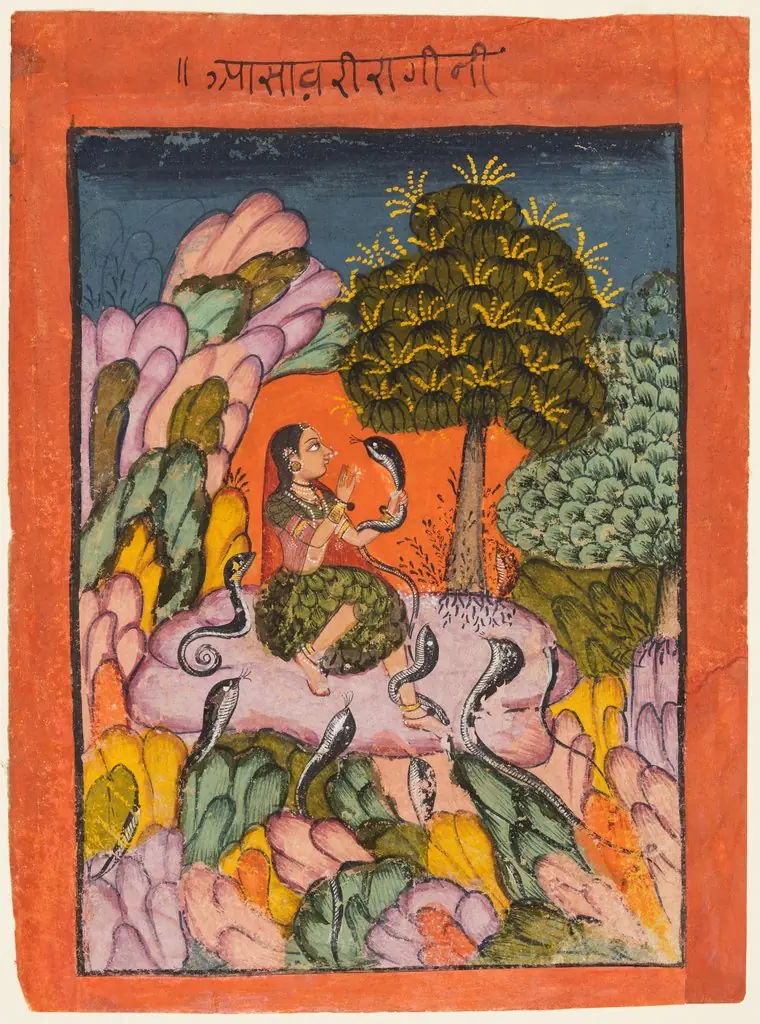
The work titled *Ascetic Princess with Snakes in a Wilderness: Asavari Ragini, from a Ragamala* is a painted composition in the collection of the Cleveland Museum of Art. It depicts a solitary female figure seated on a rock within a forested setting, accompanied by several serpents and a modest structure with a green roof. The sky is rendered in a pale blue, dotted with scattered clouds.
Subject & Meaning
The central figure is identified as Asavari Ragini, a character drawn from the Indian ragamala tradition, which pairs musical modes with visual narratives.
The central figure is identified as Asavari Ragini, a character drawn from the Indian ragamala tradition, which pairs musical modes with visual narratives. She is portrayed in a meditative pose, her calm expression suggesting spiritual discipline. The surrounding snakes, one held in her right hand and another coiled around her head, symbolize both the ascetic’s mastery over danger and the transformative power of devotion.
Technique & Style
Executed in a refined painting technique, the artist employs a limited palette of greens, blues, and earth tones to create a harmonious atmosphere. Delicate brushwork defines the foliage and the sinuous forms of the snakes, while the soft, diffused background conveys a sense of distance. The composition balances figure and environment, a hallmark of ragamala illustrations that blend portraiture with landscape.
History & Provenance
The painting belongs to a series illustrating ragamala themes, a genre that flourished in Indian art from the 16th to 19th centuries. Though the exact date and creator are not recorded, the work reflects the stylistic conventions of that period. It entered the Cleveland Museum of Art’s holdings through acquisition, becoming part of the museum’s representation of South Asian visual culture.
Context
Ragamala paintings serve as visual counterparts to Indian classical music, each panel embodying a specific raga’s emotional character. In this piece, the serene yet potent presence of the snakes aligns with the raga’s contemplative mood, while the wilderness setting underscores the theme of renunciation. The inclusion of a modest building hints at a hermitage, situating the ascetic princess within a broader narrative of spiritual retreat.
Artist & collection