Artwork
Disputed portrait of thirteen-year-old Beethoven
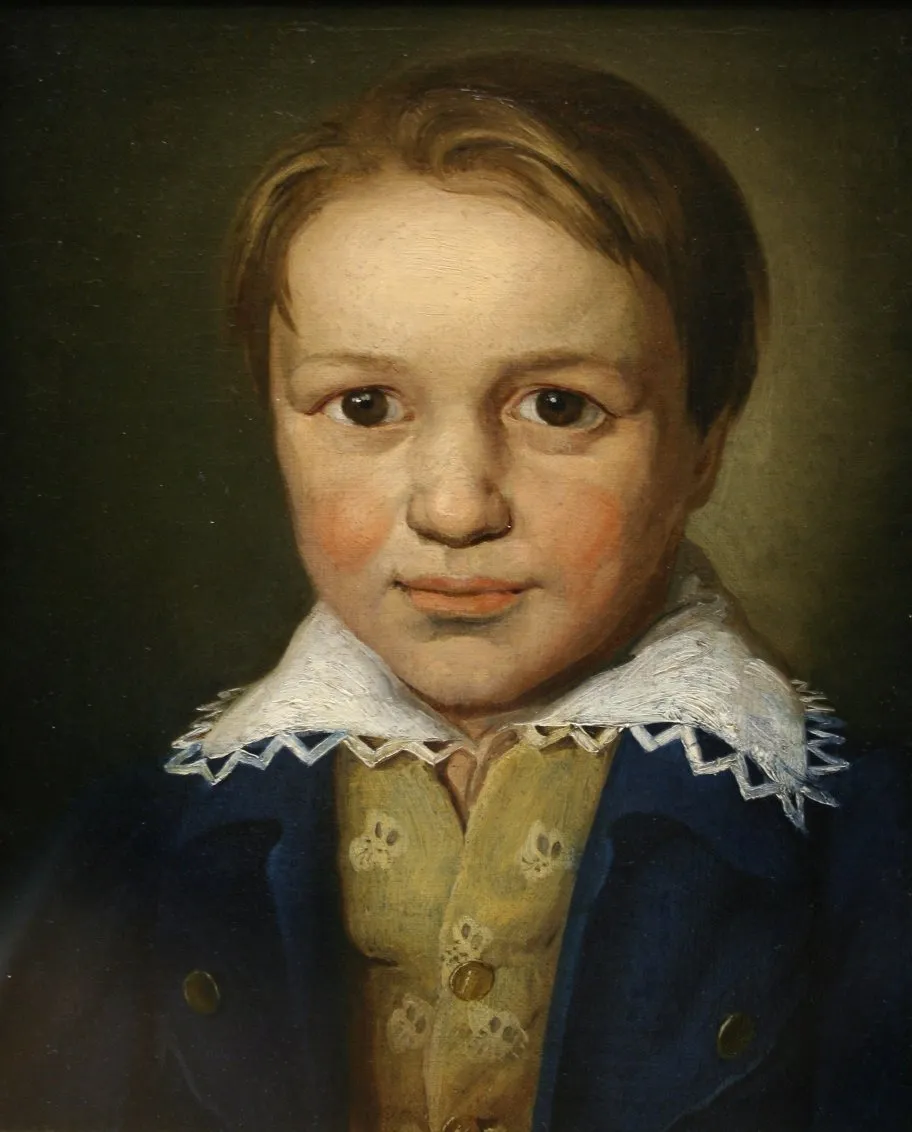
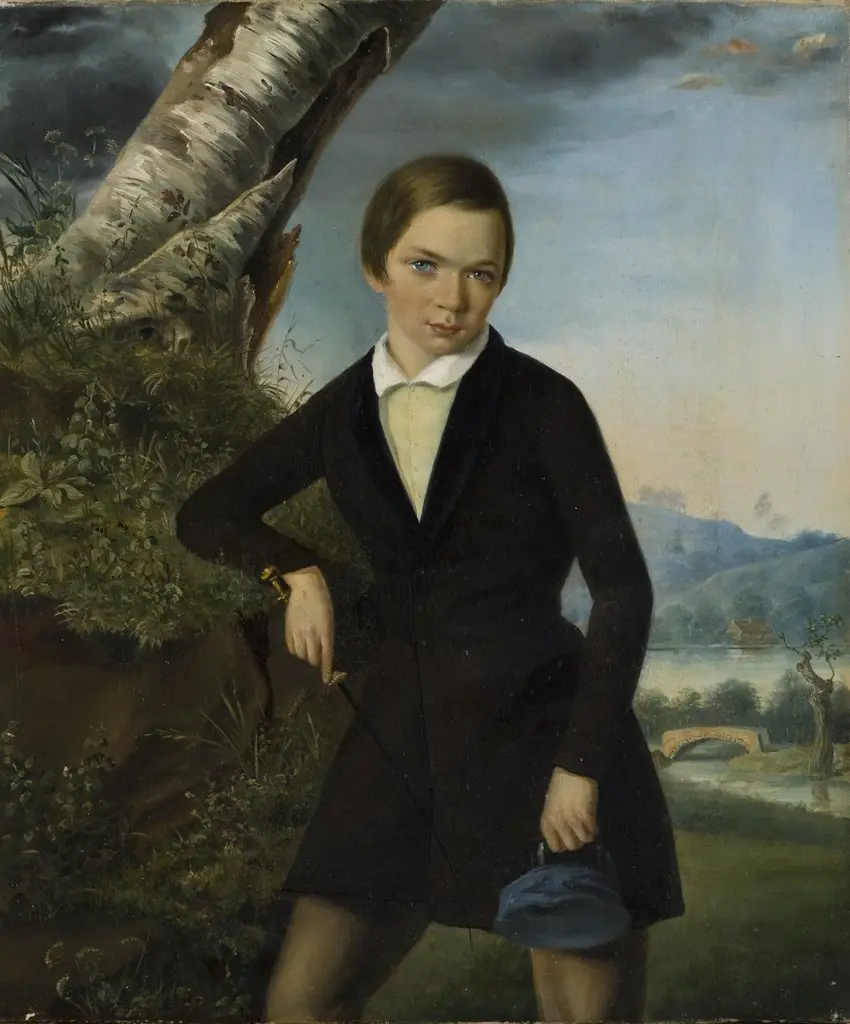
Disputed portrait of thirteen-year-old Beethoven is an oil painting by the Rococo painting artist Unknown. It dates from 1792 and is held in the collection of the Kunsthistorisches Museum. This oil painting depicts a young boy believed to be thirteen-year-old Ludwig van Beethoven.
About this work
Overview
The composition emphasizes the sitter’s presence through controlled lighting and restrained color, focusing attention on his poised demeanor and direct gaze.
This oil painting depicts a young boy believed to be thirteen-year-old Ludwig van Beethoven. Rendered with careful attention to facial detail and posture, the work presents the subject in a formal, frontal pose against a dark, unadorned background. The composition emphasizes the sitter’s presence through controlled lighting and restrained color, focusing attention on his poised demeanor and direct gaze.
Subject & Meaning
The subject, identified as a youthful Beethoven, is portrayed without theatricality, suggesting an early assertion of personal dignity. His neutral expression and steady gaze convey quiet self-possession rather than youthful exuberance. The portrait does not reference music or occupation, instead presenting him as a figure of emerging individuality, consistent with bourgeois portraiture of the late 18th century.
Technique & Style
The artist employs chiaroscuro to model the boy’s face and clothing, enhancing three-dimensionality through subtle gradations of light and shadow. The blue jacket and yellow shirt contrast softly against the dark background, while the white lace collar draws focus to the neck and jawline. Brushwork is precise but not ornate, prioritizing clarity of form over decorative flourish.
History & Provenance
The painting’s attribution to Beethoven remains unconfirmed by documentary evidence, though stylistic and contextual clues support the identification. It entered the collection of the Kunsthistorisches Museum in Vienna in the 19th century, where it has been displayed alongside other portraits from the Habsburg era. Its origins prior to museum acquisition are undocumented.
Context
Created during Beethoven’s early years in Bonn or Vienna, the portrait reflects the conventions of middle-class portraiture in late Enlightenment Europe. Similar works from the period emphasize composure and moral seriousness, often commissioned to mark social ascent or familial pride. The absence of musical instruments or symbols aligns with portraits of non-noble youth at the time.
Legacy
Though not definitively authenticated, the painting endures as a visual reference for Beethoven’s youth in popular and scholarly discourse. Its restrained aesthetic contrasts with later romanticized depictions, offering a grounded counterpoint to mythologized images of the composer. It remains a key object in discussions of early portraiture and the representation of musical prodigies.
Artist & collection

 Domestic Scene
 Giacomo and Cardinal Marco, investing Andrea, Abbot of San Zeno, with his Benefice
 The Nymph of Fontainebleau
 Portrait of a Woman
 Madonna and Child with Saints in the Enclosed Garden
 Venus and Minerva
 Family Group of Four on Sofa
 Wall painting from Room H of the Villa of P. Fannius Synistor at Boscoreale
 Copilul
 Everard Benjamin
 Childhood portrait of Jan Wołowicz (1778–?)
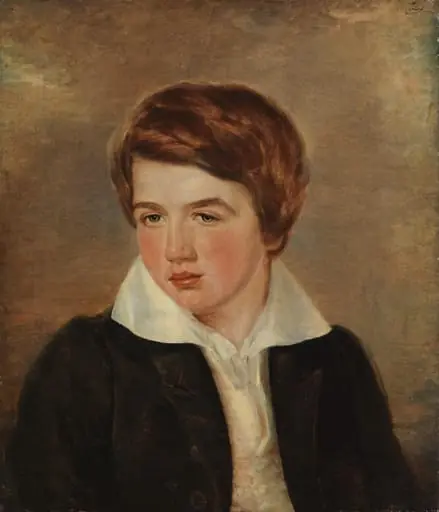 Gustaf Fredrik Wrede
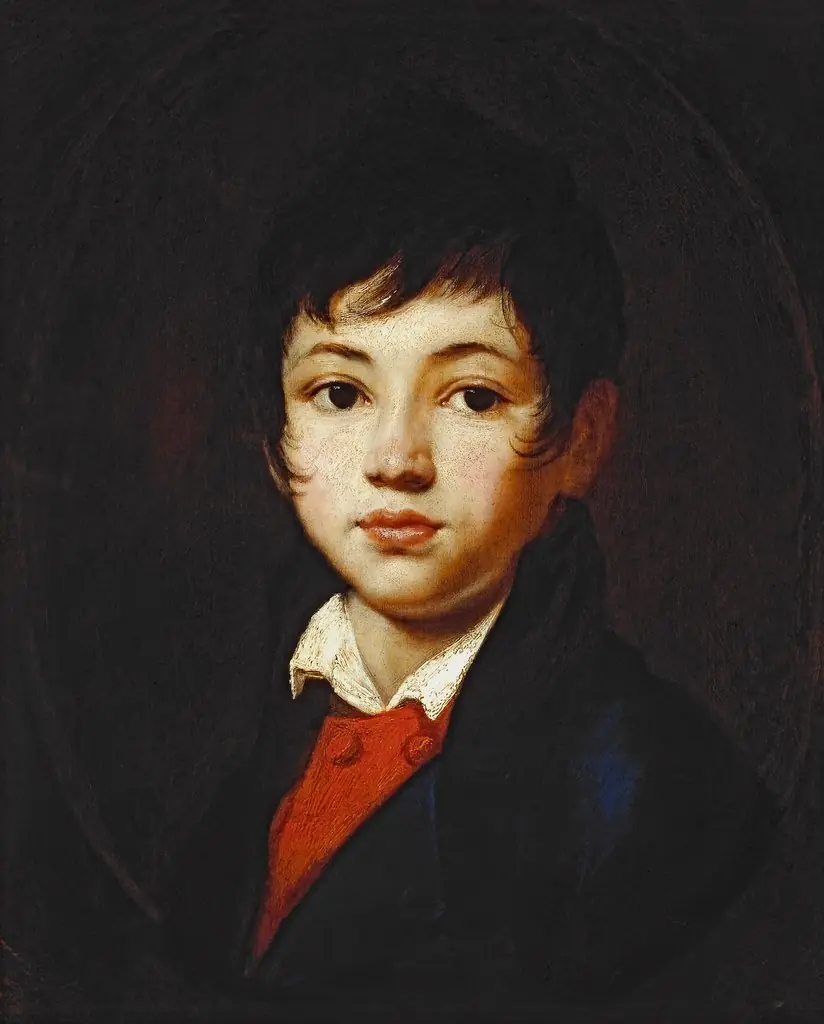 Portrait of A.A.Chelishchev
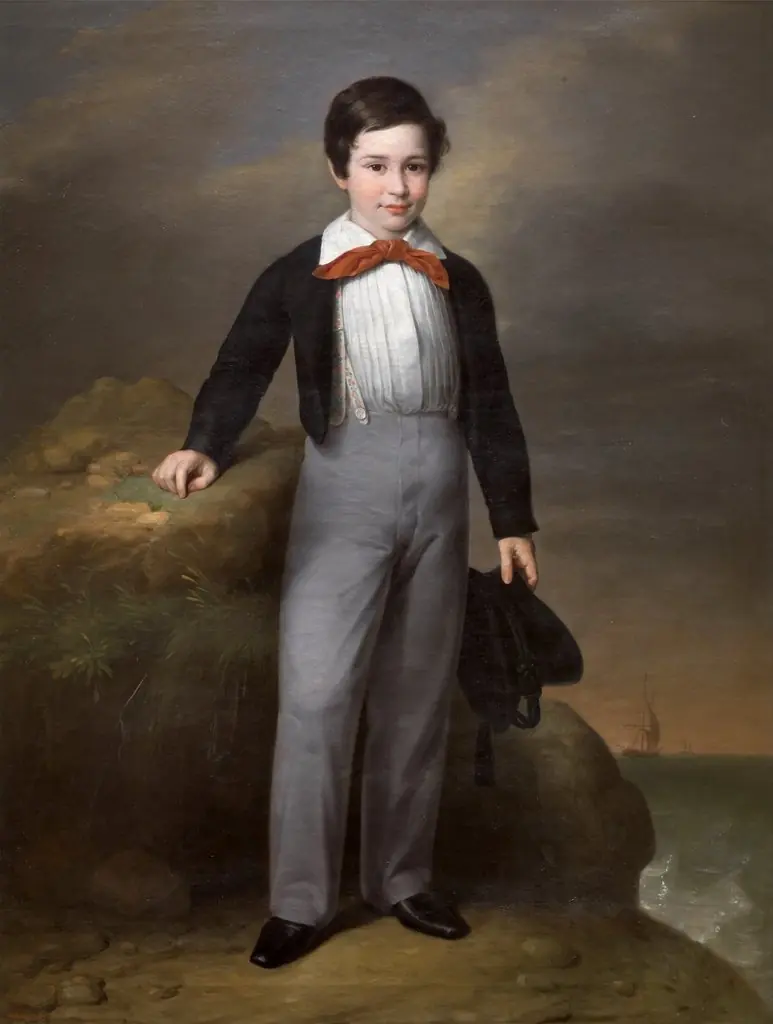 Manuel Flores Calderón
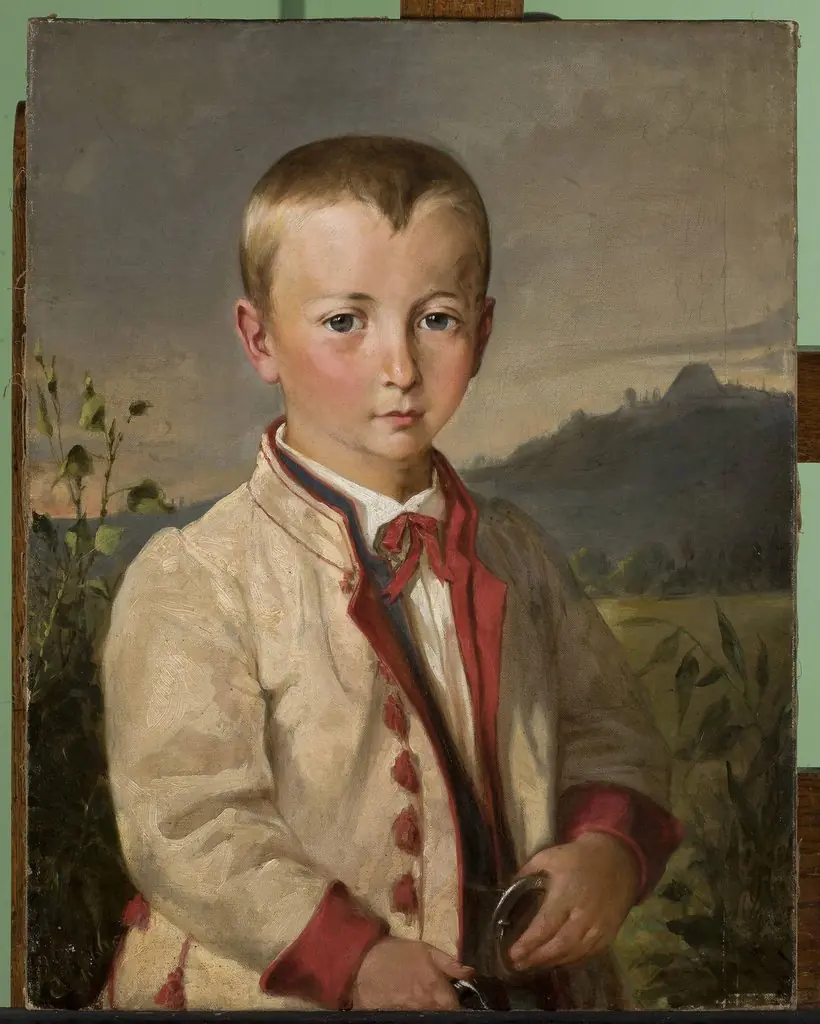 Boy against landscape
 Carl Bror Munck af Fulkila (1836-1905)
 A Young Boy (one of pair of portraits)
 Bust portrait of a boy
 Malvina Mortier de Trévise
 Portrait of Alexander Sokolovsky in Childhood