Artwork
William Henry Eaves
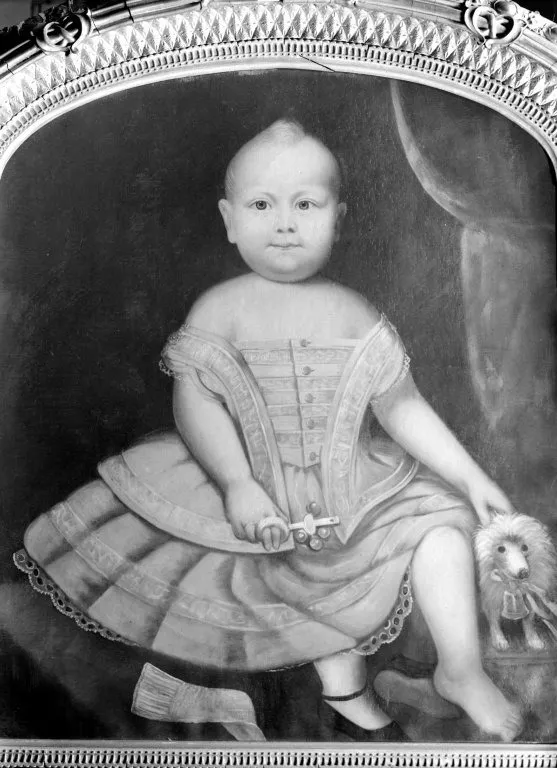
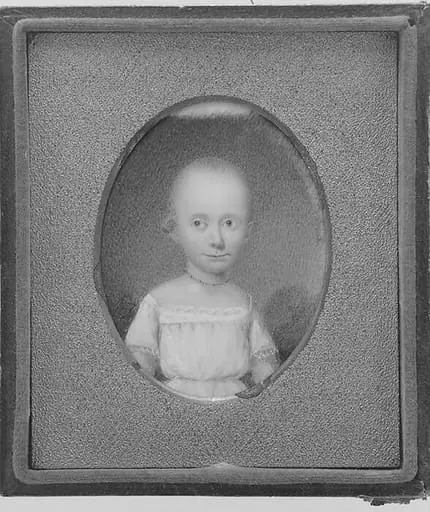
William Henry Eaves is an oil painting by the Realist artist Unknown. It dates from 1856 and is held in the collection of the Brooklyn Museum.
About this work
The child's hair is styled in a short, neat fashion, and they are seated with their legs crossed, holding a small toy in their right hand.
This portrait depicts a young child, possibly an infant, dressed in a light-colored dress with a ruffled skirt and a matching corset. The child's hair is styled in a short, neat fashion, and they are seated with their legs crossed, holding a small toy in their right hand. A small dog sits beside them, adding a sense of companionship to the scene. The painting is rendered in oil paint, with a focus on capturing the soft, gentle features of the child's face. The background is dark and muted, which helps to draw attention to the child and their surroundings. The Brooklyn Museum holds this charming portrait, which offers a glimpse into the life of a young child in the mid-19th century.
Overview
This oil painting by William Henry Eaves portrays a young child, likely an infant, seated calmly with legs crossed and holding a small toy. The figure is dressed in a light, ruffled dress with a fitted corset, typical of early Victorian children's wear. A small dog rests beside them, reinforcing a quiet domestic atmosphere. The dark, unobtrusive background isolates the subject, emphasizing their delicate presence and the intimacy of the moment.
Subject & Meaning
The child, rendered with gentle precision, reflects 19th-century ideals of childhood innocence and purity. The inclusion of a toy and a pet suggests a nurturing home environment, common in middle- and upper-class portraiture of the era. Rather than formal grandeur, the scene conveys quiet companionship and tenderness, aligning with evolving cultural views that valued childhood as a distinct, protected stage of life.
Technique & Style
Eaves employs soft brushwork to capture the child’s delicate facial features and the texture of fabric, particularly the ruffled skirt and corset. The muted palette and dark background enhance the figure’s luminosity, drawing focus to the subject’s expression and posture. The dog is rendered with subtle detail, contributing to the scene’s naturalism without distracting from the central figure.
History & Provenance
The painting is held by the Brooklyn Museum, which acquired it as part of its 19th-century American art collection. While little is documented about the child’s identity or the commission’s circumstances, the work’s preservation suggests it was valued by its original owners. Its survival offers rare insight into private domestic life during the mid-1800s.
Context
In mid-19th-century America, portraits of children became increasingly common among the middle class, reflecting broader social shifts toward sentimentalizing childhood. Unlike earlier formal depictions, works like this emphasized emotional connection and domesticity. Eaves’s painting aligns with this trend, capturing a moment of quiet intimacy rather than aristocratic display.
Legacy
Though Eaves is not widely known today, this portrait endures as a quiet testament to everyday life in Victorian America. It contributes to the historical record of how children were visually represented—not as miniature adults, but as individuals deserving of tenderness and attention. The work remains a subtle but significant artifact of shifting cultural values around family and childhood.
Artist & collection

 Domestic Scene
 Giacomo and Cardinal Marco, investing Andrea, Abbot of San Zeno, with his Benefice
 The Nymph of Fontainebleau
 Portrait of a Woman
 Madonna and Child with Saints in the Enclosed Garden
 Venus and Minerva
 Family Group of Four on Sofa
 Wall painting from Room H of the Villa of P. Fannius Synistor at Boscoreale
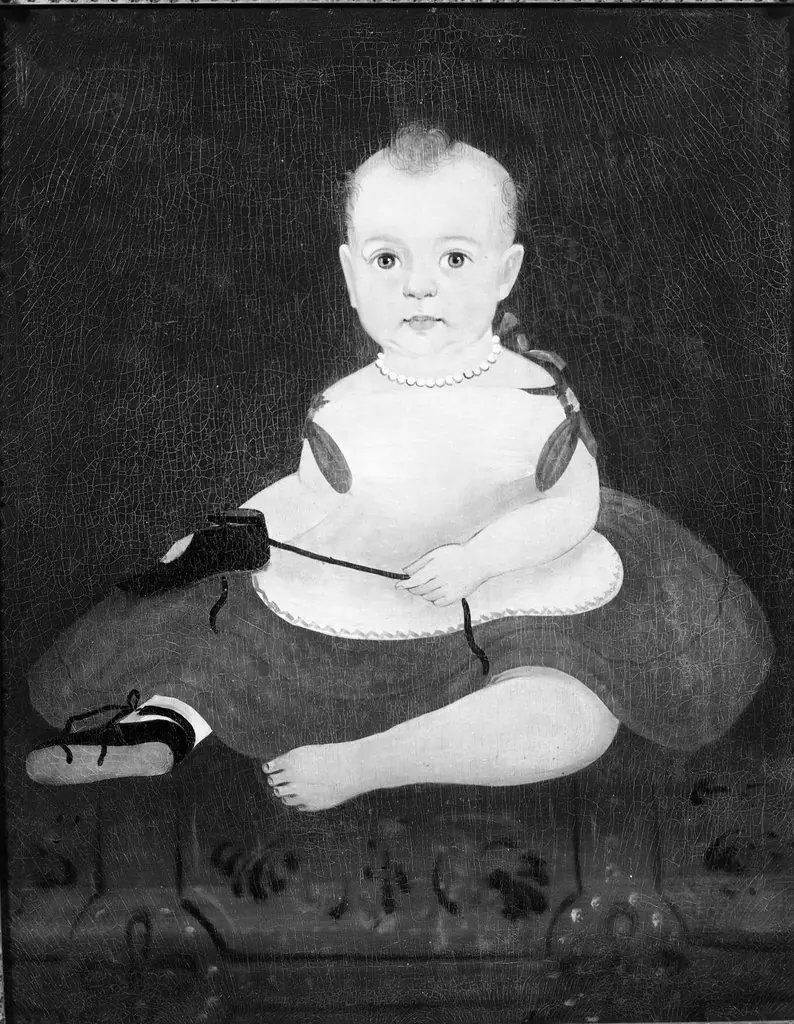 Portrait of a Baby
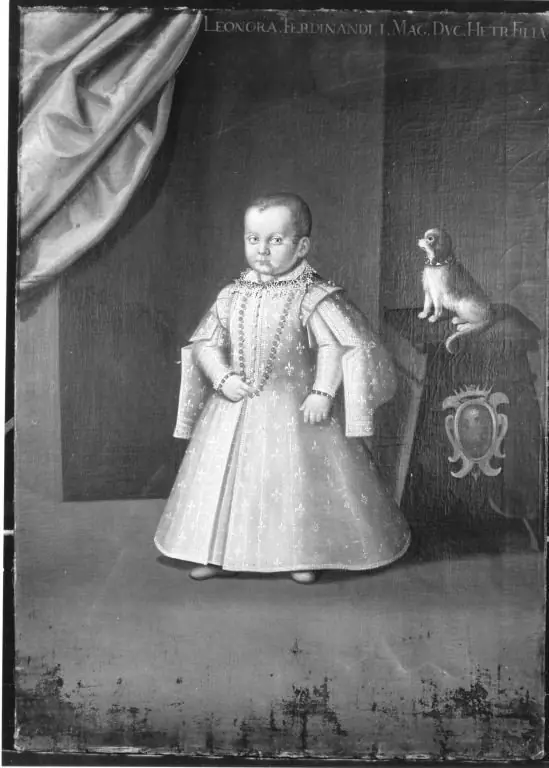 Kinderbildnis der Elionora von Toskana, Tochter des Großherzogs Ferdinand I.
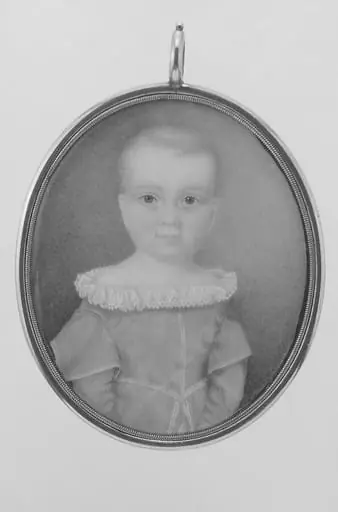 Portrait of a Boy
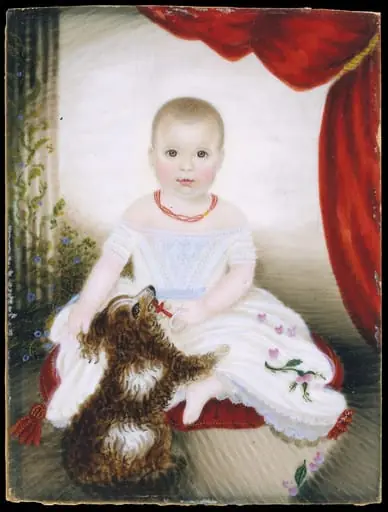 Baby with Rattle and Dog
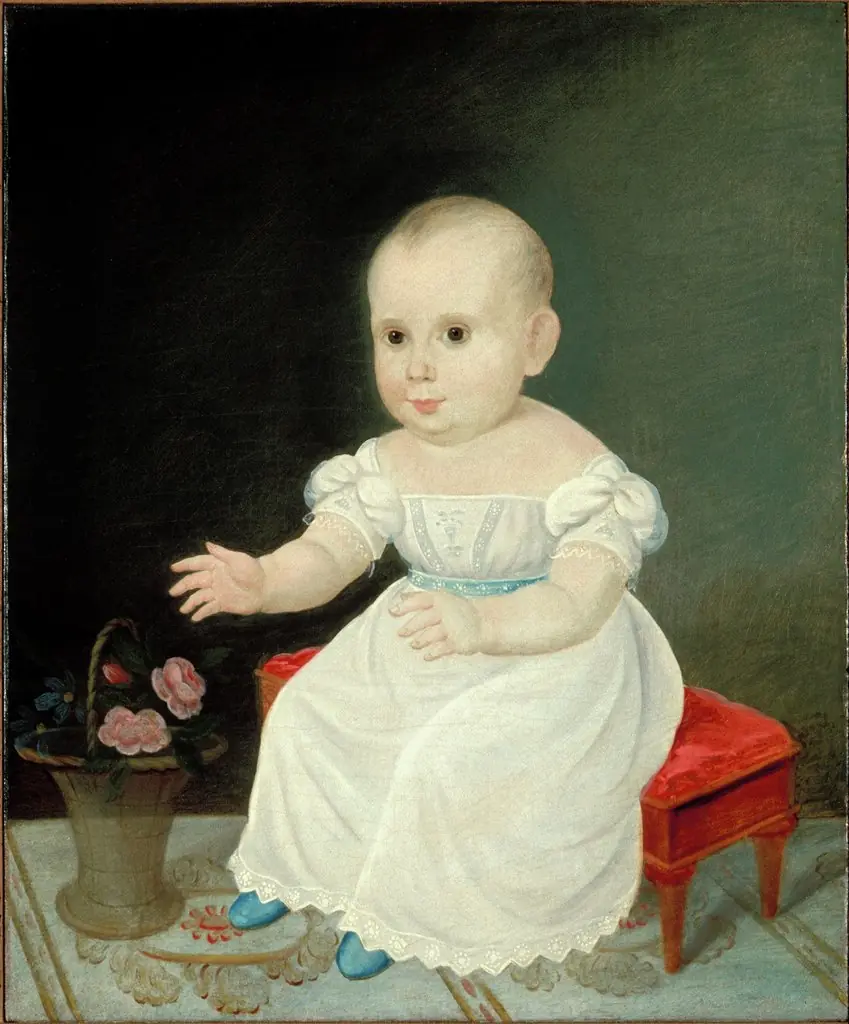 Baby
Baby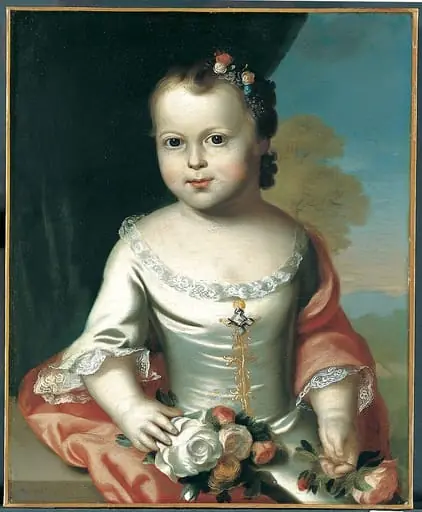 Elizabeth Greenleaf
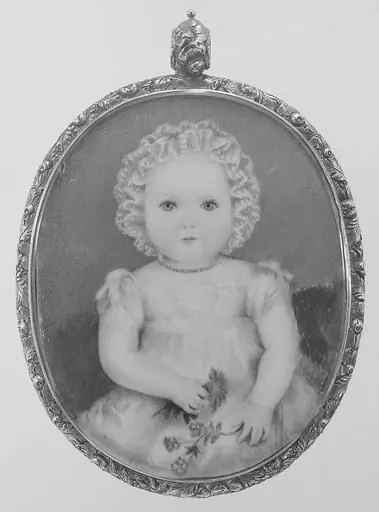 Portrait of a Baby
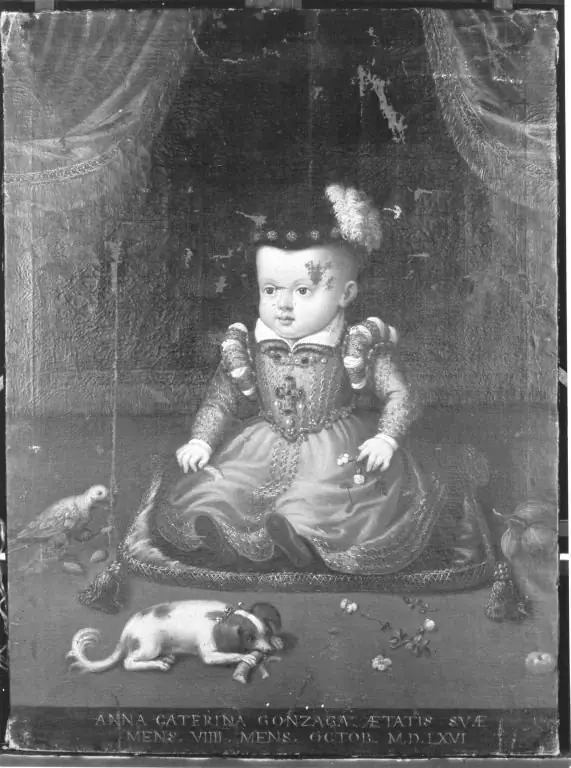 Kinderbildnis der Anna Katharina Gonzaga
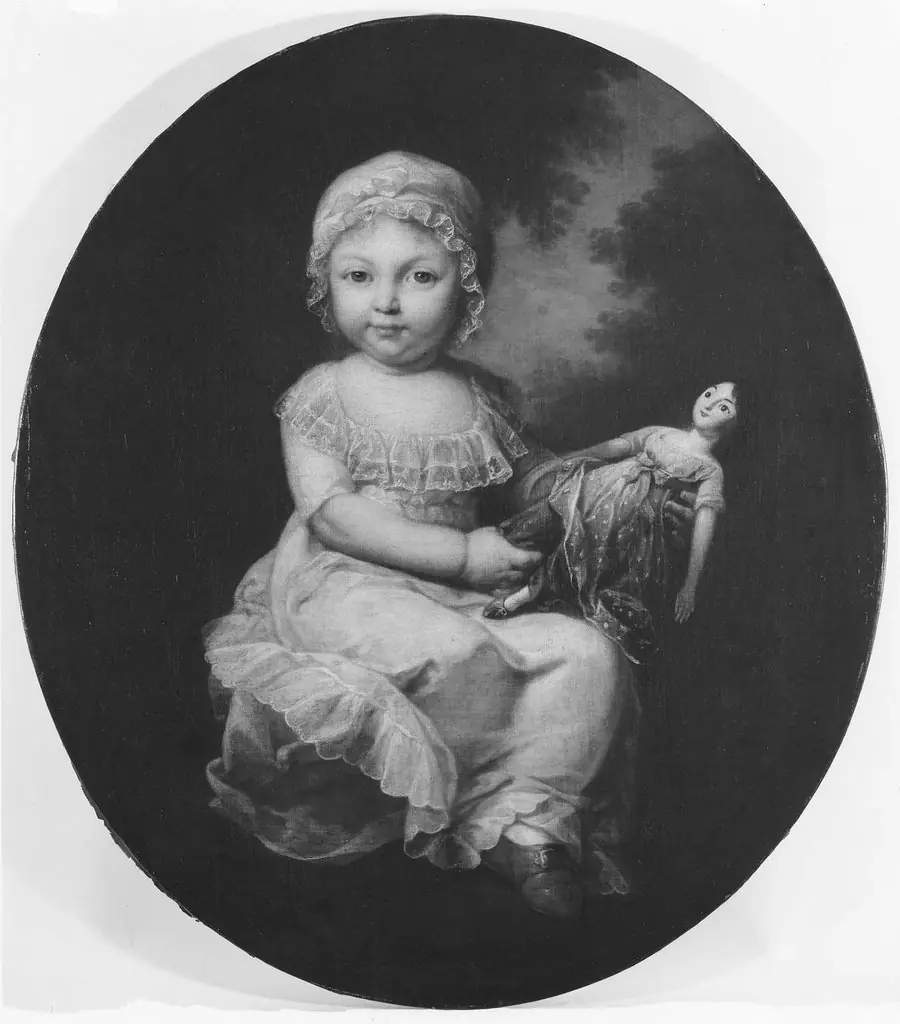 Portrait of a Child Holding a Doll
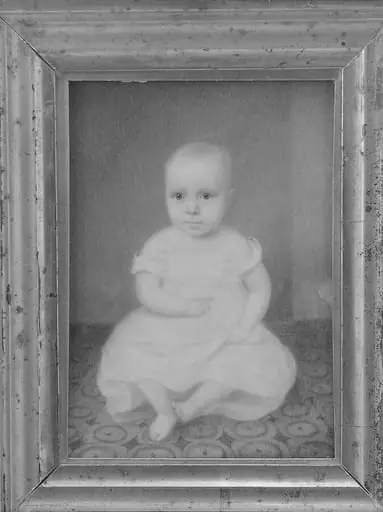 Portrait of a Baby
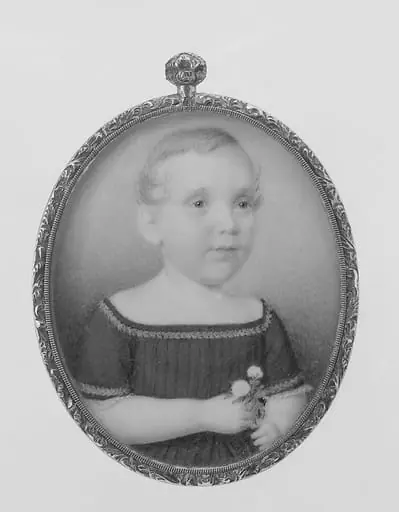 Portrait of a Boy
 Portrait of a Child