Artwork
Portrait of a Baby
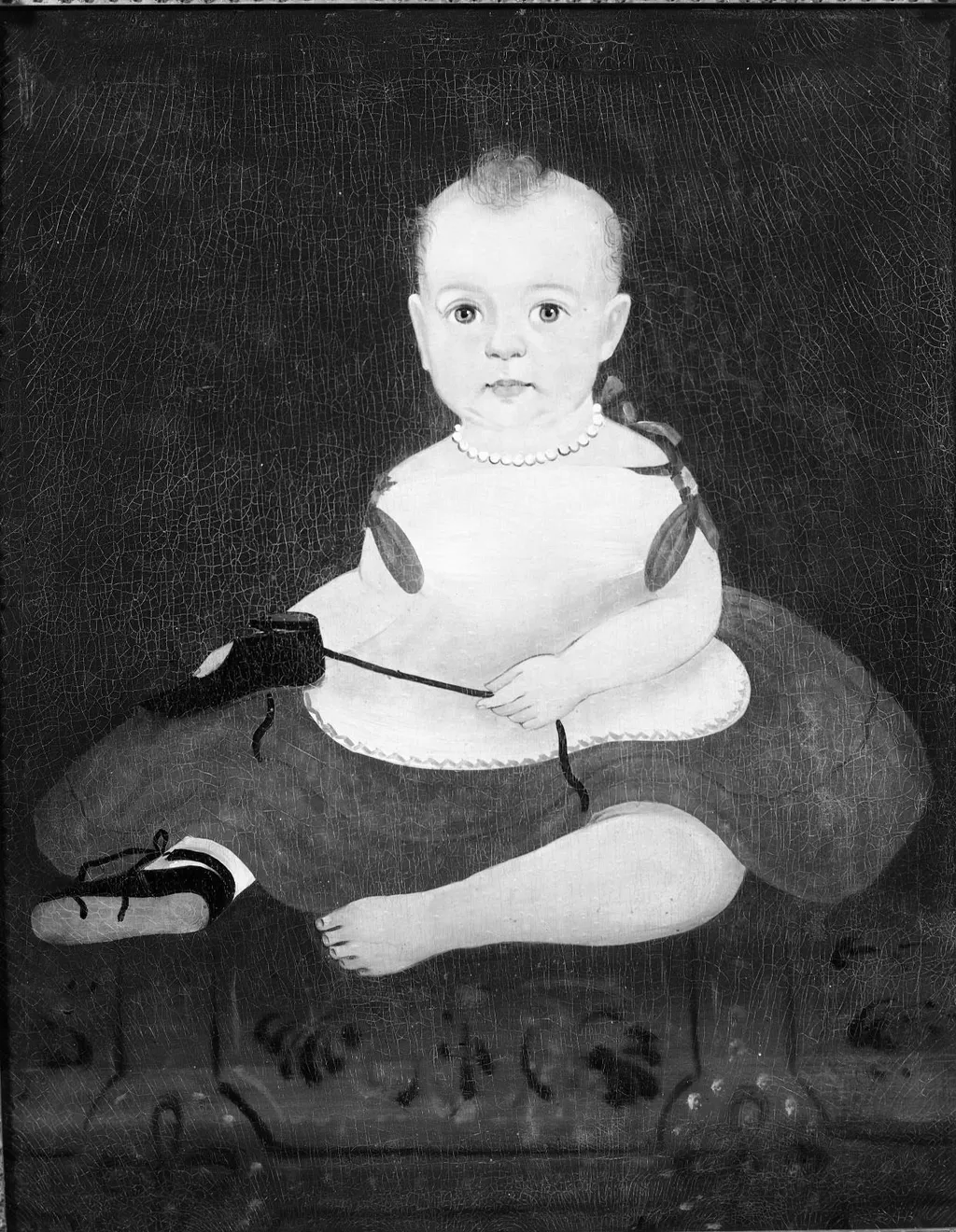
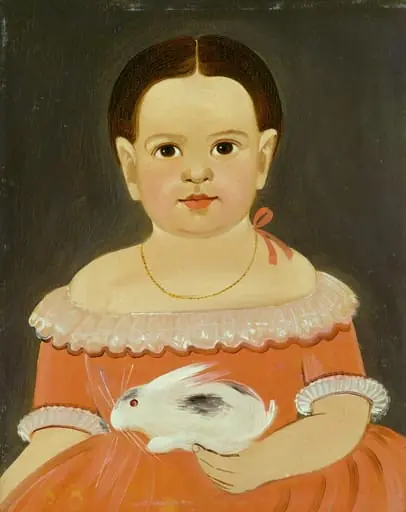
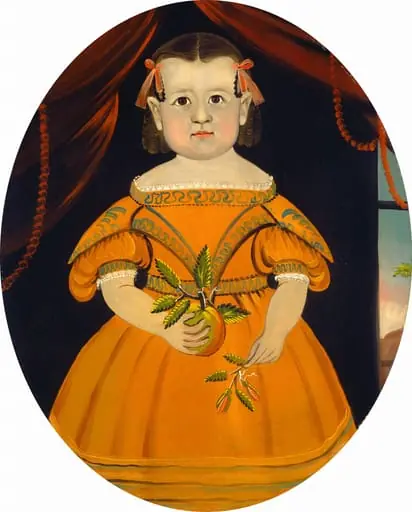
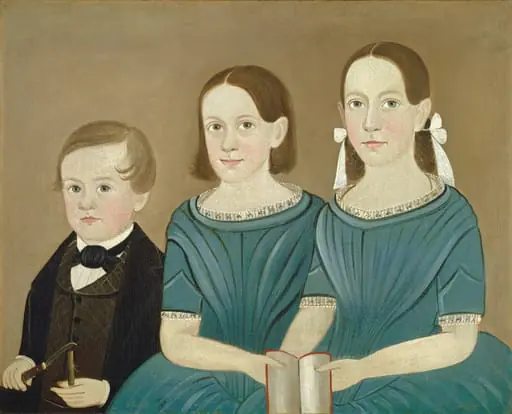
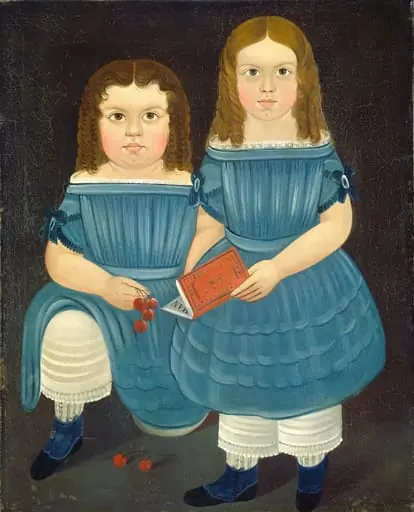
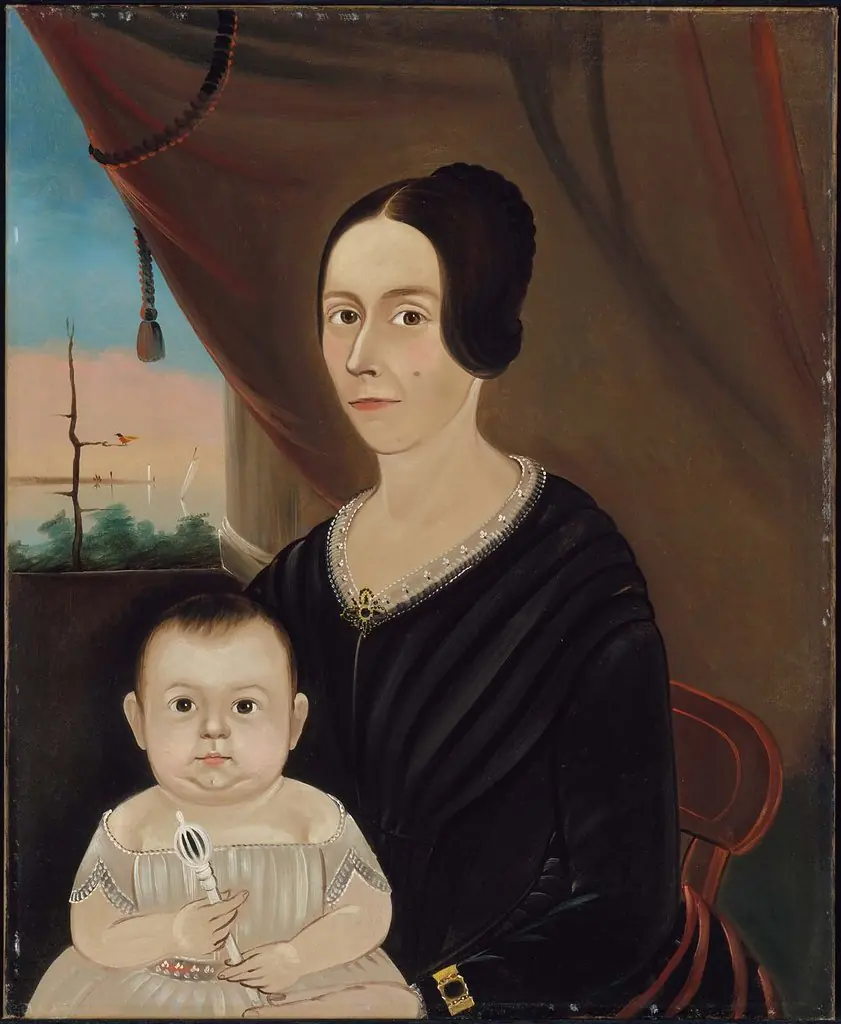
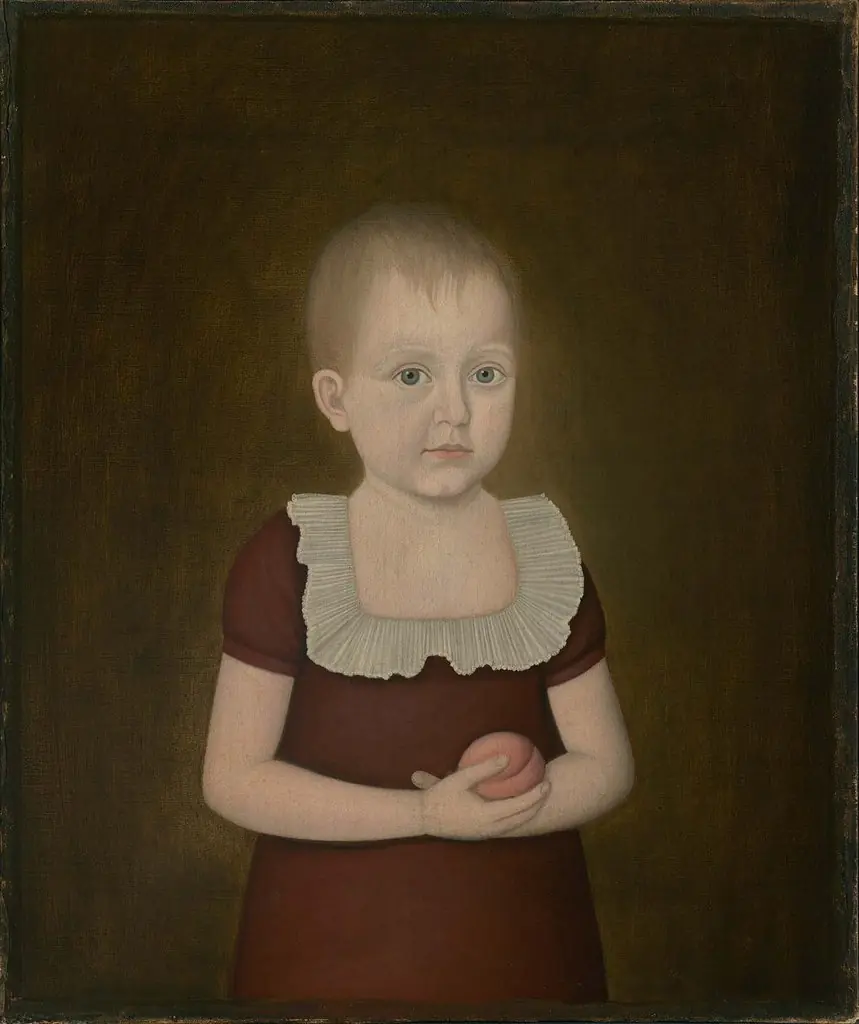
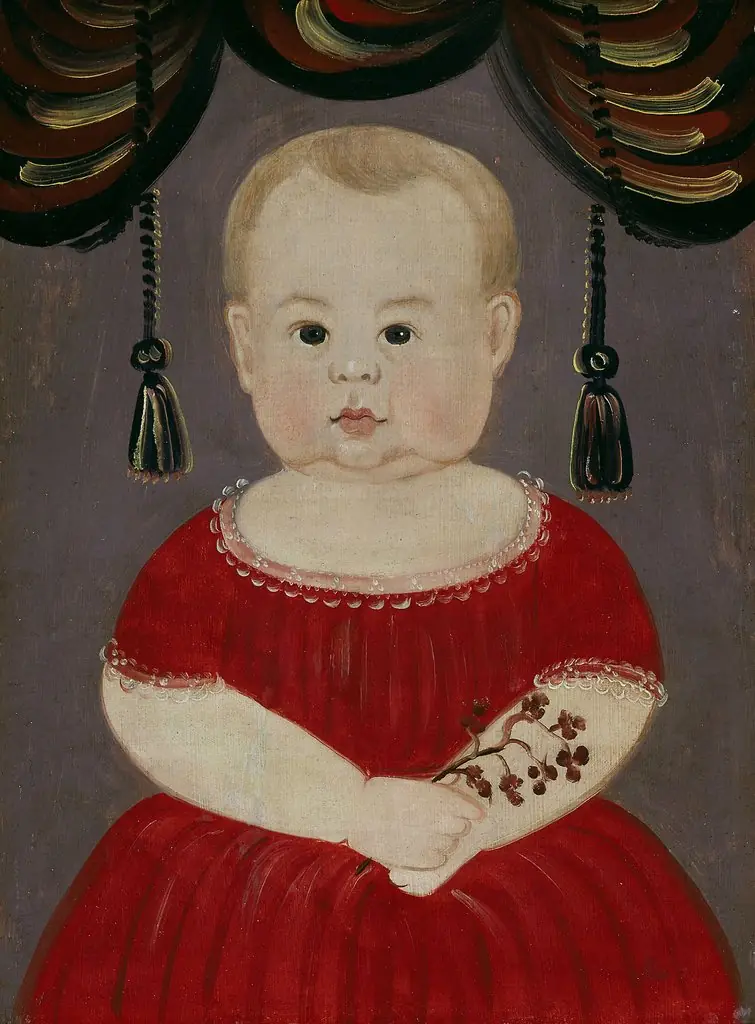
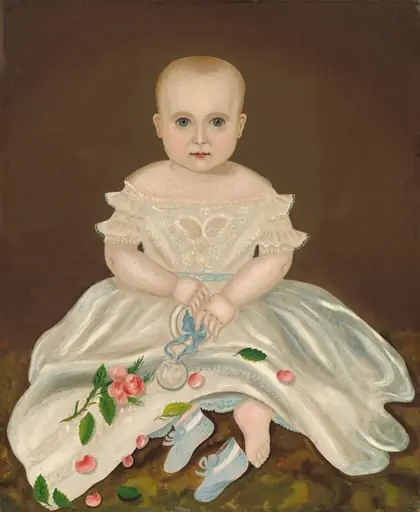
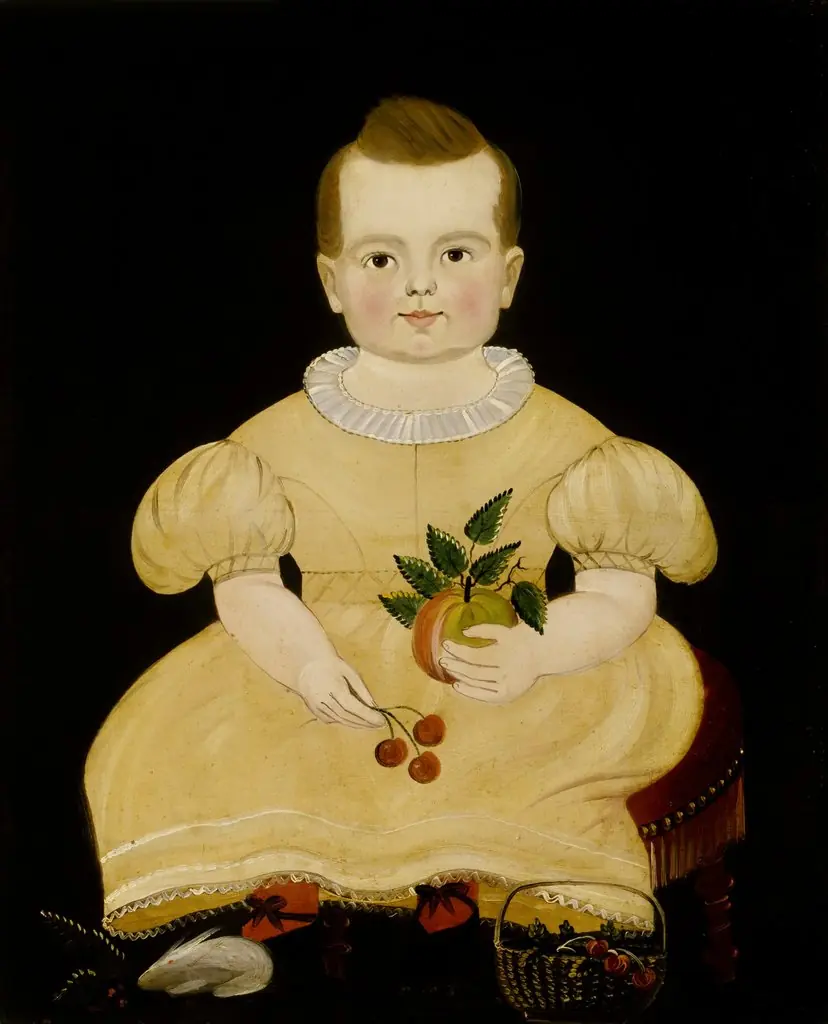
Portrait of a Baby is an oil painting by the American Folk Art artist Sturtevant J. Hamblin. It dates from 1845 and is held in the collection of the Museum of Fine Arts Boston. Painted in 1845 by Sturtevant J.
About this work
Overview
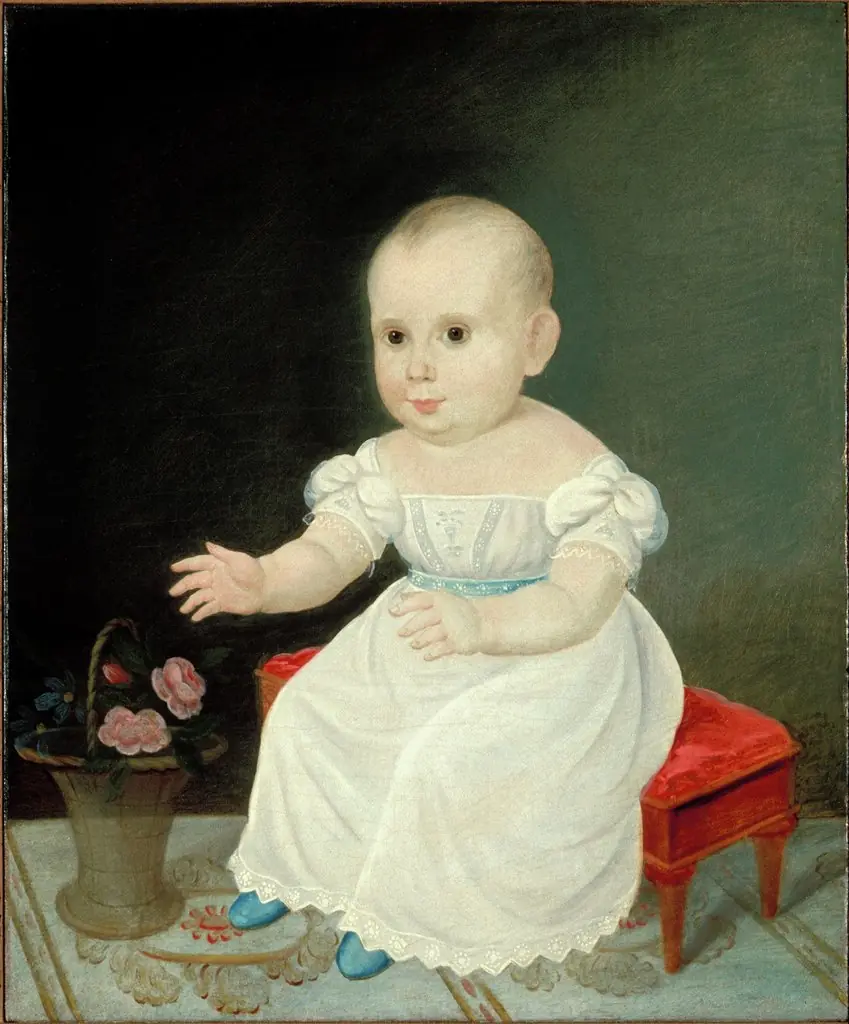
Painted in 1845 by Sturtevant J. Hamblin, this oil portrait depicts an infant seated in a simple wooden chair. The work is part of the Museum of Fine Arts, Boston’s collection. Its modest scale and intimate focus reflect a 19th-century American interest in domestic portraiture, particularly the depiction of children as subjects worthy of careful observation and artistic rendering.
Subject & Meaning
The child, dressed in a white dress with puffed sleeves and a black ribbon at the neck, is rendered with quiet solemnity.
The child, dressed in a white dress with puffed sleeves and a black ribbon at the neck, is rendered with quiet solemnity. Barefoot one moment, shod the next, the pose suggests a fleeting, unposed moment rather than a formal commission. The direct gaze and stillness convey a sense of presence, perhaps hinting at the cultural weight placed on childhood as a stage of moral and physical vulnerability.
Technique & Style
Hamblin applied oil paint with varied thickness—dense, textured strokes for the fabric and chair, smoother layers for the child’s skin. The contrast in handling draws attention to the infant’s delicate form. Subtle unevenness in the skin tones suggests the artist’s direct, unpolished approach, while the dark, undefined background isolates the figure, enhancing its emotional gravity.
History & Provenance
The painting entered the Museum of Fine Arts, Boston’s collection in the late 19th or early 20th century, though its earlier ownership remains undocumented. It was likely commissioned by a middle-class family in New England, where Hamblin was active. Its survival and preservation reflect a growing institutional interest in vernacular American art during the museum’s formative years.
Context
In mid-19th-century America, portraits of children were increasingly common among families seeking to memorialize early life. Artists like Hamblin, working outside elite academic circles, catered to local patrons with accessible, emotionally resonant imagery. The absence of elaborate settings or symbolic props aligns this work with a broader trend toward naturalism in domestic portraiture.
Legacy
Though not widely exhibited or studied, the portrait stands as a quiet example of regional American painting that prioritized sincerity over grandeur. It contributes to a broader understanding of how ordinary lives were documented in art during a period when formal portraiture was still evolving beyond aristocratic traditions.
Own this work as a print
Artist & collection