Artwork
Portrait of Cosimo II de' Medici, Grand Duke of Tuscany
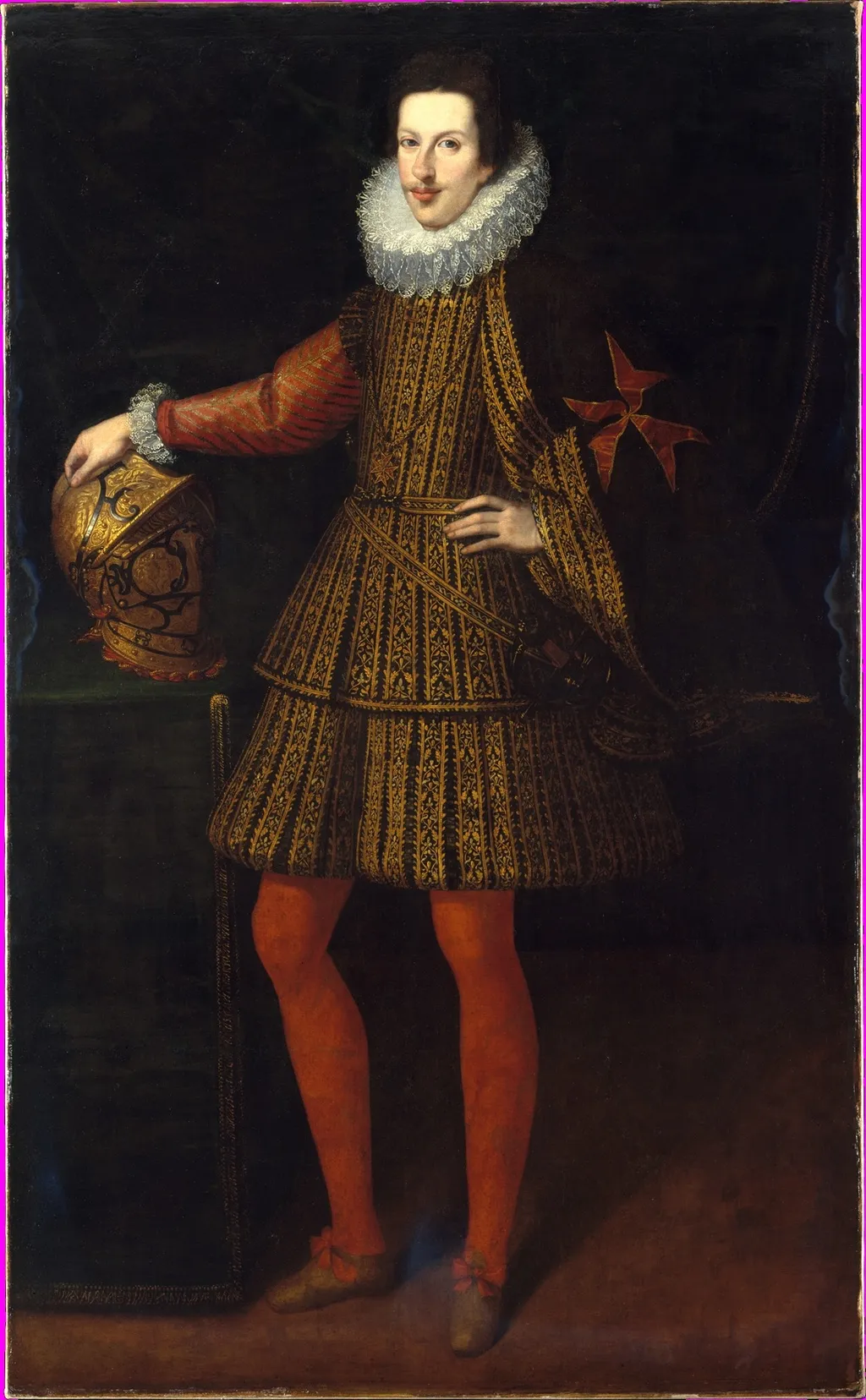
Portrait of Cosimo II de' Medici, Grand Duke of Tuscany is an unspecified painting. It dates from 1639 and is held in the collection of the Metropolitan Museum of Art. The work is a formal portrait of Cosimo II de’ Medici, Grand Duke of Tuscany, rendered in oil on canvas.
About this work
Overview
The painting balances opulent detail with a restrained spatial setting, underscoring the subject’s status while maintaining a dignified compositional clarity.
The work is a formal portrait of Cosimo II de’ Medici, Grand Duke of Tuscany, rendered in oil on canvas. The composition presents the ruler in a richly appointed costume, his left hand resting on a gilded helmet, set against a dark, subtly gradated backdrop that emphasizes his figure. The painting balances opulent detail with a restrained spatial setting, underscoring the subject’s status while maintaining a dignified compositional clarity.
Subject & Meaning
Cosimo II, who reigned from 1609 to 1621, is shown in ceremonial attire that signals both his political authority and his patronage of the arts. The presence of the golden helmet and the red star on his shoulder allude to military leadership and dynastic symbolism, respectively, while the luxurious fabrics convey the wealth and cultural influence of the Medici court during the early Baroque period.
Technique & Style
The artist employs a muted chiaroscuro, allowing the dark background to recede and the illuminated figure to advance. Fine brushwork renders the texture of velvet, lace, and metal, creating a tactile sense of richness. A restrained palette of reds, golds, and deep shadows highlights the contrast between flesh and ornament, while the gradual tonal shift in the backdrop adds depth without distracting from the sitter.
History & Provenance
The portrait was likely commissioned shortly after Cosimo II’s accession to reinforce his legitimacy and to be displayed in Medici palaces. Over the centuries it passed through the family’s private collection before entering a public museum, where it remains a reference point for the visual culture of early 17th‑century Tuscan rulership.
Context
Created during a period when Tuscan portraiture emphasized dynastic continuity, the painting reflects the Medici’s strategy of using visual art to project power. Its formal pose and elaborate costume align with contemporary court portrait conventions in Italy, which blended personal likeness with emblematic attributes to communicate political and cultural messages.
Artist & collection
