Artwork
Triptych with the Crucifixion
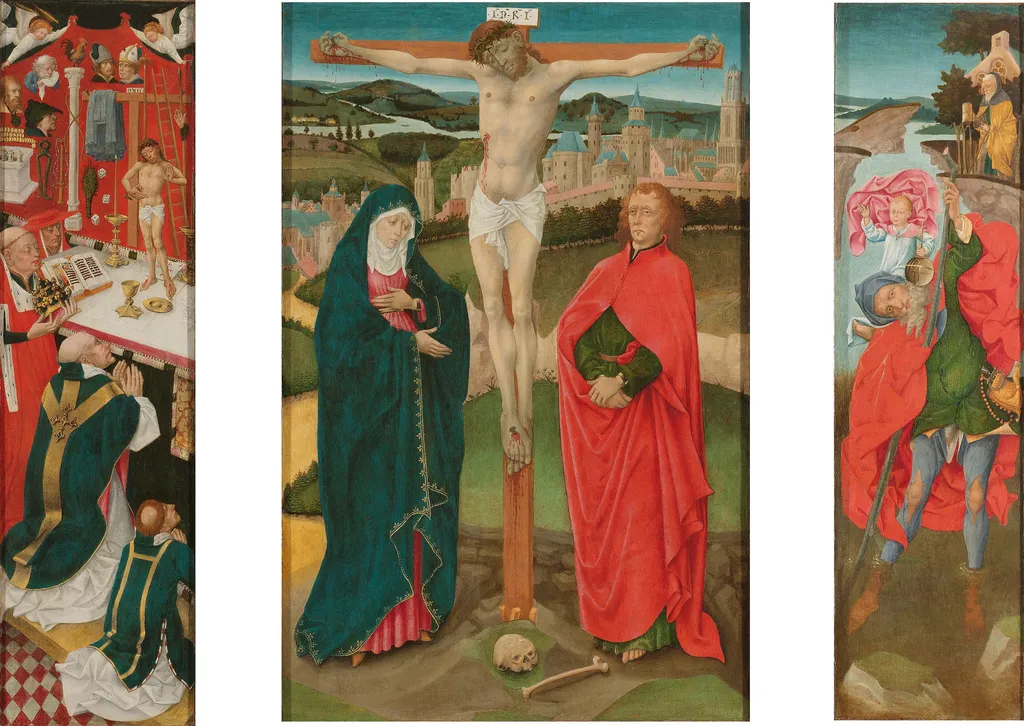
Triptych with the Crucifixion is an oil painting. It dates from 1460 and is held in the collection of the Rijksmuseum. The work is a three‑panel oil painting, arranged as a triptych.
About this work
Overview
The work is a three‑panel oil painting, arranged as a triptych. The central panel depicts a crucifixion scene, flanked by two side panels that present related narrative moments. The composition is unified by a somber palette and a shared horizon that links the three registers.
Subject & Meaning
In the central image, a man is affixed to a cross, accompanied by a woman dressed in dark blue and a man in red robes, suggesting witnesses to the event.
In the central image, a man is affixed to a cross, accompanied by a woman dressed in dark blue and a man in red robes, suggesting witnesses to the event. Above the cross the inscription “ERI” appears, while the ground is strewn with bones, emphasizing mortality. The left panel shows a group gathered around a table, some in prayer, and the right panel includes a figure cradling an infant and another bearing a crown of thorns, extending the theological narrative beyond the crucifixion itself.
Technique & Style
Executed in oil, the painting employs strong contrasts of light and shadow, a chiaroscuro effect that models the figures and creates a sense of depth. The distant cityscape with towers and a church in the background of the central panel is rendered in muted tones, allowing the illuminated foreground to dominate the viewer’s attention.
Context
The triptych format and the inclusion of devotional figures align the work with late medieval and early Renaissance religious art, where multi‑panel compositions were used to guide contemplation of Christ’s passion and its surrounding human responses.
Artist & collection