Artwork
Crucifixion Triptych
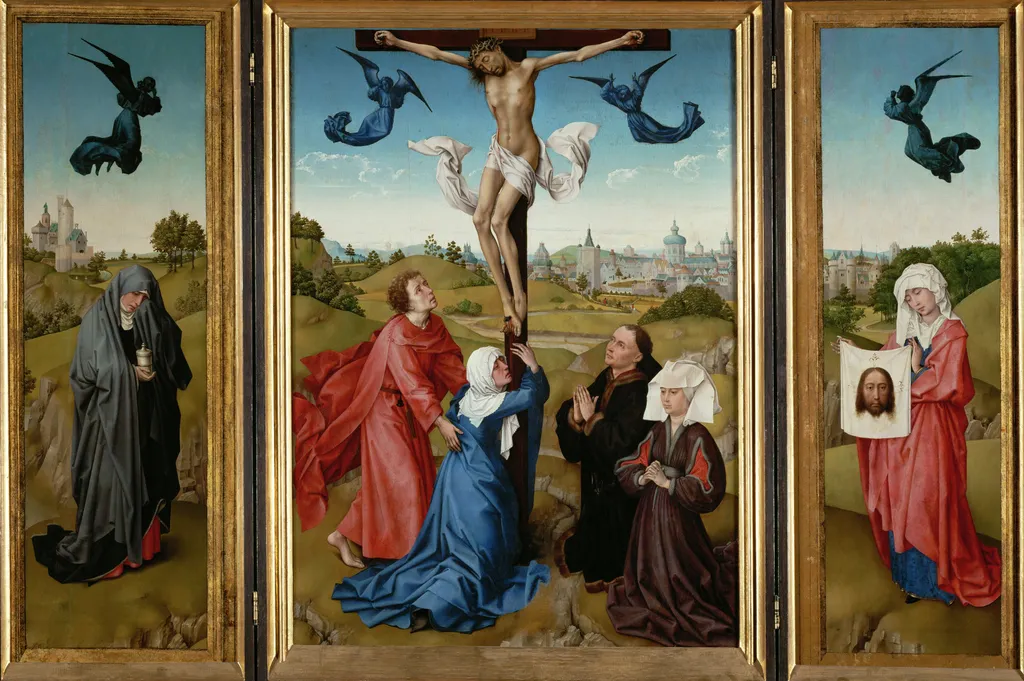
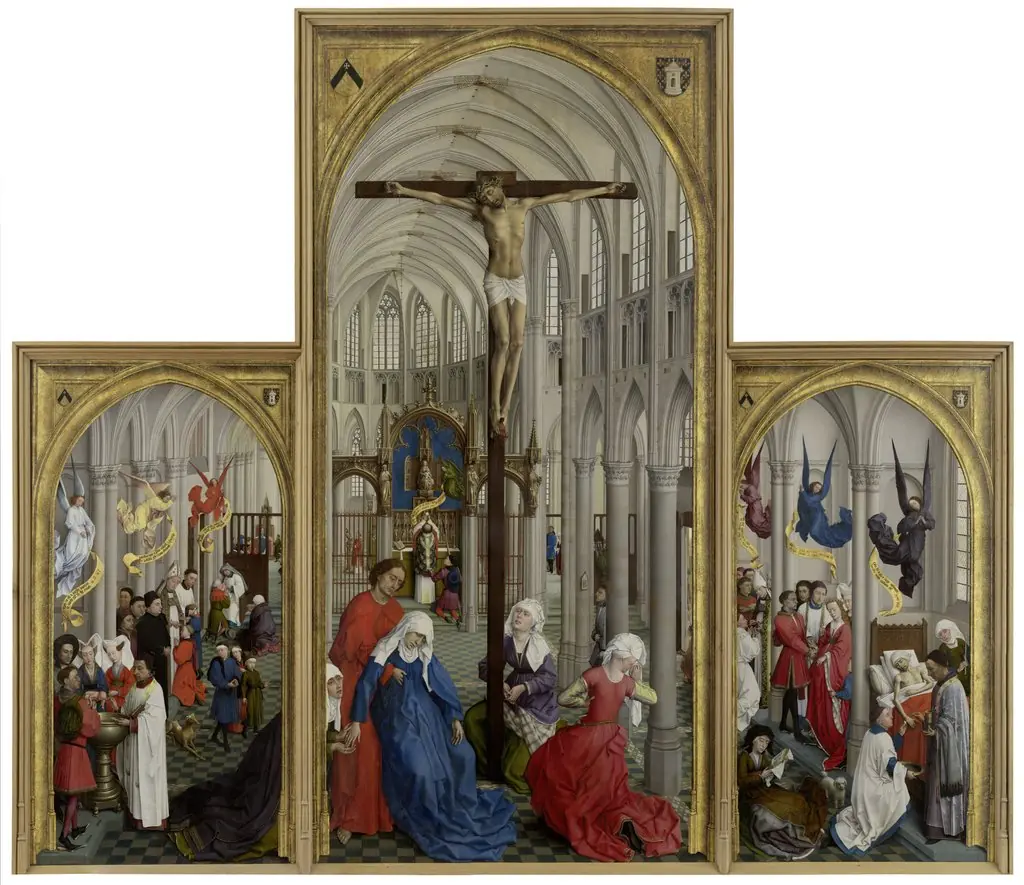
Crucifixion Triptych is an oil painting by the Northern Renaissance artist Rogier van der Weyden. It dates from 1440 and is held in the collection of the Kunsthistorisches Museum.
About this work
Overview
Rogier van der Weyden's *Crucifixion Triptych*, an oil painting from approximately 1443–1445, functions as an altarpiece composed of three hinged panels.
Rogier van der Weyden's *Crucifixion Triptych*, an oil painting from approximately 1443–1445, functions as an altarpiece composed of three hinged panels. This significant work is currently housed in the Kunsthistorisches Museum in Vienna. It exemplifies the artist's meticulous approach to religious narrative and emotional expression, characteristic of early Netherlandish painting, within a devotional format designed to inspire contemplation.
Subject & Meaning
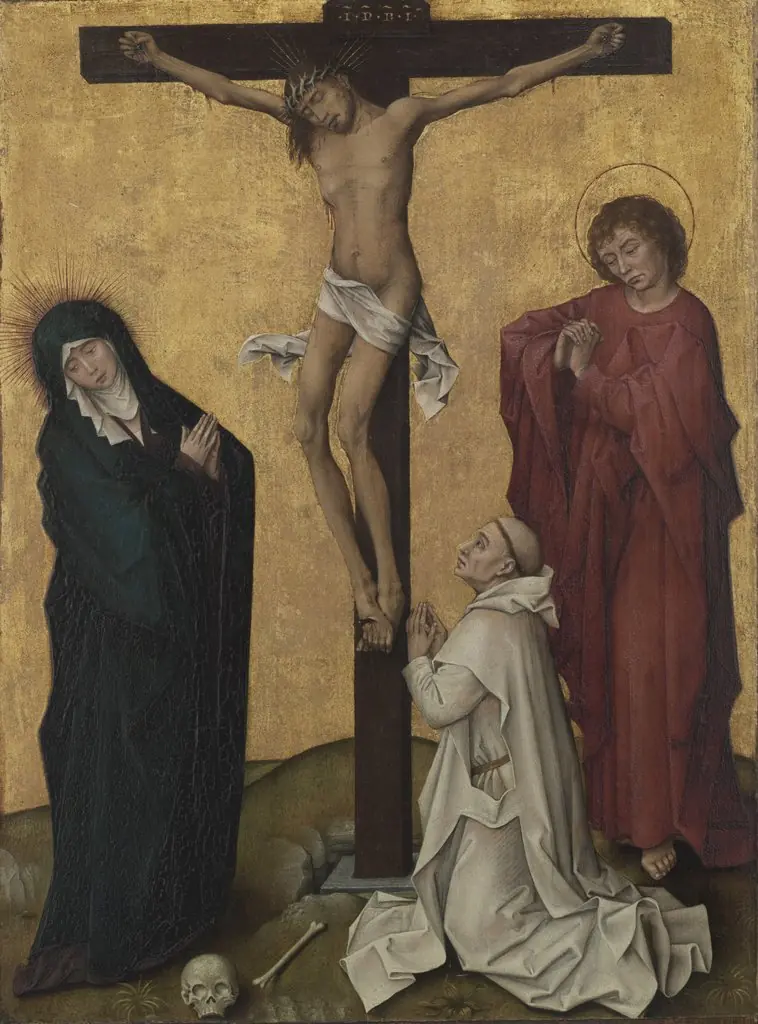
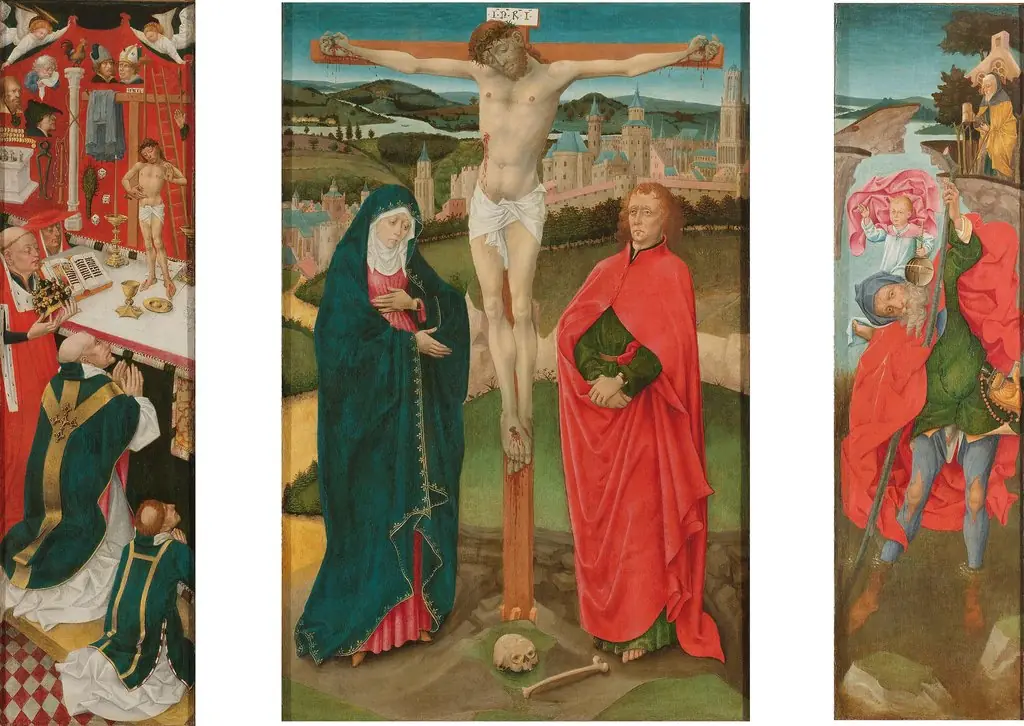
The central panel depicts the Crucifixion of Christ, with the Virgin Mary embracing the foot of the cross in profound grief, supported by Saint John the Evangelist. Two kneeling donors are positioned to the right, observing the scene. The left wing features Mary Magdalene, while Saint Veronica occupies the right panel, holding the sudarium bearing Christ's image. A continuous landscape unifies the three panels, extending to a distant view of Jerusalem.
Technique & Style
Executed in oil paint, the triptych demonstrates a high degree of technical skill and meticulous detail, hallmarks of van der Weyden's craftsmanship. The artist employs a muted color palette, predominantly featuring shades of blue, green, and brown, which contributes to the solemn atmosphere of the sacred narrative. The precise rendering of forms and careful application of color enhance the emotional gravity of the composition.
Artist & collection
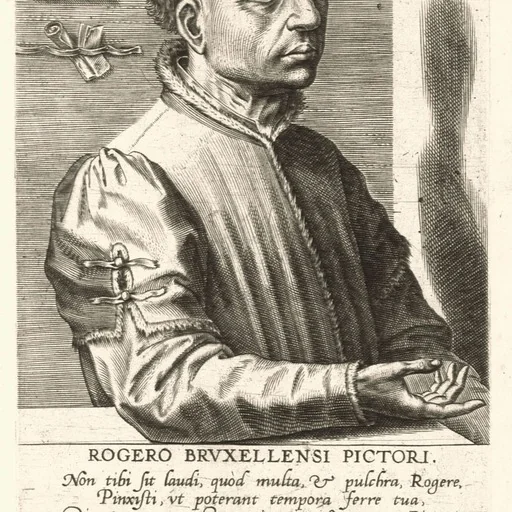
Artist
Rogier van der Weyden (Dutch: ; 1399 or 1400 – 18 June 1464), initially known as Roger de la Pasture (French: ), was an early Netherlandish painter whose surviving works consist mainly of religious triptychs,…