Artwork
Tantric Manuscript "Sangrahani Sutra"
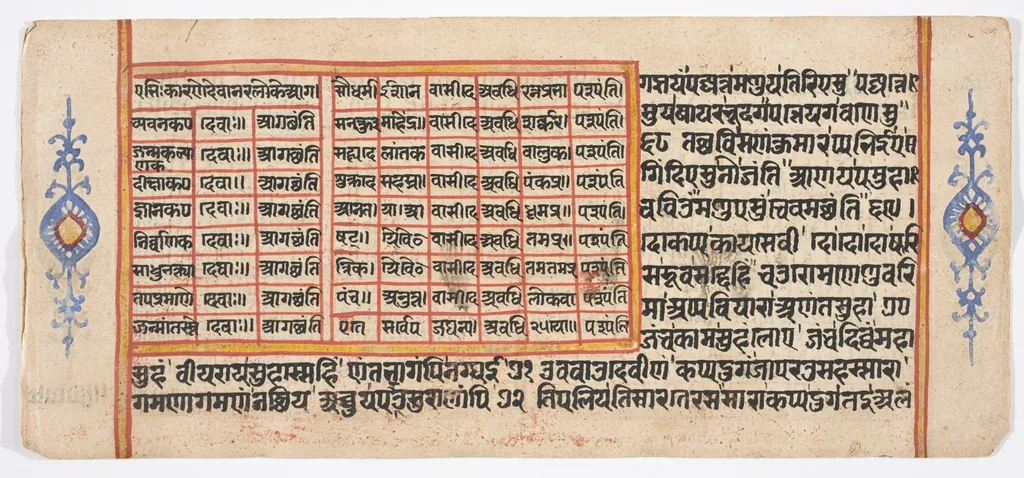
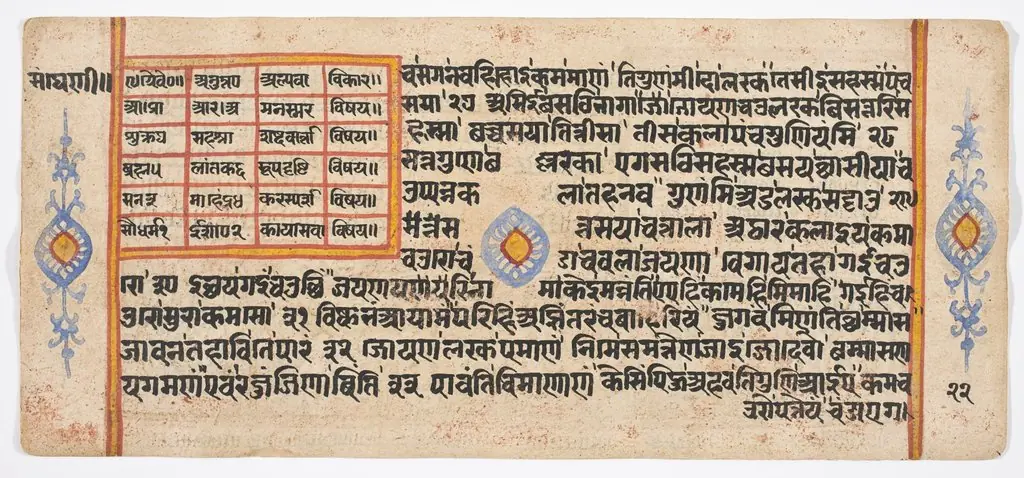
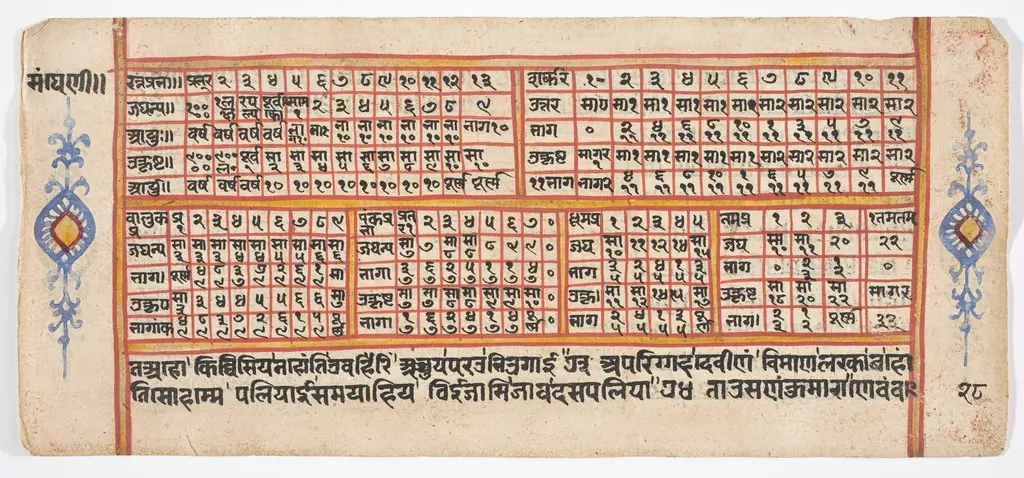
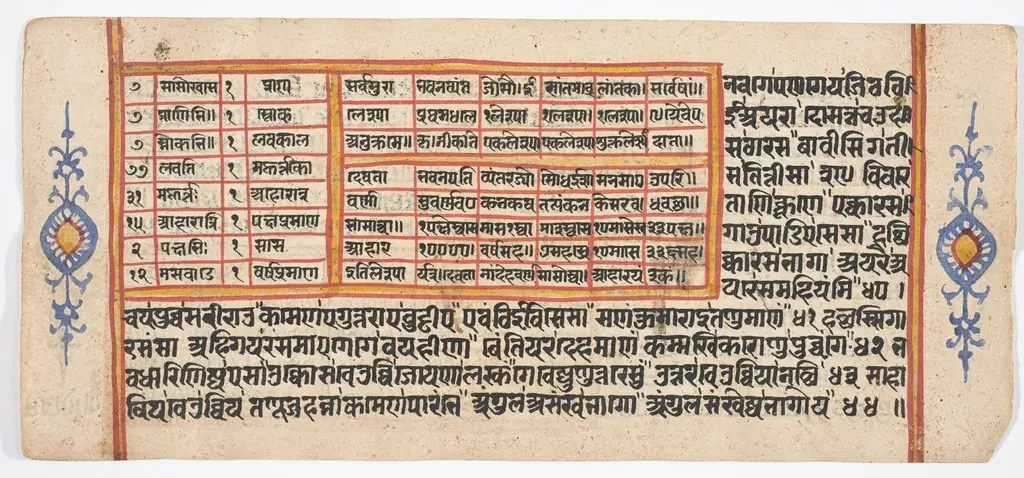
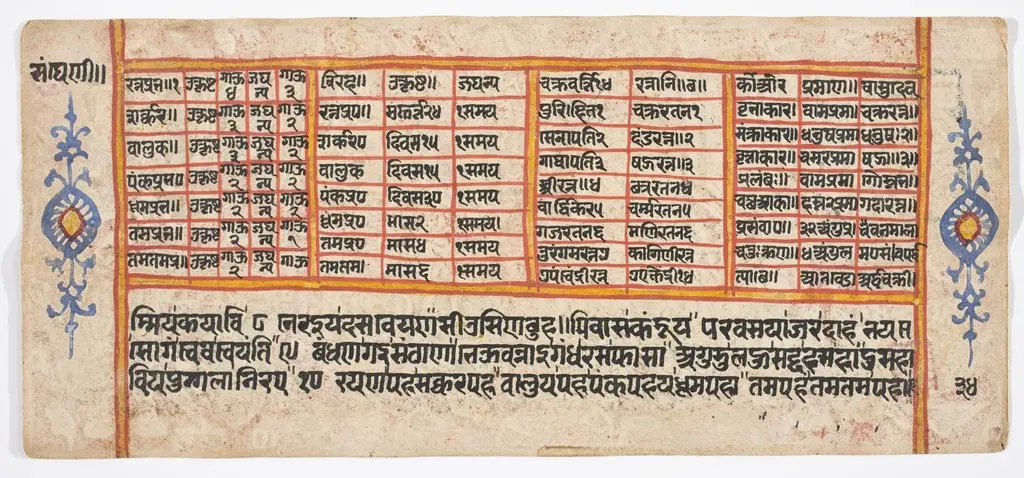
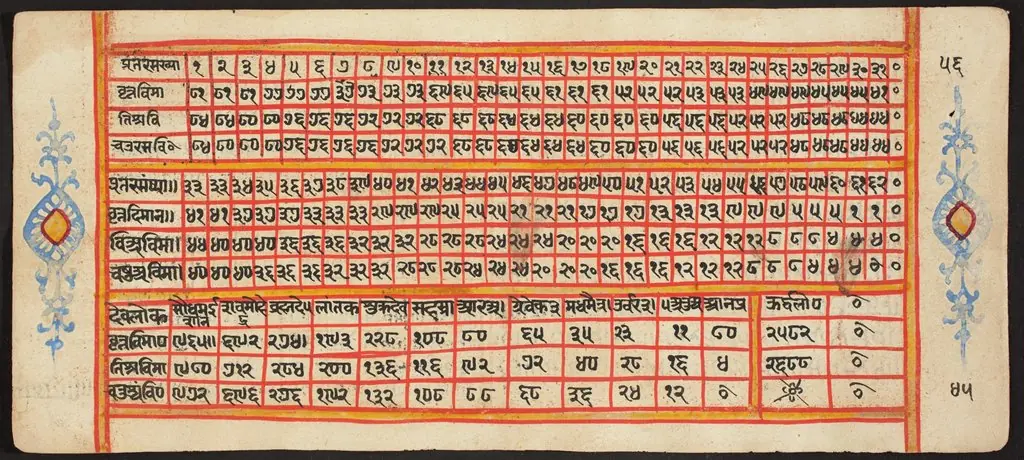
Tantric Manuscript "Sangrahani Sutra" is an unspecified painting by Unknown. It is held in the collection of the Detroit Institute of Arts. This page comes from a handwritten manuscript of the Sangrahani Sutra, a Buddhist text composed in Sanskrit.
About this work
Overview
This page comes from a handwritten manuscript of the Sangrahani Sutra, a Buddhist text composed in Sanskrit.
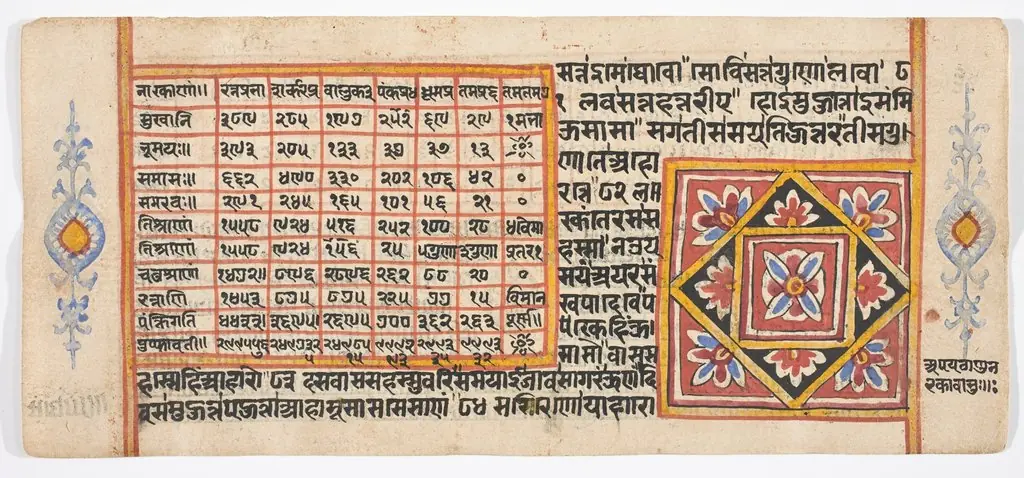
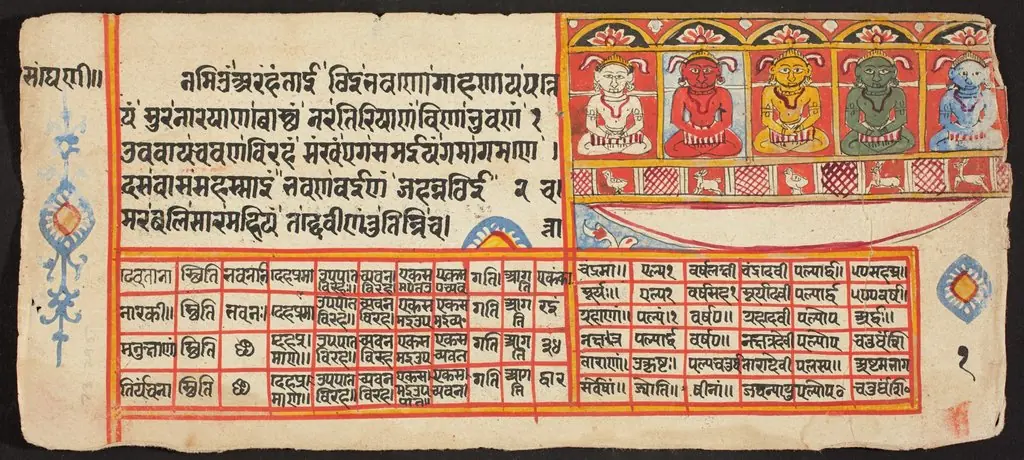
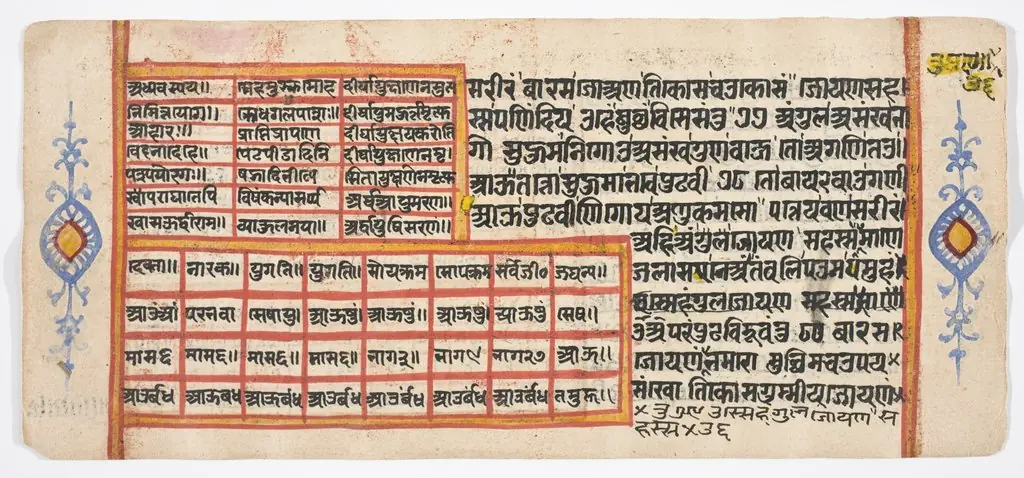
This page comes from a handwritten manuscript of the Sangrahani Sutra, a Buddhist text composed in Sanskrit. Created in medieval India, it was produced as a devotional object for ritual use. The script is meticulously rendered in black ink, arranged in dense horizontal lines across the page. Decorative borders frame the text, featuring floral and geometric motifs in red, gold, and ochre, reflecting the aesthetic conventions of tantric manuscript culture.
Subject & Meaning
The Sangrahani Sutra is a doctrinal compilation within the Mahayana Buddhist tradition, summarizing key teachings on ethical conduct and meditative discipline. Its physical form—carefully copied by hand—was believed to embody spiritual power. The inclusion of ornamental frames and marginal designs served not merely as decoration but as aids to concentration, reinforcing the sacred nature of the text during recitation and contemplation.
Technique & Style
The script is executed in a precise, cursive Devanagari style typical of eastern Indian scribal traditions. Ink lines are uniform, with careful spacing between characters and words. Decorative elements are applied with mineral pigments, including gold leaf, on palm leaf or paper. The borders feature stylized vines and lotus motifs, rendered in symmetrical patterns that echo the structured layout of the text, blending utility with ritual ornamentation.
History & Provenance
This manuscript page likely originated in Bihar or Bengal between the 11th and 13th centuries, a period of flourishing Buddhist scholarship in eastern India. It was preserved in monastic libraries before entering private or institutional collections. The Detroit Institute of Arts acquired it as part of a broader collection of South Asian religious manuscripts, reflecting early 20th-century interest in Asian spiritual art forms.
Context
During the late medieval period, tantric Buddhist communities in eastern India produced highly ornate manuscripts as objects of veneration. These were not merely texts but ritual instruments, often used in ceremonies and personal meditation. The labor-intensive process of copying them—by trained scribes over months or years—underscored their spiritual value, distinguishing them from secular writings of the time.
Legacy
Surviving examples of such manuscripts are rare, as many were lost to environmental decay or political upheaval. This page contributes to scholarly understanding of how Buddhist teachings were transmitted visually and materially. Its preservation allows modern viewers to engage with the material culture of medieval Indian Buddhism, offering insight into the intersection of text, ritual, and artistic discipline.
Artist & collection

 Domestic Scene
 Giacomo and Cardinal Marco, investing Andrea, Abbot of San Zeno, with his Benefice
 The Nymph of Fontainebleau
 Portrait of a Woman
 Madonna and Child with Saints in the Enclosed Garden
 Venus and Minerva
 Family Group of Four on Sofa
 Wall painting from Room H of the Villa of P. Fannius Synistor at Boscoreale
 Tantric Manuscript "Sangrahani Sutra"
 Tantric Manuscript "Sangrahani Sutra"
 Tantric Manuscript "Sangrahani Sutra"
 Tantric Manuscript "Sangrahani Sutra"
 Tantric Manuscript "Sangrahani Sutra"
 Tantric Manuscript "Sangrahani Sutra"
 Tantric Manuscript "Sangrahani Sutra"
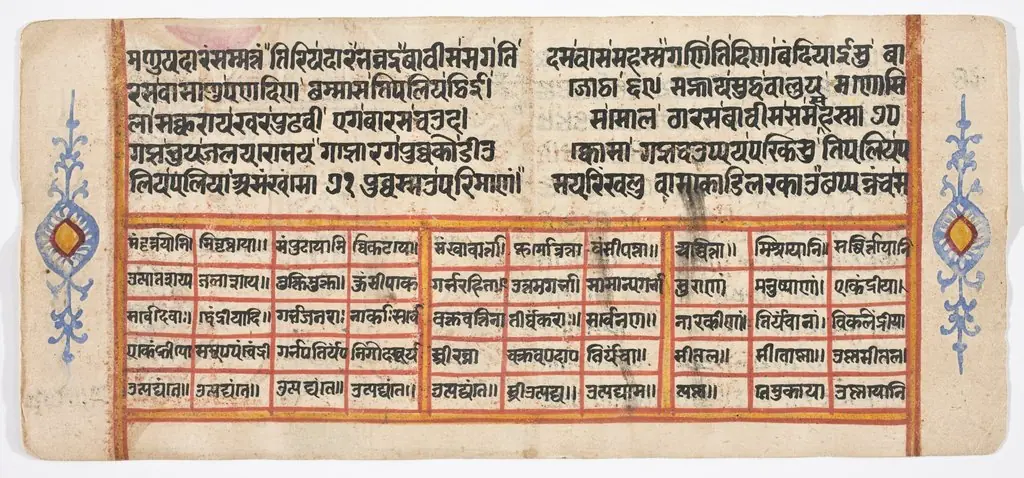 Tantric Manuscript "Sangrahani Sutra"
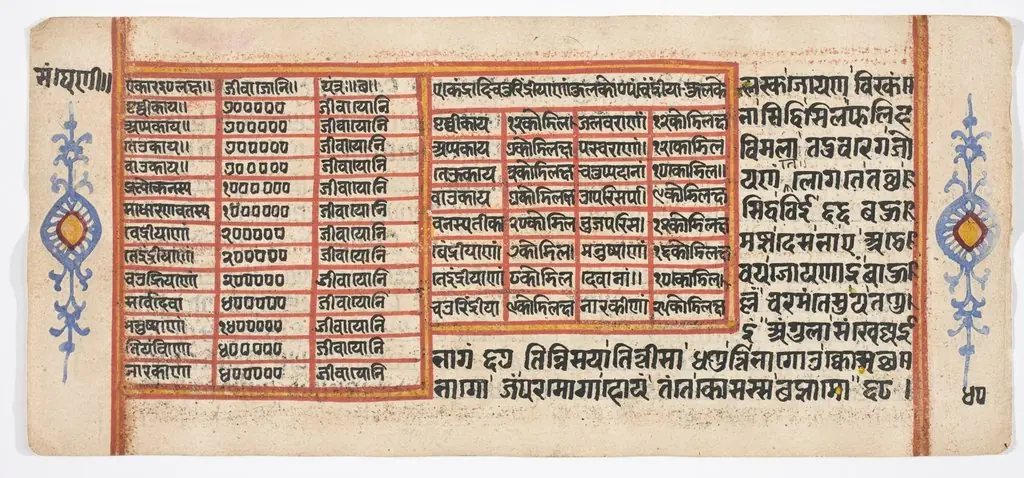 Tantric Manuscript "Sangrahani Sutra"
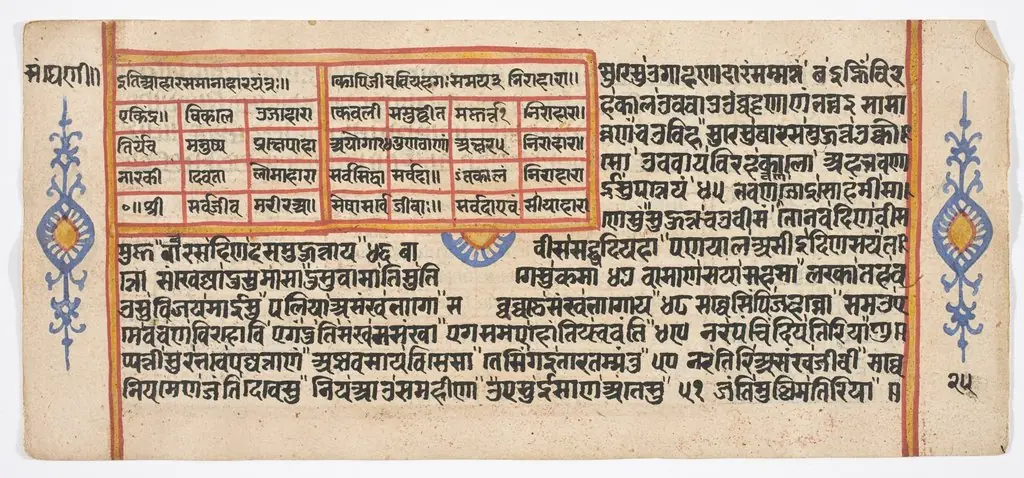 Tantric Manuscript "Sangrahani Sutra"
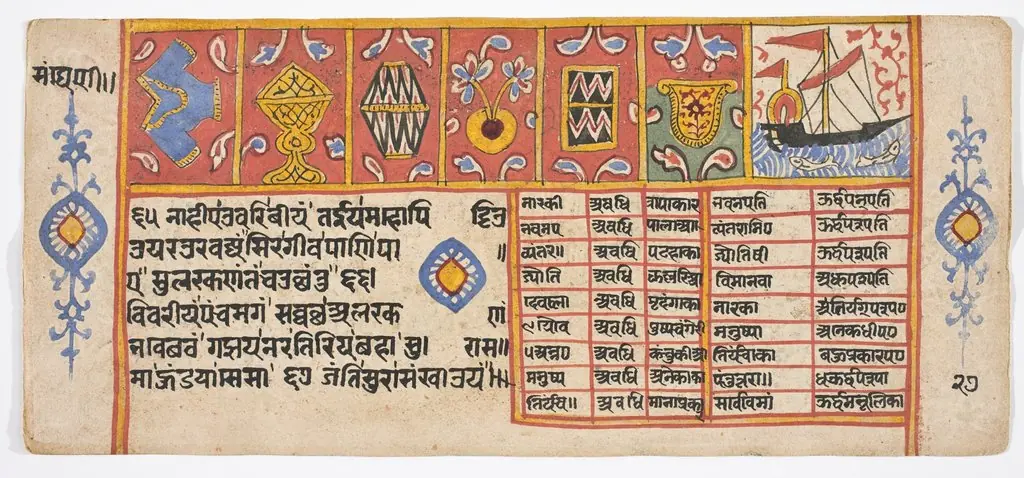 Tantric Manuscript "Sangrahani Sutra"
 Tantric Manuscript "Sangrahani Sutra"