Artwork
Tantric Manuscript "Sangrahani Sutra"
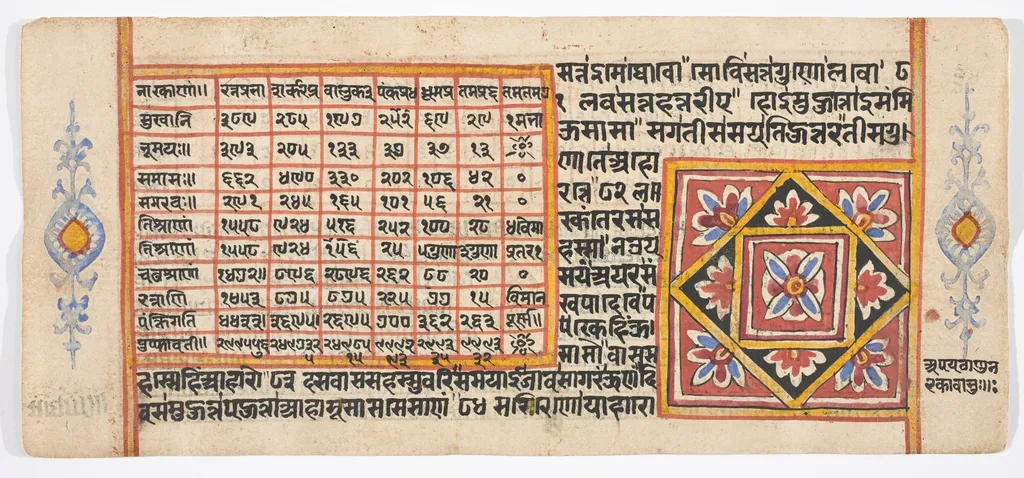
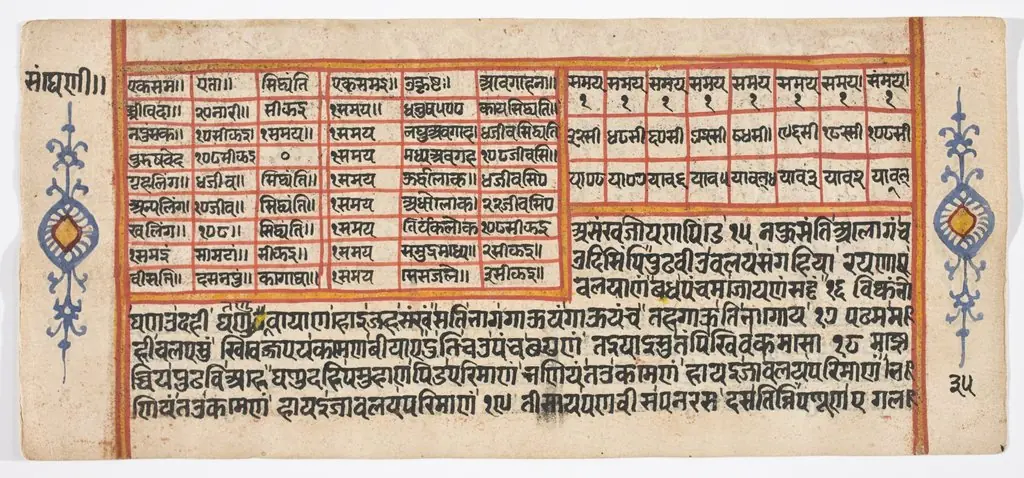
Tantric Manuscript "Sangrahani Sutra" is an unspecified painting by Unknown. It is held in the collection of the Detroit Institute of Arts. The work titled “Sangrahani Sutra” is a painted manuscript composed of a dense grid of black‑ink characters set against a light beige field.
About this work
Overview
The work titled “Sangrahani Sutra” is a painted manuscript composed of a dense grid of black‑ink characters set against a light beige field.
The work titled “Sangrahani Sutra” is a painted manuscript composed of a dense grid of black‑ink characters set against a light beige field. Red dividing lines segment the textual blocks, while a surrounding band of stylized floral designs in pink, blue and yellow creates a symmetrical, ornamental frame. The overall composition balances the austerity of the script with vivid decorative elements, producing a lively visual rhythm.
Subject & Meaning
The central element consists of an unknown script, suggesting a religious or esoteric text, possibly of tantric origin, as implied by the title. The surrounding floral motifs, rendered in bright hues, serve both as decorative borders and as symbolic embellishments, a common practice in manuscript traditions where natural imagery often conveys spiritual concepts such as purity, abundance or the unfolding of consciousness.
Technique & Style
The artist employed fine black ink for the script, applying it with precise, uniform strokes that form a regular grid. Red pigment outlines the sections, providing a clear structural hierarchy. The floral patterns were painted in opaque pigments, layered to achieve a smooth, saturated surface. The symmetrical arrangement and the contrast between monochrome text and polychrome ornamentation reflect a synthesis of calligraphic discipline and decorative painting typical of South Asian manuscript art.
History & Provenance
While the exact date and place of creation remain unidentified, the manuscript’s title and visual language align it with tantric literary traditions that flourished across the Indian subcontinent. The use of beige paper, black ink and vivid mineral pigments suggests a pre‑modern production context, likely commissioned for devotional or scholarly use before entering a museum collection through acquisition or donation.
Context
Manuscripts of this type often functioned as both textual carriers and visual objects of reverence, integrating scriptural content with elaborate ornamentation to enhance contemplation. The grid format indicates a systematic arrangement of verses or doctrinal sections, while the surrounding flora reflects a broader aesthetic trend in which sacred texts were visually enriched to underscore their spiritual significance.
Artist & collection

 Domestic Scene
 Giacomo and Cardinal Marco, investing Andrea, Abbot of San Zeno, with his Benefice
 The Nymph of Fontainebleau
 Portrait of a Woman
 Madonna and Child with Saints in the Enclosed Garden
 Venus and Minerva
 Family Group of Four on Sofa
 Wall painting from Room H of the Villa of P. Fannius Synistor at Boscoreale
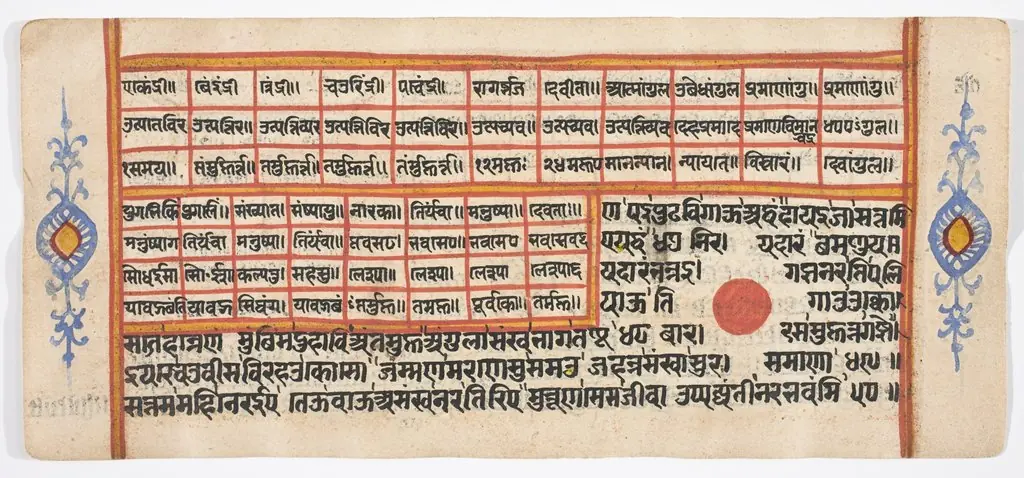 Tantric Manuscript "Sangrahani Sutra"
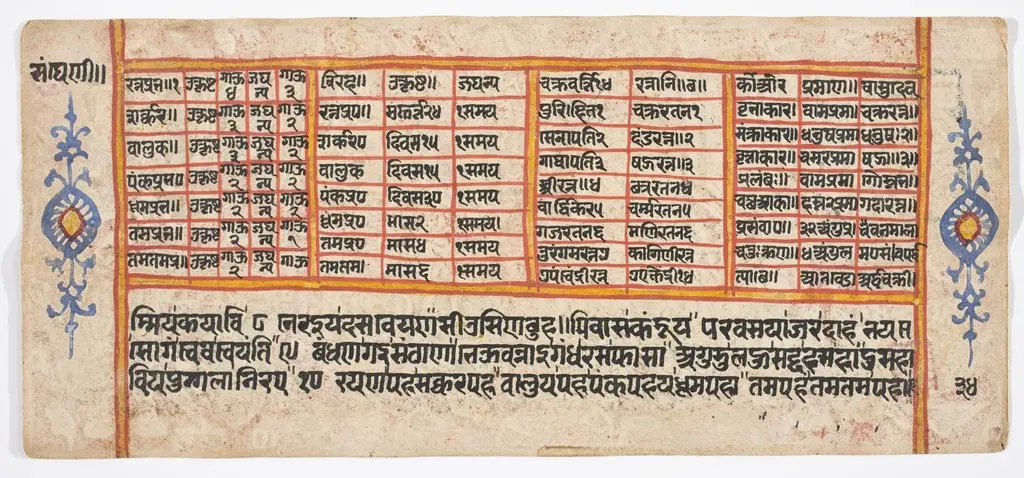 Tantric Manuscript "Sangrahani Sutra"
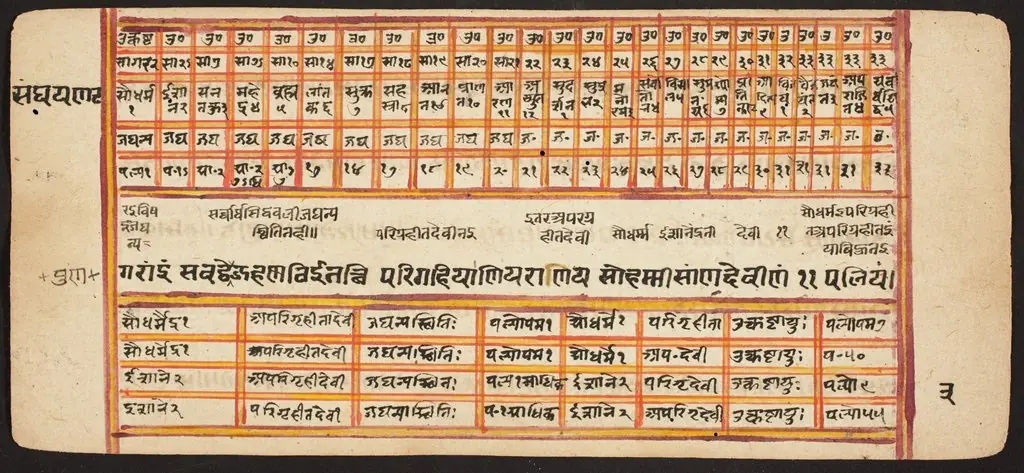 Tantric Manuscript "Sangrahani Sutra"
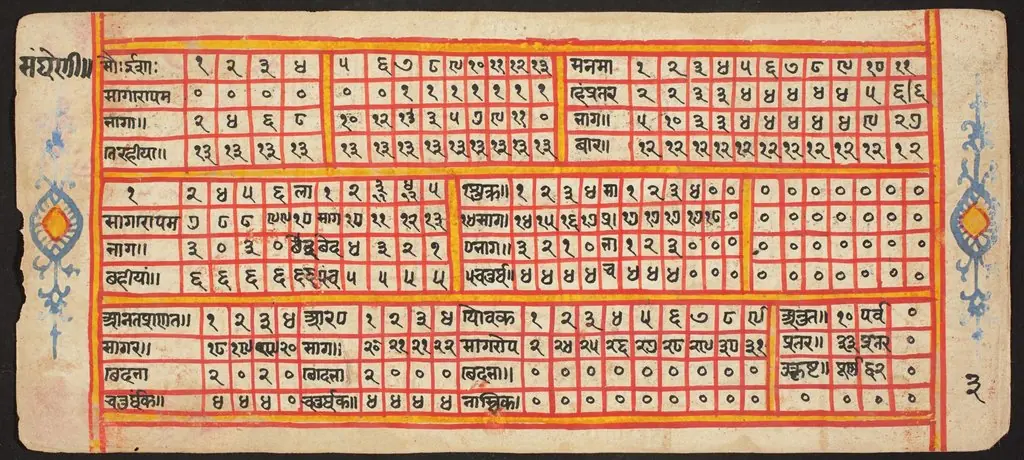 Tantric Manuscript "Sangrahani Sutra"
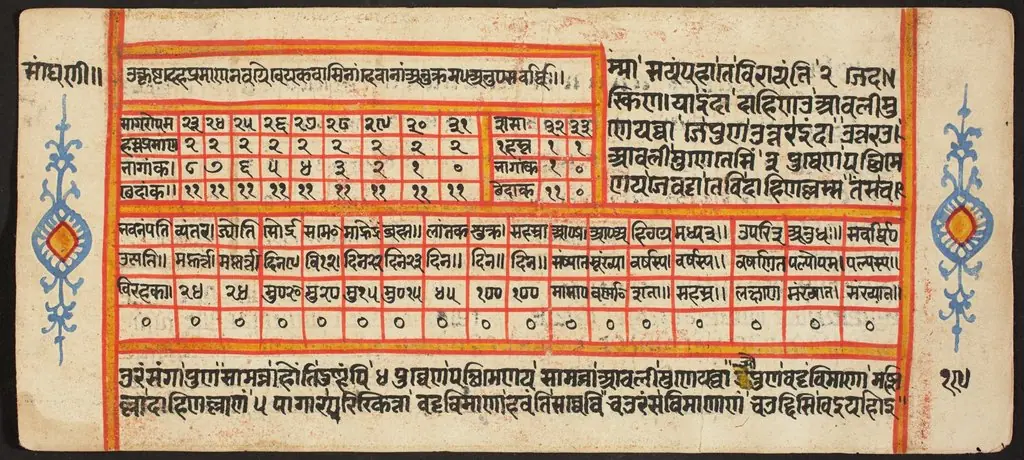 Tantric Manuscript "Sangrahani Sutra"
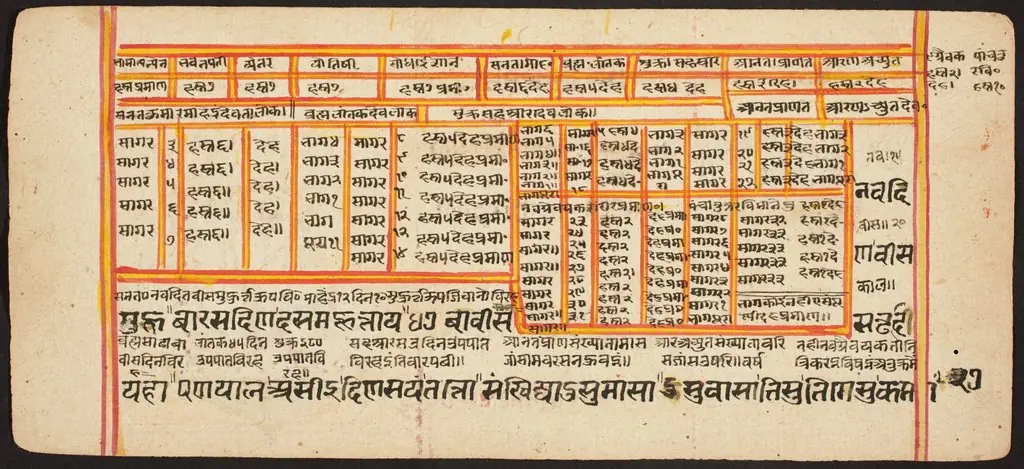 Tantric Manuscript "Sangrahani Sutra"
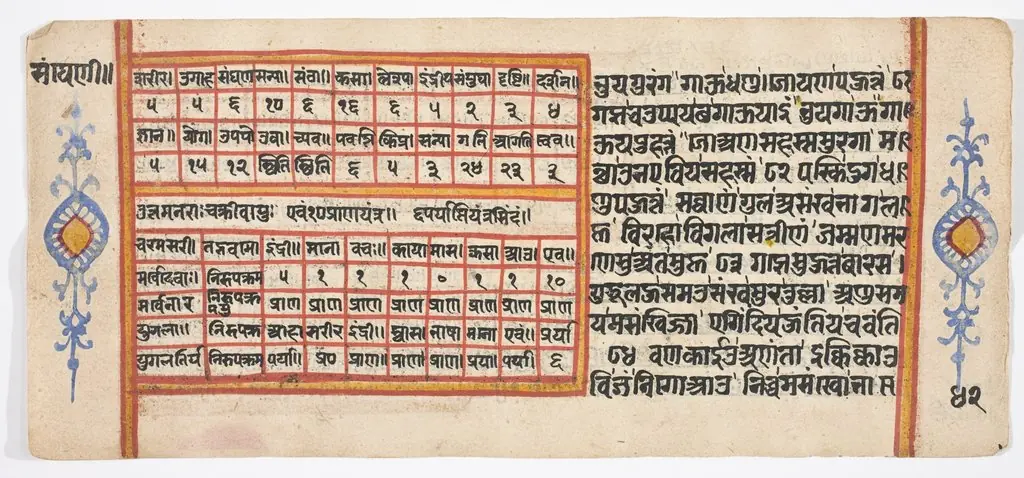 Tantric Manuscript "Sangrahani Sutra"
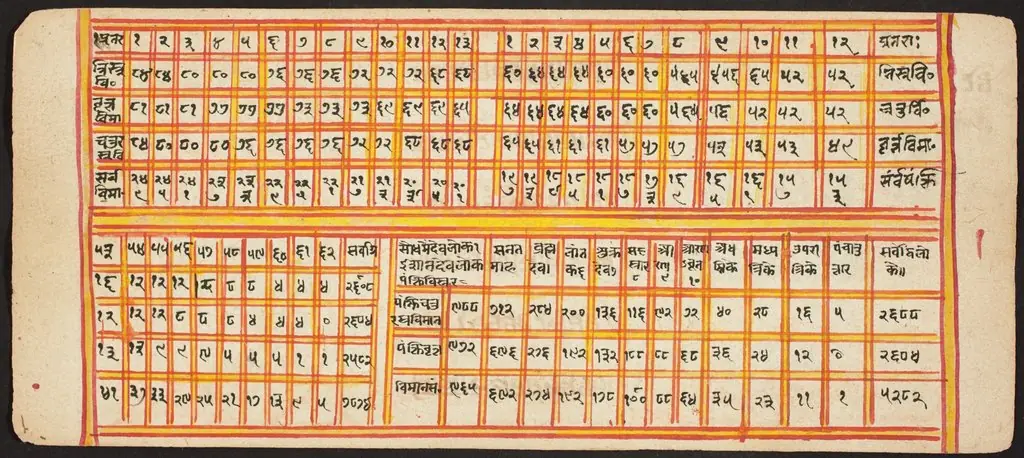 Tantric Manuscript "Sangrahani Sutra"
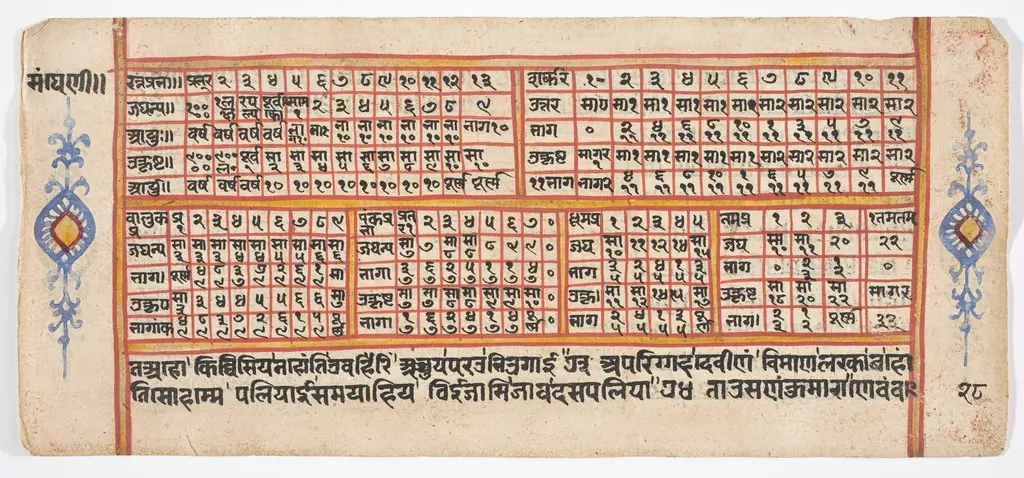 Tantric Manuscript "Sangrahani Sutra"
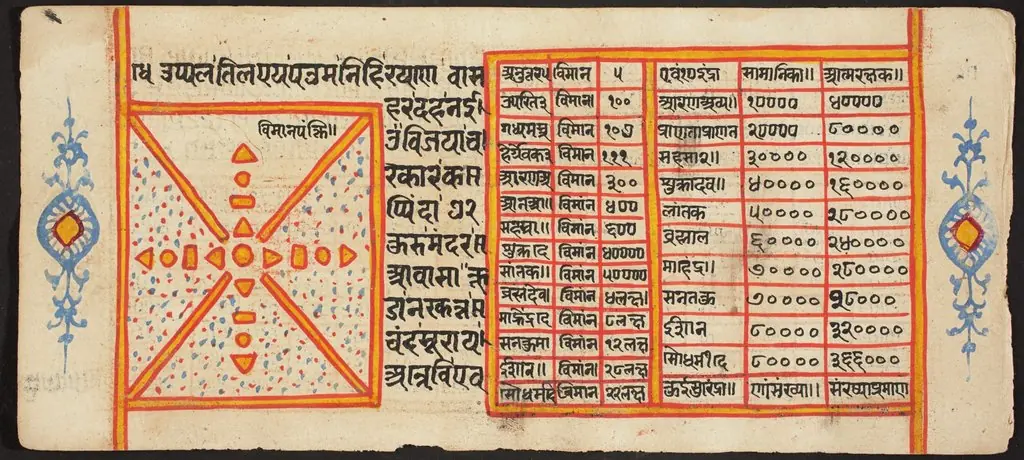 Tantric Manuscript "Sangrahani Sutra"
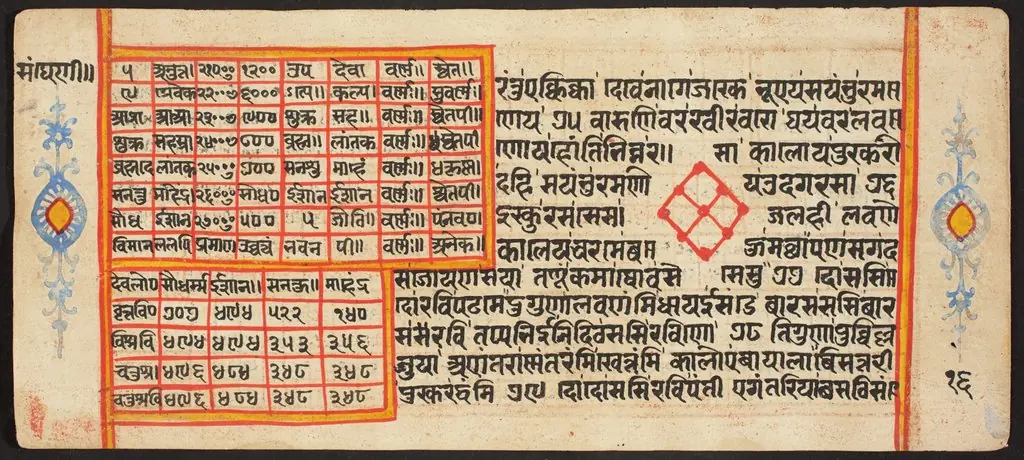 Tantric Manuscript "Sangrahani Sutra"
 Tantric Manuscript "Sangrahani Sutra"