Artwork
Summer Landscape
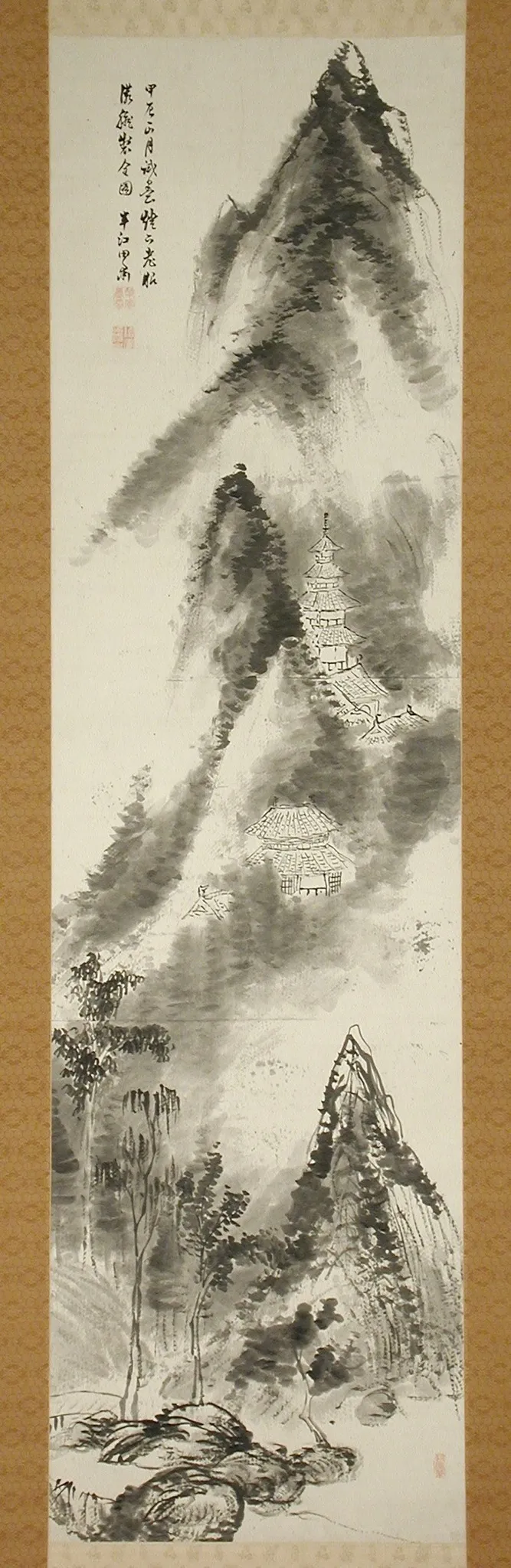
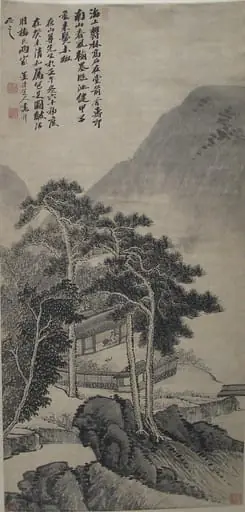
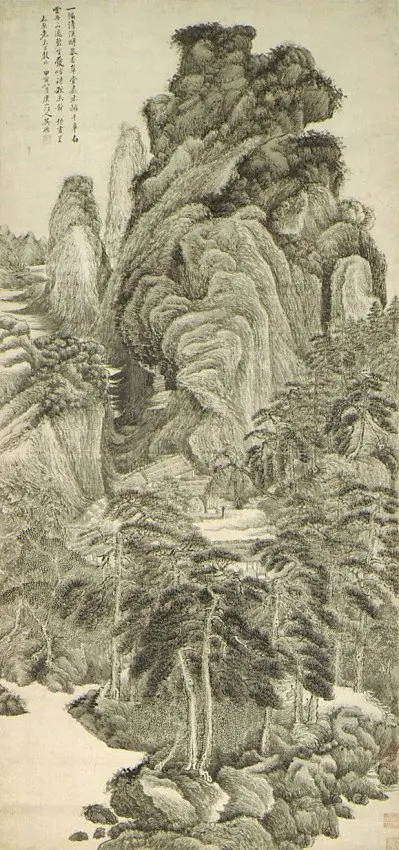
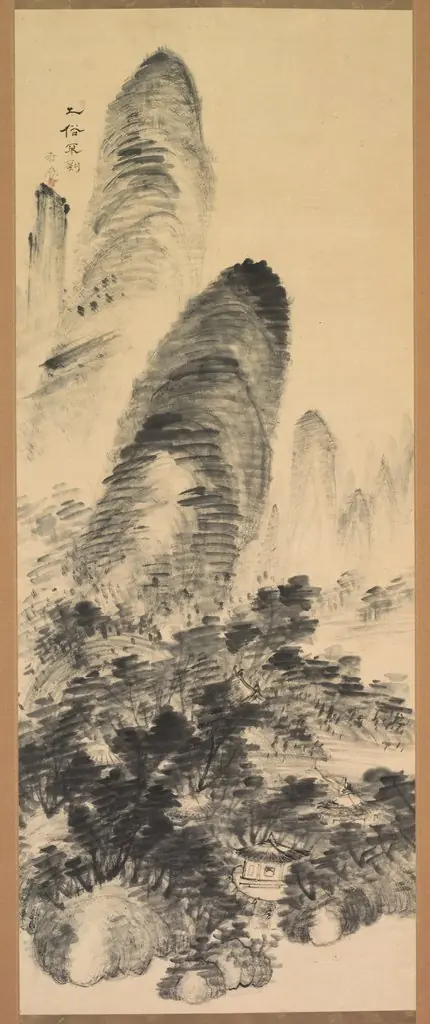
Summer Landscape is an unspecified painting by the Barbizon school artist Unknown. It dates from 1844 and is held in the collection of the Los Angeles County Museum of Art. This painting presents a quiet mountain scene rendered primarily in shades of gray and black.
About this work
Overview
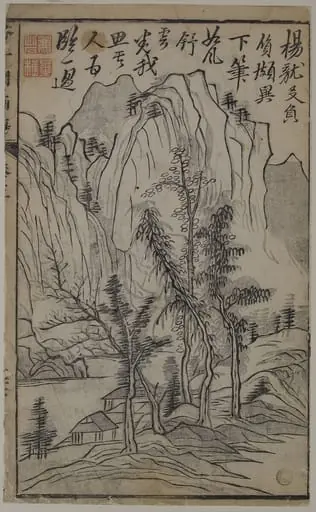
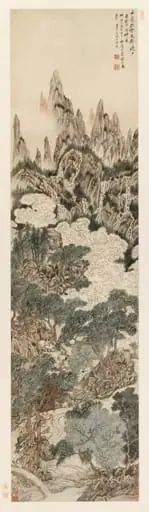
This painting presents a quiet mountain scene rendered primarily in shades of gray and black. The composition emphasizes stillness, with rugged peaks, scattered trees clinging to rocky slopes, and a distant pagoda nestled on a distant rise. The absence of bright color contributes to a muted, introspective mood, inviting quiet observation rather than dramatic engagement.
Subject & Meaning
The landscape depicts an unpopulated natural setting, with a pagoda subtly integrated into the terrain rather than dominating it. This suggests harmony between human architecture and the environment, possibly reflecting a philosophical or spiritual reverence for nature. The stillness and isolation imply contemplation, evoking themes of solitude and endurance.
Technique & Style
The artist employs a restrained palette of grays and blacks to model form and depth, using subtle tonal variations to suggest texture in rock and foliage. Brushwork is controlled, avoiding bold outlines; instead, edges blend softly, enhancing the atmospheric quiet. The lack of vivid color shifts the focus to structure, light, and spatial recession.
History & Provenance
The painting’s origins are not documented in available records, and no specific artist or date is confirmed. Its style aligns with certain East Asian ink traditions, though it lacks definitive markers of a known school or period. Its survival suggests it was preserved within a private or institutional collection, though its early ownership remains unknown.
Context
Created in a cultural milieu where landscape painting often conveyed inner states rather than topographical accuracy, this work fits within a broader tradition of nature as a mirror for contemplation. The use of monochrome tones echoes ink-wash practices, where restraint and suggestion replaced literal representation to evoke emotional resonance.
Legacy
Though not widely exhibited or studied, the painting contributes to a quieter strand of landscape art that values subtlety over spectacle. Its enduring presence in collections reflects an appreciation for minimalism and meditative composition, influencing later artists who prioritize atmosphere and silence over narrative or color.
Artist & collection

 Domestic Scene
 Giacomo and Cardinal Marco, investing Andrea, Abbot of San Zeno, with his Benefice
 The Nymph of Fontainebleau
 Portrait of a Woman
 Madonna and Child with Saints in the Enclosed Garden
 Venus and Minerva
 Family Group of Four on Sofa
 Wall painting from Room H of the Villa of P. Fannius Synistor at Boscoreale