Artwork
Morning Sun over Heavenly Citadel Peak
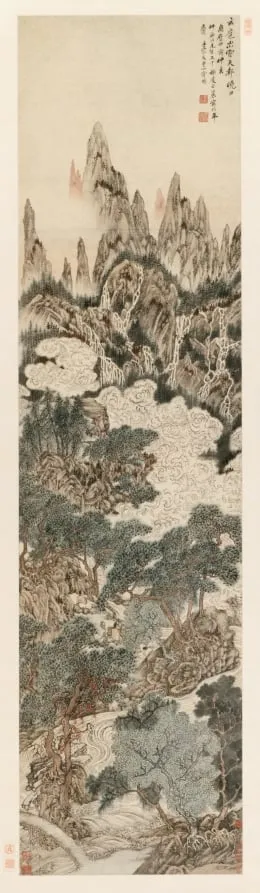
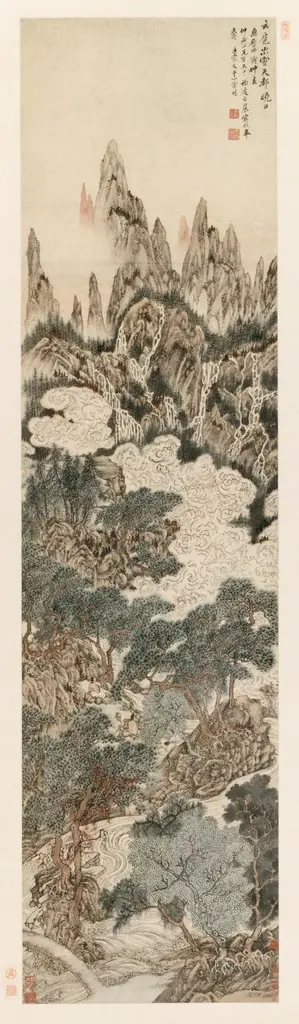
Morning Sun over Heavenly Citadel Peak is an unspecified painting by the Baroque artist Ding Yunpeng. It dates from 1614 and is held in the collection of the Cleveland Museum of Art.
About this work
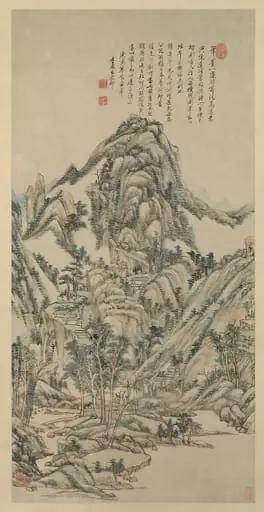
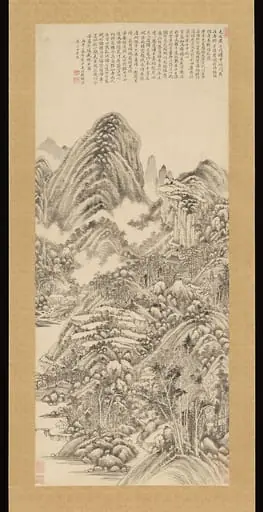
You see a tall mountain peak wrapped in mist, with tiny temples clinging to the cliffs and pine trees twisting from the rocks.
You see a tall mountain peak wrapped in mist, with tiny temples clinging to the cliffs and pine trees twisting from the rocks.
This is one of the first paintings of Mount Huang, a place so steep and remote that few artists had seen it. The red brushstrokes aren’t just leaves—they hint at cinnabar, a mineral thought to grant eternal life.
To see how later artists painted the same mountain, look up *subject: china, ming dynasty (1368–1644)*.
Overview
Ding Yunpeng, an artist from Anhui, created this ink-and-color scroll as a birthday gift, capturing Heavenly Citadel Peak in the Yellow Mountains. Among the earliest known depictions of the range, the work reflects a shift in artistic interest toward remote, rugged landscapes during the late Ming dynasty, when improved access allowed artists to encounter such sites firsthand.
Subject & Meaning
The painting centers on a towering peak shrouded in mist, with small temples and gnarled pines clinging to its cliffs. The mountains are linked to the Yellow Emperor, a mythic figure who sought immortality here. Red brushstrokes, suggesting both foliage and cinnabar, subtly evoke alchemical traditions tied to eternal life, embedding spiritual aspiration within the landscape.
Technique & Style
Rendered in ink and mineral pigments, the composition uses delicate lines to define rock forms and mist, while bold red accents introduce symbolic depth. The scale of human structures and trees is minimized against the mountain’s grandeur, emphasizing its sublime isolation. Brushwork balances precision with atmospheric suggestion, characteristic of late Ming literati aesthetics.
History & Provenance
Commissioned as a personal gift, the scroll predates the mountain’s popularity as a tourist destination. Its creation coincided with the construction of climbing paths, enabling artists to witness the peaks directly. As one of the first known paintings of the site, it marks a turning point in regional landscape representation before the mountain gained wider artistic attention.
Context
Before the late Ming period, Mount Huang’s inaccessibility limited its depiction in art. Its emergence as a subject reflects broader cultural shifts: growing interest in Daoist pilgrimage sites, increased travel among scholars, and a preference for authentic, unidealized nature over traditional compositional formulas. Ding’s work aligns with this emerging trend of topographical realism.
Legacy
This painting helped establish Mount Huang as a legitimate subject for Chinese landscape art. Later artists, inspired by its dramatic forms and spiritual associations, expanded its visual vocabulary. Though now a national park and popular destination, its artistic legacy begins with such early, intimate renderings that captured its mystique before mass visitation.
Artist & collection