Artwork
Kalpa Sutra
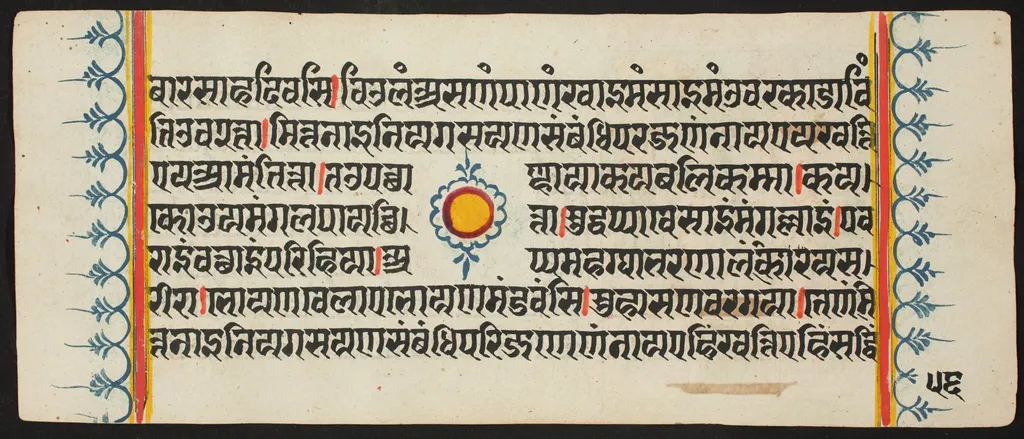
Kalpa Sutra is an unspecified painting by Unknown. It is held in the collection of the Detroit Institute of Arts.
About this work
Overview
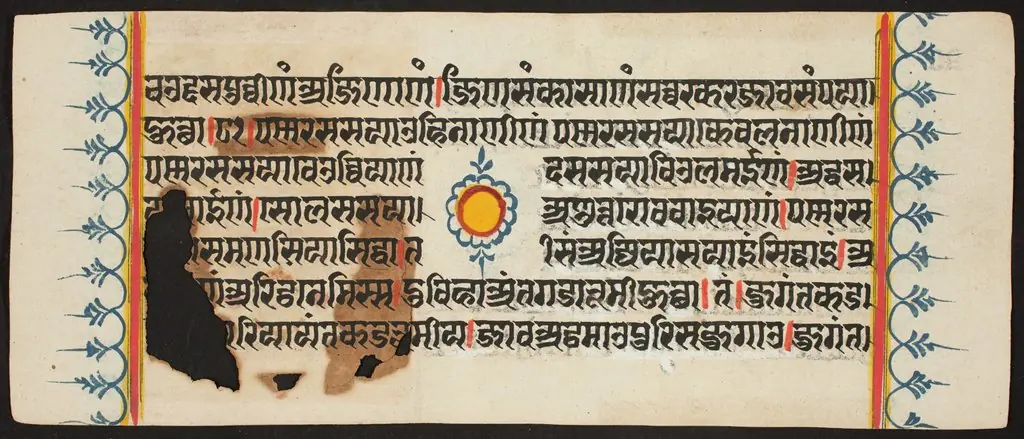
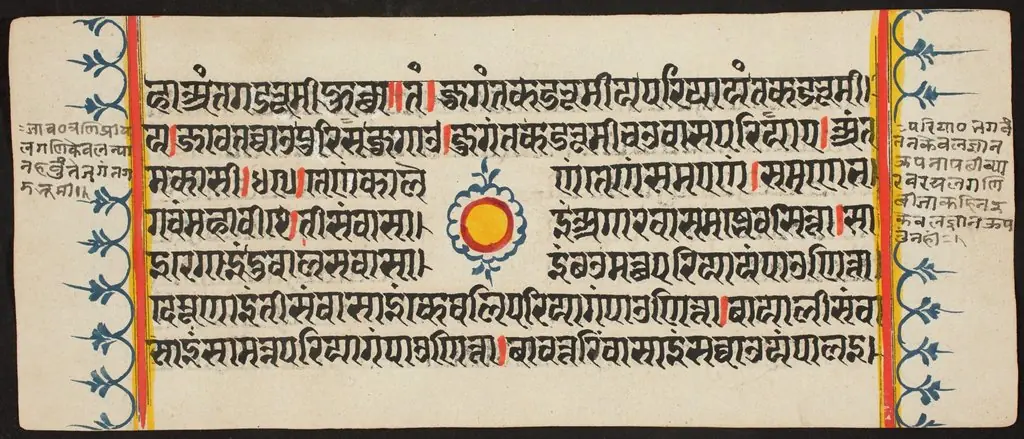
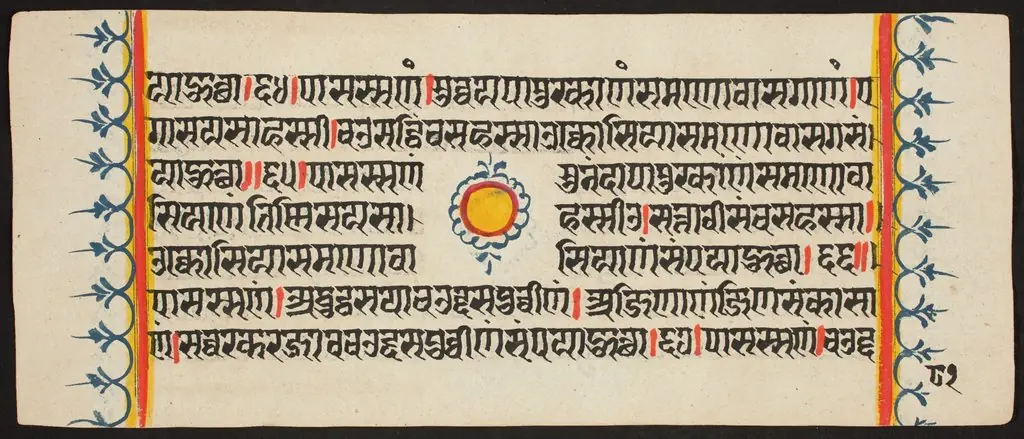
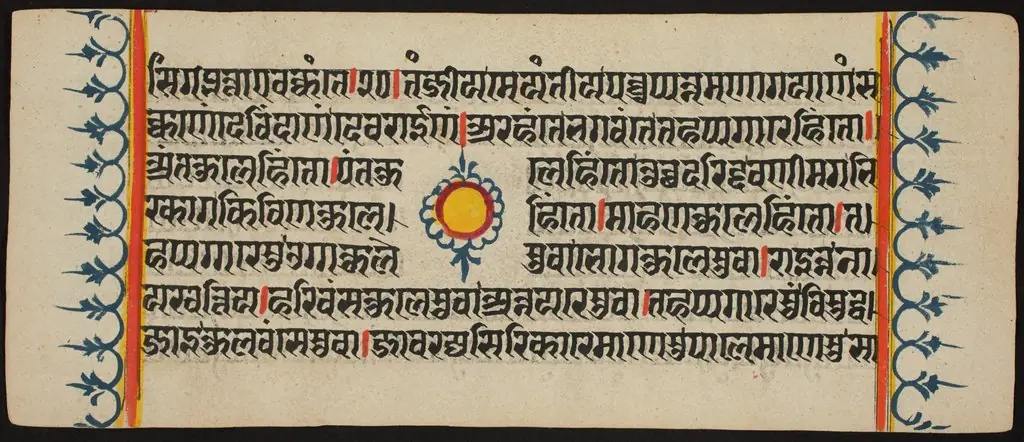
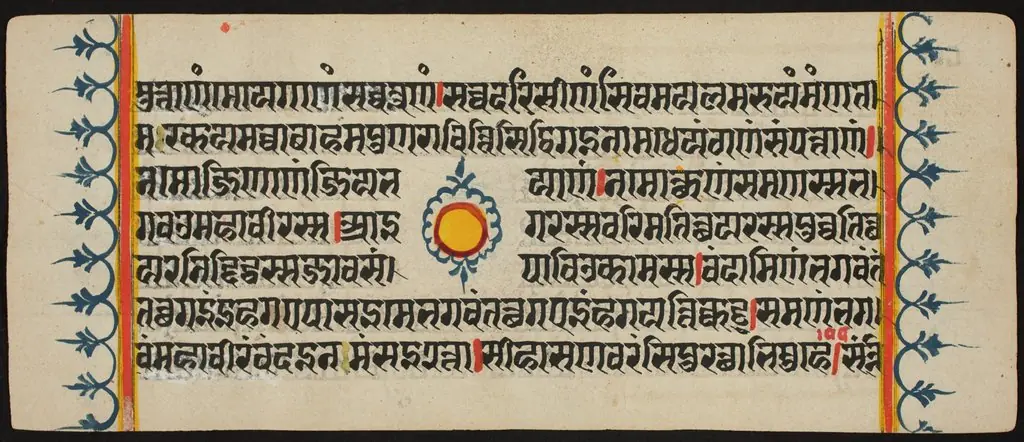
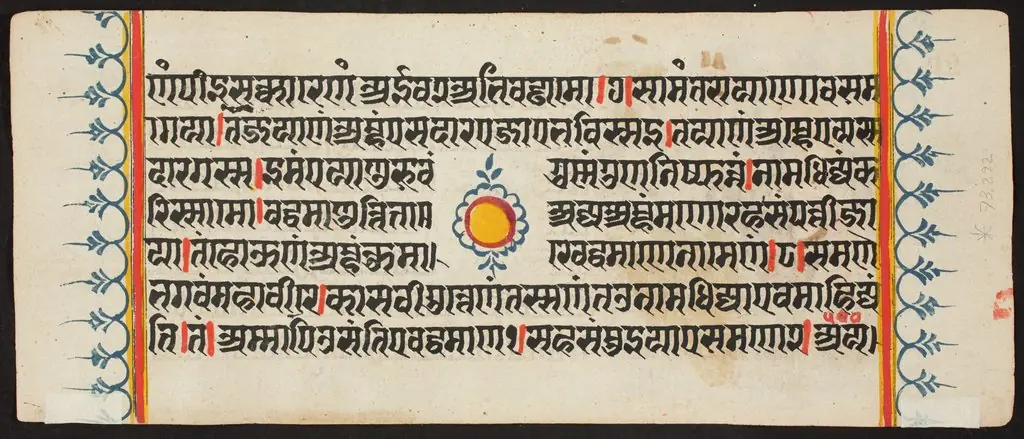
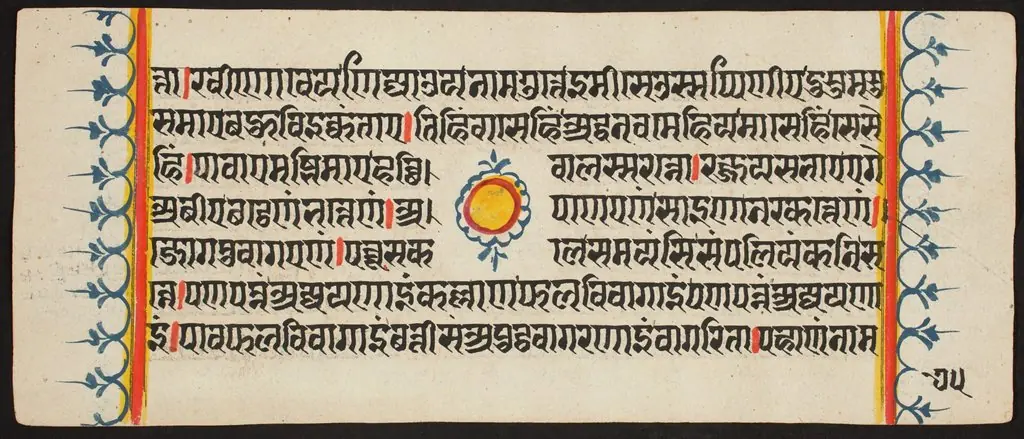
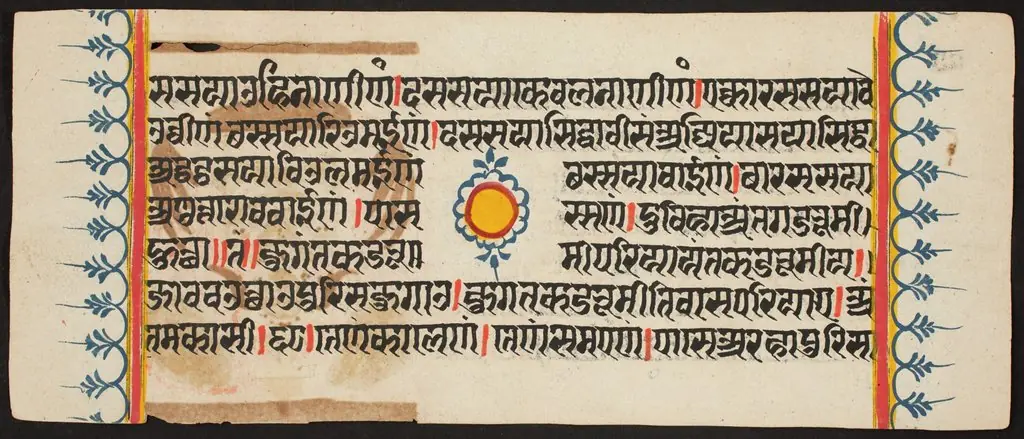
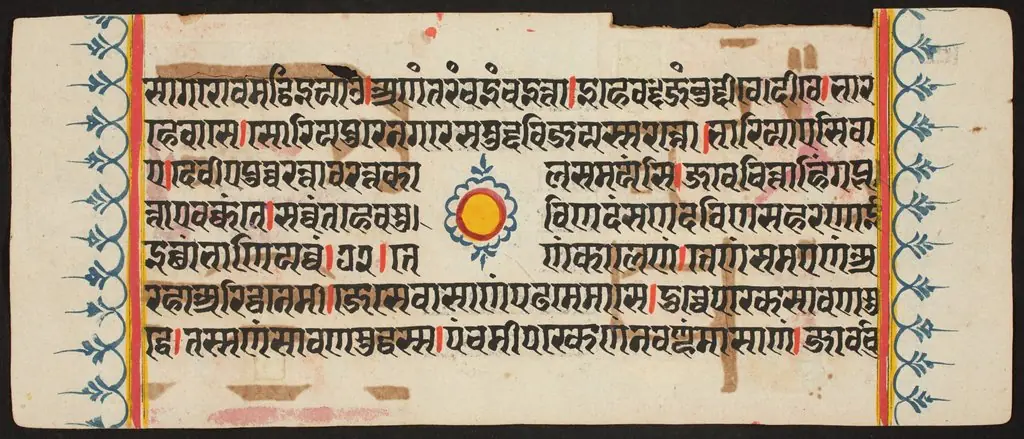
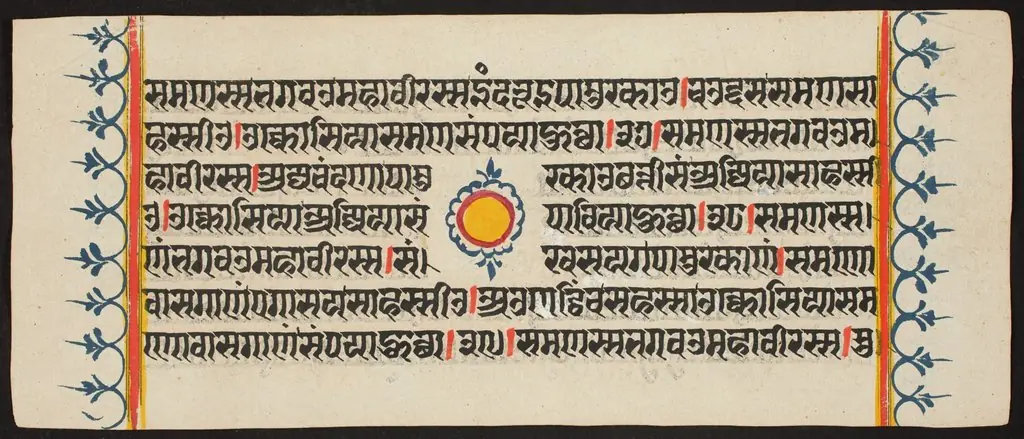
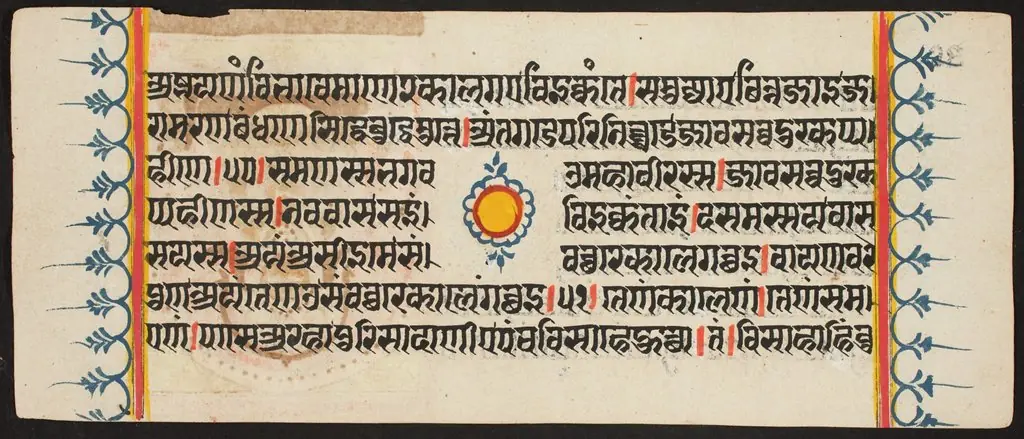
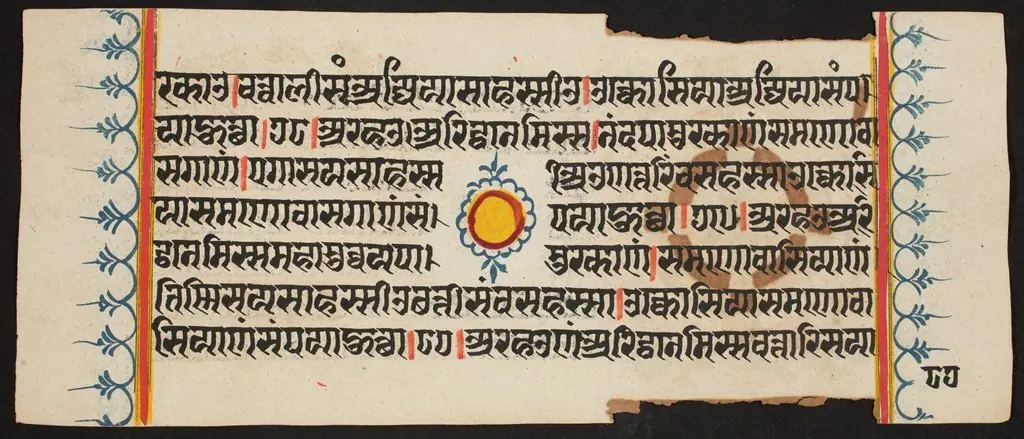
A small concentric emblem—yellow center, red ring, blue outline—appears at the center, functioning as a symbolic motif rather than a narrative image.
This artifact is a folio from a Kalpa Sutra manuscript, a Jain religious text written in Prakrit using a medieval Indic script. The off-white parchment features black ink script with selective red highlights, likely denoting sacred names or key passages. Decorative borders frame the text, each marked by a central red vertical line and yellow edging. A small concentric emblem—yellow center, red ring, blue outline—appears at the center, functioning as a symbolic motif rather than a narrative image.
Subject & Meaning
The Kalpa Sutra contains biographies of Jain Tirthankaras and monastic rules. The red-highlighted passages likely emphasize names of revered teachers or doctrinal injunctions. The central emblem, while abstract, may symbolize the cosmic order or the spiritual center of Jain cosmology. Its placement suggests ritual significance, possibly marking a sacred section of the text used in liturgical recitation or contemplative practice.
Technique & Style
The script is meticulously rendered in black ink with precision, indicating skilled calligraphic training. Red pigment, possibly vermilion, was applied sparingly for emphasis, contrasting with the muted off-white ground. The borders are geometrically uniform, with fine red lines and yellow bands applied by hand. The central emblem, composed of three concentric rings, demonstrates a standardized iconographic convention common in Jain manuscript decoration, prioritizing symbolic clarity over naturalism.
History & Provenance
Folios like this were produced in western India between the 14th and 16th centuries, primarily in Gujarat or Rajasthan. They were commissioned by Jain lay patrons for temple libraries or monastic use. The preservation of the border design and pigment integrity suggests careful handling and storage, likely within a religious institution. Similar manuscripts survive in collections across India and Europe, often originating from temple archives or private Jain collections.
Context
Jain manuscript culture emphasized textual purity and visual restraint. Unlike Hindu or Buddhist texts, Jain illuminated manuscripts rarely depicted figures; instead, they used symbolic motifs and textual emphasis to convey sanctity. This folio reflects a tradition where the written word itself was sacred, and decoration served to elevate the act of reading or reciting scripture, aligning with Jain principles of non-attachment and reverence for knowledge.
Legacy
This folio exemplifies a distinctive Jain aesthetic that prioritized textual authority over pictorial representation. Its design elements influenced later manuscript traditions in western India and remain studied for their calligraphic discipline and symbolic economy. Surviving Kalpa Sutra folios are now preserved in museums and libraries as key artifacts of Jain intellectual and devotional life, offering insight into pre-modern religious literacy and material culture.
Artist & collection

 Domestic Scene
 Giacomo and Cardinal Marco, investing Andrea, Abbot of San Zeno, with his Benefice
 The Nymph of Fontainebleau
 Portrait of a Woman
 Madonna and Child with Saints in the Enclosed Garden
 Venus and Minerva
 Family Group of Four on Sofa
 Wall painting from Room H of the Villa of P. Fannius Synistor at Boscoreale