Artwork
Nine dessert plates
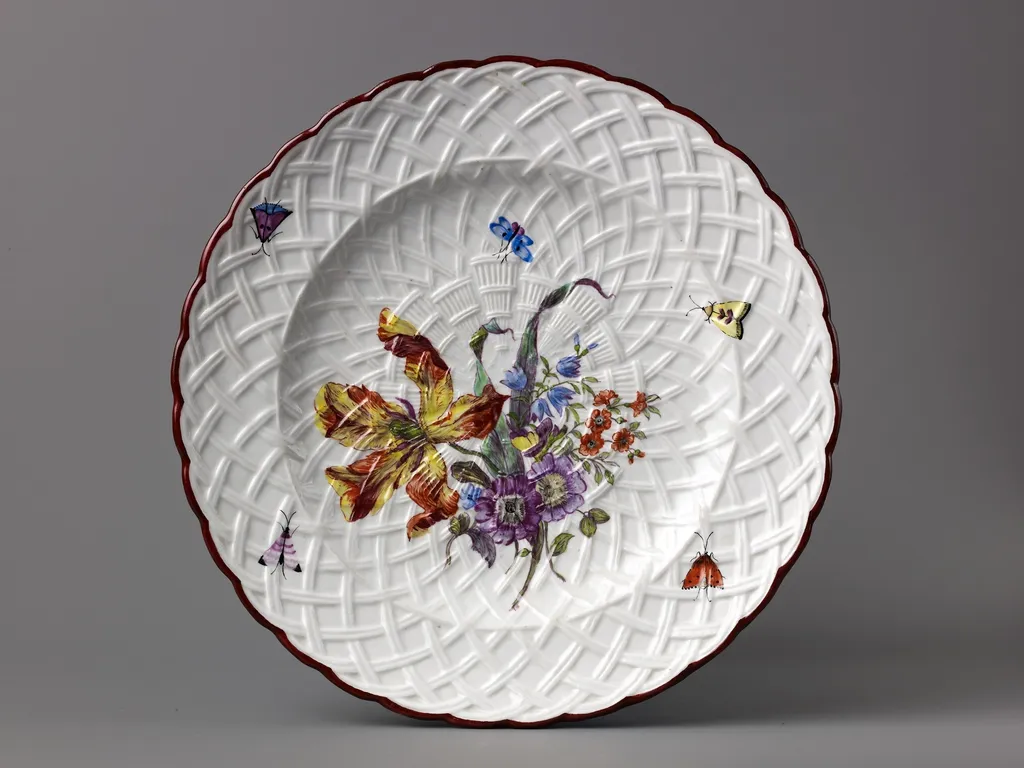
Nine dessert plates is an unspecified painting. It dates from 1769 and is held in the collection of the Metropolitan Museum of Art. The object is a circular, white ceramic plate featuring a decorative central motif.
About this work
Overview
The object is a circular, white ceramic plate featuring a decorative central motif. Around the rim the surface is textured, resembling a woven or basket‑like pattern. The interior displays a painted arrangement of flowers in vivid purples, blues and oranges, flanked by two large green leaves, with small butterflies and insects scattered throughout the design.
Subject & Meaning
The central composition presents a stylized bouquet, combining bright, uncomplicated hues to evoke a garden scene. The inclusion of butterflies and insects adds a sense of natural movement, while the framing leaves emphasize the floral arrangement, suggesting an appreciation of decorative flora typical of domestic ornamental art.
Technique & Style
The plate’s surface was hand‑painted using opaque pigments applied in flat, saturated washes. The brushwork is straightforward, yielding crisp outlines and uniform color fields. The rim’s raised texture was likely created by hand‑building or a slip‑trailing technique, giving the edge a basket‑like appearance that contrasts with the smooth central glaze.
Context
Such decorative plates were commonly produced for everyday use or as ornamental pieces in the 19th and early 20th centuries, when floral motifs were popular in domestic ceramics. The combination of painted flora and textured rims reflects a trend toward integrating pictorial decoration with tactile surface treatment in household wares.
Legacy
While not a singularly celebrated work, the plate exemplifies the broader tradition of painted ceramic tableware that blends functional objects with artistic embellishment. Its design continues to inform contemporary ceramic artists who explore the dialogue between surface texture and painted narrative motifs.
Artist & collection
