Artwork
Illustration to "Vishnu Sahasranama"
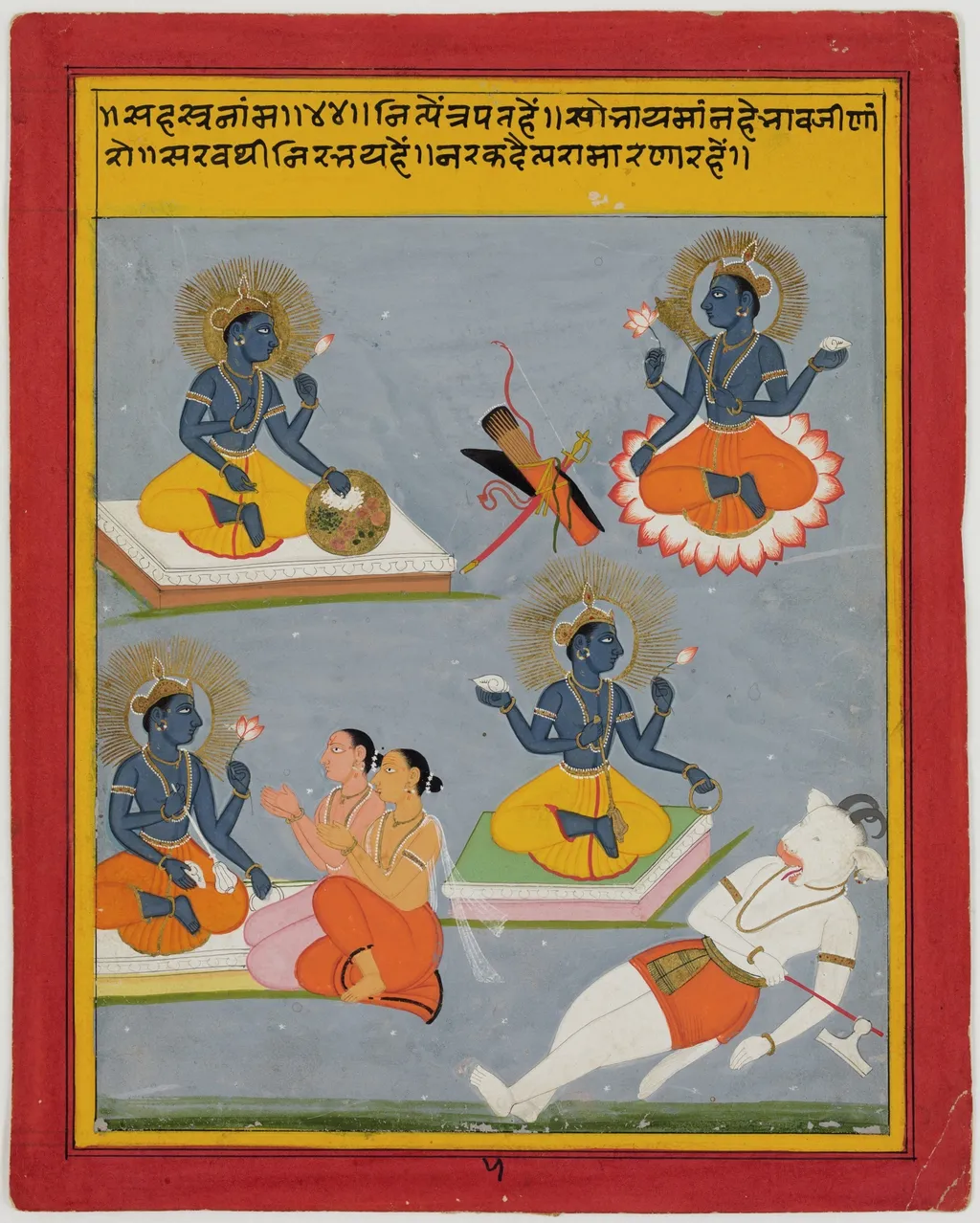
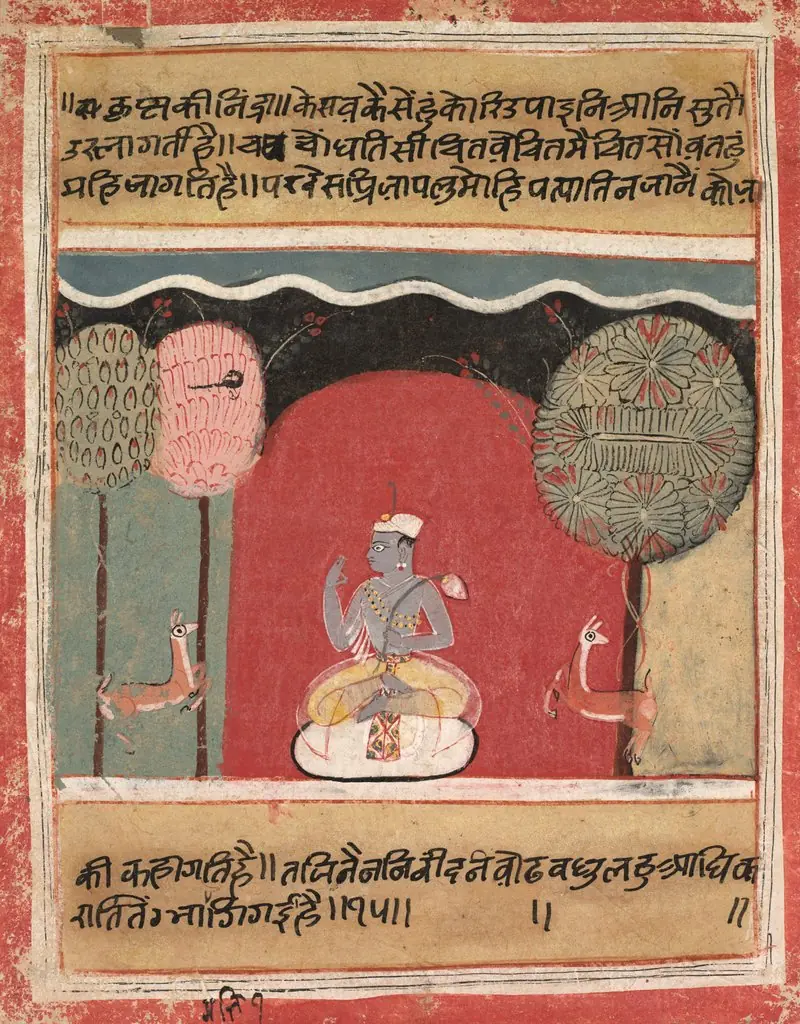
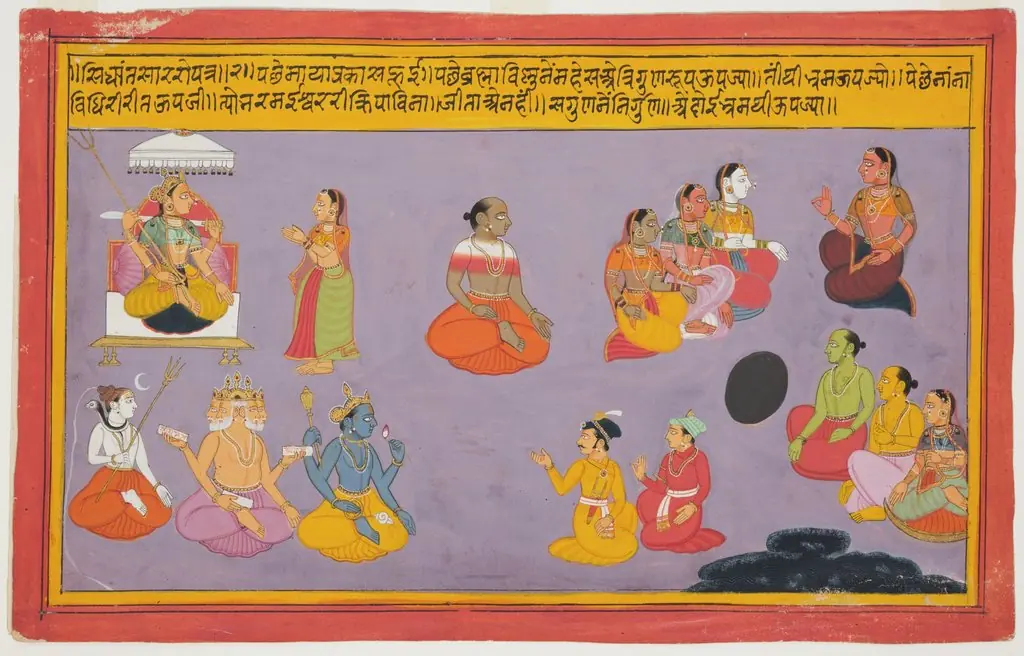
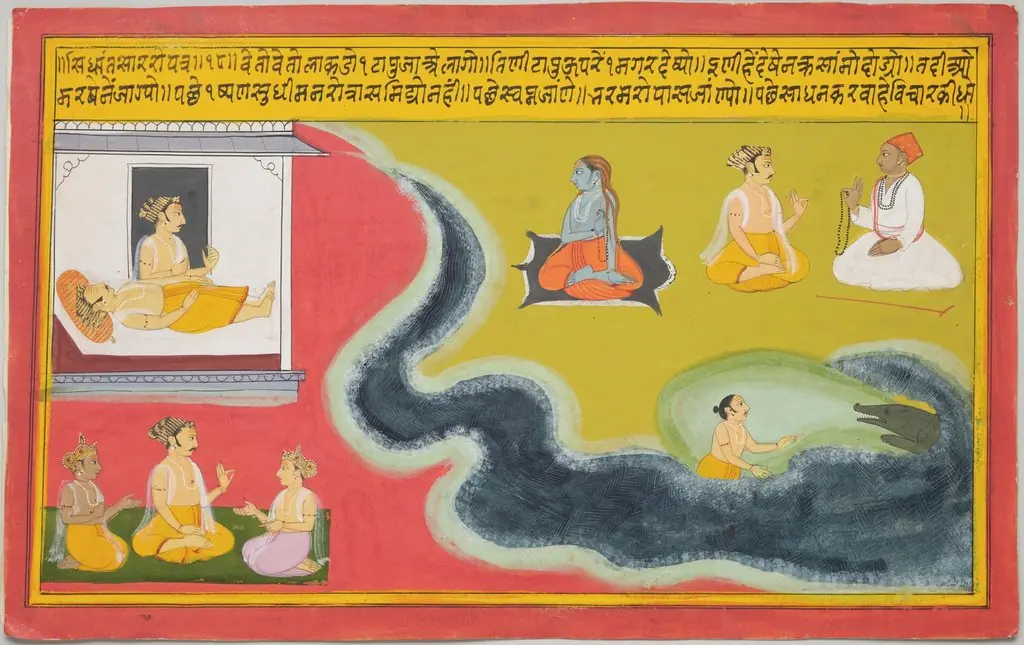
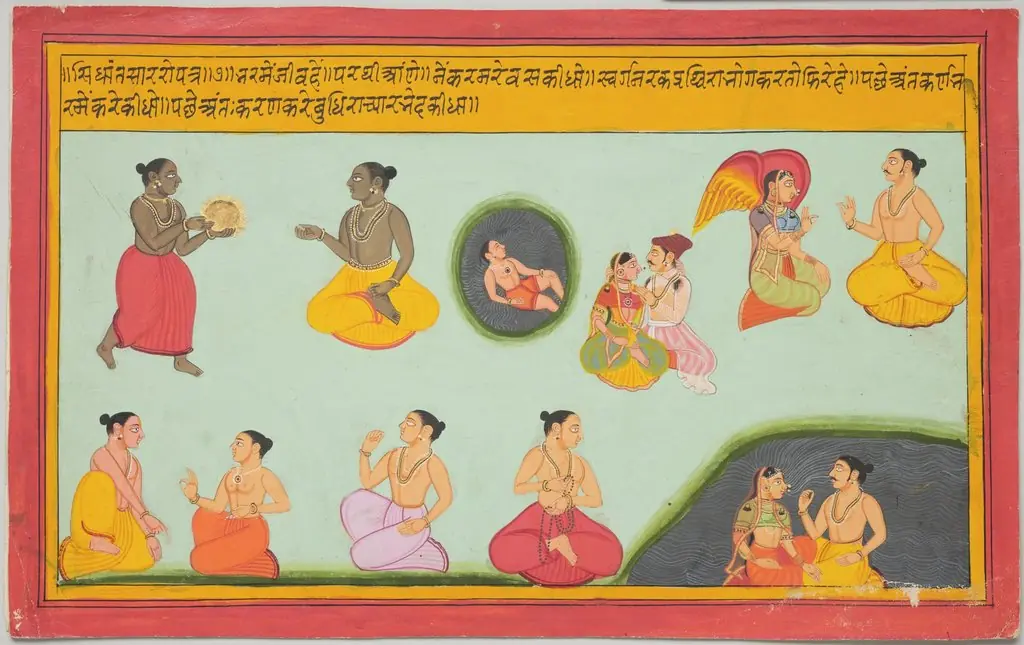
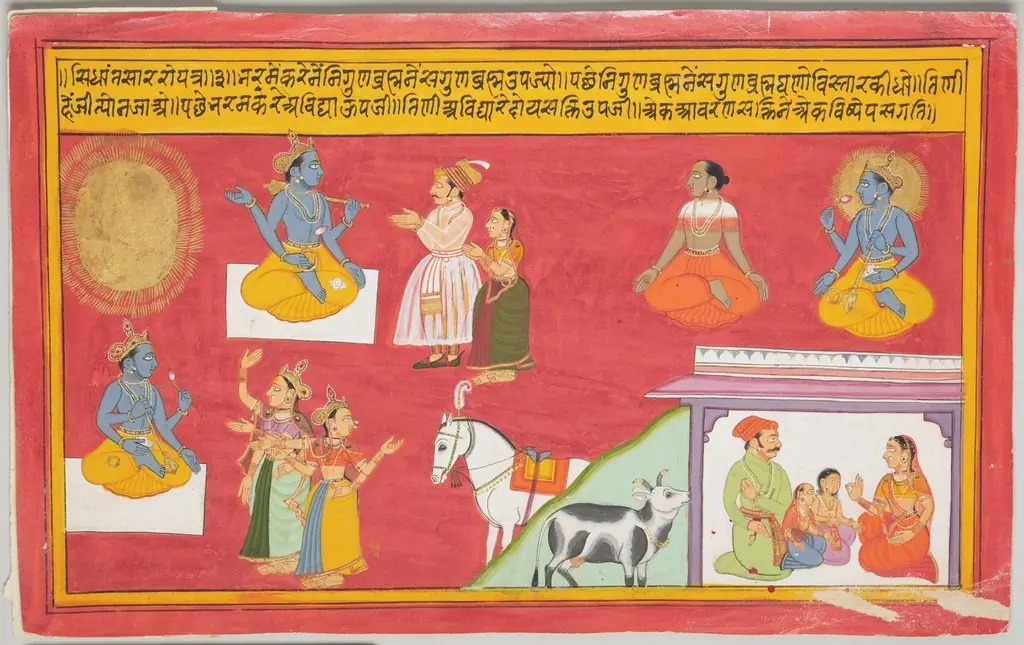
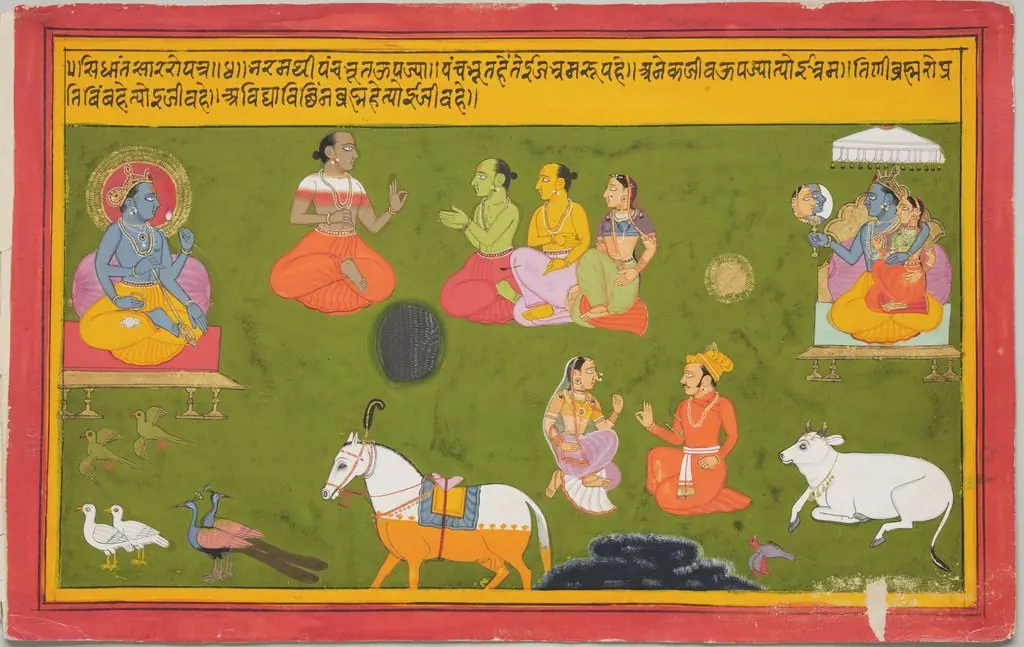
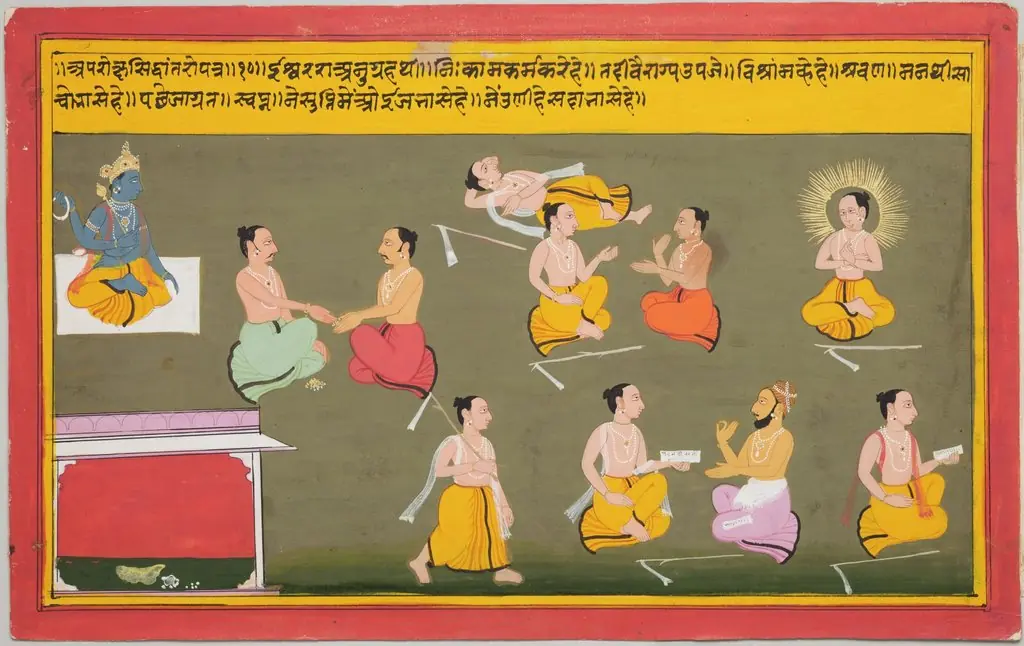
Illustration to "Vishnu Sahasranama" is an unspecified painting by the Mughal Painting artist Unknown. It dates from 1690 and is held in the collection of the Detroit Institute of Arts. This small-scale painting illustrates a passage from the Vishnu Sahasranama, a Hindu text listing one thousand names of Vishnu.
About this work
Overview
Rendered in delicate brushwork, it centers on a blue-skinned deity seated on a lotus, surrounded by symbolic elements of divine presence.
This small-scale painting illustrates a passage from the Vishnu Sahasranama, a Hindu text listing one thousand names of Vishnu. Rendered in delicate brushwork, it centers on a blue-skinned deity seated on a lotus, surrounded by symbolic elements of divine presence. The composition is framed by a red border and set against a muted gray background, emphasizing spiritual stillness over narrative detail.
Subject & Meaning
The central figure represents Vishnu, identified by his blue complexion and attributes: the conch shell (symbolizing cosmic sound) and the lotus (purity and creation). The two kneeling women embody devotion, while the prone white figure with a red sash may signify a devotee in surrender or a mythic being in reverence. Together, the elements convey an act of worship rooted in quiet contemplation.
Technique & Style
The painting employs fine, controlled lines and flat areas of color typical of late Mughal or Rajput devotional art. Soft modeling defines the deity’s form, while the lack of perspective and minimal background detail focus attention on sacred figures. The red border functions both decoratively and ritually, marking the image as an object of veneration rather than mere illustration.
History & Provenance
The work is attributed to an artist active in northwestern India during the 18th or early 19th century, likely associated with a courtly or temple atelier. It entered the collection of the Detroit Institute of Arts through documented acquisition, aligning with broader efforts to preserve South Asian religious art in Western institutions during the 20th century.
Context
Produced during a period when illustrated manuscripts of sacred texts were still commissioned by patrons, this piece reflects the continuity of devotional painting traditions despite shifting political landscapes. Similar works were used in personal worship or temple rituals, where visual representation served as a conduit for meditation on divine qualities.
Legacy
As part of a larger corpus of illustrated Vishnu Sahasranama manuscripts, this painting contributes to the understanding of how Hindu theological concepts were visually codified. Its preservation in a major museum ensures continued scholarly access, offering insight into the interplay of text, image, and ritual in pre-modern Indian religious culture.
Artist & collection

 Domestic Scene
 Giacomo and Cardinal Marco, investing Andrea, Abbot of San Zeno, with his Benefice
 The Nymph of Fontainebleau
 Portrait of a Woman
 Madonna and Child with Saints in the Enclosed Garden
 Venus and Minerva
 Family Group of Four on Sofa
 Wall painting from Room H of the Villa of P. Fannius Synistor at Boscoreale