Artwork
Radha and Krishna
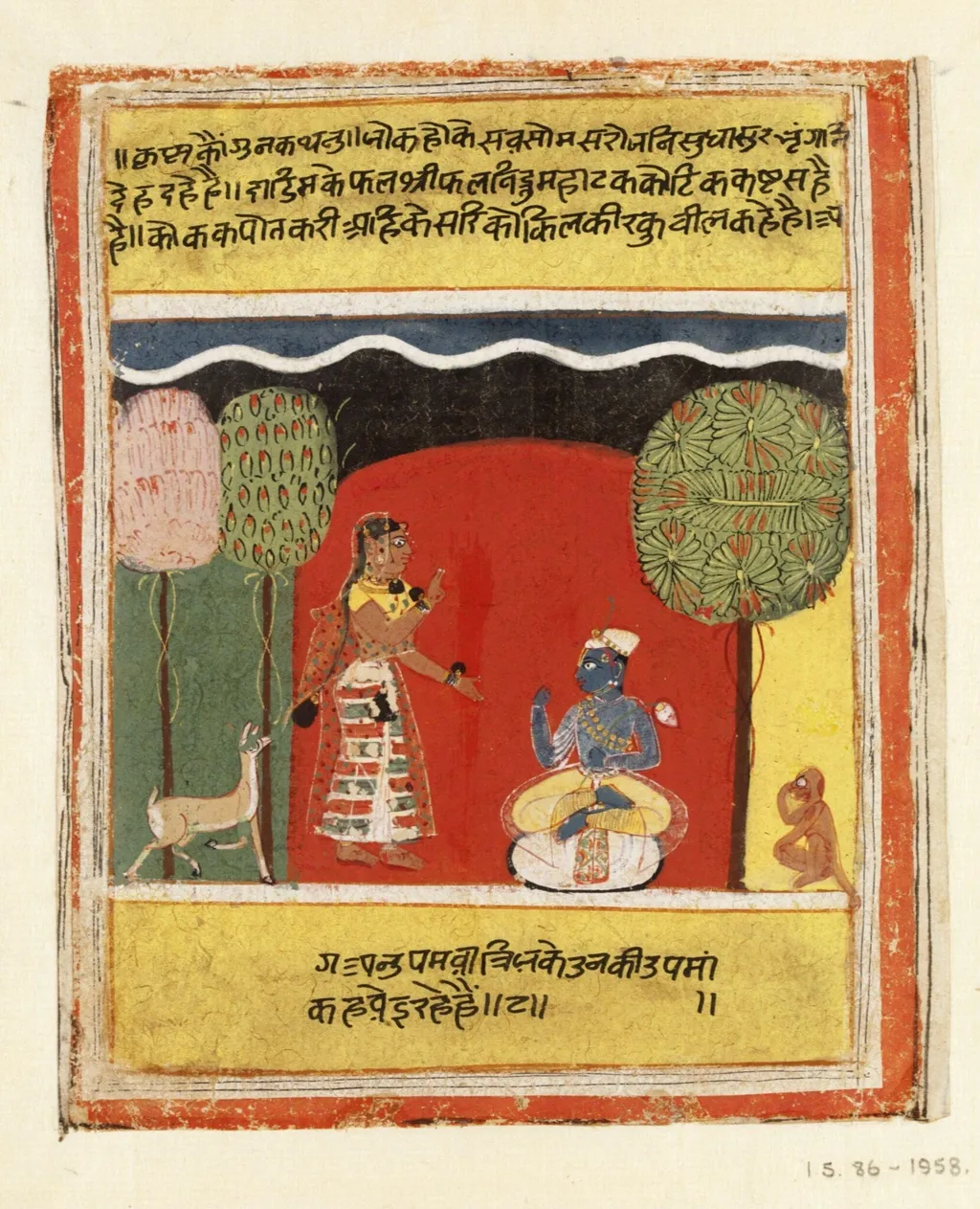
Radha and Krishna is a paint painting by the Baroque artist Unknown. It dates from 1634 and is held in the collection of the Victoria and Albert Museum.
About this work
Overview
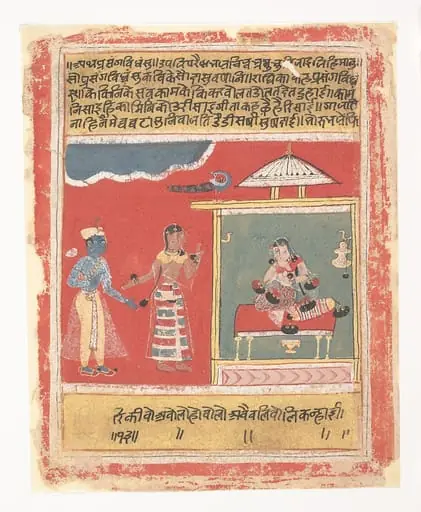
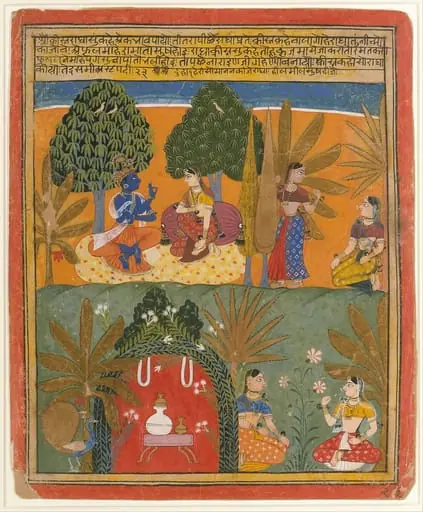
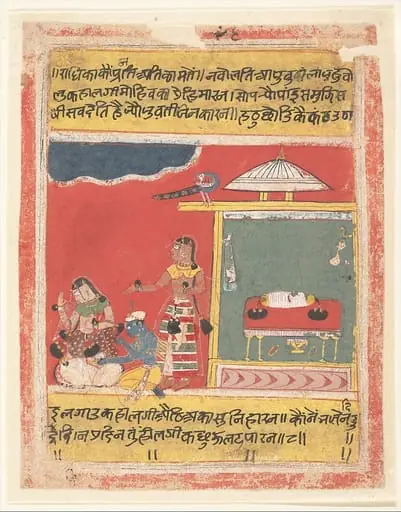
The work is a 17th‑century Indian painting that visualizes a passage from the Hindi treatise Rasikapriya, a text on love composed by Keshav Das in 1591 at Orchha, Madhya Pradesh. Executed in 1634, the piece portrays the divine lover Krishna alongside his mortal beloved Radha, set against a plain red field with stylised foliage.
Subject & Meaning
Krishna, identified by his characteristic blue skin, and Radha sit together, embodying the ideal of divine love explored in the Rasikapriya. The inclusion of a monkey, a deer and a bird adds symbolic companions often associated with pastoral romance in Hindu iconography.
Technique & Style
The painting employs a sparse, linear approach typical of the Malwa school of central India during the 1600s. Figures are rendered with minimal modelling, set against a uniform red background, while stylised trees provide a simple decorative framework.
History & Provenance
A colophon attached to the work records its completion in 1634, confirming its date and place of production. The colophon, now held in a private collection, serves as the primary documentary evidence for the painting’s origin.
Context
The Rasikapriya, written in the late 16th century, discusses various categories of lovers, frequently using the mythic pair of Krishna and Radha as exemplars. This painting thus functions as an illustrative accompaniment to the literary discussion, reflecting the devotional and aesthetic interests of the period.
Artist & collection

 Domestic Scene
 Giacomo and Cardinal Marco, investing Andrea, Abbot of San Zeno, with his Benefice
 The Nymph of Fontainebleau
 Portrait of a Woman
 Madonna and Child with Saints in the Enclosed Garden
 Venus and Minerva
 Family Group of Four on Sofa
 Wall painting from Room H of the Villa of P. Fannius Synistor at Boscoreale
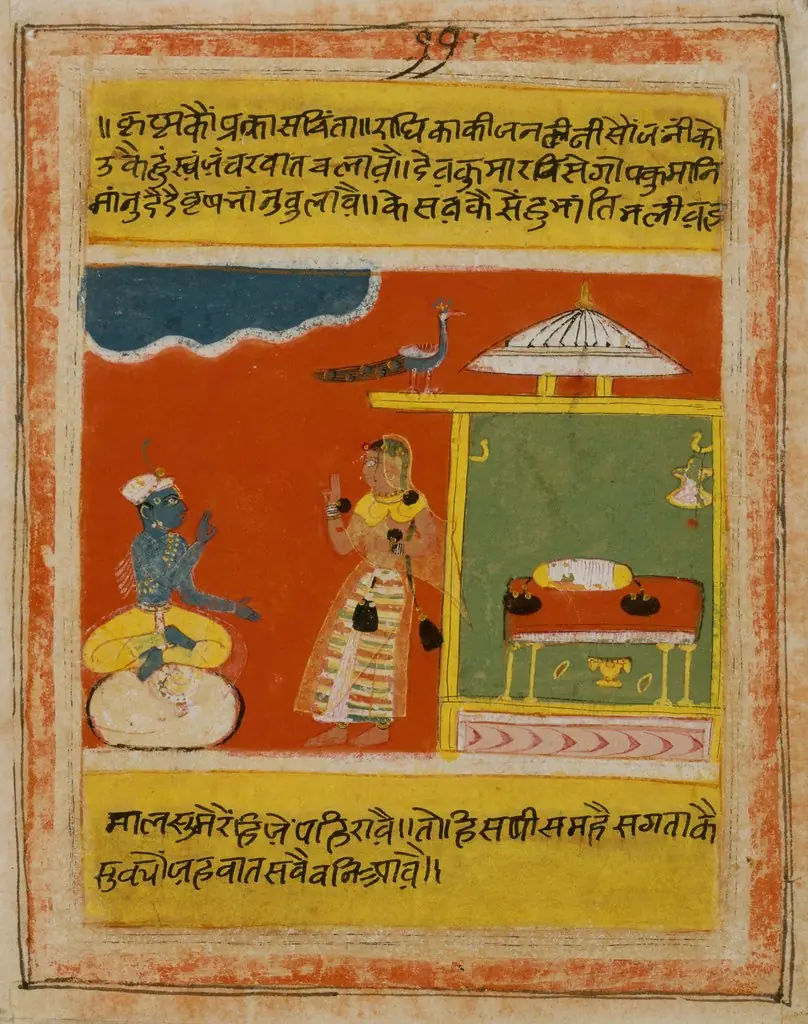 Krishna and Radha
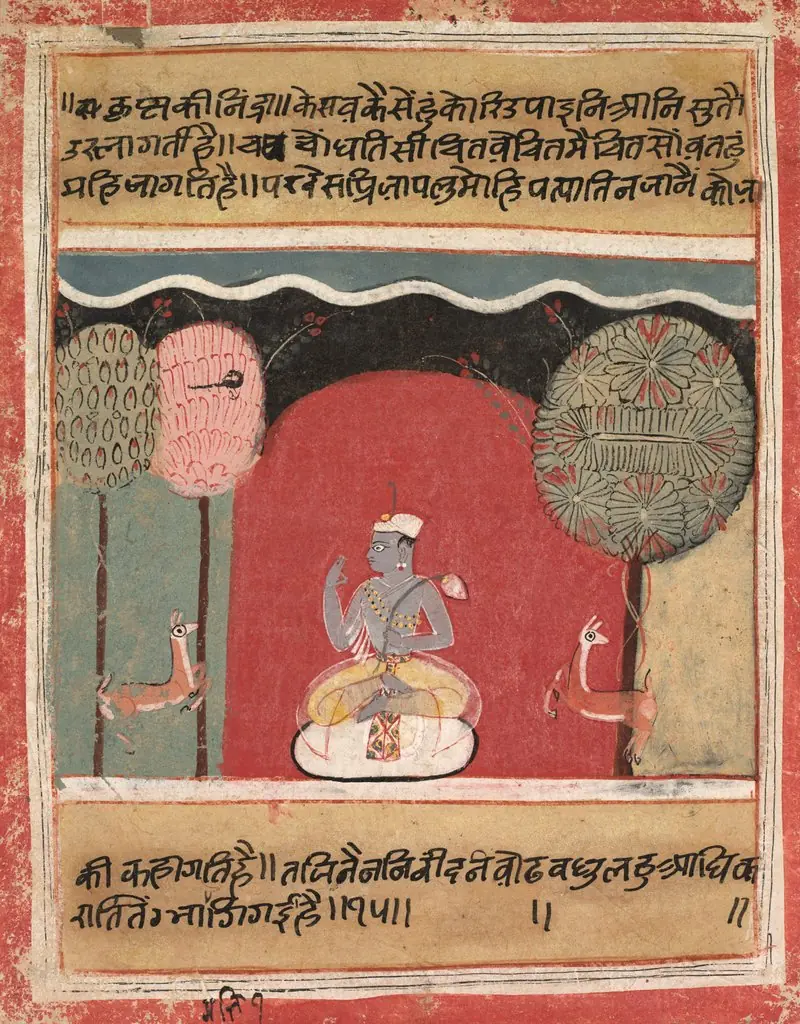 Krishna's Insomnia, Page from a Rasikapriya
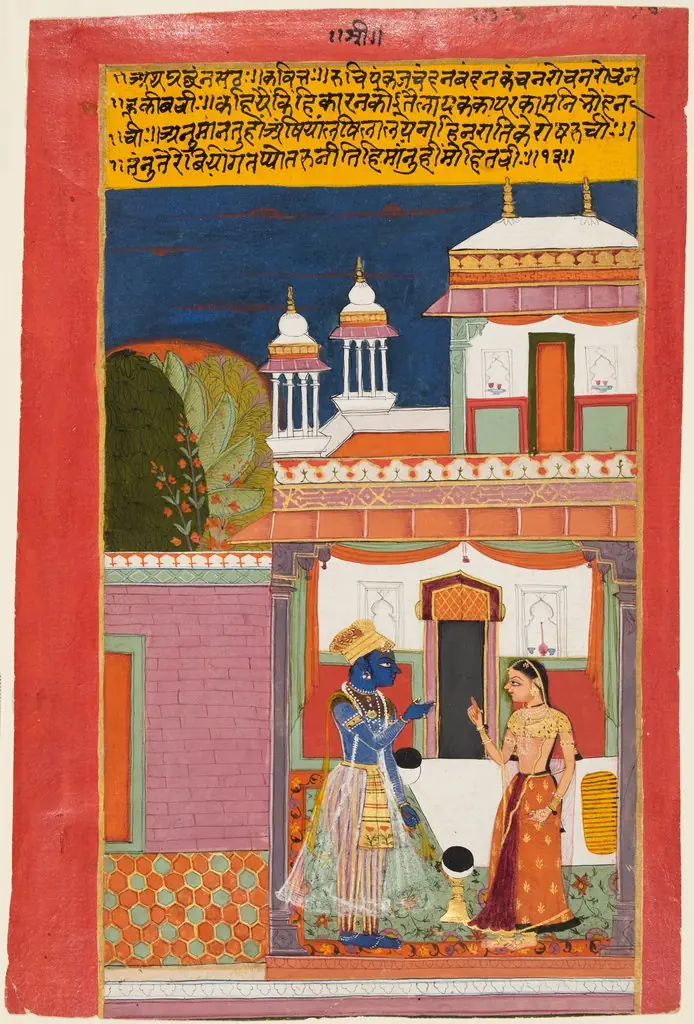 Krishna and Radha Quarreling: Shatha Nayaka, from a Rasikapriya
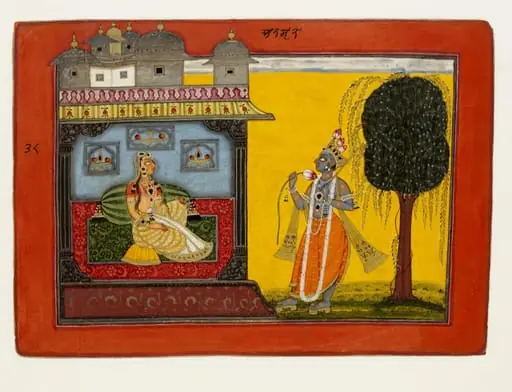 Krishna and Radha
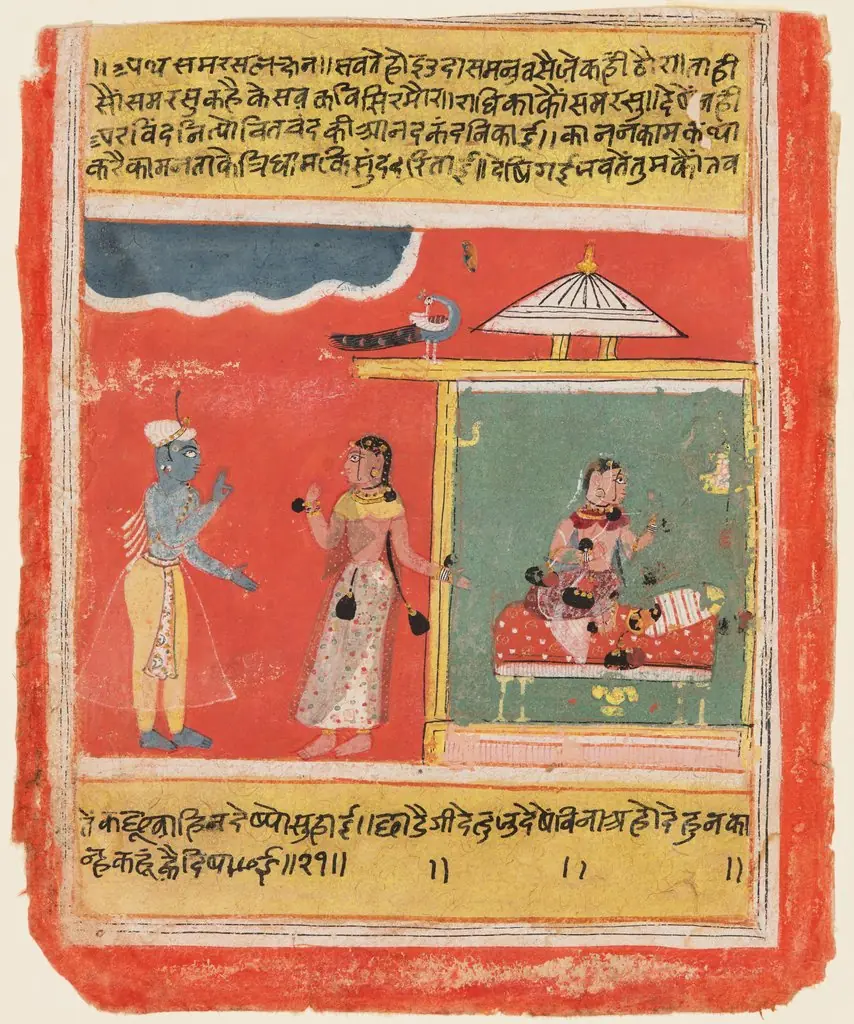 The Sentiment of Peace: Sama Rasa, from a Rasikapriya
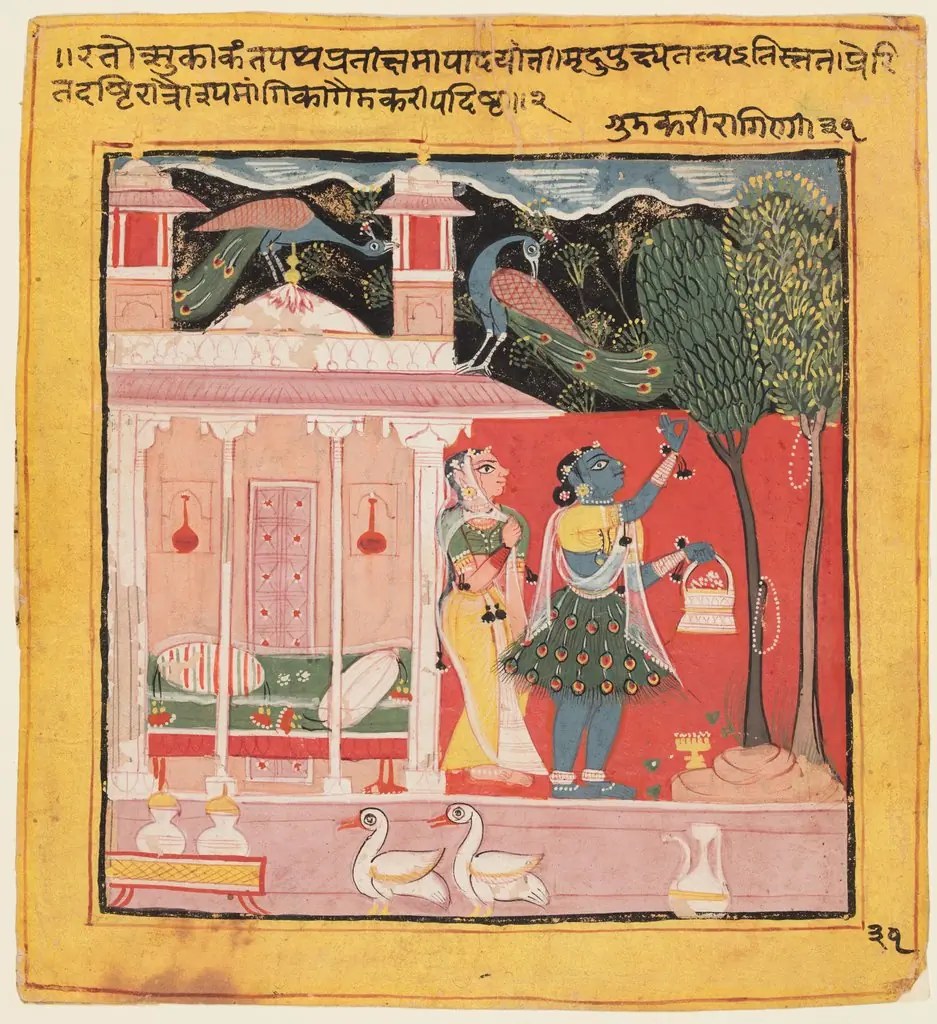 A Woman Plucks Leaves While Awaiting Her Lover: Gunakali Ragini of Malkos, from the “Chawand Ragamala”
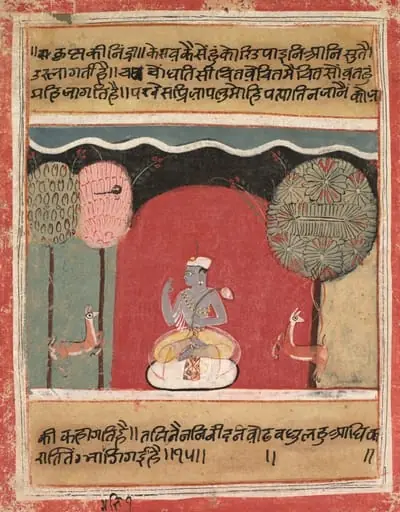 Krishna's Insomnia, Page from a Rasikapriya
 Untitled
 Untitled
 Untitled