Artwork
Raga Suramananda, page from a Ragamala series
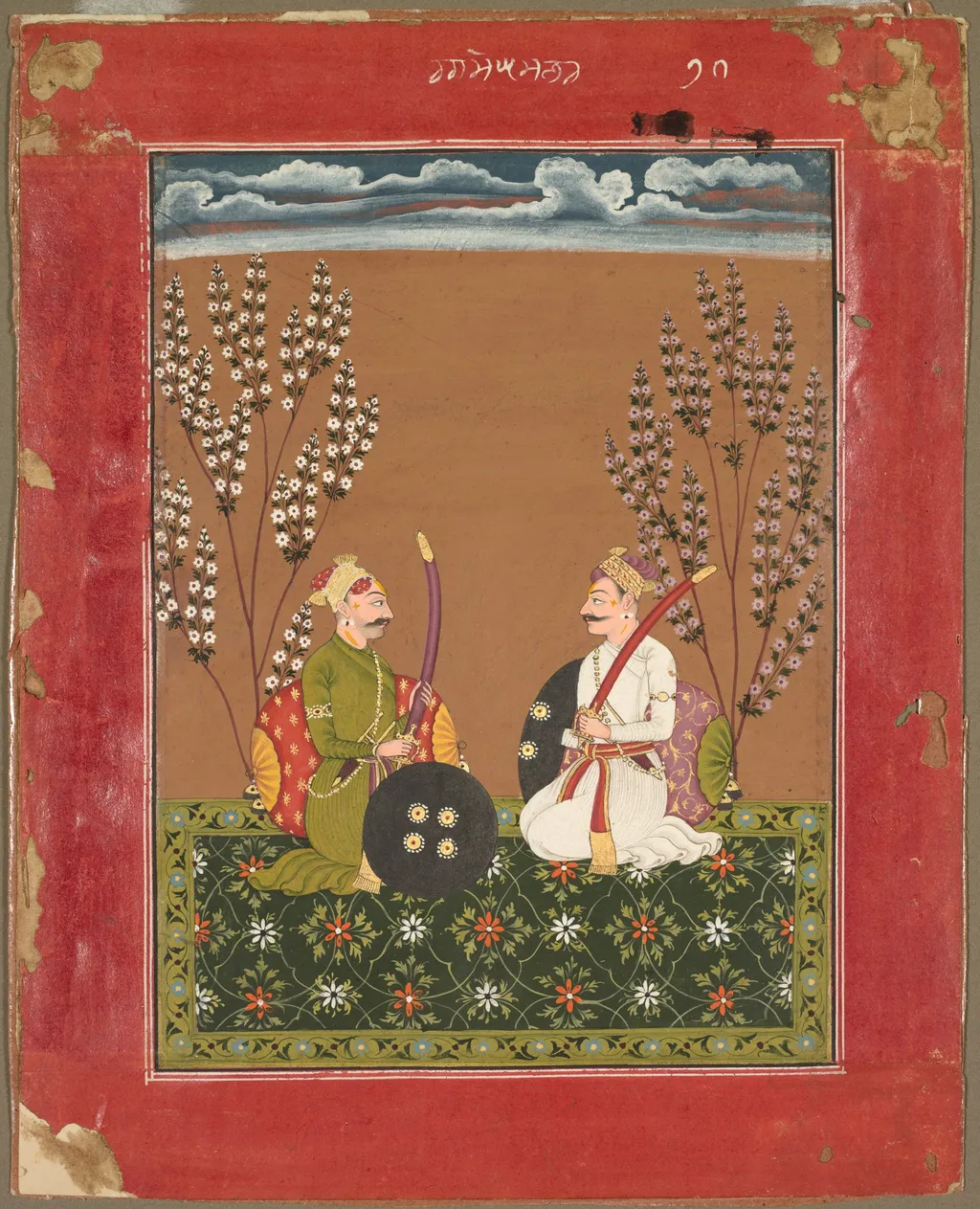
Raga Suramananda, page from a Ragamala series is an unspecified painting. It dates from 1750 and is held in the collection of the Cleveland Museum of Art. Raga Suramananda is a mid‑18th‑century Indian painting that forms part of a ragamala series—visual representations of musical modes.
About this work
The man on the right is wearing a white outfit with a purple and gold patterned blanket draped over his shoulder.
This painting shows two men sitting on a green floral patterned rug. They are wearing traditional Indian clothing and headpieces, and each is holding a bow and arrow. The man on the left is wearing a green outfit with a red and gold patterned blanket draped over his shoulder. The man on the right is wearing a white outfit with a purple and gold patterned blanket draped over his shoulder. The background of the painting is a brown wall with white flowers growing up the sides. Above the wall is a blue sky with white clouds. The painting is called Raga Suramananda, page from a Ragamala series. It was made in 1750 and is held at The Cleveland Museum of Art.
Overview
Raga Suramananda is a mid‑18th‑century Indian painting that forms part of a ragamala series—visual representations of musical modes. Executed around 1750, the work measures roughly a page‑size panel and is currently in the collection of the Cleveland Museum of Art. The composition combines figural narrative with decorative landscape elements, typical of ragamala conventions.
Subject & Meaning
The scene depicts two male figures seated on a richly patterned green rug, each attired in traditional court dress and bearing a bow and arrow. Their garments are complemented by draped blankets—one green with red‑gold motifs, the other white with purple‑gold designs—suggesting a symbolic pairing of contrasting yet harmonious qualities associated with the raga Suramananda.
Technique & Style
Rendered in opaque water‑based pigments on paper, the painting displays fine brushwork for the intricate textile patterns and delicate rendering of foliage. The background features a muted brown wall overgrown with white blossoms, while a blue sky with fluffy clouds rises above, creating a layered spatial depth that balances figural detail with ornamental scenery.
History & Provenance
Created circa 1750, the work likely originated in a northern Indian workshop that specialized in ragamala production for elite patrons. It entered the Cleveland Museum of Art’s holdings through a 20th‑century acquisition, though the precise chain of ownership before its museum entry remains undocumented in public records.
Context
Ragamala paintings served as visual aids for musicians and connoisseurs, linking specific ragas to moods, seasons, and mythic narratives. Suramananda, as a raga, is associated with a serene, devotional character, which the calm posture of the figures and the tranquil sky aim to evoke. The work reflects the broader 18th‑century Indian artistic trend of integrating music, poetry, and visual art.
Artist & collection

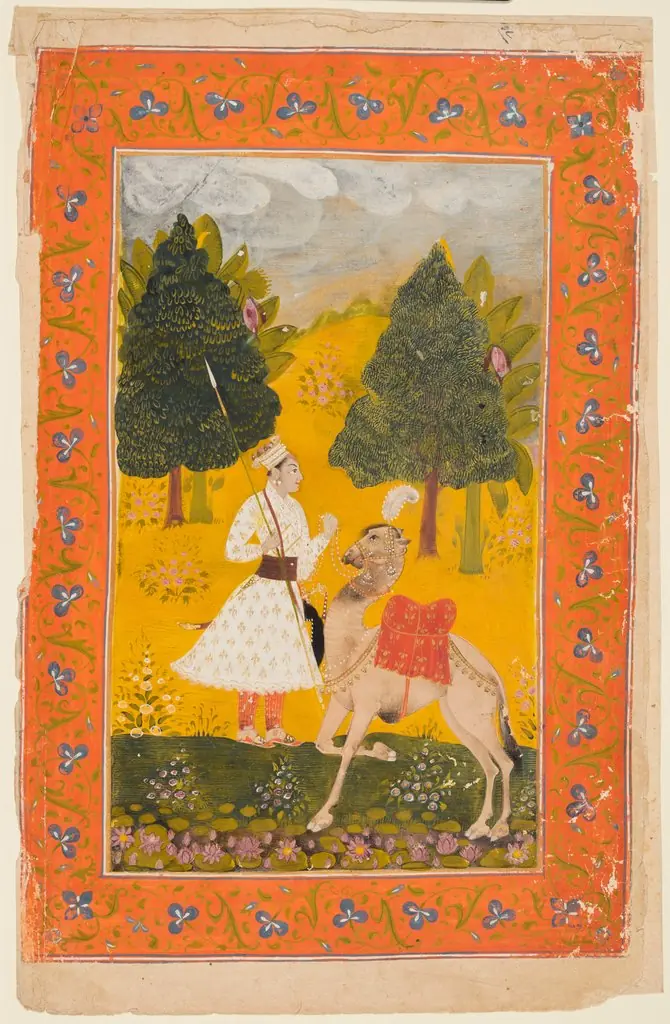 Maru Ragini, from a Ragamala (Garland of Melodies)
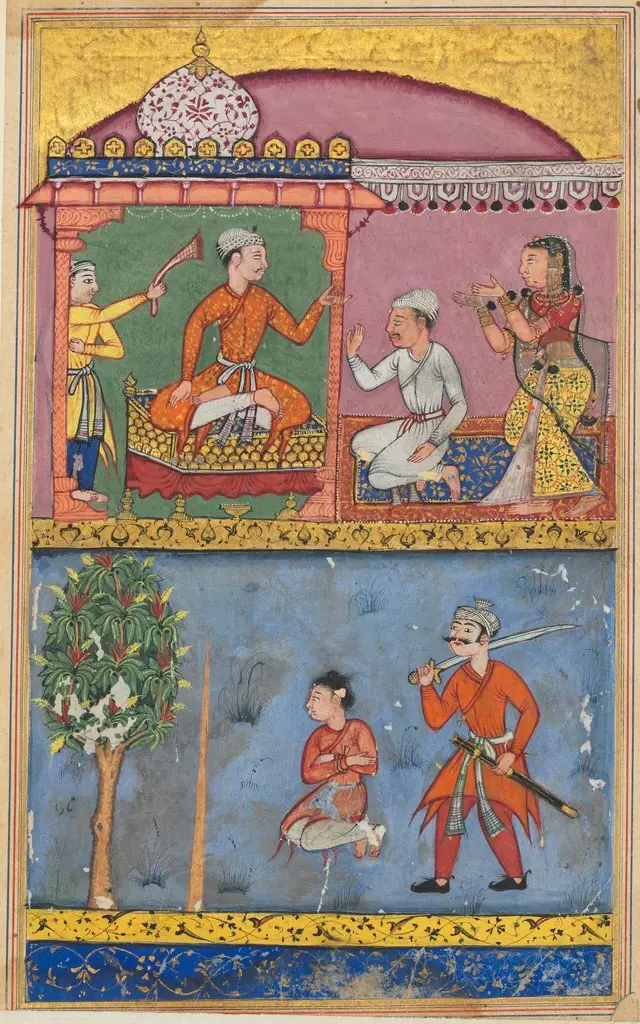 The handmaiden appeals for justice and the prince is taken to the execution site for the fourth time, from a Tuti-nama (Tales of a Parrot): Eighth Night
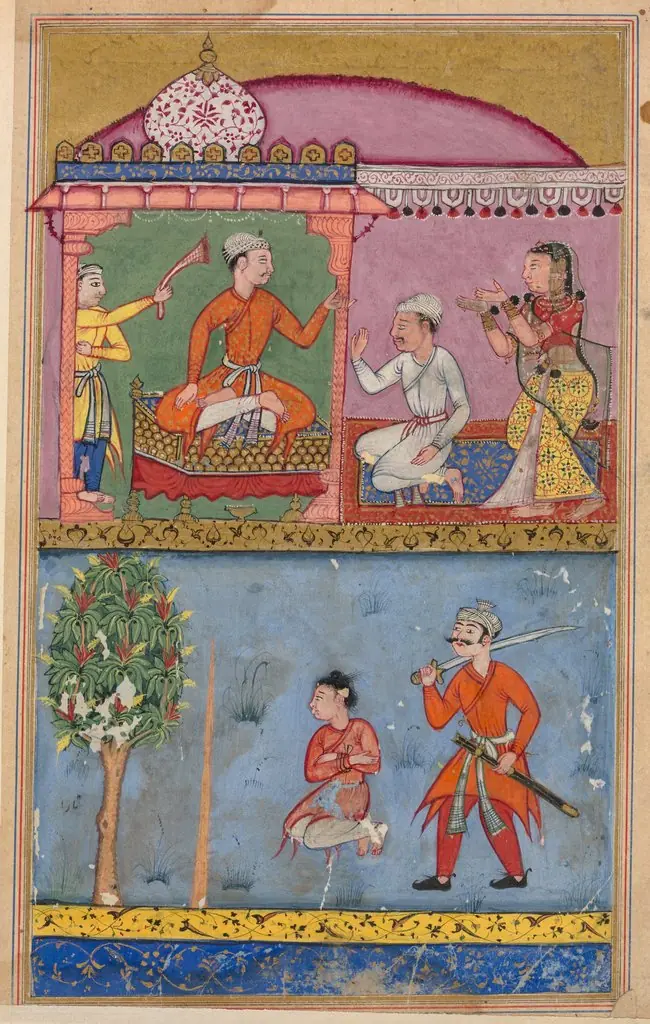 Page from Tales of a Parrot (Tuti-nama): text page
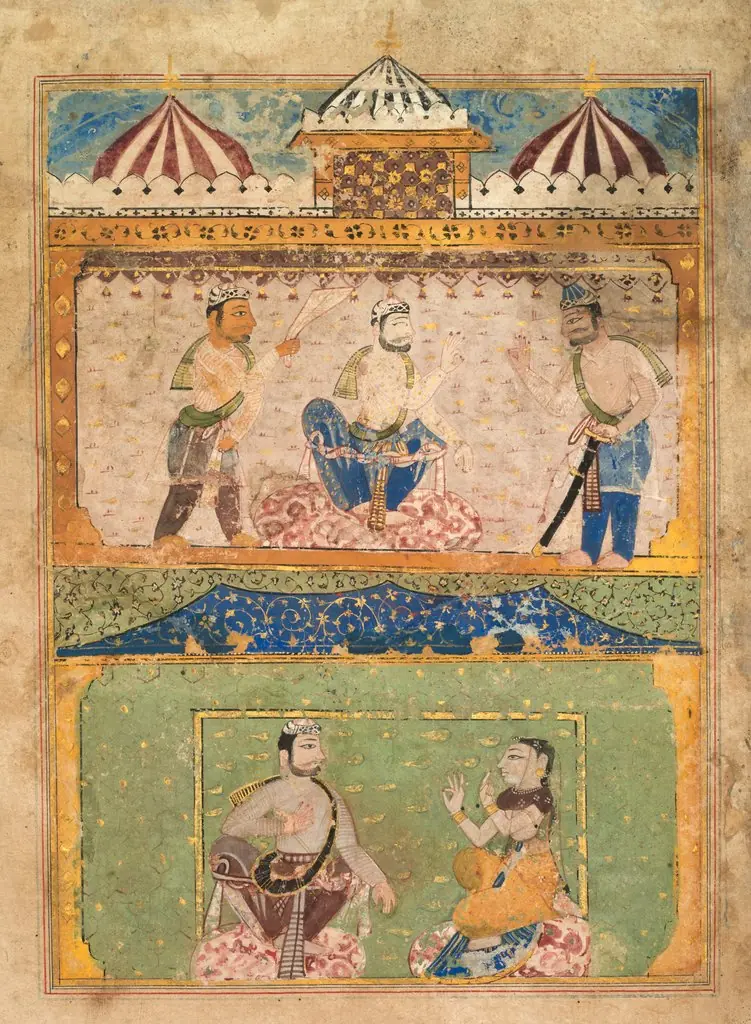 A Traveler Persuades Lorik to Return Home (top); Chanda Objects (bottom), from a Chandayana (Story of Chanda)
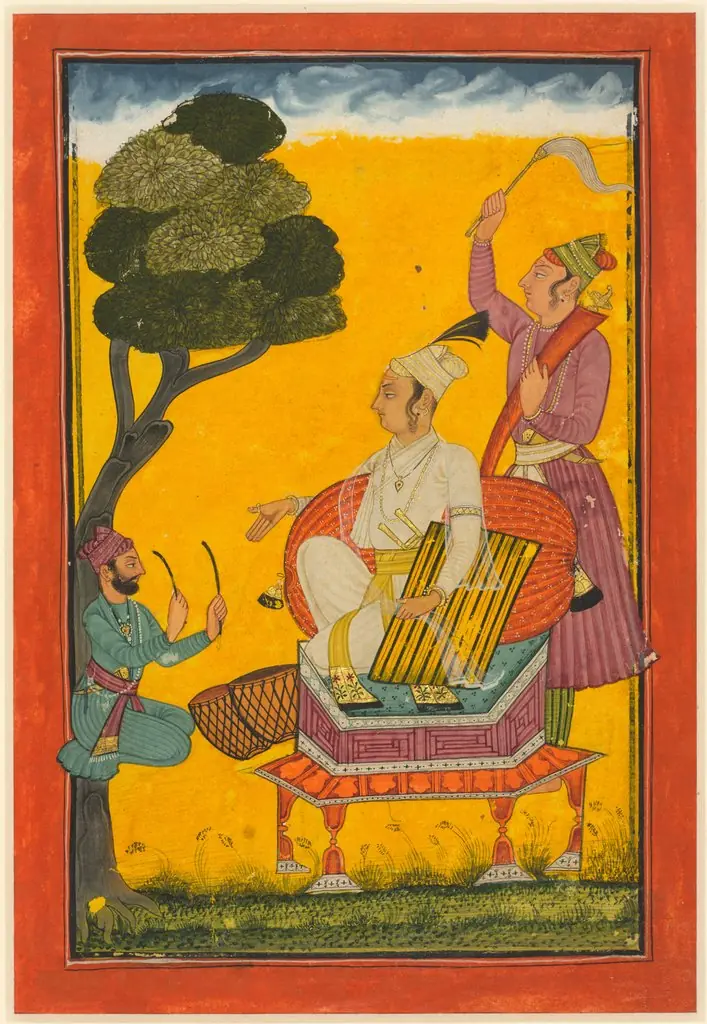 Vivaca Ragaputra, a Leaf from Ragamala Series