Artwork
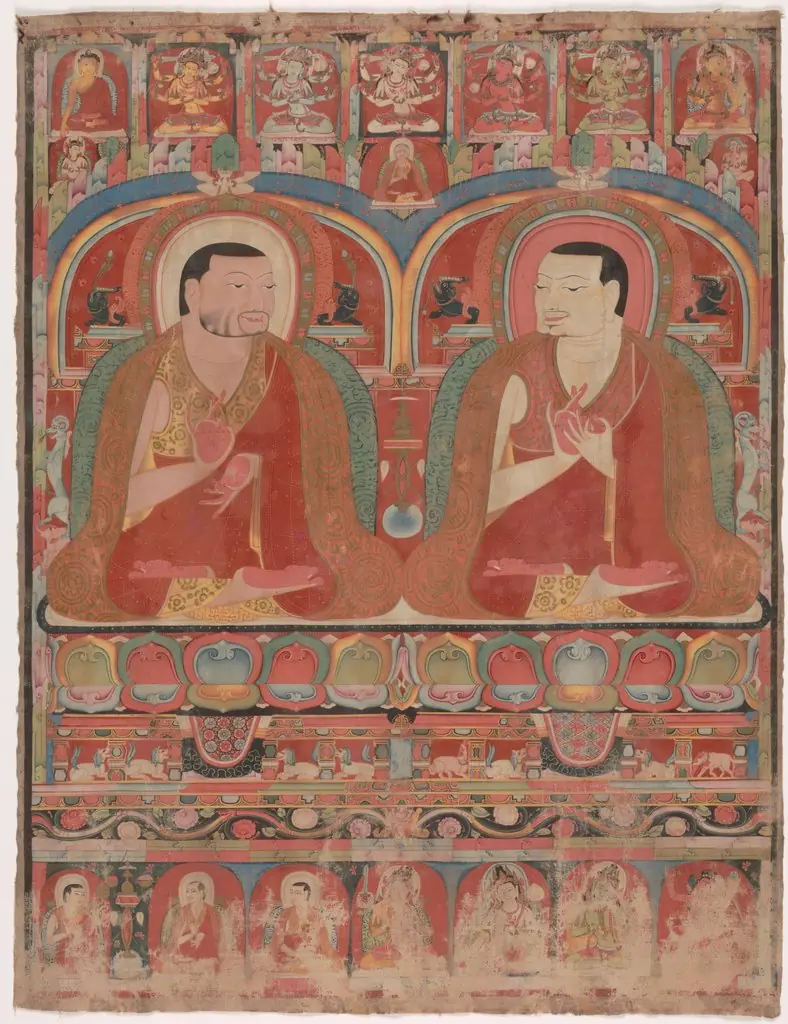
Painted Banner (Thangka) of Lineage Painting of Two Lamas in Debate
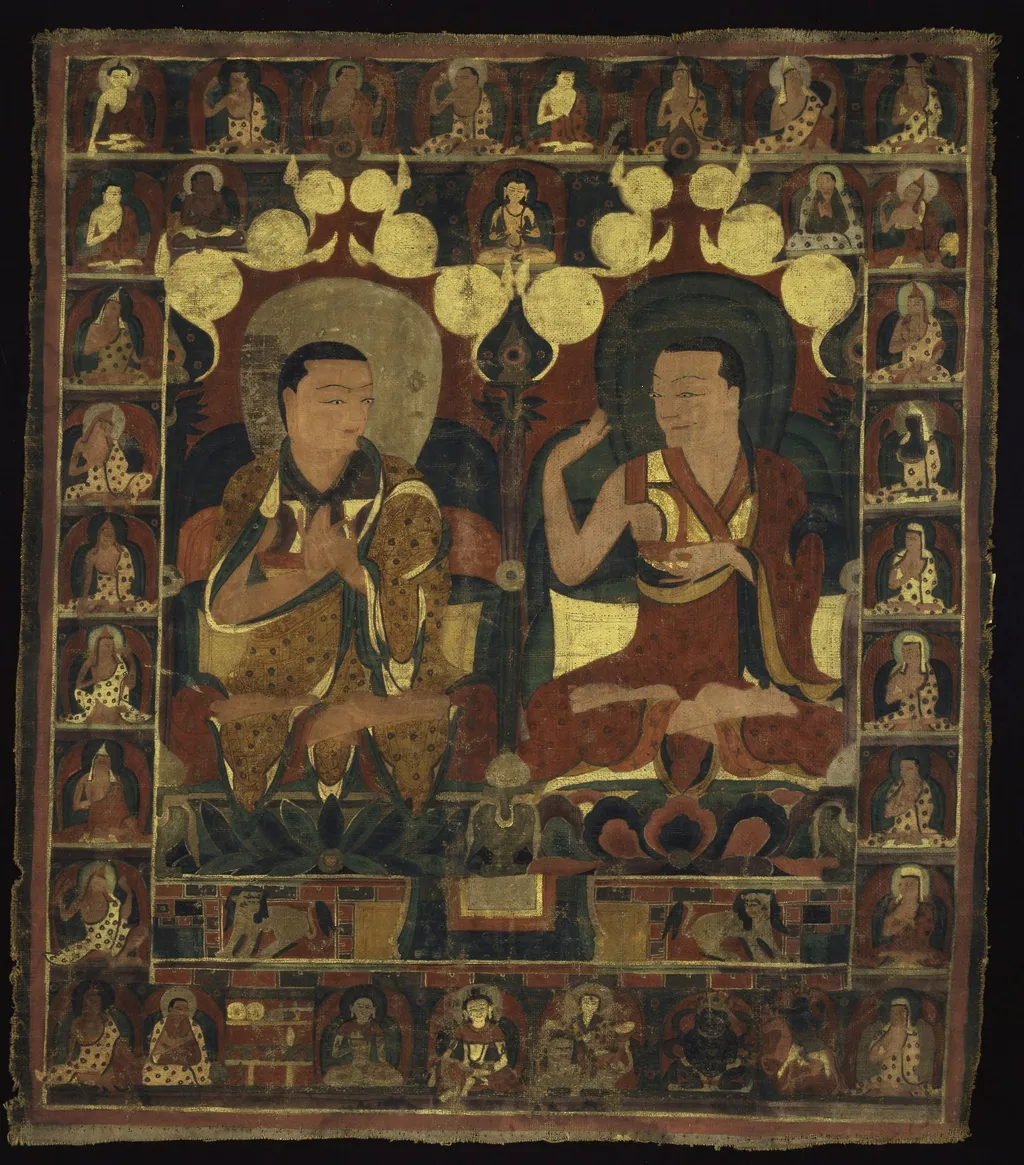
Painted Banner (Thangka) of Lineage Painting of Two Lamas in Debate is an unspecified painting by Unknown. It dates from 1500 and is held in the collection of the Art Institute of Chicago.
About this work
Overview
The background uses rich red and brown tones, typical of traditional Tibetan painting, framing the central scene with symbolic and hierarchical precision.
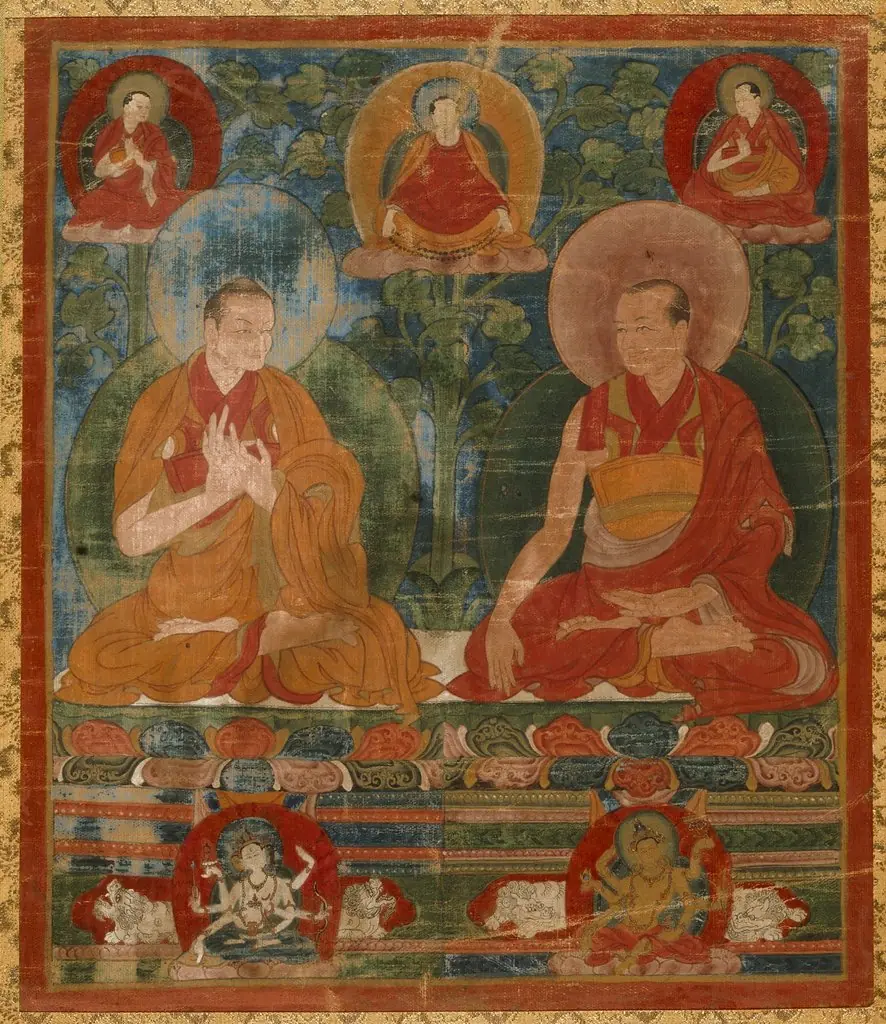
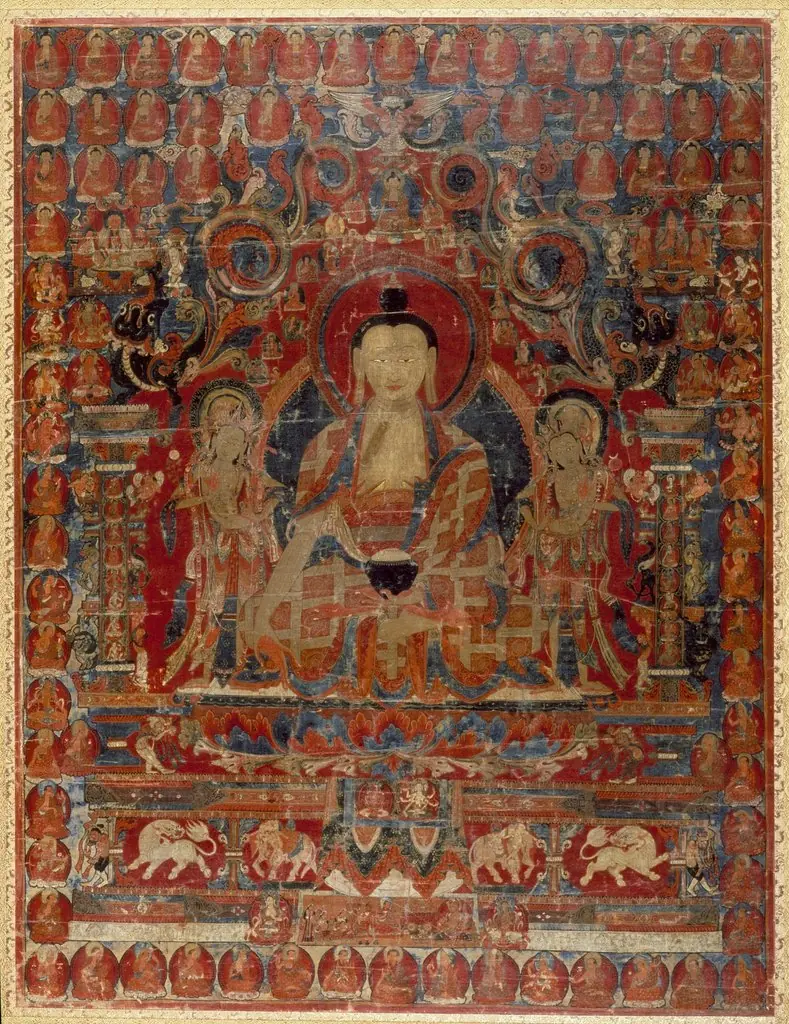
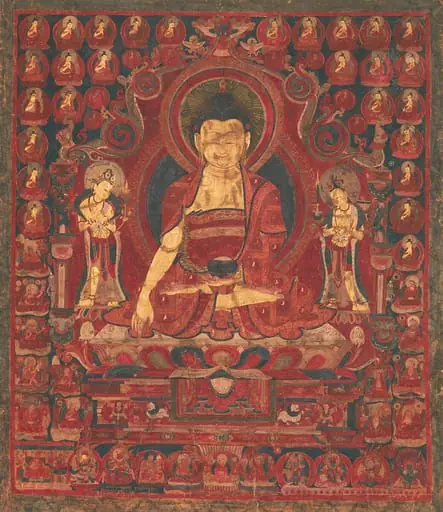
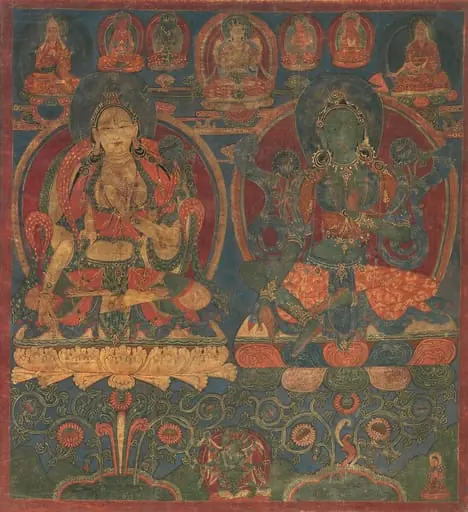
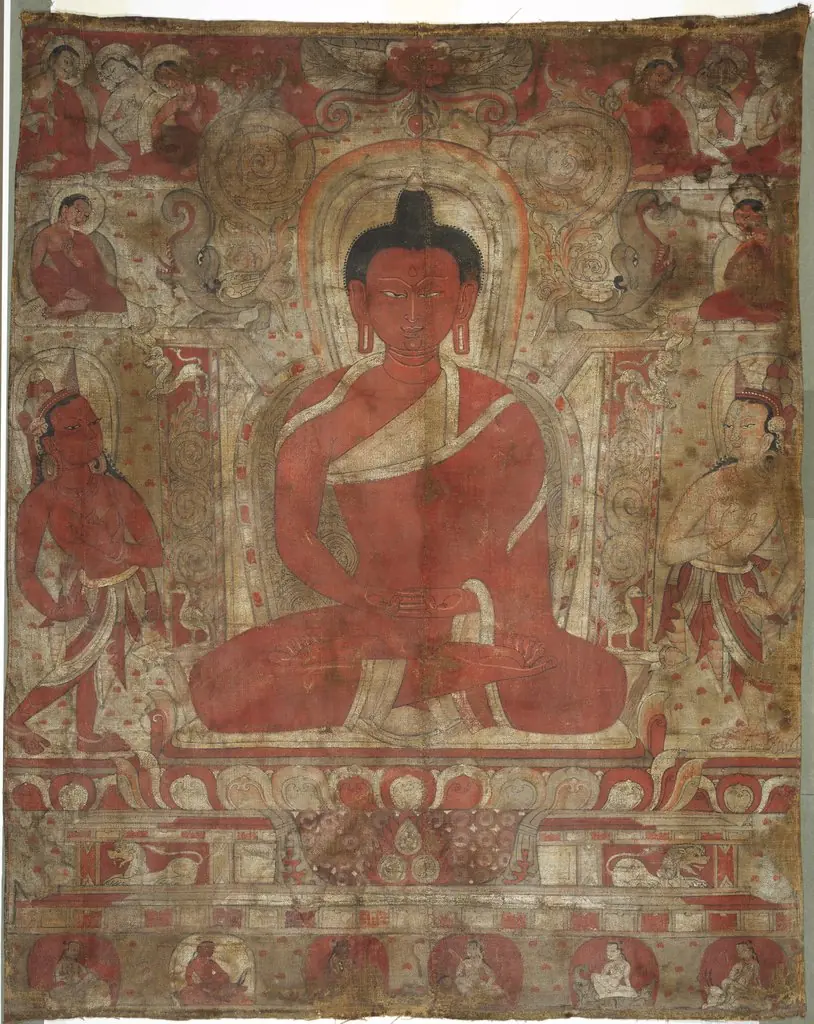
This thangka is a devotional painting depicting two lamas engaged in scholarly debate, a common practice in Tibetan Buddhist monastic education. The central figures are seated cross-legged on a floor, their hands raised in gestural exchange, while the surrounding border contains a series of smaller portraits. The background uses rich red and brown tones, typical of traditional Tibetan painting, framing the central scene with symbolic and hierarchical precision.
Subject & Meaning
The two lamas represent figures from a lineage of Buddhist teachers, likely engaged in doctrinal discourse to illustrate the transmission of knowledge. Their serious expressions and formal posture emphasize intellectual rigor over emotional display. The smaller figures around the border are probably ancestral masters or deities, reinforcing the spiritual pedigree of the debate and serving as witnesses to the continuity of teaching.
Technique & Style
Executed in the traditional Tibetan thangka style, the painting employs mineral pigments on cotton, with fine brushwork defining facial features and textile patterns. The use of flat, saturated colors and outlined forms follows iconographic conventions, avoiding perspective in favor of symbolic clarity. The border’s miniature portraits are rendered with meticulous detail, reflecting the importance of lineage and ancestral veneration in Tibetan Buddhist art.
History & Provenance
Though specific origins are undocumented, the painting likely dates to the 18th or 19th century, produced in a Tibetan or Himalayan monastic workshop. Such thangkas were commissioned for use in monasteries or private altars to aid meditation and instruction. Its presence in the Art Institute of Chicago suggests it entered a Western collection through early 20th-century acquisitions or missionary networks.
Context
Debate was a central pedagogical method in Tibetan Buddhism, used to sharpen understanding of doctrine through structured argument. Thangkas like this served both as visual aids in teaching and as objects of veneration. The inclusion of ancestral figures underscores the belief in unbroken spiritual transmission, linking contemporary practice to past masters through visual hierarchy and sacred geography.
Legacy
This thangka preserves a visual language that continues to inform Tibetan Buddhist practice today. Its preservation in a major museum allows broader access to a tradition rooted in oral and visual pedagogy. While removed from its original ritual context, it remains a testament to the enduring role of art in sustaining religious knowledge across generations.
Artist & collection

 Domestic Scene
 Giacomo and Cardinal Marco, investing Andrea, Abbot of San Zeno, with his Benefice
 The Nymph of Fontainebleau
 Portrait of a Woman
 Madonna and Child with Saints in the Enclosed Garden
 Venus and Minerva
 Family Group of Four on Sofa
 Wall painting from Room H of the Villa of P. Fannius Synistor at Boscoreale