Artwork
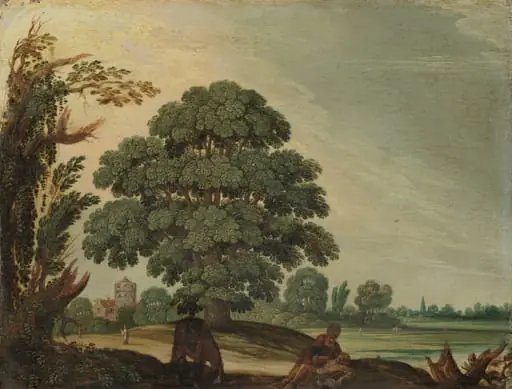
Landscape with the Good Samaritan
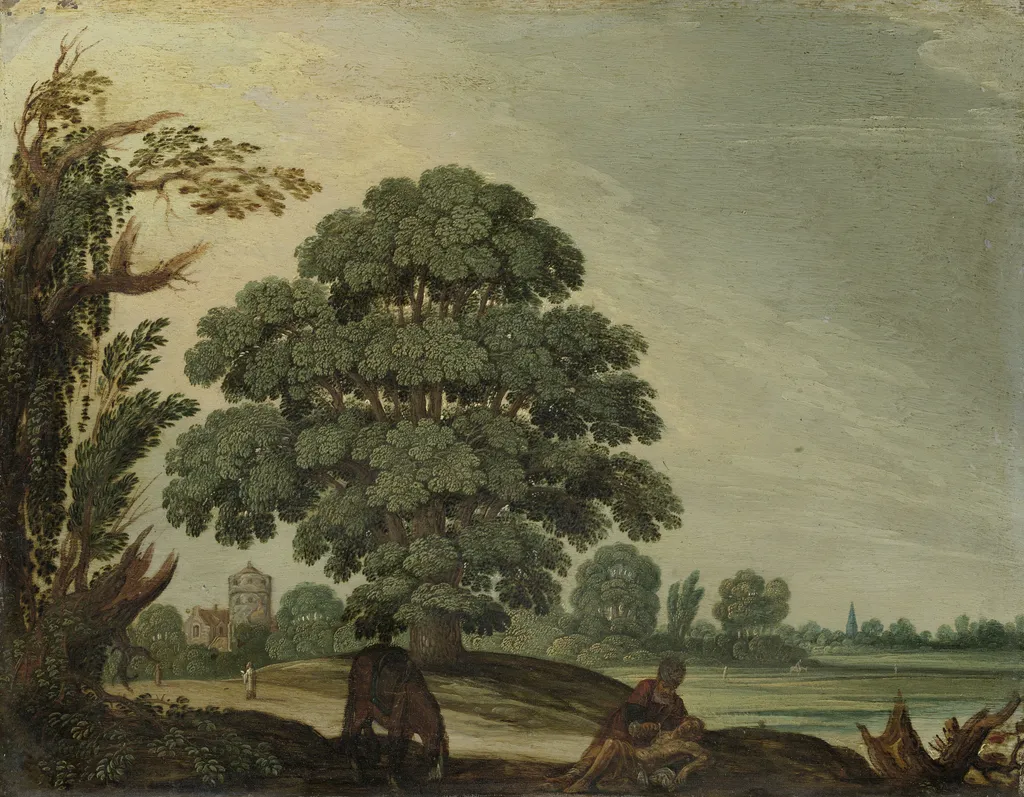
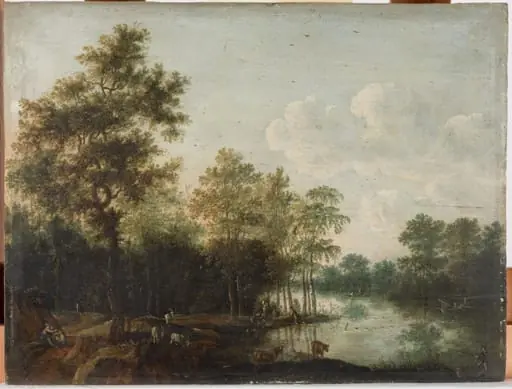
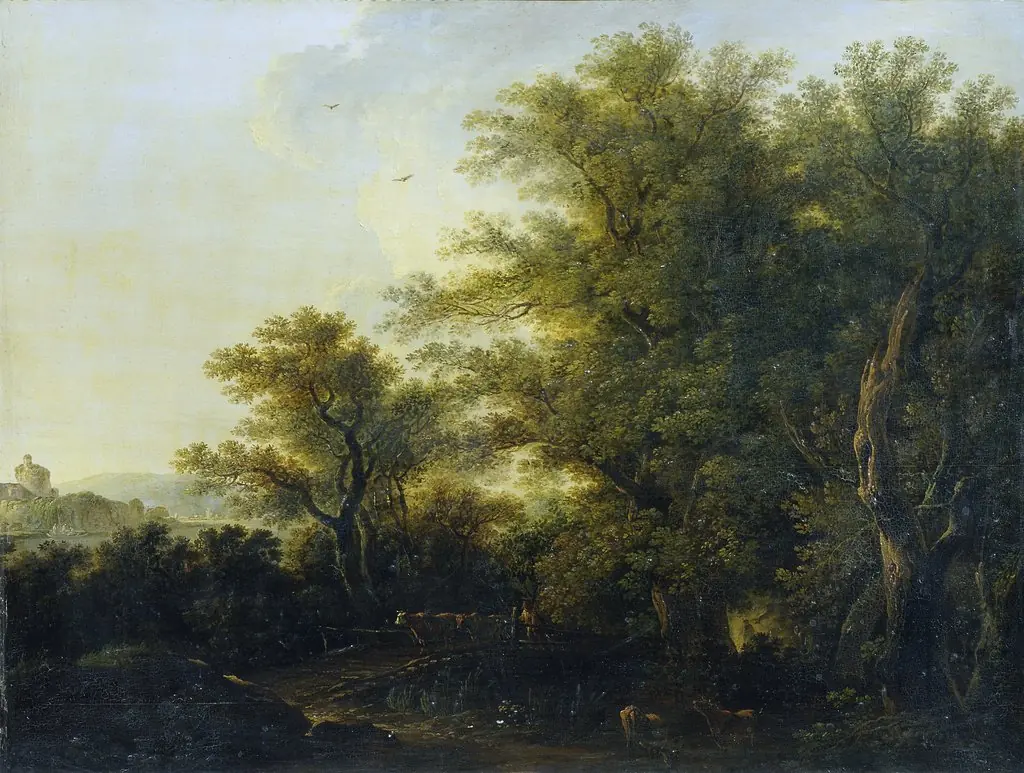
Landscape with the Good Samaritan is an oil painting by the Dutch Golden Age artist Unknown. It dates from 1630 and is held in the collection of the Rijksmuseum. This small-scale painting on copper depicts a tranquil rural scene, dominated by a central tree and framed by foliage.
About this work
Overview
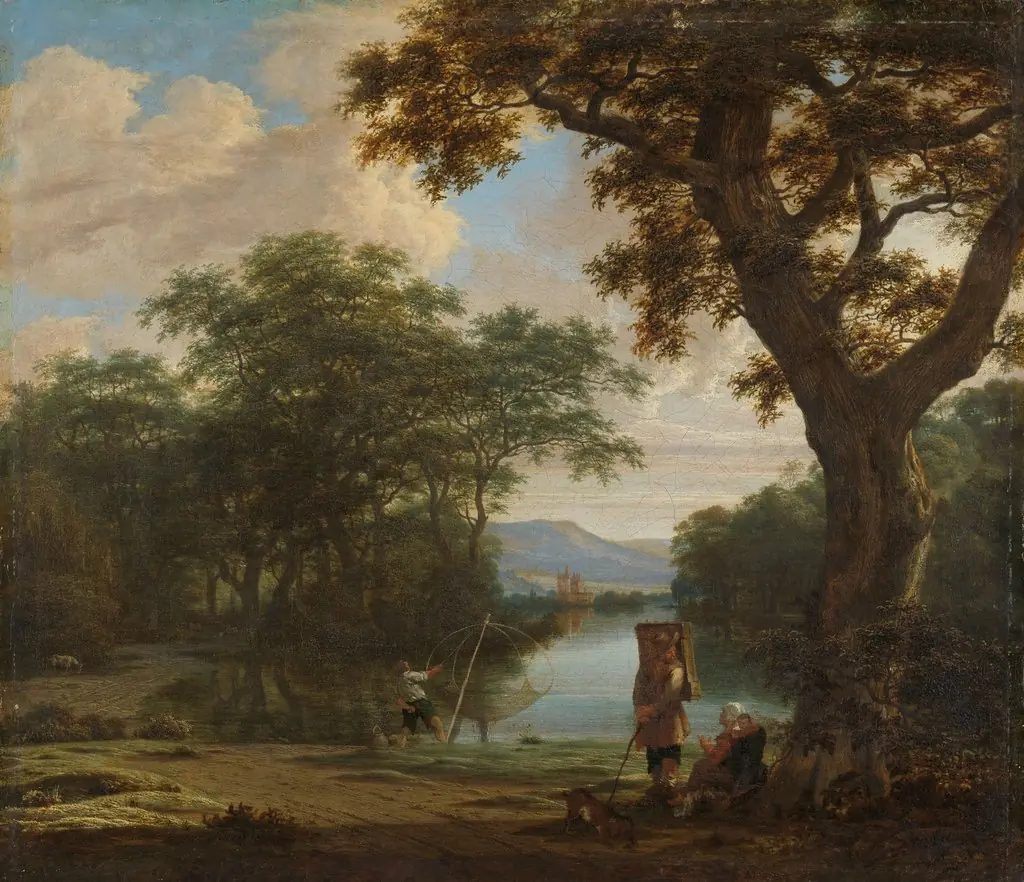
This small-scale painting on copper depicts a tranquil rural scene, dominated by a central tree and framed by foliage. Two figures occupy the foreground—a seated traveler and a standing companion—while the surrounding landscape unfolds in layered planes. The composition balances naturalism with a quiet, introspective mood, achieved through subtle tonal shifts and delicate handling of light.
Subject & Meaning
The seated figure, likely the wounded traveler, contrasts with the upright posture of the Samaritan, whose presence is implied rather than overtly heroic.
The work illustrates the biblical parable of the Good Samaritan, though its narrative elements are understated. The seated figure, likely the wounded traveler, contrasts with the upright posture of the Samaritan, whose presence is implied rather than overtly heroic. The expansive landscape suggests themes of journey and moral reflection, emphasizing the setting’s role in conveying the story’s emotional weight.
Technique & Style
Executed on a copper support, the painting benefits from the metal’s smooth surface, allowing fine detail and luminous color. The artist employs chiaroscuro to model forms, using soft transitions between light and shadow to create spatial depth. Brushwork ranges from precise definition in the foliage to broader, atmospheric strokes in the sky, aligning with the restrained elegance of 17th-century Dutch landscape traditions.
History & Provenance
Attributed to a follower of Rembrandt van Rijn, the painting reflects the master’s influence while maintaining distinct stylistic traits. Its early ownership history remains fragmentary, though its survival on copper suggests it was valued as a refined cabinet piece. Subsequent attributions have varied, with scholars occasionally linking it to Rembrandt’s circle or workshop.
Context
Created during a period when Dutch artists increasingly explored landscape as an independent genre, this work merges devotional narrative with scenic beauty. The choice of copper, a less common support, indicates an intent to achieve durability and visual richness. Such paintings often served both decorative and contemplative purposes in 17th-century Dutch interiors.
Legacy
While not among the most widely recognized works of its kind, the painting exemplifies the era’s fusion of moral storytelling and natural observation. Its technical refinement and thematic subtlety contribute to the broader understanding of Rembrandt’s influence on landscape painting. Today, it offers insight into the priorities of Dutch collectors who favored intimate, meticulously rendered scenes.
Artist & collection

 Domestic Scene
 Giacomo and Cardinal Marco, investing Andrea, Abbot of San Zeno, with his Benefice
 The Nymph of Fontainebleau
 Portrait of a Woman
 Madonna and Child with Saints in the Enclosed Garden
 Venus and Minerva
 Family Group of Four on Sofa
 Wall painting from Room H of the Villa of P. Fannius Synistor at Boscoreale