Artwork
Landscape with the Schwanenburg, Cleves
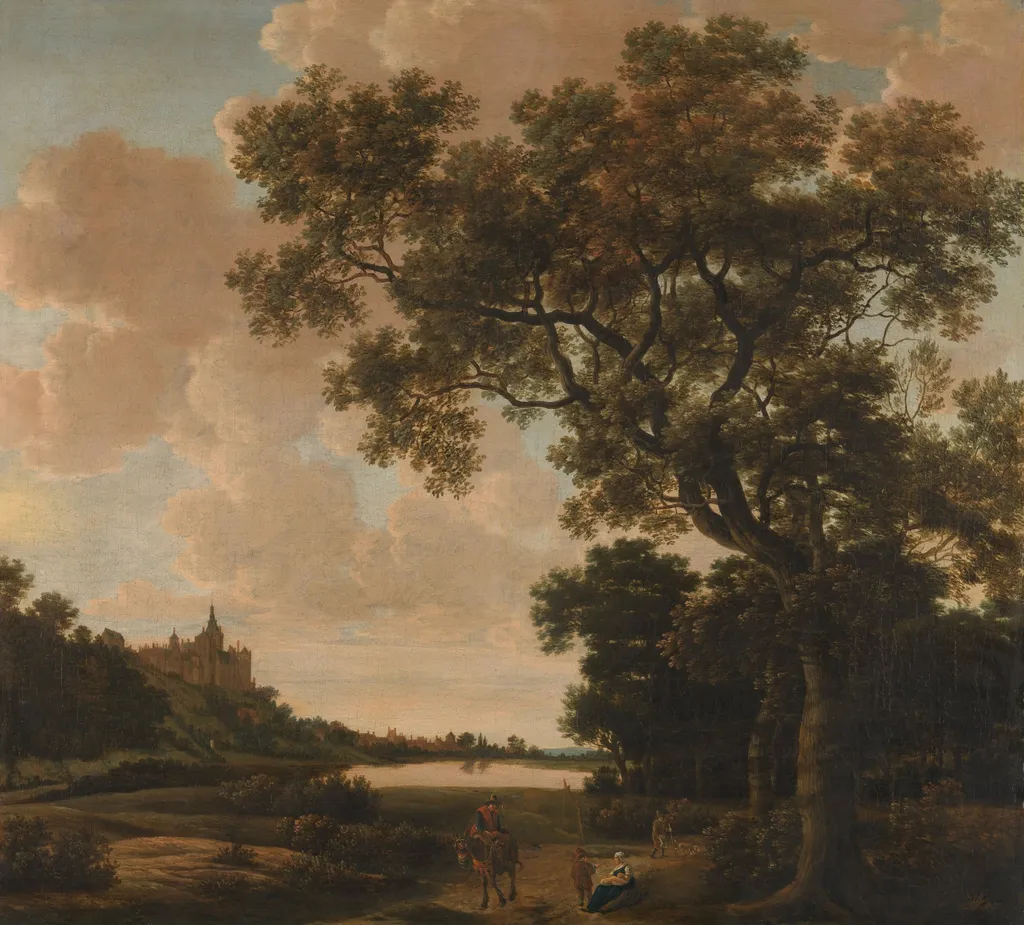
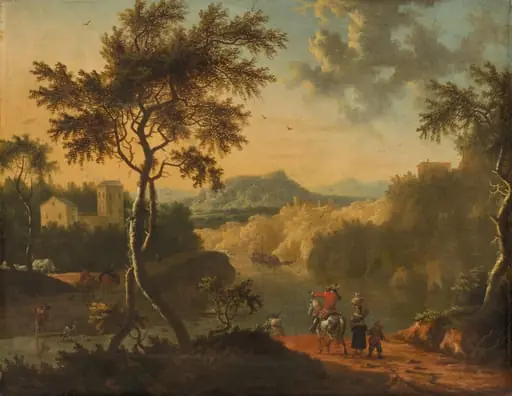
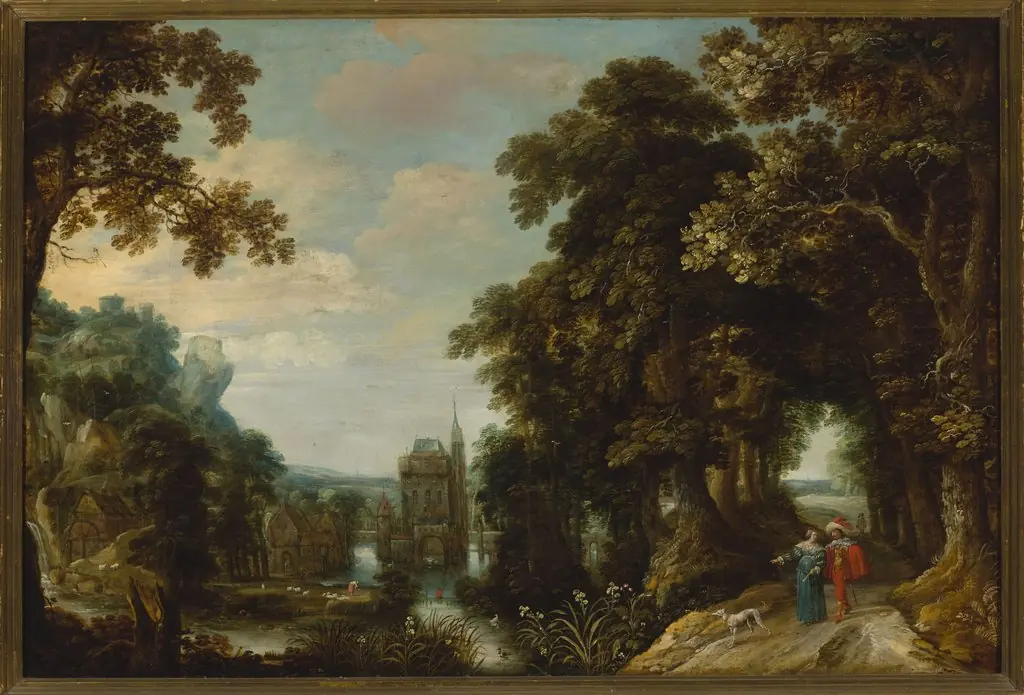
Landscape with the Schwanenburg, Cleves is an unspecified painting by the Dutch Golden Age artist Unknown. It dates from 1650 and is held in the collection of the Rijksmuseum. The work depicts the Schwanenburg, a hill‑top castle in Cleves, Germany, seen through a dense forest.
About this work
Overview
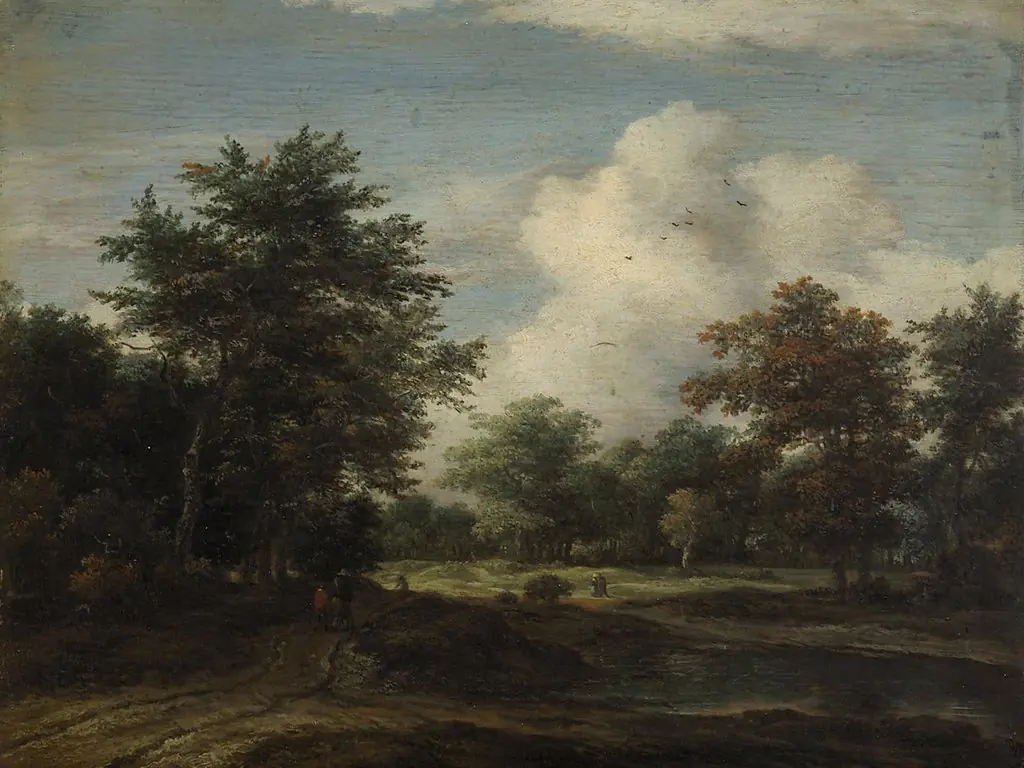
The work depicts the Schwanenburg, a hill‑top castle in Cleves, Germany, seen through a dense forest. A narrow road winds past the trees, leading the eye toward the fortress, while a few figures—one on a mule and others on foot—populate the foreground. The composition frames the castle as if viewed through a natural window, emphasizing the interplay of architecture and landscape.
Subject & Meaning
The painting presents a tranquil, everyday scene rather than a grand historical narrative. By placing the castle within a wooded setting, the artist highlights the relationship between human habitation and the surrounding nature, suggesting a harmonious coexistence. The modest presence of travelers hints at the castle’s role as a waypoint within the regional landscape.
Technique & Style
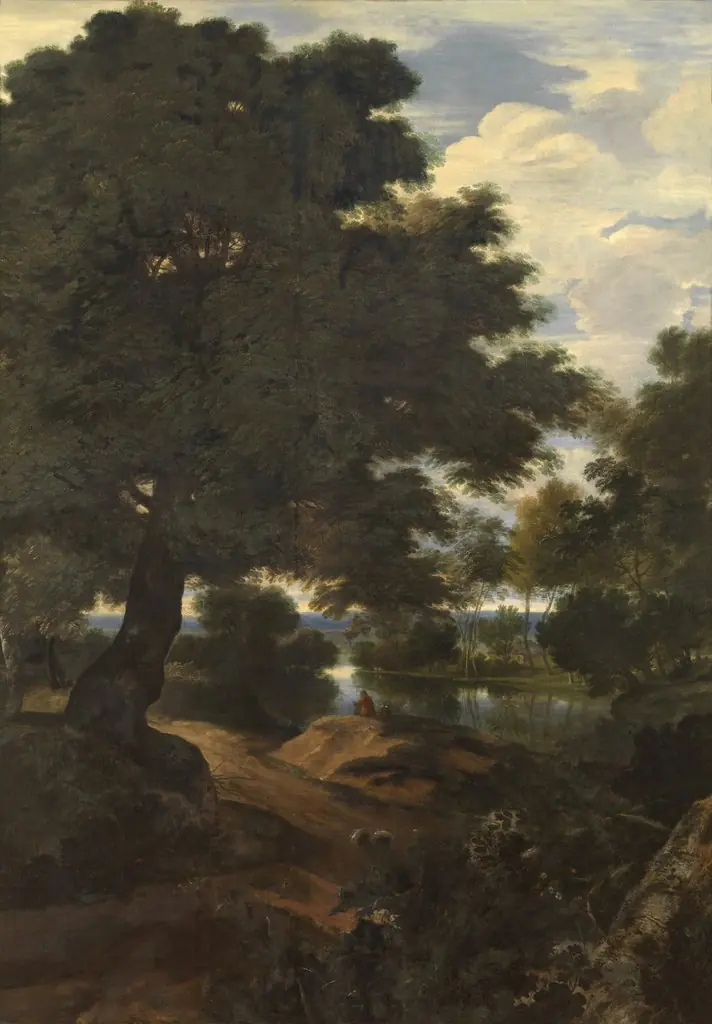
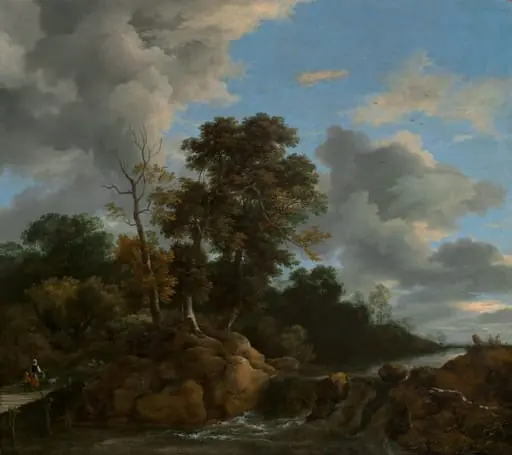
Executed without a signature, the piece’s medium remains uncertain, though the handling of light and foliage aligns with Dutch Golden Age landscape conventions. The brushwork suggests a careful rendering of tree trunks and foliage, while the distant architecture is softened, creating depth. The overall palette is muted, reinforcing the natural atmosphere.
History & Provenance
The painting’s origin is undocumented; no artist’s name or date appears on the canvas. It likely entered collections through the 19th‑century interest in Germanic scenery, eventually becoming part of a museum holding focused on Northern European landscapes. Its provenance reflects the broader European fascination with pastoral and historic sites.
Context
During the 17th century, Dutch and German painters frequently used forests as framing devices, directing viewers’ attention to distant landmarks. This approach parallels works in the Rijksmuseum’s holdings, where wooded vistas serve as compositional windows, linking interior spaces with expansive exteriors and underscoring the period’s interest in realistic, atmospheric landscapes.
Artist & collection

 Domestic Scene
 Giacomo and Cardinal Marco, investing Andrea, Abbot of San Zeno, with his Benefice
 The Nymph of Fontainebleau
 Portrait of a Woman
 Madonna and Child with Saints in the Enclosed Garden
 Venus and Minerva
 Family Group of Four on Sofa
 Wall painting from Room H of the Villa of P. Fannius Synistor at Boscoreale