Artwork
Den heliga familjen
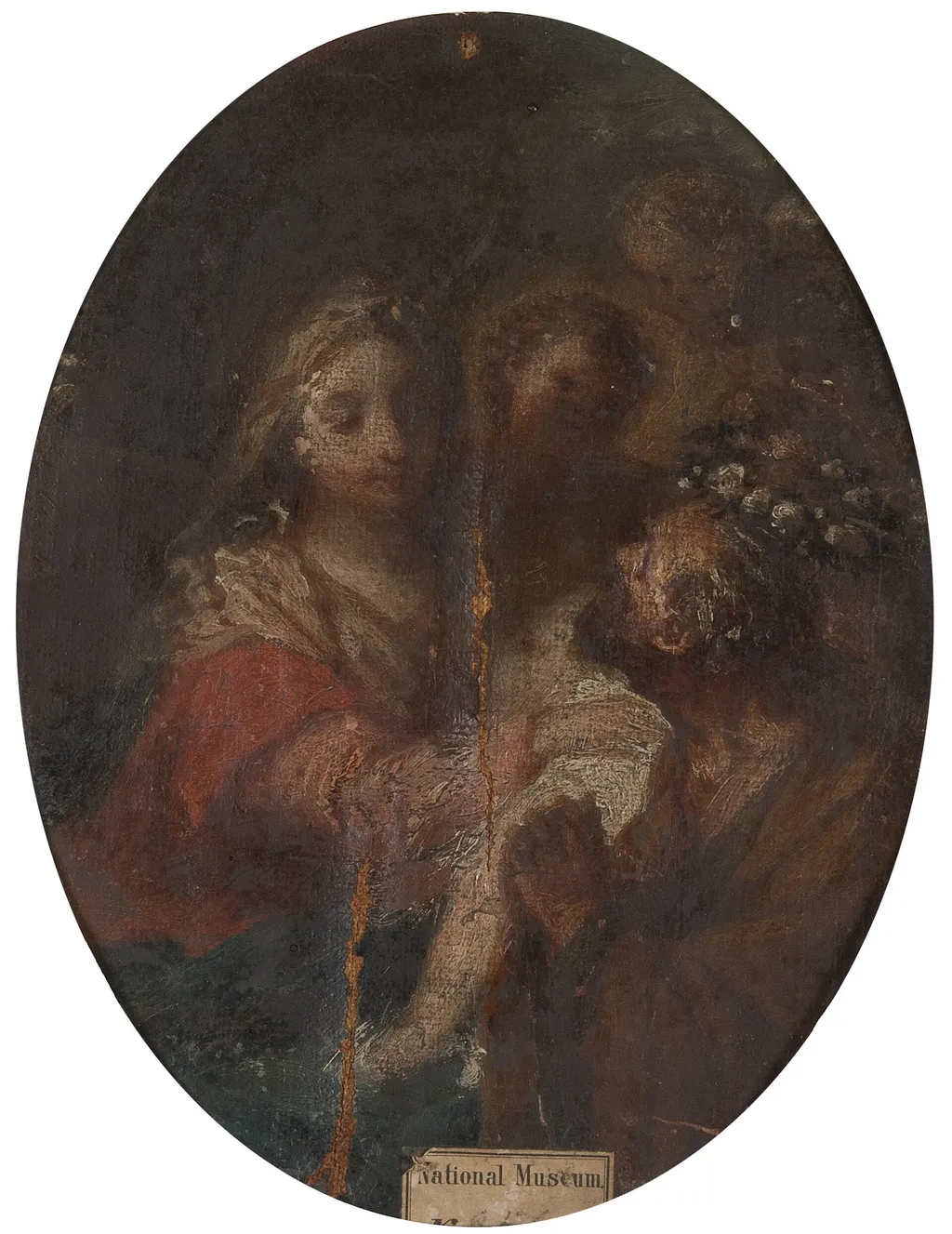
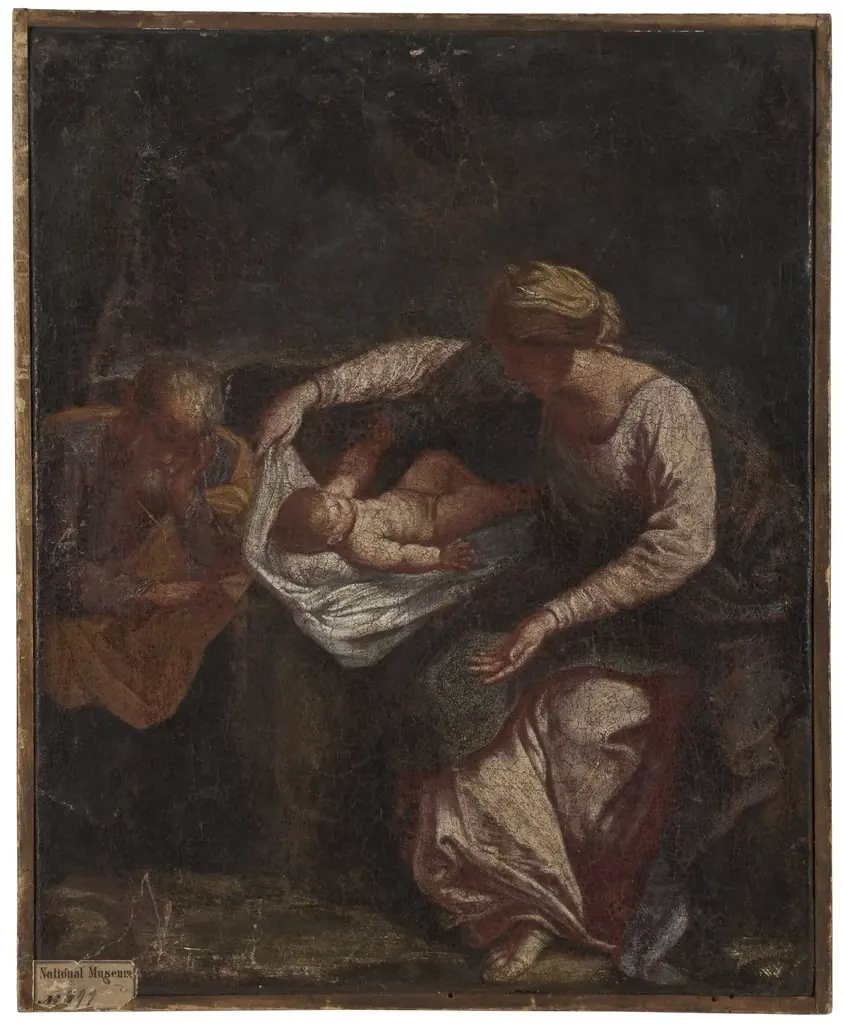
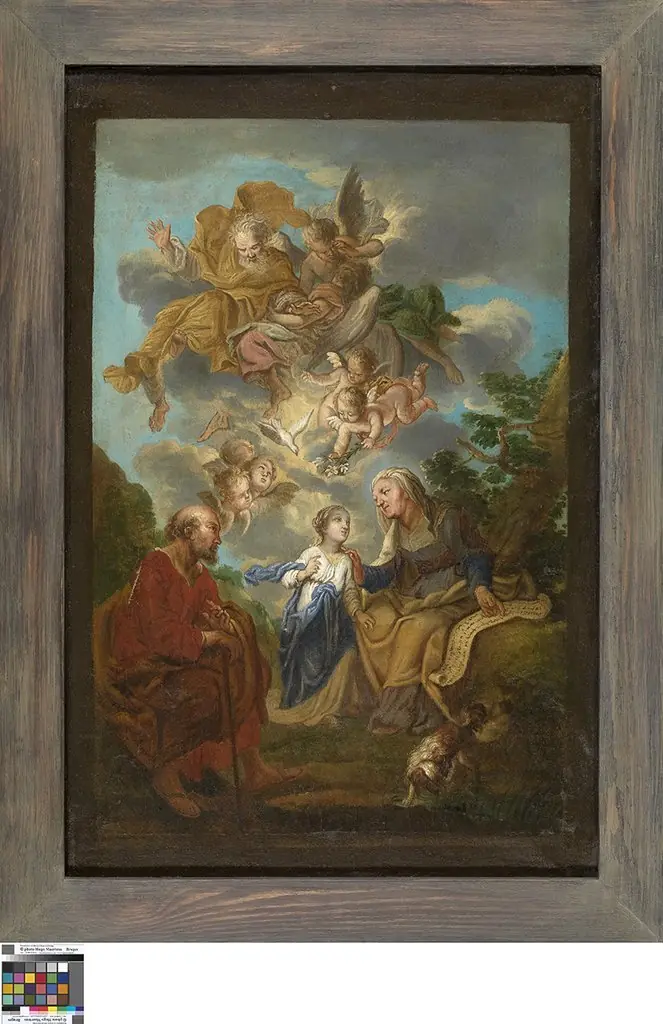
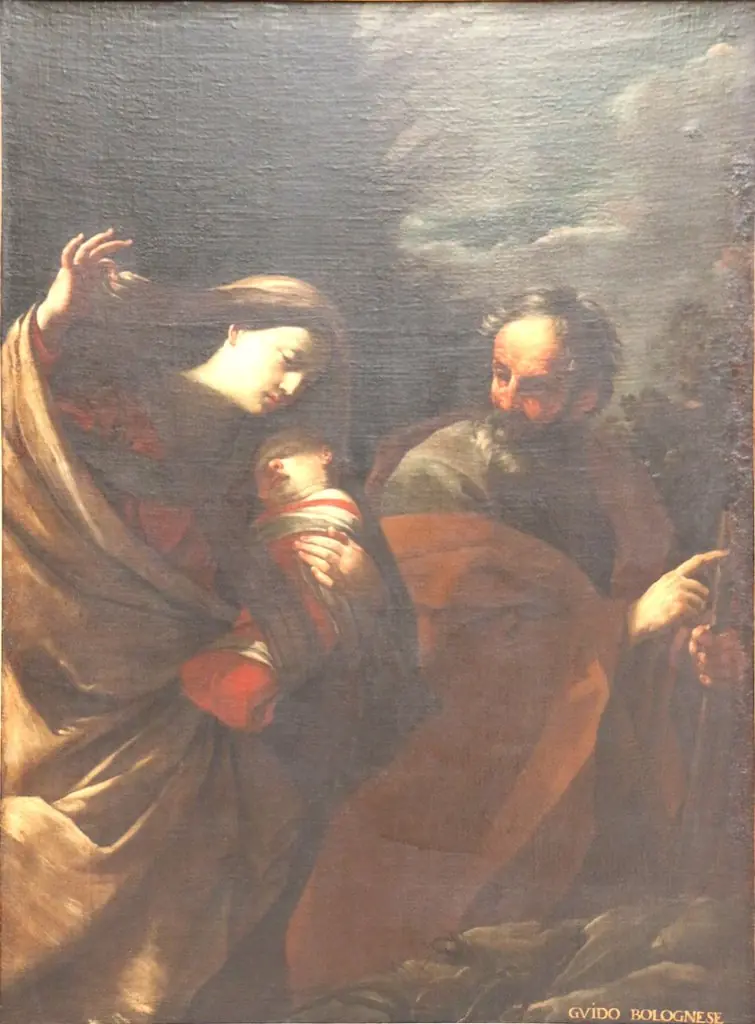
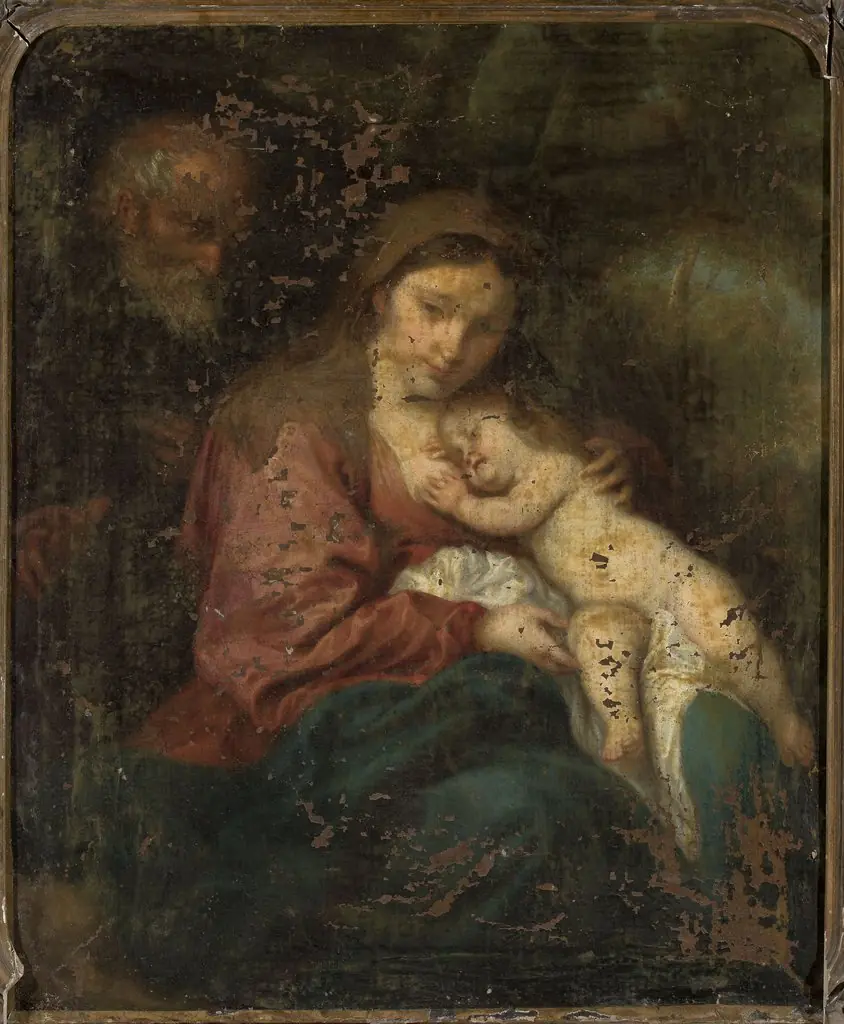
Den heliga familjen is an unspecified painting by Unknown. It is held in the collection of the Nationalmuseum. This painting depicts the Holy Family—Mary, Joseph, and the infant Jesus—in a quiet, intimate moment.
About this work
Overview
The subdued palette and soft lighting enhance the contemplative atmosphere, suggesting a private devotional scene rather than a public narrative.
This painting depicts the Holy Family—Mary, Joseph, and the infant Jesus—in a quiet, intimate moment. The composition centers the trio against a deep, shadowed background that isolates them from any external context, focusing attention on their quiet interaction. The subdued palette and soft lighting enhance the contemplative atmosphere, suggesting a private devotional scene rather than a public narrative.
Subject & Meaning
The figures represent the Christian Holy Family, portrayed not as celestial beings but as a domestic unit bound by tenderness. Mary and Joseph’s gaze toward the child conveys protective affection, while the child’s stillness suggests innocence and vulnerability. The gesture of Mary’s hand resting on Jesus’ shoulder emphasizes maternal care, reinforcing themes of nurture and spiritual guardianship within a human framework.
Technique & Style
The artist employs muted tones and minimal contrast to unify the figures and background, avoiding dramatic lighting in favor of subtle gradations. Brushwork is restrained, with smooth transitions between forms, contributing to the calm mood. The dark background acts as a visual void, heightening the luminosity of the figures and drawing the viewer into their private space without distraction.
History & Provenance
The painting’s origins are not fully documented, but its style and composition align with late medieval or early Renaissance devotional works from Northern Europe. It likely served as a private altar piece or household object for personal meditation, reflecting the growing trend of intimate religious imagery among lay devotees during the period.
Context
In an era when religious imagery often emphasized grandeur or martyrdom, this work reflects a shift toward personal piety. The emphasis on familial tenderness mirrors broader spiritual movements that encouraged emotional connection with sacred figures. Such depictions were increasingly commissioned by non-clerical patrons seeking solace and moral guidance in domestic devotion.
Legacy
The painting contributes to a tradition of quiet, humanized portrayals of the Holy Family that influenced later Renaissance and Baroque devotional art. Its restrained emotion and focus on intimate gesture set a precedent for artists seeking to convey sacredness through everyday tenderness rather than spectacle, shaping how religious figures were imagined in private worship for generations.
Artist & collection

 Domestic Scene
 Giacomo and Cardinal Marco, investing Andrea, Abbot of San Zeno, with his Benefice
 The Nymph of Fontainebleau
 Portrait of a Woman
 Madonna and Child with Saints in the Enclosed Garden
 Venus and Minerva
 Family Group of Four on Sofa
 Wall painting from Room H of the Villa of P. Fannius Synistor at Boscoreale