Artwork
The Rape of Europa
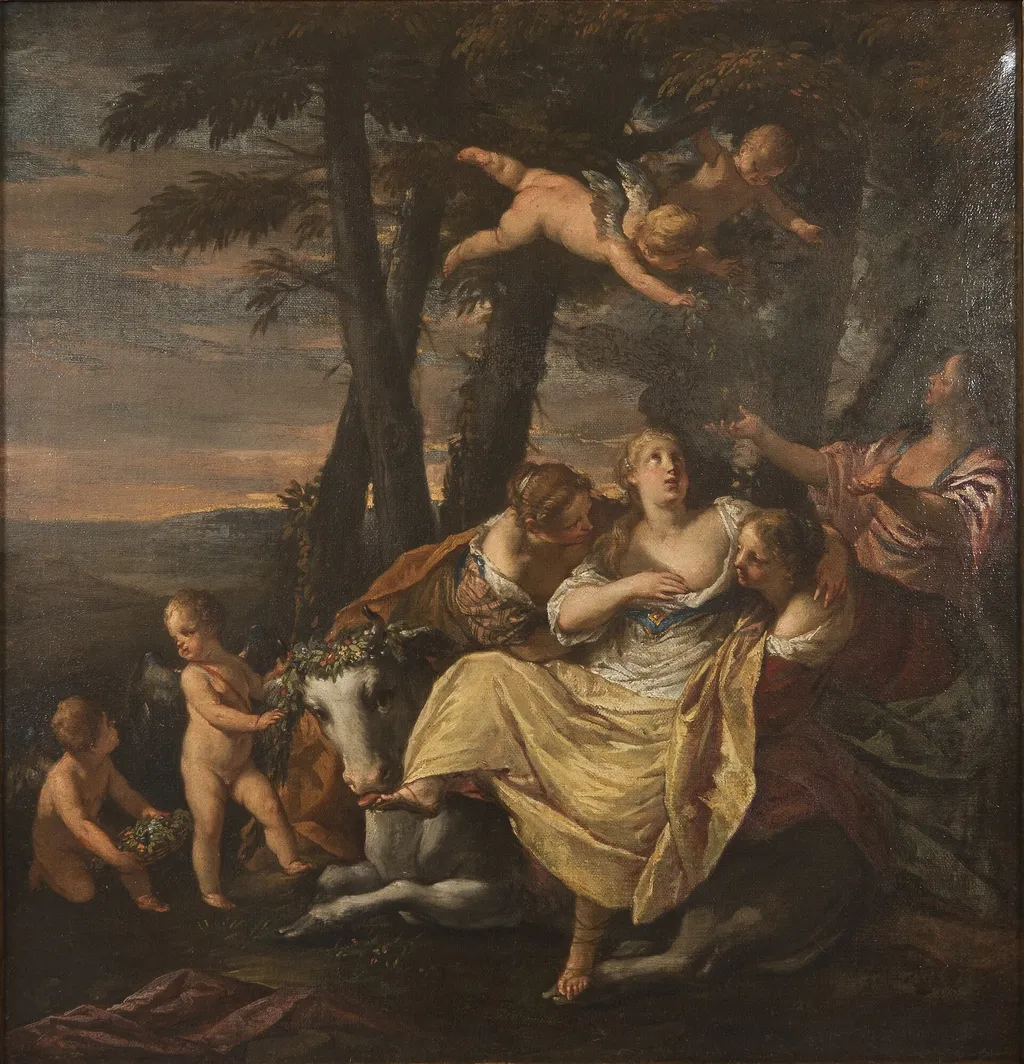
The Rape of Europa is an oil painting by Unknown. It is held in the collection of the Nationalmuseum. This oil painting depicts a mythological scene from Ovid’s Metamorphoses, showing the abduction of Europa by Zeus in the form of a bull.
About this work
Overview
Set against a naturalistic landscape with water and trees, the composition centers on the struggling figure of Europa as she is carried away.
This oil painting depicts a mythological scene from Ovid’s Metamorphoses, showing the abduction of Europa by Zeus in the form of a bull. Set against a naturalistic landscape with water and trees, the composition centers on the struggling figure of Europa as she is carried away. Dramatic lighting and classical dress emphasize the narrative’s gravity, while the surrounding figures observe in silence, heightening the tension of the moment.
Subject & Meaning
The scene illustrates the myth in which Zeus, disguised as a gentle bull, lures Europa onto his back before swimming off with her to Crete. The painting captures the instant of betrayal and force, transforming a divine seduction into a moment of peril. The passive onlookers suggest inevitability or helplessness, reinforcing themes of power, vulnerability, and the capriciousness of the gods in classical mythology.
Technique & Style
The artist employs chiaroscuro to model the figures with strong contrasts of light and shadow, lending volume and emotional intensity to the central group. Brushwork is fluid yet controlled, particularly in the rendering of fabric and water. Warm tones in Europa’s garments contrast with cooler hues in the background, directing focus to her figure while enhancing the sense of movement and urgency within the composition.
History & Provenance
The painting has been part of the Nationalmuseum’s collection since the 19th century, though its earlier ownership remains undocumented. It was likely acquired during a period of heightened interest in classical themes among European collectors. No records indicate significant alterations or restorations, and its condition reflects careful preservation over time.
Context
Created during a time when mythological subjects dominated elite art patronage, the work aligns with Baroque and early Neoclassical trends that favored dramatic narratives drawn from antiquity. Artists across Europe revisited Europa’s story to explore themes of power and transformation, often using it as a vehicle for both aesthetic display and moral reflection on human fate.
Legacy
While not widely reproduced or cited in major scholarly texts, the painting remains a representative example of how classical myths were visually interpreted in Northern European collections. Its presence in the Nationalmuseum underscores the institution’s commitment to preserving regional interpretations of enduring mythological subjects from the early modern period.
Artist & collection

 Domestic Scene
 Giacomo and Cardinal Marco, investing Andrea, Abbot of San Zeno, with his Benefice
 The Nymph of Fontainebleau
 Portrait of a Woman
 Madonna and Child with Saints in the Enclosed Garden
 Venus and Minerva
 Family Group of Four on Sofa
 Wall painting from Room H of the Villa of P. Fannius Synistor at Boscoreale
 Venus
Venus Untitled
 Group portrait with allegorical overtones of the children of Diederic Pietersz van Leyden van Leeuwen (1628-1682), burgomaster of Leiden, and Alida Paets (1625-1673)
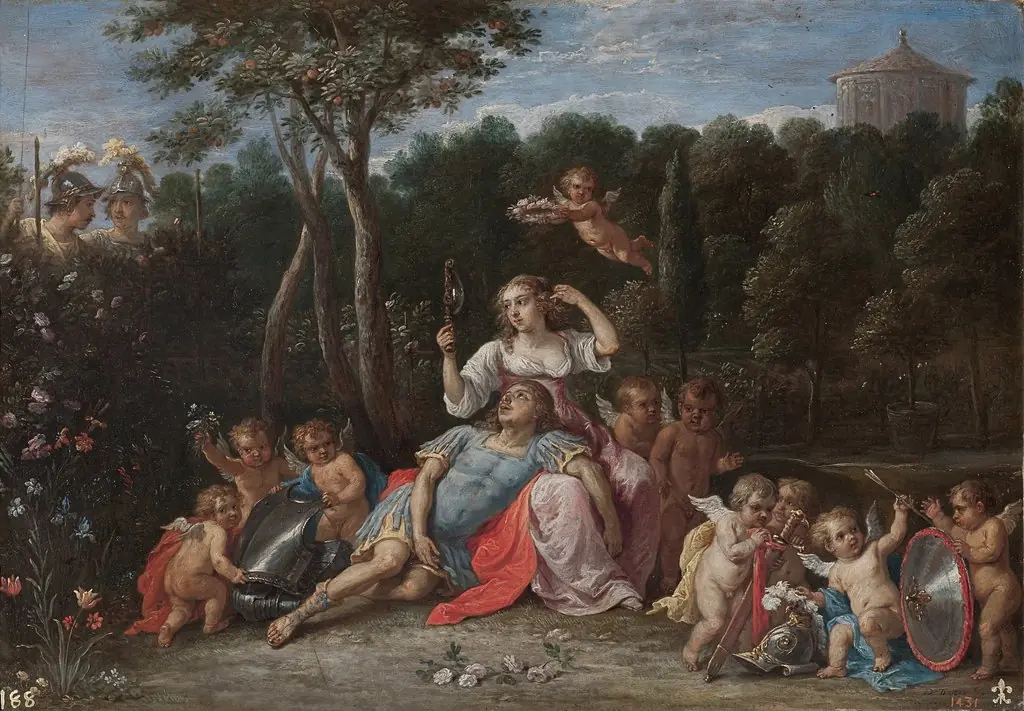 El jardín de Armida
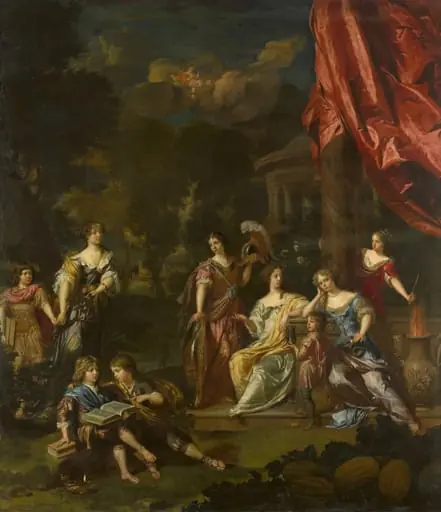 Allegorizing Group Portrait of the Children of Diederic Pietersz van Leyden van Leeuwen, Burgomaster of Leiden, and Alida Paets
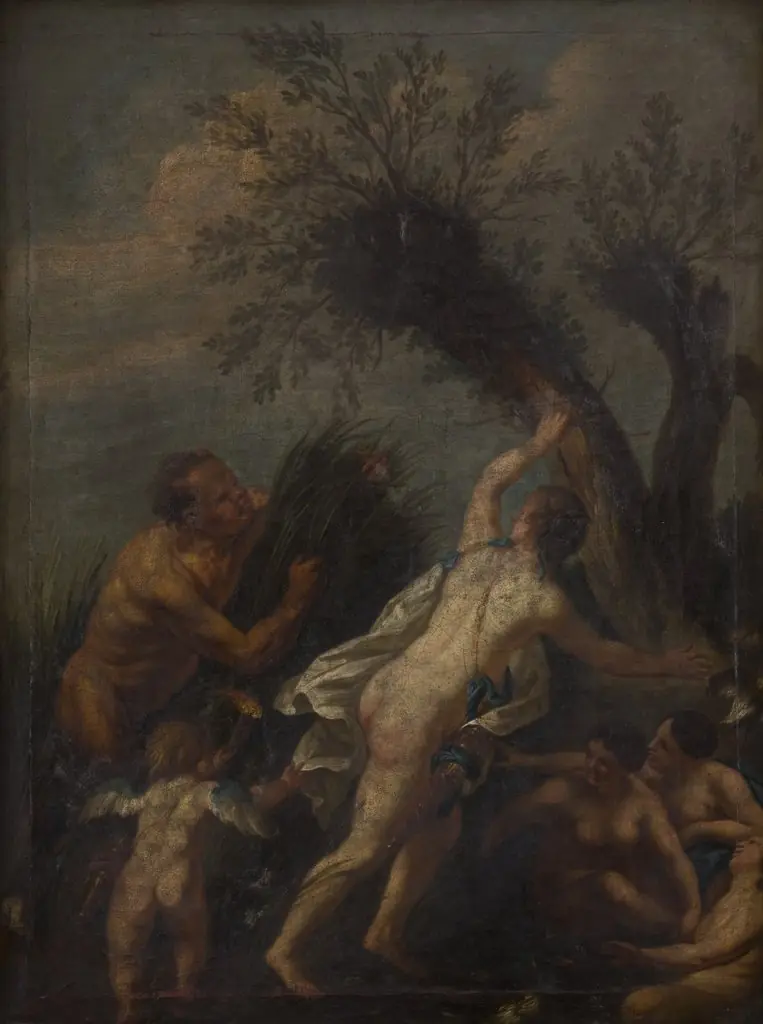 Diana and Her Nymphs Surprised by Satyr
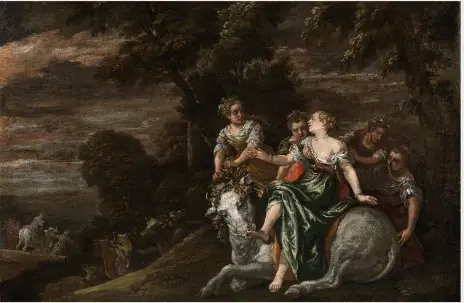 Europa and the Bull