Artwork
Nobleman between Active and Contemplative life
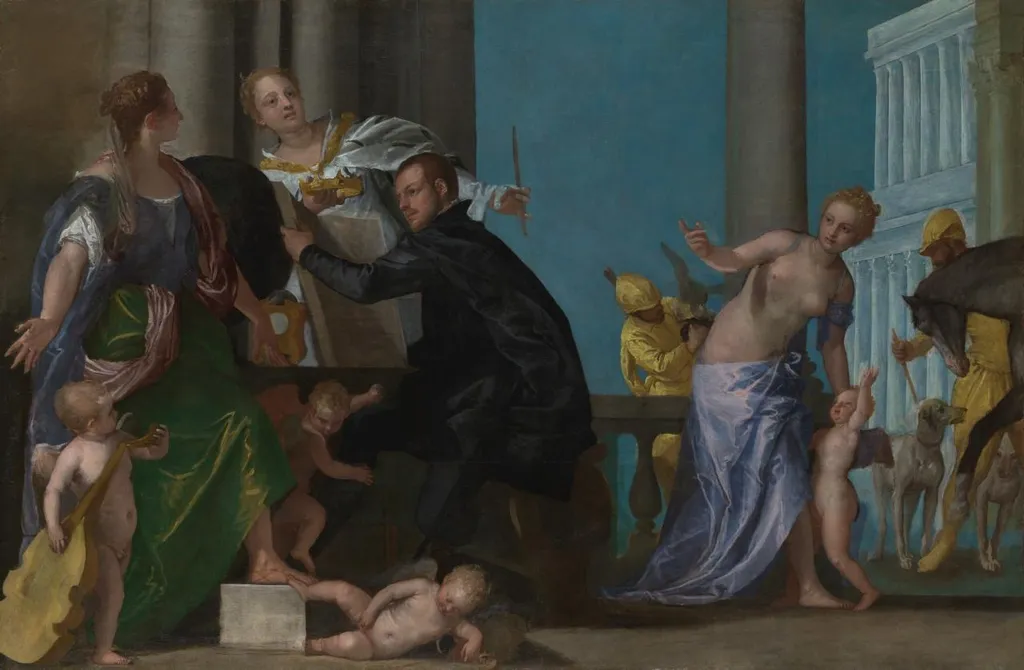
Nobleman between Active and Contemplative life is an oil painting by the Mannerist artist Unknown. It dates from 1575 and is held in the collection of the National Gallery of Victoria.
About this work
Overview
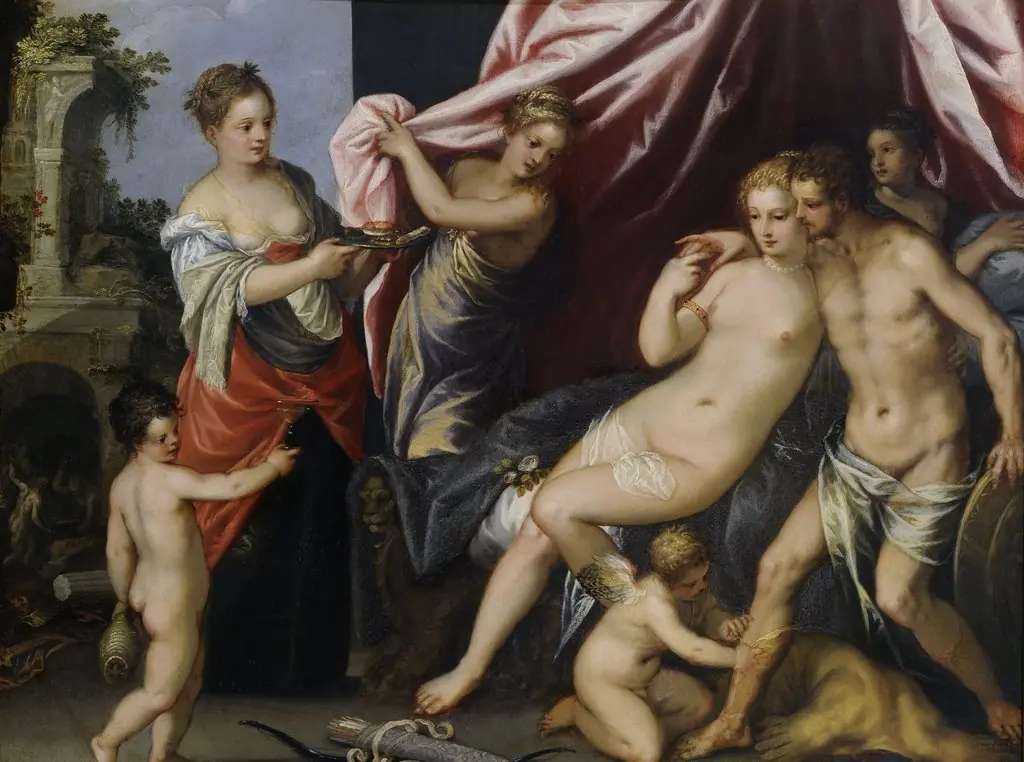
The work titled *Nobleman between Active and Contemplative Life* is an oil painting attributed to the 16th‑century Venetian master Paolo Veronese. It is part of the collection of the National Gallery of Victoria in Melbourne. The composition presents a seated gentleman in dark attire flanked by two female figures, accompanied by infants and small dogs.
Subject & Meaning
Opposite her, a partially nude woman wrapped only in a blue cloth reclines with a relaxed demeanor, evoking a contemplative, spiritual alternative.
The central figure, a nobleman dressed in black, appears poised between two contrasting feminine presences. The woman on his left, clothed in a green gown with a red sash, gestures outwardly, suggesting an active, perhaps worldly, pursuit. Opposite her, a partially nude woman wrapped only in a blue cloth reclines with a relaxed demeanor, evoking a contemplative, spiritual alternative. The surrounding children and dogs introduce a light, domestic element that softens the moral dichotomy.
Technique & Style
Executed in oil on canvas, the painting displays Veronese’s characteristic luminous palette and fluid handling of drapery. The rich greens and reds of the garments contrast with the subdued dark tones of the nobleman’s attire, while the delicate rendering of the infants and animals demonstrates the artist’s skill in depicting texture and movement within a complex allegorical scene.
History & Provenance
The canvas entered the National Gallery of Victoria’s holdings in the early 20th century, acquired through a donation that expanded the museum’s representation of Italian Renaissance art. Its attribution to Veronese has been supported by stylistic analysis and archival documentation linking the work to the artist’s workshop in Venice.
Context
During the late Renaissance, allegorical paintings that juxtaposed active and contemplative life were common, reflecting contemporary philosophical debates about the proper balance between worldly engagement and spiritual reflection. Veronese often incorporated such moral themes into his large‑scale compositions, using sumptuous color and theatrical arrangement to engage viewers in the ethical narrative.
Artist & collection

 Domestic Scene
 Giacomo and Cardinal Marco, investing Andrea, Abbot of San Zeno, with his Benefice
 The Nymph of Fontainebleau
 Portrait of a Woman
 Madonna and Child with Saints in the Enclosed Garden
 Venus and Minerva
 Family Group of Four on Sofa
 Wall painting from Room H of the Villa of P. Fannius Synistor at Boscoreale
 Mythological Wedding
 The Triumph of Truth
 Holy Family with the Mystic Marriage of Saint Catherine
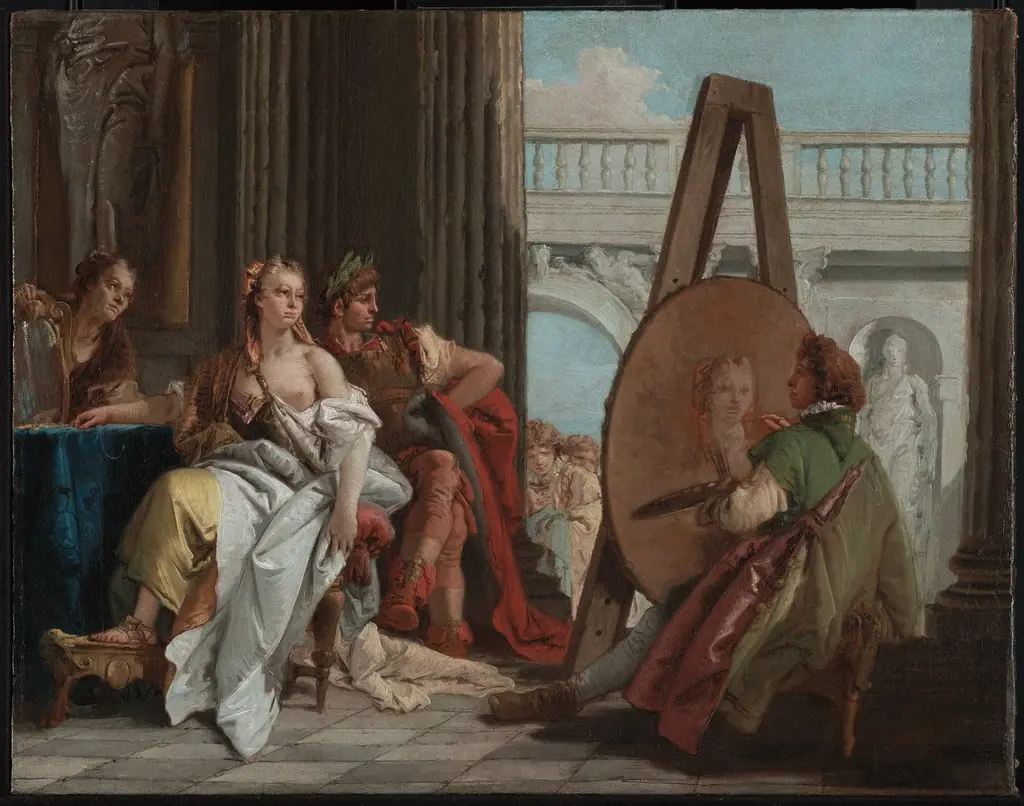 Alexander the Great and Campaspe in the Studio of Apelles
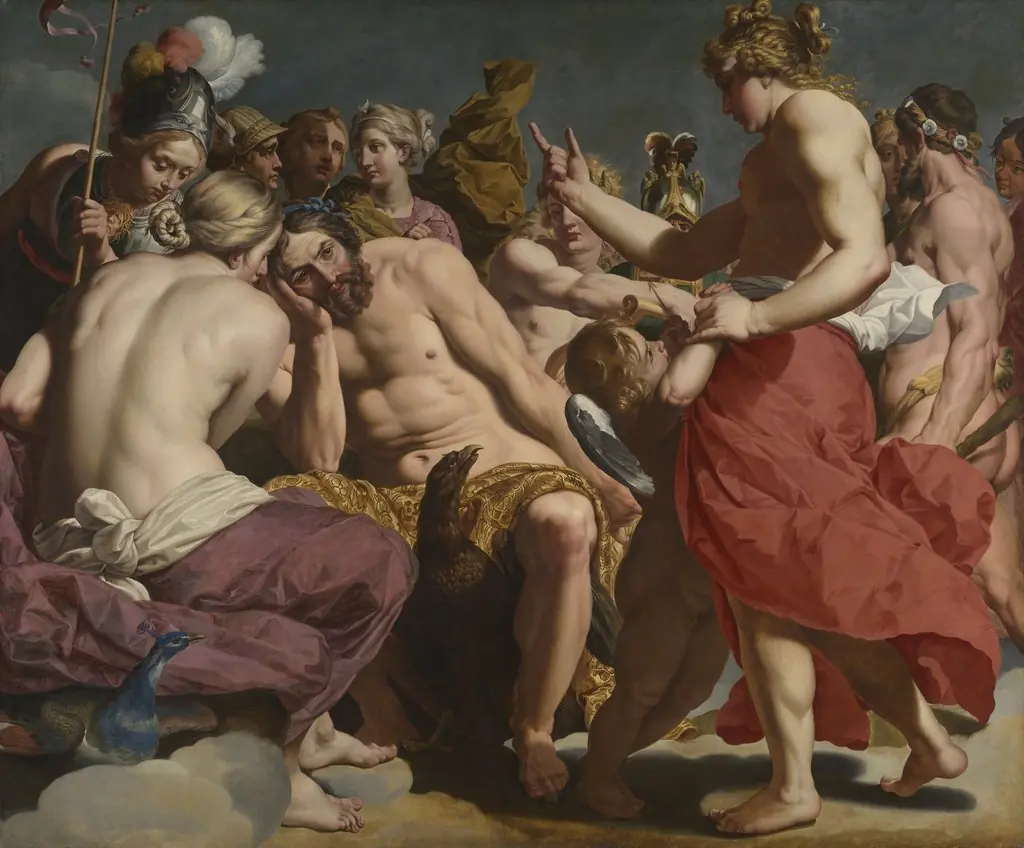 Jupiter Rebuked by Venus
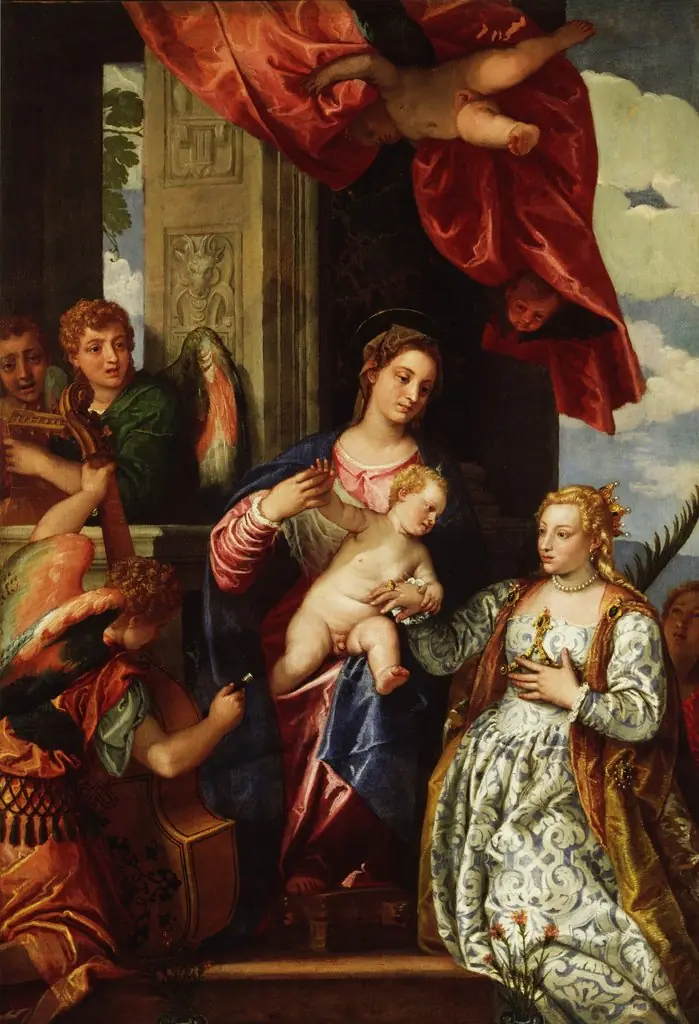 The Mystic Marriage of St. Catherine
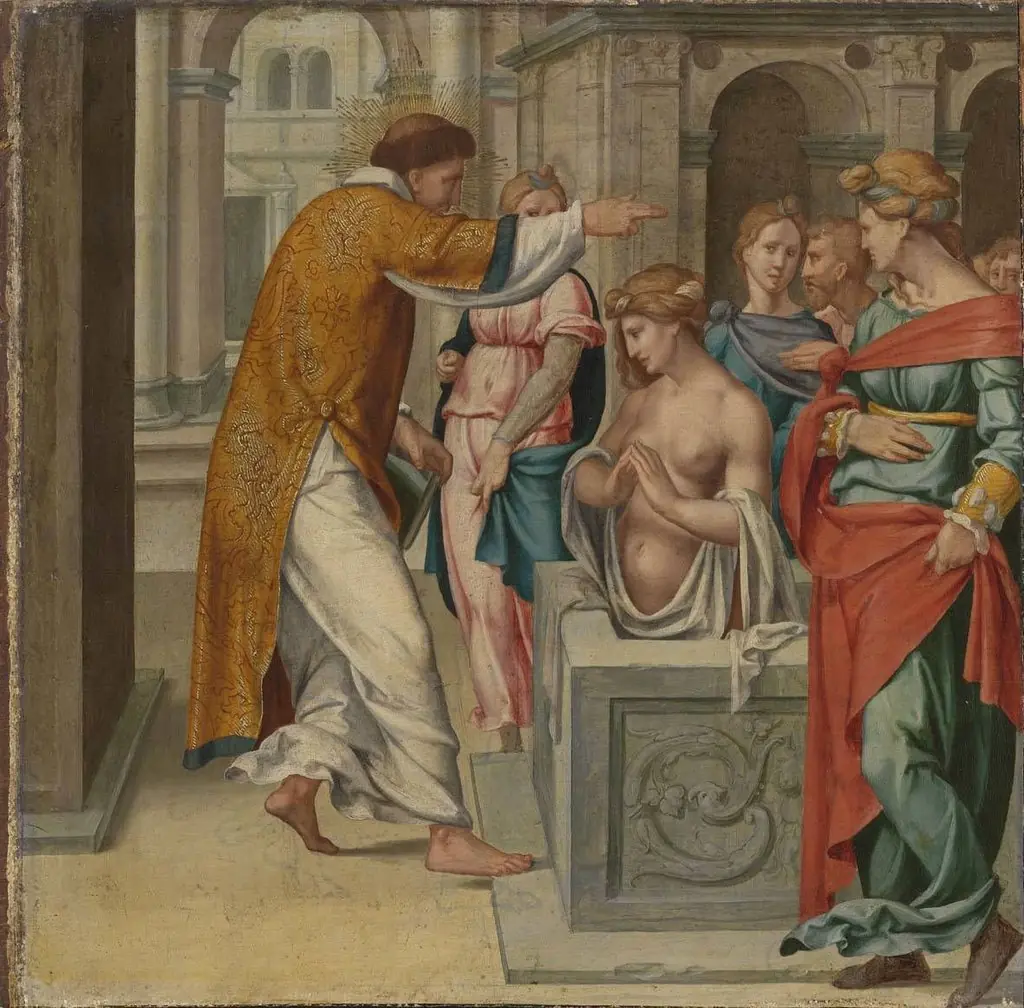 Cyriakus-Folge: Der hl. Cyriakus tauft Arthemia
 Madonna and Child with Four Saints
 The Finding of Moses
 Apelles malt Kampaspe
 Bacchus and Ariadne
 Venus and Mars