Artwork
Krishna and Gopis
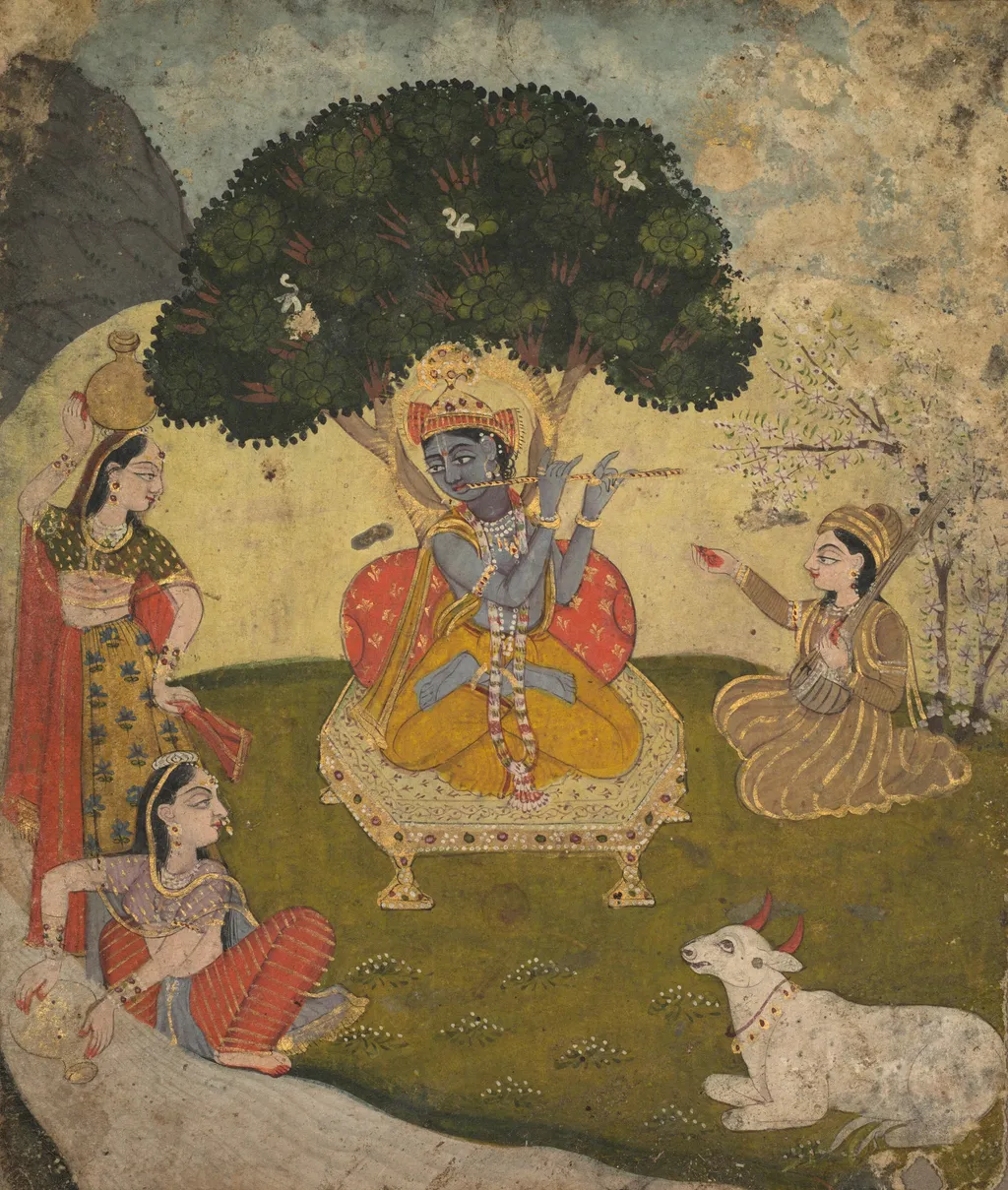
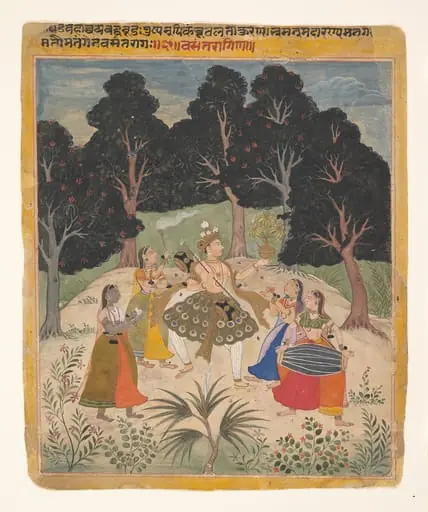
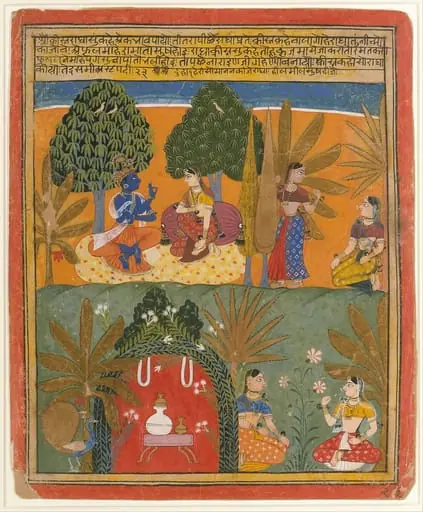
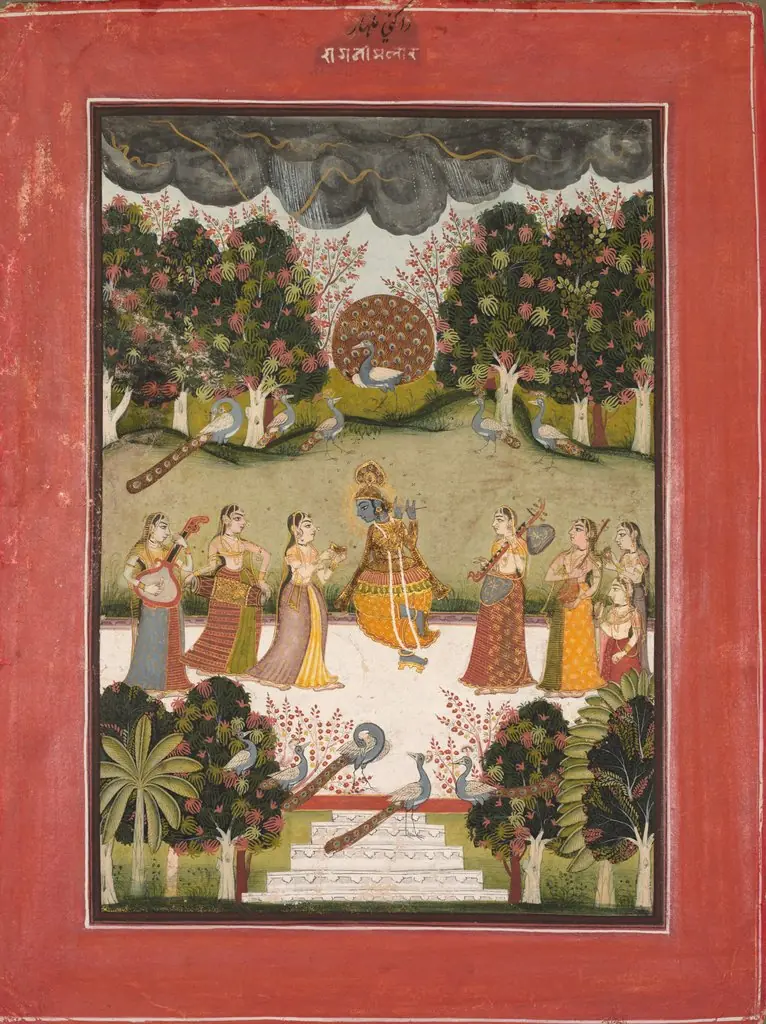
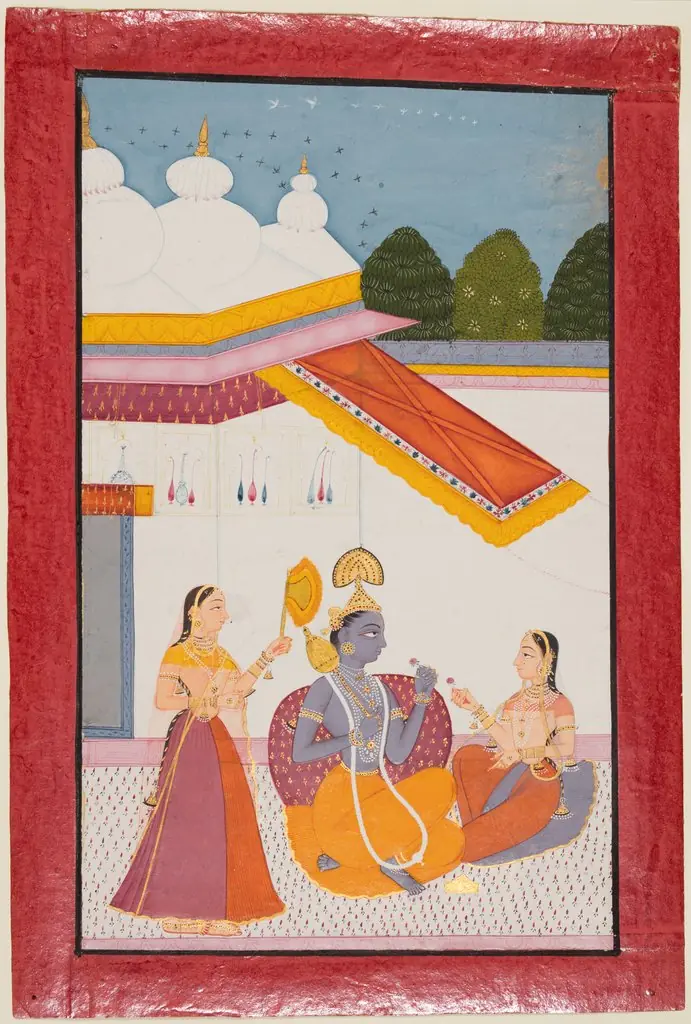
Krishna and Gopis is an unspecified painting. It dates from 1850 and is held in the collection of the Cleveland Museum of Art. The work depicts a blue‑skinned deity seated on an ornate throne beneath a tree, playing a flute.
About this work
Overview
The work depicts a blue‑skinned deity seated on an ornate throne beneath a tree, playing a flute. He is surrounded by three women dressed in vivid red and gold garments; one holds a pot, another is seated on the ground, and the third strikes a drum. A white cow with red horns lies nearby on the grass, completing the composition.
Subject & Meaning
The central figure is Krishna, a Hindu god associated with music and pastoral life. The surrounding gopis—female devotees—are shown attentively observing his performance, reflecting the devotional narratives in which they await his divine presence and partake in his lilting melodies.
Technique & Style
Rendered in a traditional Indian painting style, the piece employs a bright palette, with the deity’s blue skin contrasting against the reds, golds, and earthy tones of the surrounding figures and landscape. The detailed throne, ornamental tree, and the animal’s realistic posture demonstrate careful attention to decorative elements and narrative clarity.
History & Provenance
The painting’s origins, date, and ownership history are not provided in the source material, limiting precise attribution to a particular school or period within Indian art.
Context
Krishna’s flute‑playing scenes are common motifs in Hindu iconography, symbolizing divine love and the spiritual allure of the deity. The inclusion of gopis and a cow aligns with pastoral settings drawn from mythic episodes of Krishna’s youth in the region of Vrindavan.
Artist & collection