Artwork
Malar Ragini: Krishna Playing the Flute to Seven Gopis Holding Musical Instruments, from the Ragamala Series
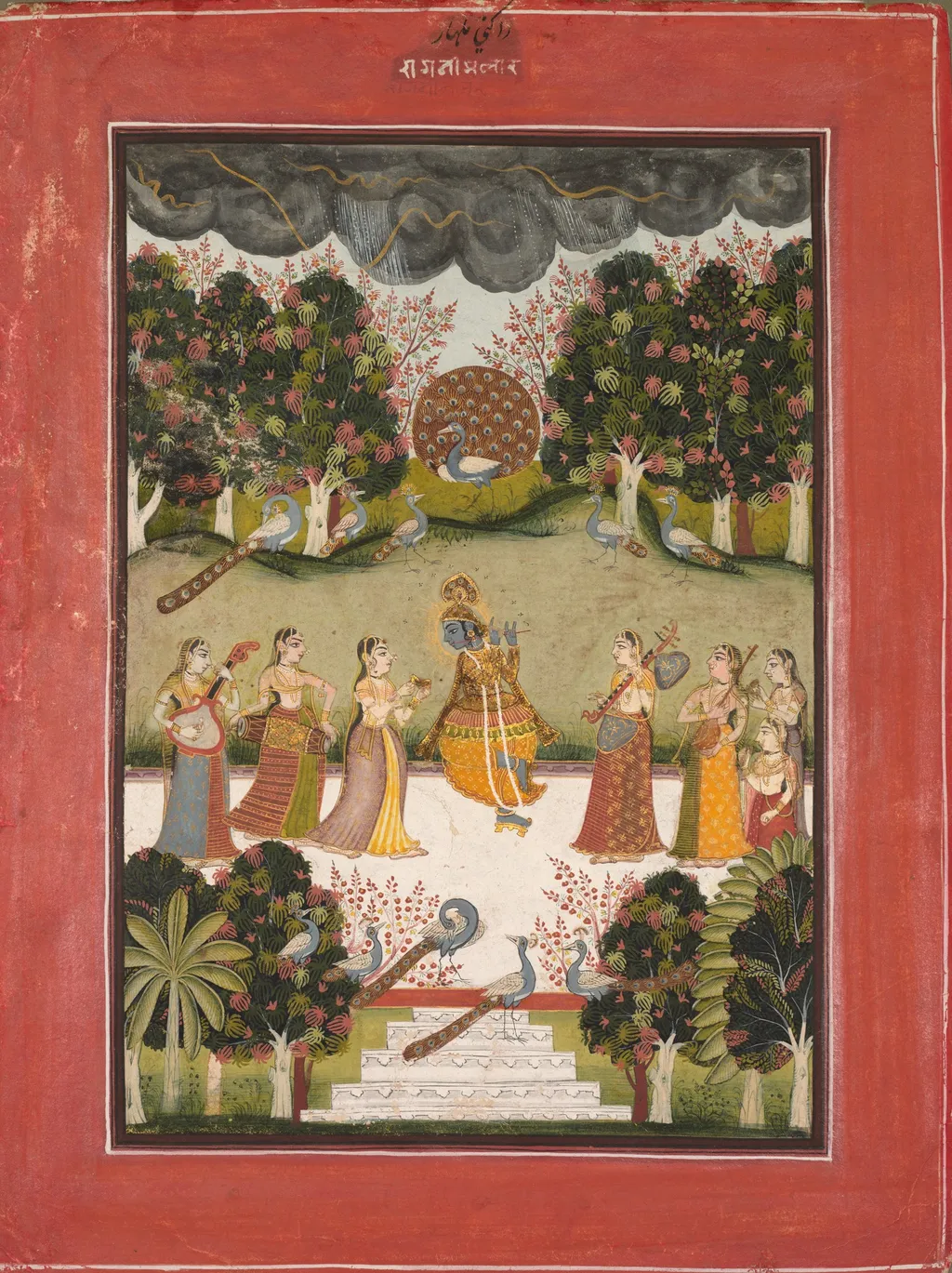
Malar Ragini: Krishna Playing the Flute to Seven Gopis Holding Musical Instruments, from the Ragamala Series is an unspecified painting. It dates from 1760 and is held in the collection of the Cleveland Museum of Art. The work depicts the Hindu deity Krishna, rendered with his characteristic blue skin, seated centrally and playing a flute.
About this work
Overview
The setting unfolds in a verdant landscape populated by trees, flowering plants, birds in flight, and a peacock, all beneath a cloud‑dotted sky.
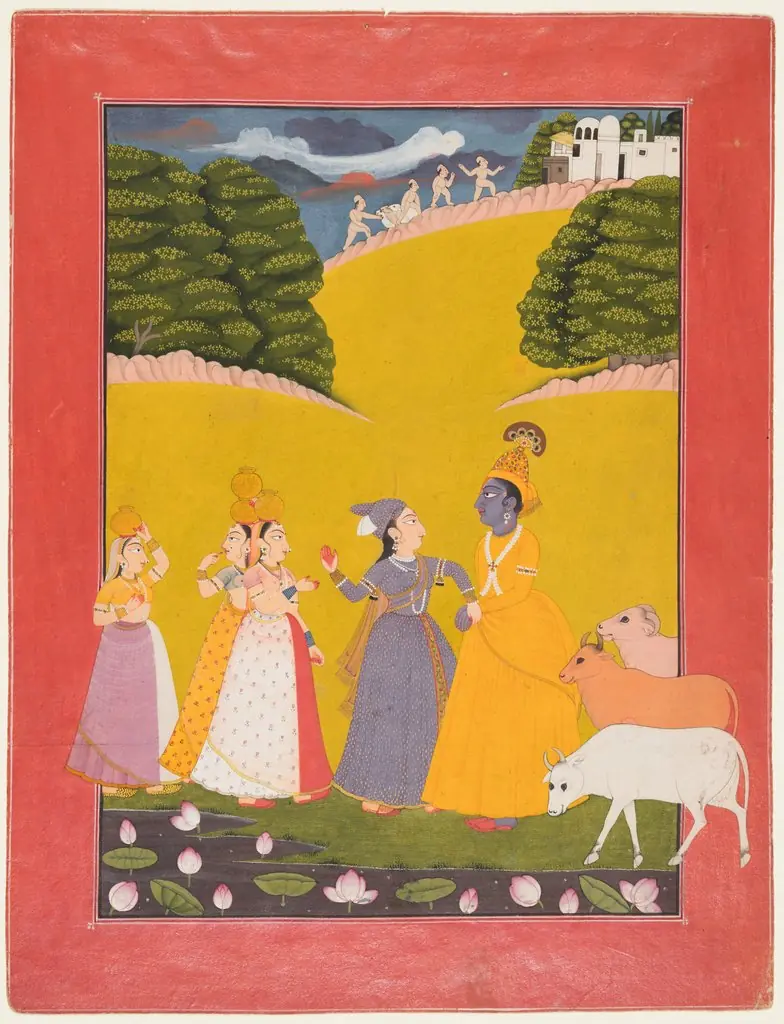
The work depicts the Hindu deity Krishna, rendered with his characteristic blue skin, seated centrally and playing a flute. He is encircled by seven female figures, each holding a distinct musical instrument, their garments bright and their hairstyles varied. The setting unfolds in a verdant landscape populated by trees, flowering plants, birds in flight, and a peacock, all beneath a cloud‑dotted sky.
Subject & Meaning
The composition illustrates a celebrated episode from the Bhagavata tradition in which Krishna enchants the gopis—seven devoted cowherd maidens—through his music. Their instruments and attentive postures underscore the theme of divine love expressed through song, while the surrounding flora and fauna evoke a harmonious, pastoral world that celebrates spiritual union and joyous devotion.
Technique & Style
Executed in the Ragamala series tradition, the painting employs a vibrant palette of blues, reds, and greens, with careful attention to textile patterns and ornamental detail. The figures are outlined with fine brushwork, while the background features a more atmospheric treatment of foliage and sky, creating depth through layered washes and subtle tonal shifts.
Context
Part of a broader series that visualizes Indian musical modes (ragas), this piece integrates narrative and allegory, linking the spiritual resonance of Krishna’s flute with the melodic qualities of the ragas. Such works were commonly commissioned for devotional spaces in the 18th‑century Indian courts, reflecting both religious sentiment and the patron’s appreciation for the arts of music and painting.
Artist & collection