Artwork
Tantric Manuscript "Sangrahani Sutra"
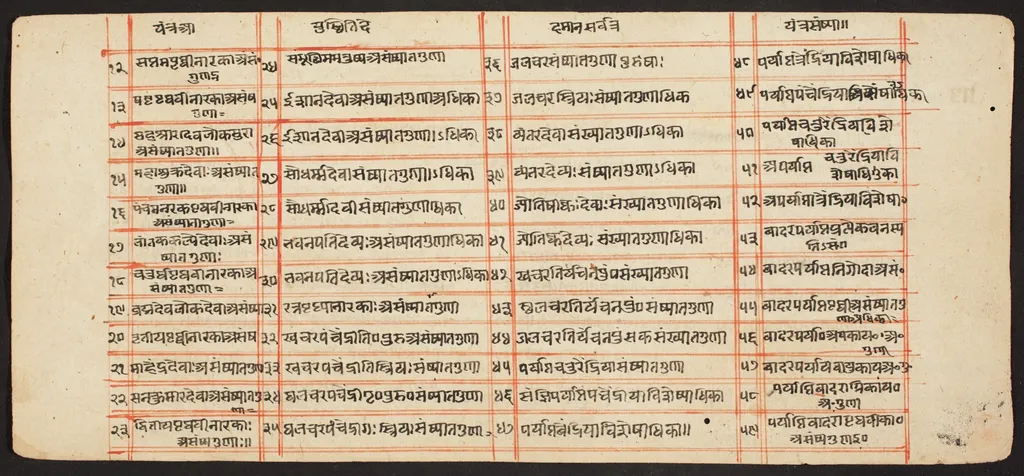
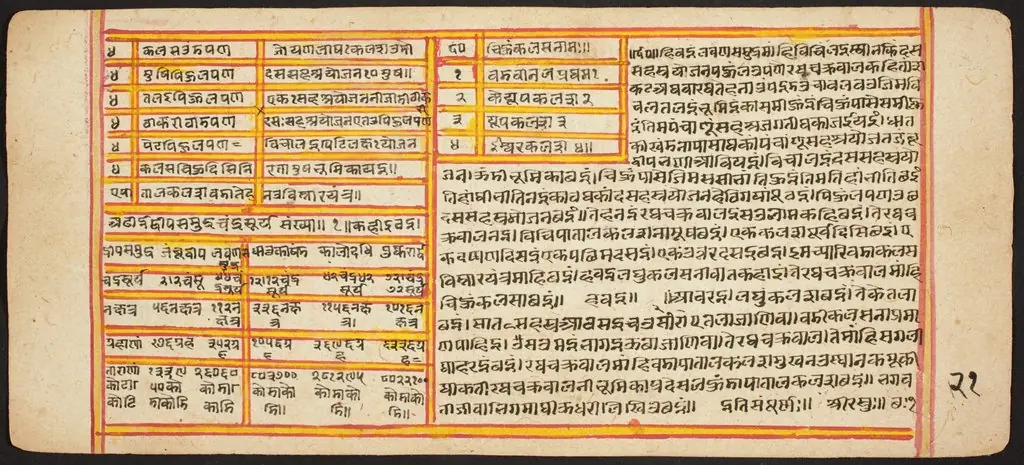
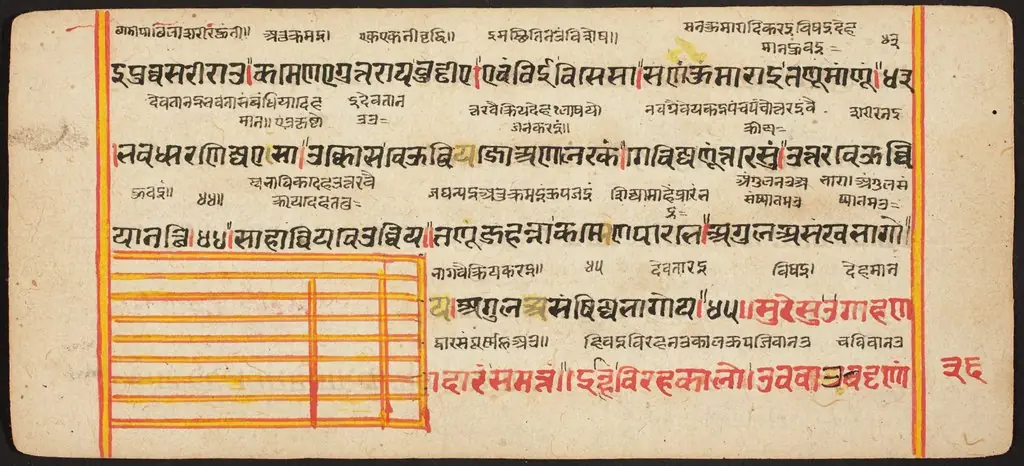
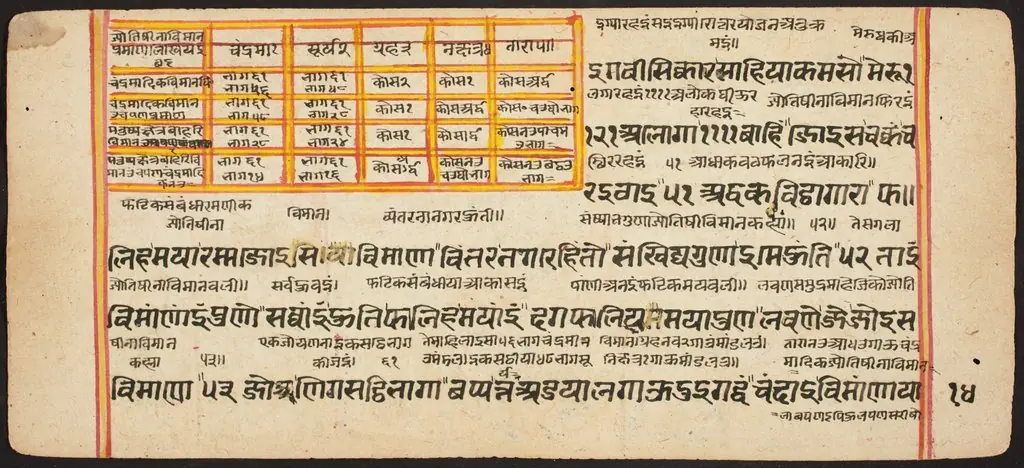
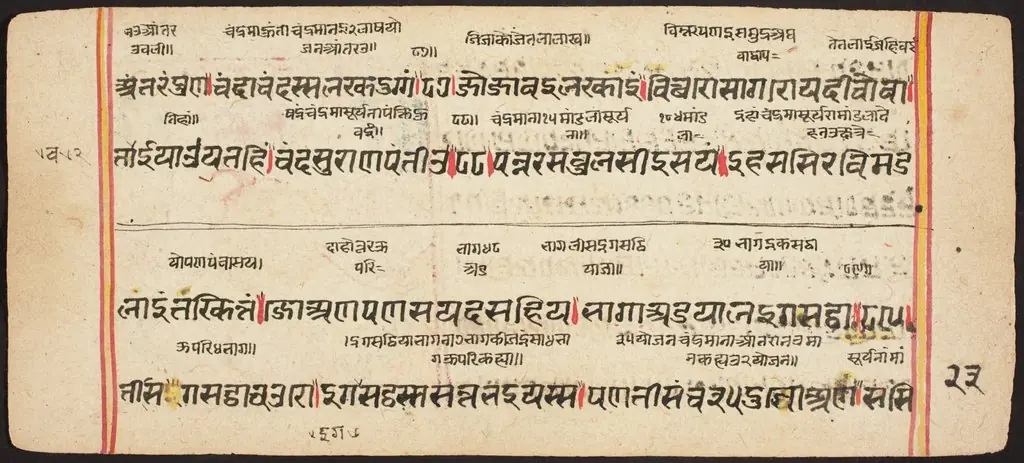
Tantric Manuscript "Sangrahani Sutra" is an unspecified painting by Unknown. It is held in the collection of the Detroit Institute of Arts. This manuscript page contains a grid of fifty small squares, each holding a few lines of text in an undeciphered script.
About this work
Overview
This manuscript page contains a grid of fifty small squares, each holding a few lines of text in an undeciphered script.
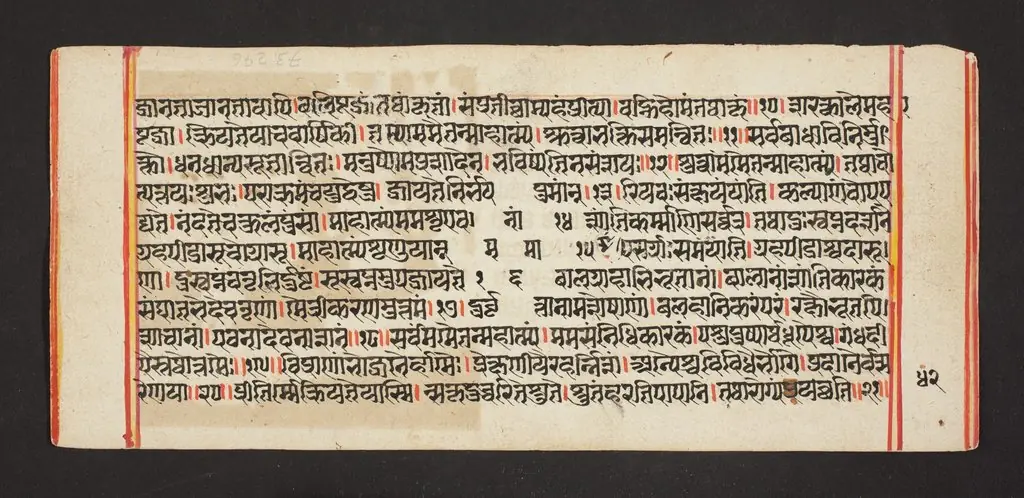
This manuscript page contains a grid of fifty small squares, each holding a few lines of text in an undeciphered script. The writing is rendered in black ink on a beige surface, separated by thin red lines. The layout suggests a systematic, possibly ritualistic organization. Though the script remains unidentified, the precision of the grid implies a structured religious or meditative function, typical of certain Eastern esoteric traditions.
Subject & Meaning
The content appears to be a liturgical or doctrinal text, likely used in tantric practice. The uniform grid may reflect a cosmological or symbolic framework, where each square corresponds to a phonetic, spiritual, or mnemonic unit. Blank squares could indicate incomplete transmission, intentional omission, or a placeholder for oral recitation. The structure supports a pedagogical or contemplative role rather than narrative storytelling.
Technique & Style
The text is carefully inscribed with fine brushwork in black ink, using a consistent hand across all squares. Red ink outlines the grid with steady precision, suggesting the use of a ruling tool. The absence of ornamentation or figural imagery emphasizes textual purity. The materials—pigment on paper or palm leaf—align with pre-modern South or Southeast Asian manuscript traditions, prioritizing legibility and ritual function over decorative flourish.
History & Provenance
The manuscript likely originated in a tantric Buddhist or Hindu monastic context between the 8th and 14th centuries, though its exact place and date remain uncertain. No known collector or institutional record accompanies it, limiting provenance. Its survival suggests it was preserved in a religious archive or private collection, possibly due to its perceived sacredness rather than artistic value.
Context
This object belongs to a broader tradition of esoteric manuscripts used in ritual practice, where written syllables or phrases were believed to hold spiritual power. Similar grid-based texts appear in Tibetan and Nepalese tantric sources, often serving as visual aids for meditation or mantra recitation. The absence of illustrations distinguishes it from illustrated sutras, pointing to a more abstract, textual focus in its devotional use.
Legacy
Though not widely studied due to its undeciphered script, this manuscript contributes to understanding how sacred knowledge was visually encoded in pre-modern Asia. Its structured form influenced later practices in ritual diagramming and script-based meditation. Scholars continue to compare it with related texts in Sanskrit, Tibetan, and other Indic languages to identify linguistic roots and possible ritual parallels.
Artist & collection

 Domestic Scene
 Giacomo and Cardinal Marco, investing Andrea, Abbot of San Zeno, with his Benefice
 The Nymph of Fontainebleau
 Portrait of a Woman
 Madonna and Child with Saints in the Enclosed Garden
 Venus and Minerva
 Family Group of Four on Sofa
 Wall painting from Room H of the Villa of P. Fannius Synistor at Boscoreale
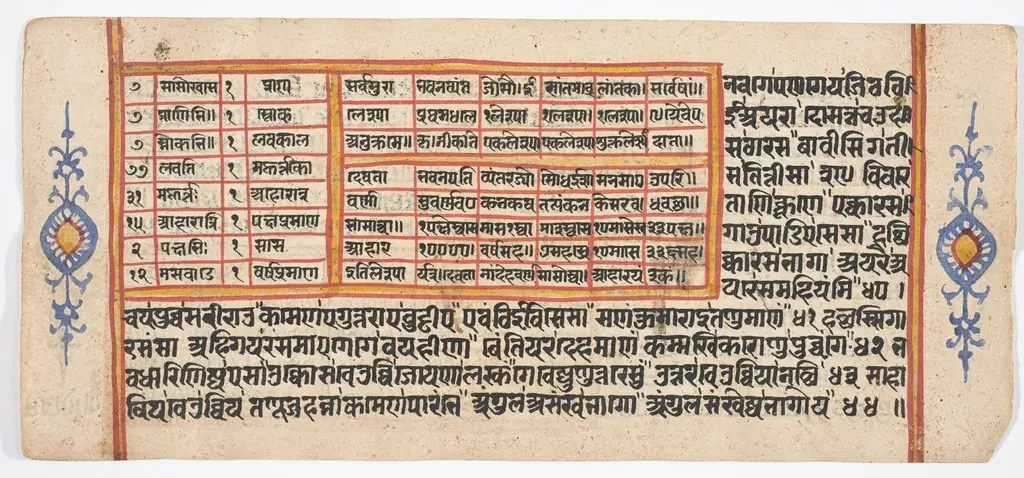 Tantric Manuscript "Sangrahani Sutra"
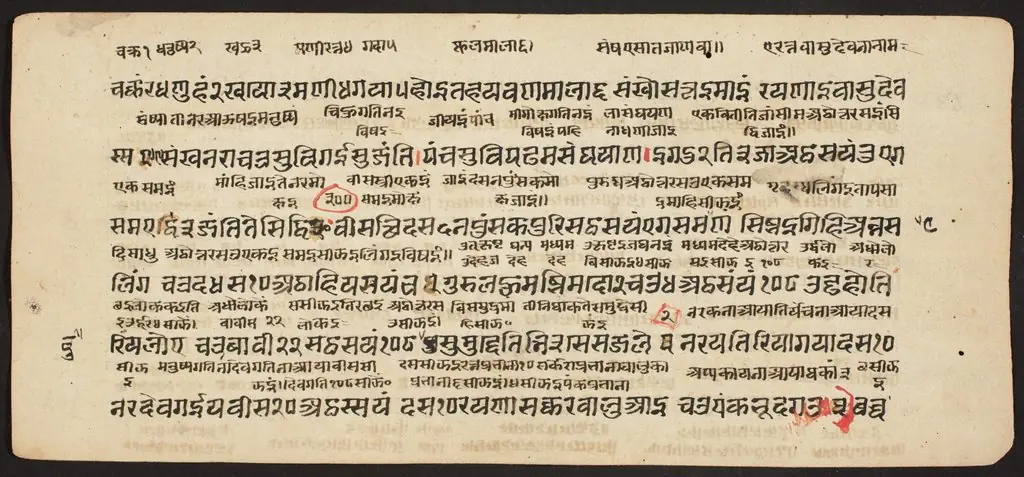 Tantric Manuscript "Sangrahani Sutra"
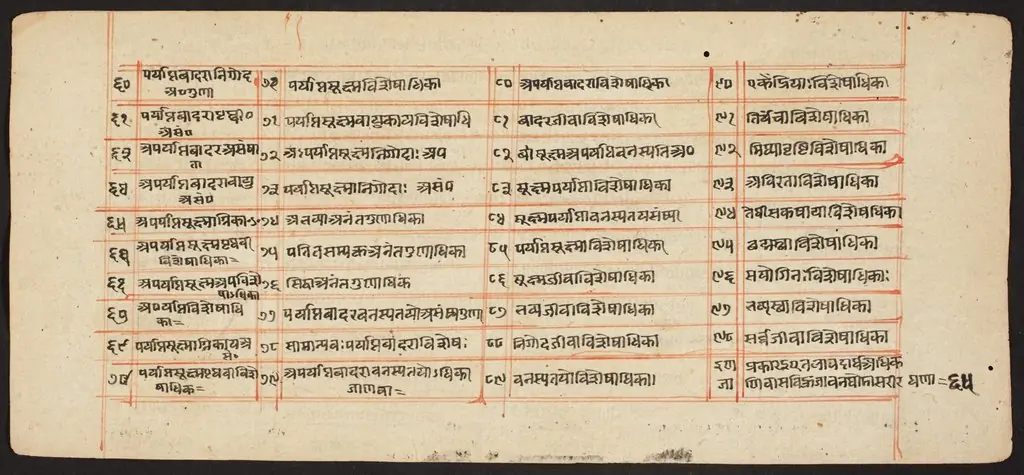 Tantric Manuscript "Sangrahani Sutra"
 Tantric Manuscript "Sangrahani Sutra"
 Tantric Manuscript "Sangrahani Sutra"
 Legend of Durga
 Tantric Manuscript "Sangrahani Sutra"
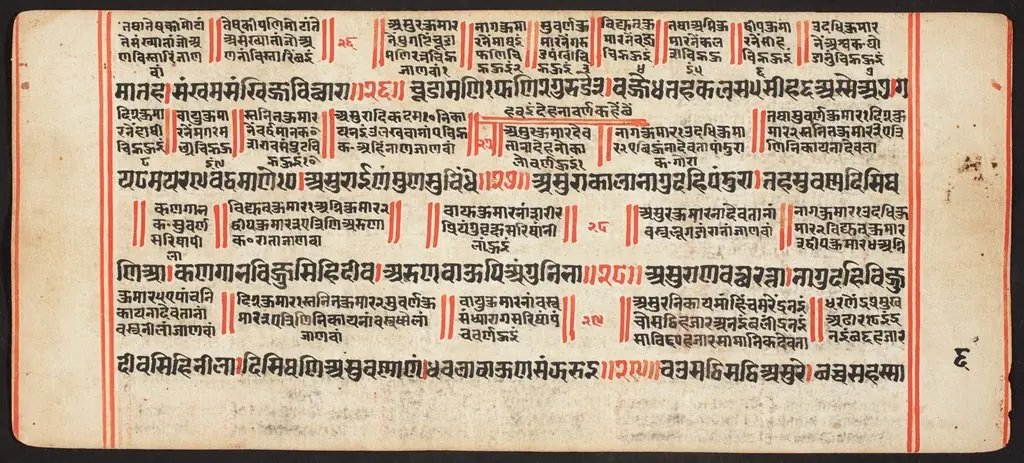 Tantric Manuscript, "Sangrahani Sutra"
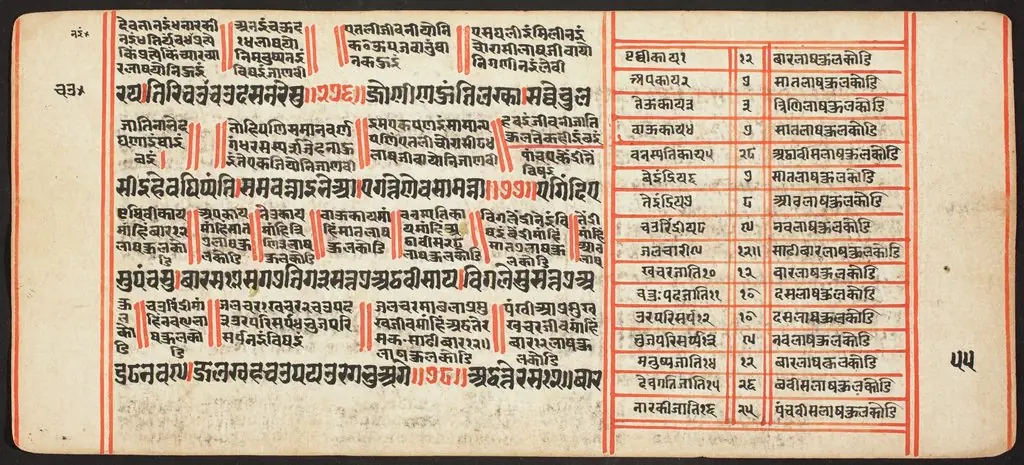 Tantric Manuscript, "Sangrahani Sutra"
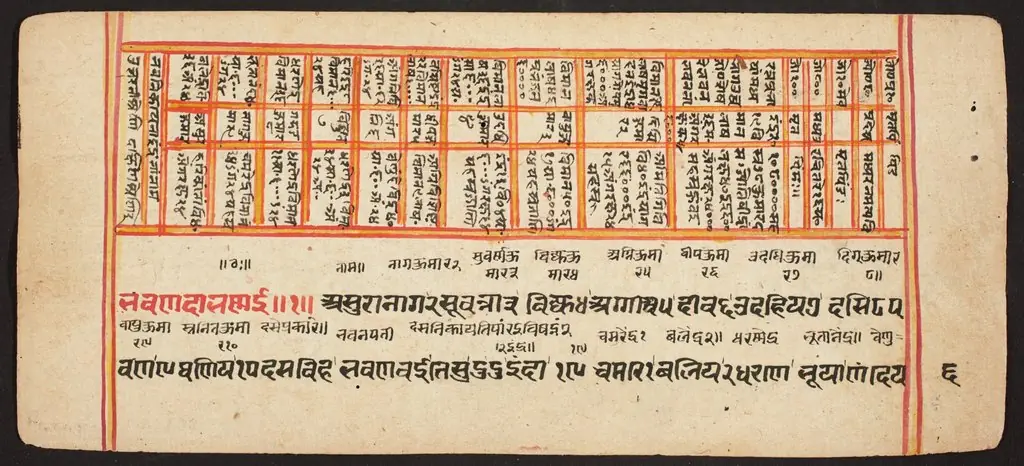 Tantric Manuscript "Sangrahani Sutra"
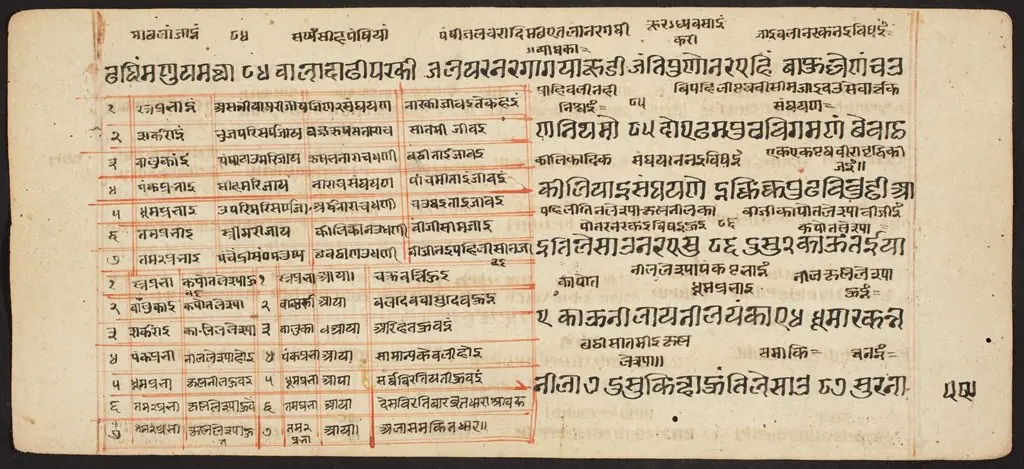 Tantric Manuscript "Sangrahani Sutra"
 Tantric Manuscript "Sangrahani Sutra"