Artwork
Tantric Manuscript "Sangrahani Sutra"
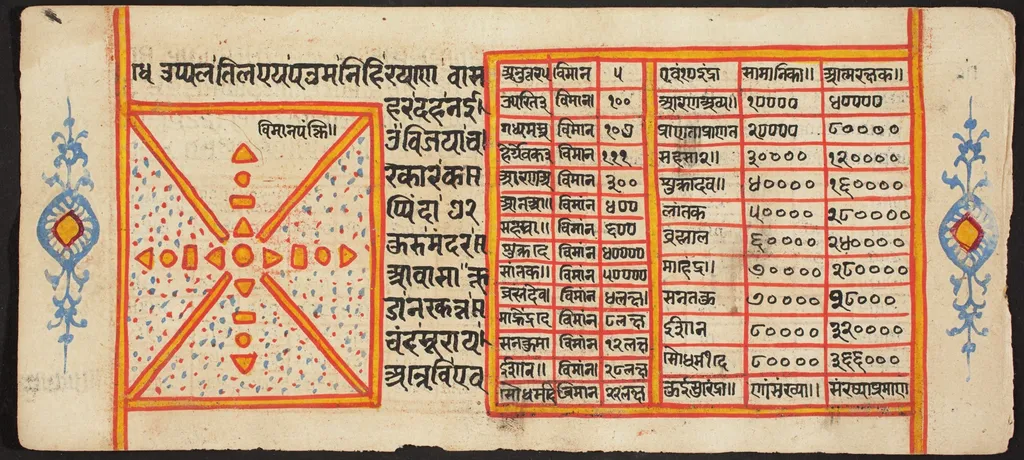
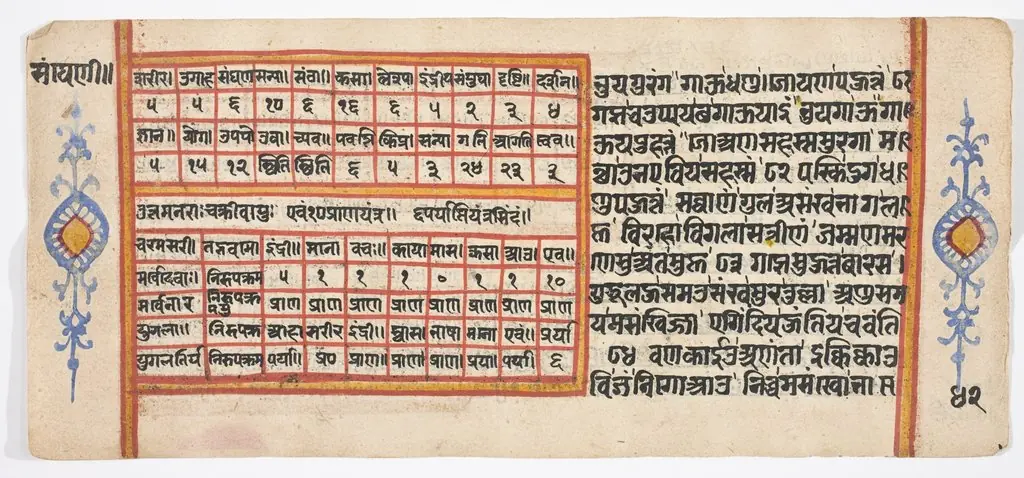
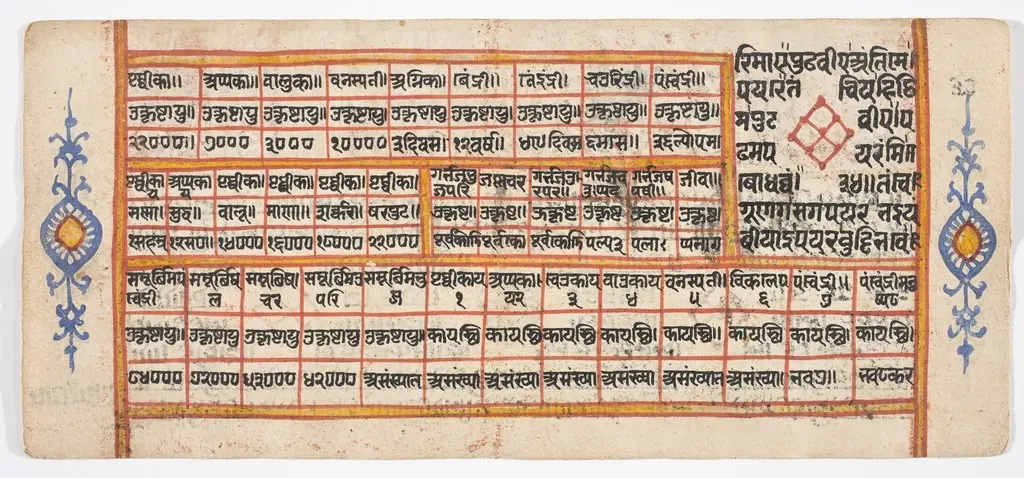
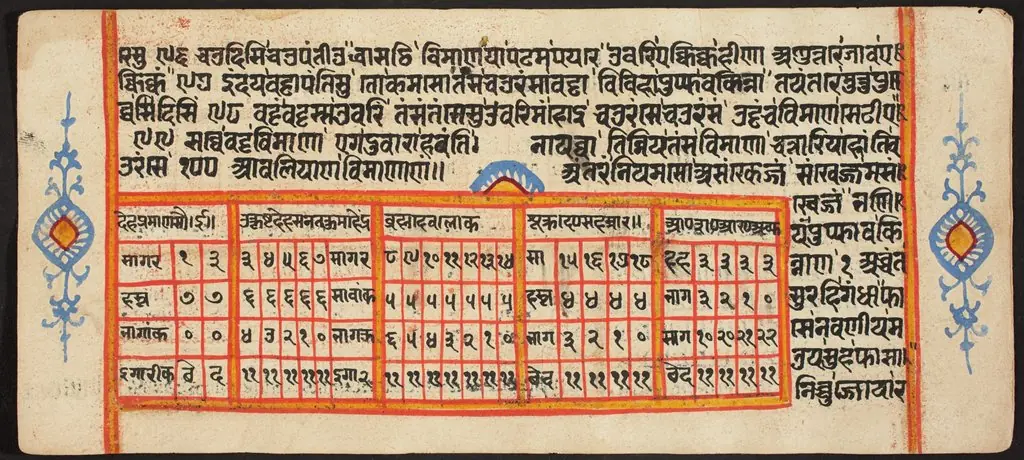
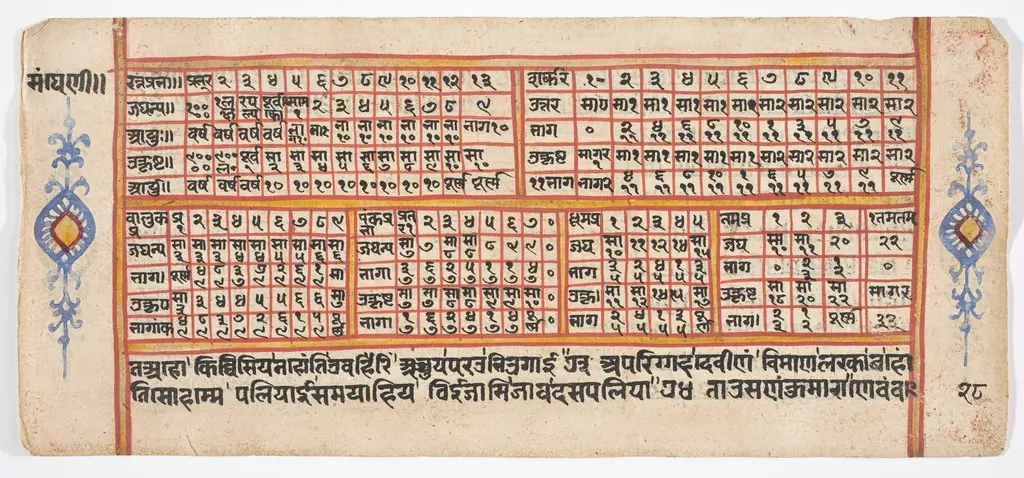
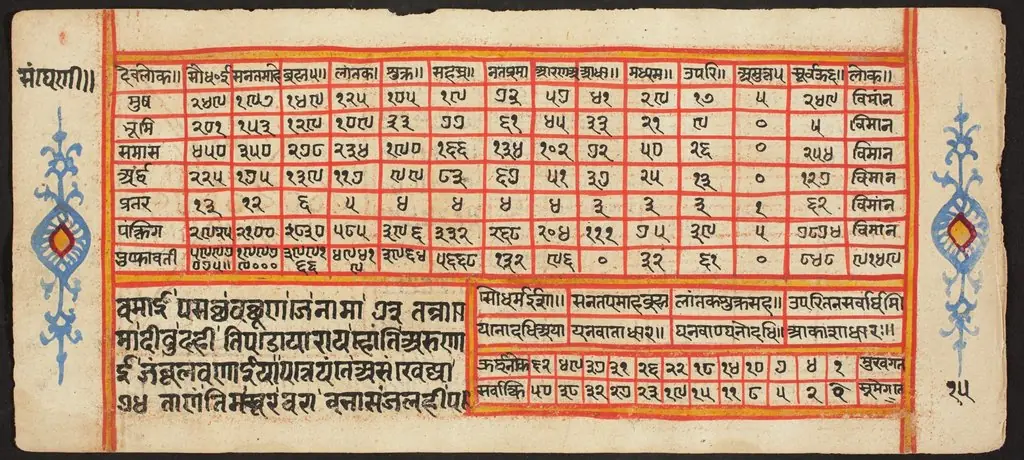
Tantric Manuscript "Sangrahani Sutra" is an unspecified painting by Unknown. It is held in the collection of the Detroit Institute of Arts. This painted page originates from a manuscript of the Sangrahani Sutra, a tantric Buddhist text.
About this work
Overview
The composition balances symbolic imagery with dense textual elements, reflecting its ritual and didactic function within esoteric Buddhist practice.
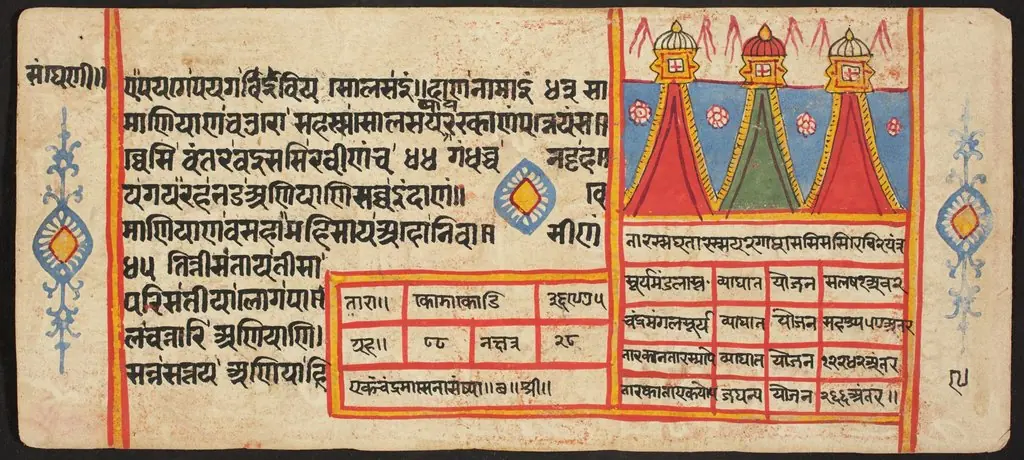
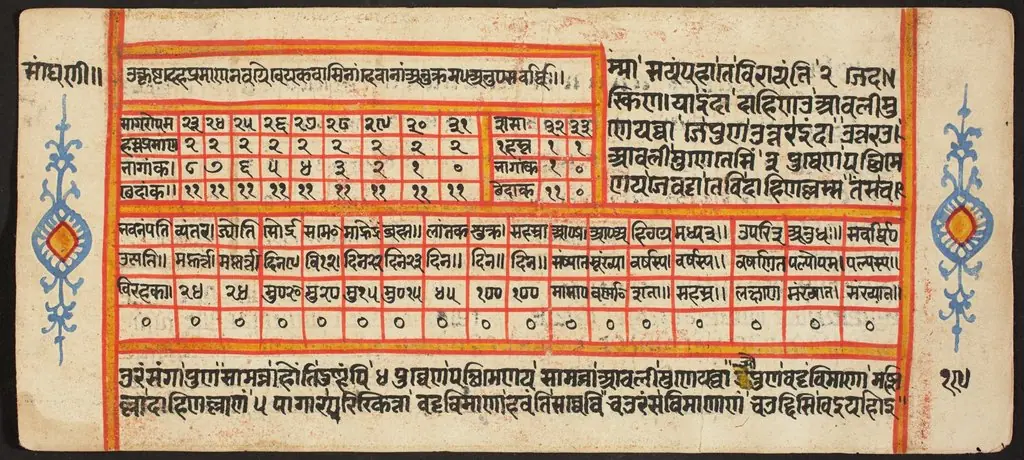
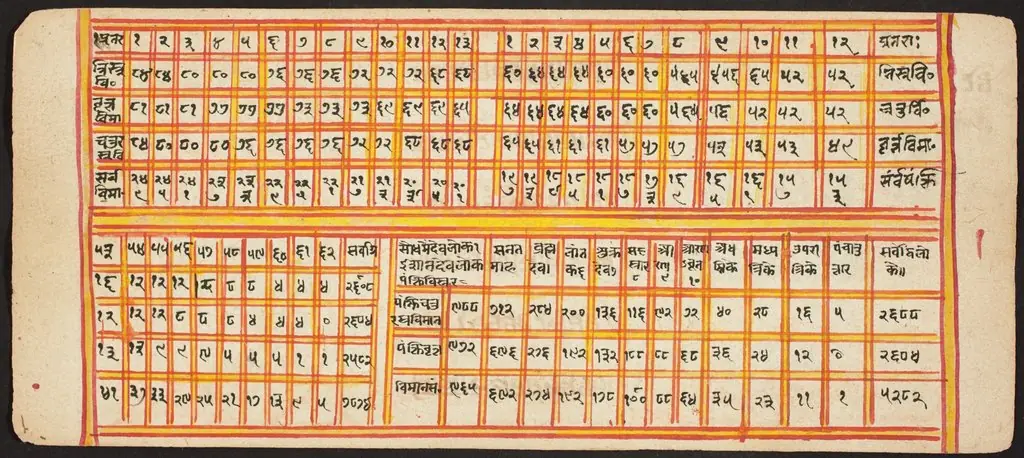
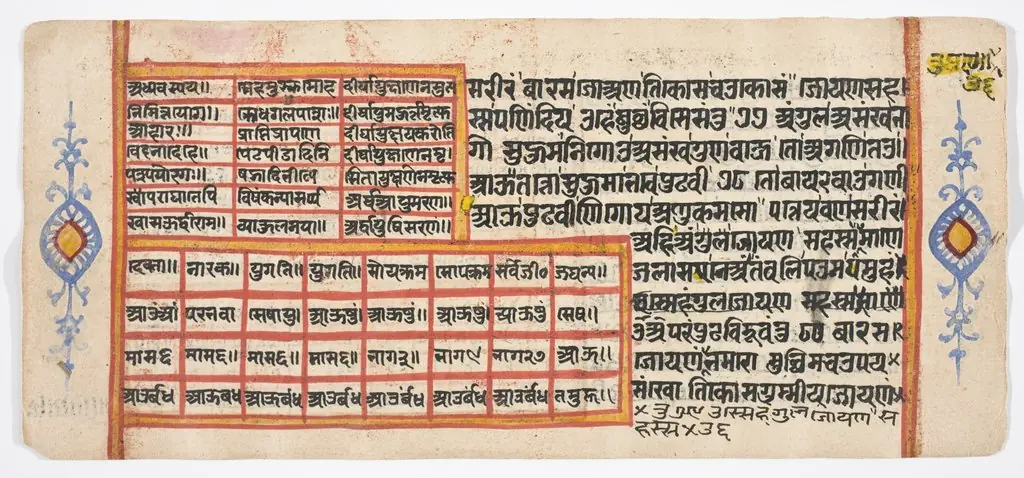
This painted page originates from a manuscript of the Sangrahani Sutra, a tantric Buddhist text. It features a central square framed in red with a yellow border, containing geometric symbols—triangles and dots—in red, yellow, and blue. To its right lies a structured table filled with minuscule script and numerals. The composition balances symbolic imagery with dense textual elements, reflecting its ritual and didactic function within esoteric Buddhist practice.
Subject & Meaning
The central square likely represents a mandala, a symbolic diagram used in tantric meditation to map spiritual cosmology. The colored triangles and dots may signify deities, energies, or cosmic principles. The accompanying table, filled with script and numbers, probably encodes liturgical instructions, syllabic formulas, or numerical correspondences essential to ritual performance. Together, image and text function as a visual guide for meditative practice.
Technique & Style
The painting employs fine brushwork to render intricate geometric forms and tiny script with precision. Pigments—red, yellow, and blue—are applied with care, likely mineral-based, to ensure durability and symbolic resonance. The layout is highly structured: the mandala occupies the left, the table the right, creating a balanced yet dense visual field. The style prioritizes clarity and symbolic accuracy over decorative flourish.
History & Provenance
The page belongs to a manuscript produced in medieval India or Nepal, likely between the 10th and 14th centuries, during the height of tantric Buddhist manuscript culture. Such texts were copied by monastic scribes for use in ritual contexts. Its survival suggests it was preserved in a temple or monastic library, possibly through generations of careful handling and storage in controlled environments.
Context
Tantric Buddhist manuscripts like this one served as instructional tools for initiates, blending visual symbolism with encoded textual knowledge. They were not meant for public viewing but for guided practice under a teacher’s supervision. The combination of geometric diagrams and numerical tables reflects a system of esoteric knowledge where visual and linguistic elements were interdependent, each reinforcing the other’s meaning.
Legacy
This page exemplifies the sophisticated integration of art and ritual in tantric Buddhism. Though obscure to modern viewers, its structure and content influenced later Tibetan thangka traditions and the codification of mandalic symbolism. Surviving fragments like this remain vital for understanding how abstract spiritual concepts were rendered tangible through disciplined visual and textual forms.
Artist & collection

 Domestic Scene
 Giacomo and Cardinal Marco, investing Andrea, Abbot of San Zeno, with his Benefice
 The Nymph of Fontainebleau
 Portrait of a Woman
 Madonna and Child with Saints in the Enclosed Garden
 Venus and Minerva
 Family Group of Four on Sofa
 Wall painting from Room H of the Villa of P. Fannius Synistor at Boscoreale
 Tantric Manuscript "Sangrahani Sutra"
 Tantric Manuscript "Sangrahani Sutra"
 Tantric Manuscript "Sangrahani Sutra"
 Tantric Manuscript "Sangrahani Sutra"
 Tantric Manuscript "Sangrahani Sutra"
 Tantric Manuscript "Sangrahani Sutra"
 Tantric Manuscript "Sangrahani Sutra"
 Tantric Manuscript "Sangrahani Sutra"
 Tantric Manuscript "Sangrahani Sutra"
 Tantric Manuscript "Sangrahani Sutra"
 Tantric Manuscript "Sangrahani Sutra"
 Tantric Manuscript "Sangrahani Sutra"