Artwork
Portrait of Suzanna Moor (1608-57)
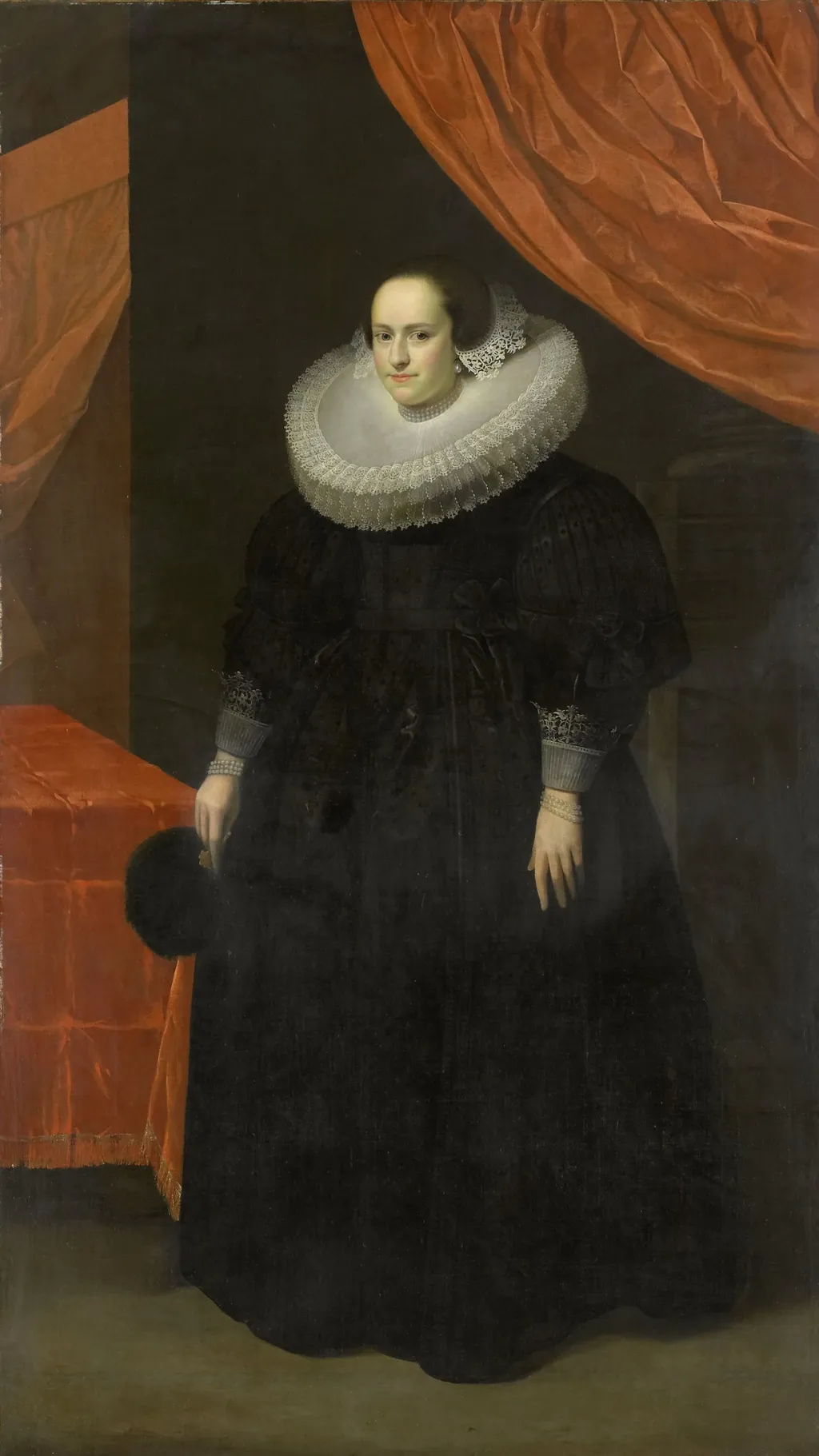
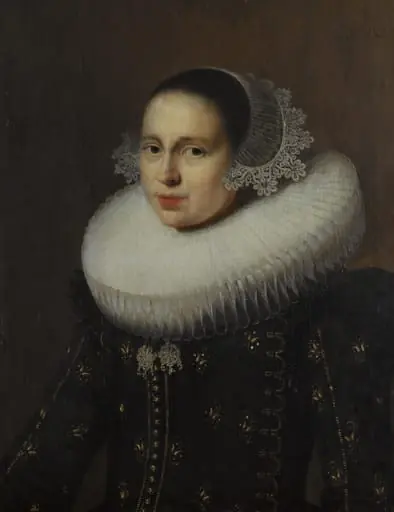
Portrait of Suzanna Moor (1608-57) is an oil painting by the Dutch Golden Age artist Unknown. It dates from 1629 and is held in the collection of the Rijksmuseum. Portrait of Suzanna Moor is a 1629 oil painting depicting a woman of elegance against a subdued backdrop.
About this work
A woman stands in front of a dark background, dressed in a black gown with wide lace cuffs and a ruff collar.
A woman stands in front of a dark background, dressed in a black gown with wide lace cuffs and a ruff collar. Her hair is pulled back neatly, and she holds a small black ball in her left hand. The fabric around her looks rich, with gold thread visible at the cuffs. Behind her, a red curtain drapes in folds, adding warmth to the scene.
This portrait was painted in 1629, showing off the style of the time—simple but elegant clothing. The lighting focuses on her face, making it stand out against the shadows.
Next, check out how this artist used chiaroscuro.
Overview
Portrait of Suzanna Moor is a 1629 oil painting depicting a woman of elegance against a subdued backdrop. The subject, identified as Suzanna Moor (1608-57), is portrayed in a state of quiet composure, adorned in attire reflective of the period's understated luxury.
Subject & Meaning
Suzanna Moor is shown standing, distinguished by her refined black gown, lace cuffs, and ruff collar, with a small black ball in her left hand. Her poised demeanor and the choice of accessories suggest a portrayal of dignity and possibly intellectual or marital status, though the ball's specific symbolism is unclear.
Technique & Style
The painting exemplifies the early 17th-century style with its simplicity and elegance. Notably, the artist employs chiaroscuro, focusing light on the subject's face to create a stark contrast with the surrounding shadows, enhancing the overall sense of depth and emphasizing the sitter's features.
History & Provenance
Painted in 1629, the portrait's provenance details are not provided in the available information. It is known to depict Suzanna Moor during her life (1608-57), offering a glimpse into the sartorial preferences of the era's upper class.
Context
The work reflects the artistic tastes of the 1620s, with the use of a dark background and a red curtain adding a touch of warmth, a common compositional choice to frame and highlight the subject. The visible gold thread in the cuffs underscores the subject's wealth.
Legacy
While specific influences or subsequent artistic impacts of this portrait are not detailed, it contributes to the historical record of 17th-century portraiture, illustrating both the aesthetic values and the social status representations of its time.
Artist & collection

 Domestic Scene
 Giacomo and Cardinal Marco, investing Andrea, Abbot of San Zeno, with his Benefice
 The Nymph of Fontainebleau
 Portrait of a Woman
 Madonna and Child with Saints in the Enclosed Garden
 Venus and Minerva
 Family Group of Four on Sofa
 Wall painting from Room H of the Villa of P. Fannius Synistor at Boscoreale
 Portrait of a woman
 Untitled
 Portrait of Johanna Le Maire (c. 1601-60)
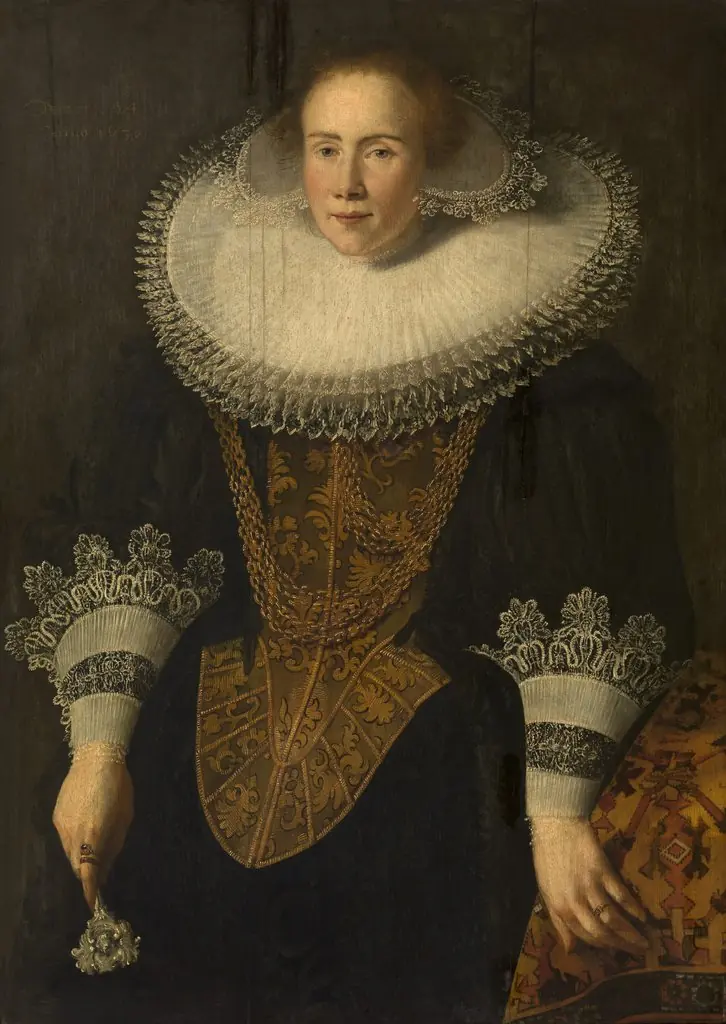 Portrait of a Woman
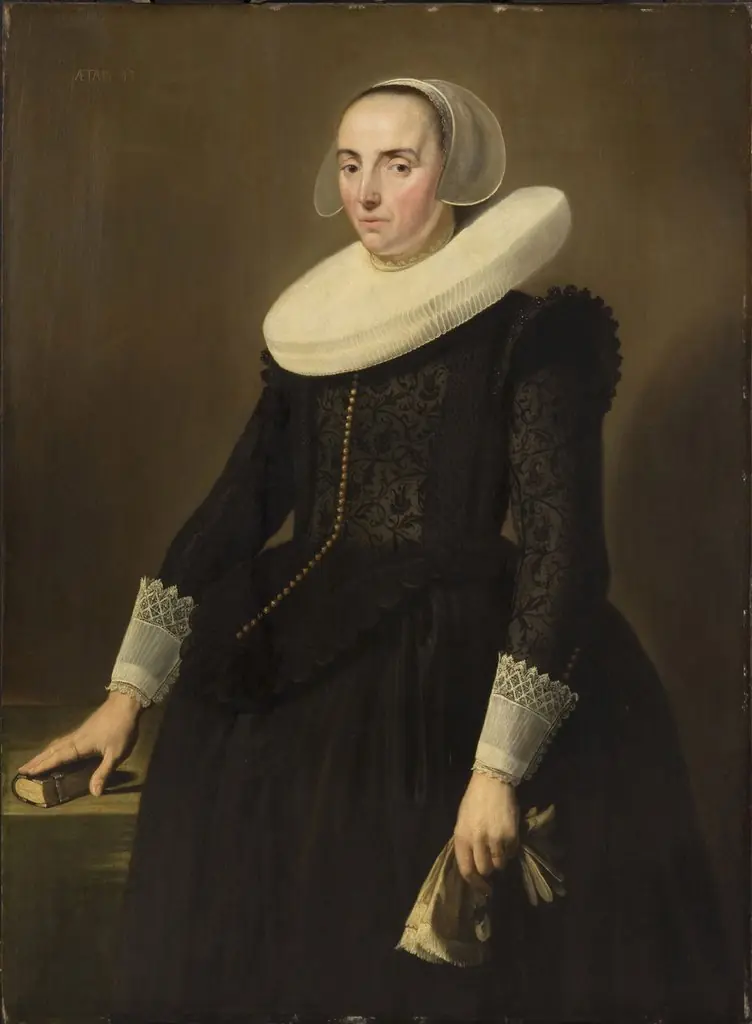 Portrait of Jeanne de Planque
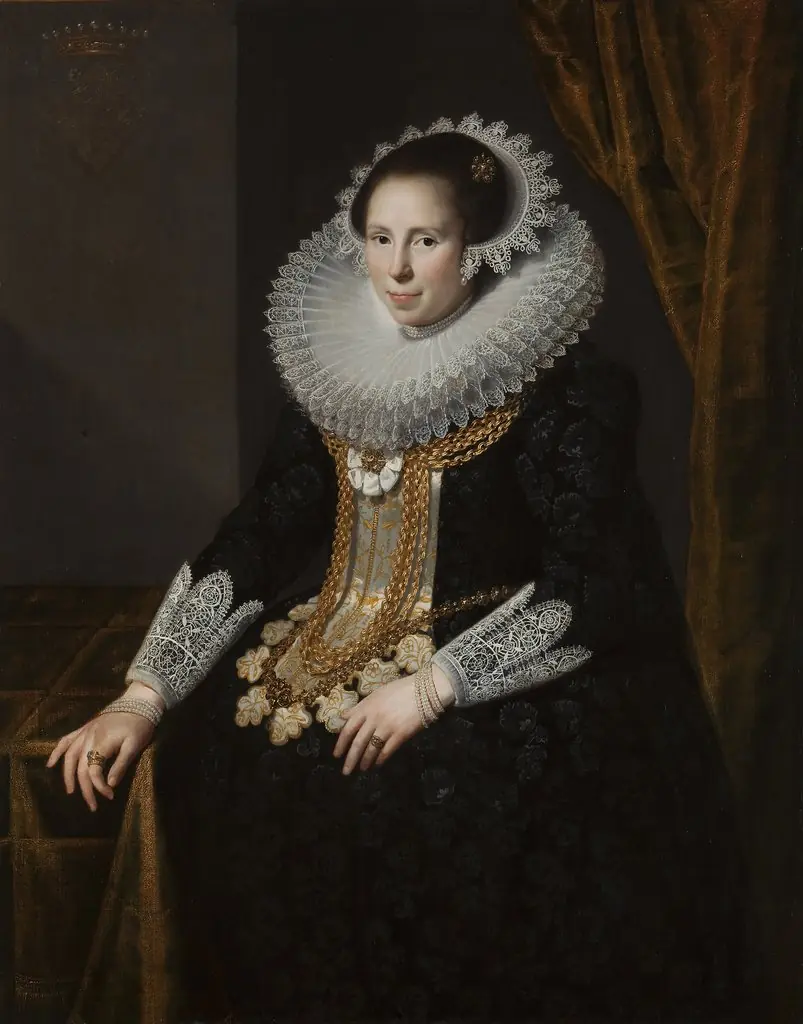 Portrait of Johanna Martens
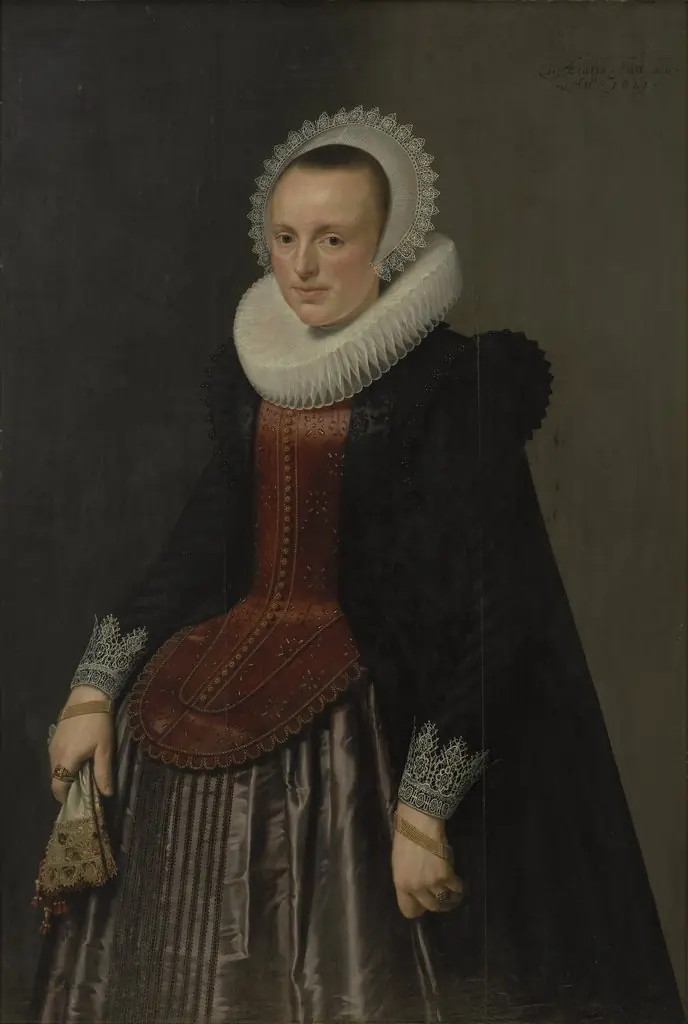 Portrait of a Lady
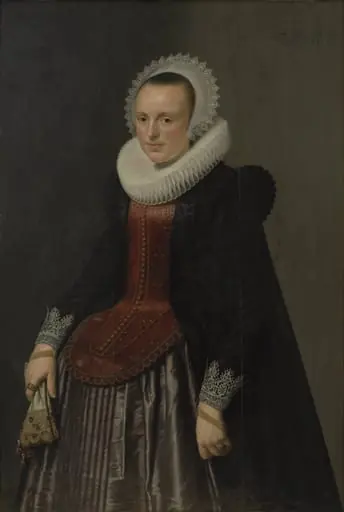 Portrait of a Lady
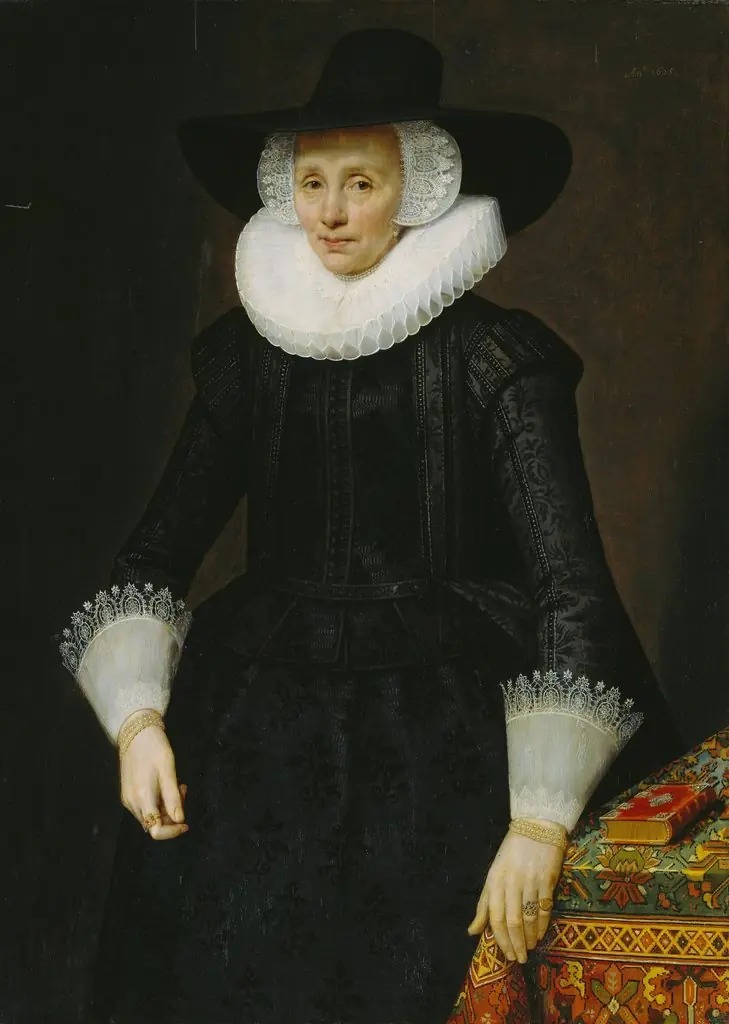 Portrait of Margarita Courten (1564-1640)
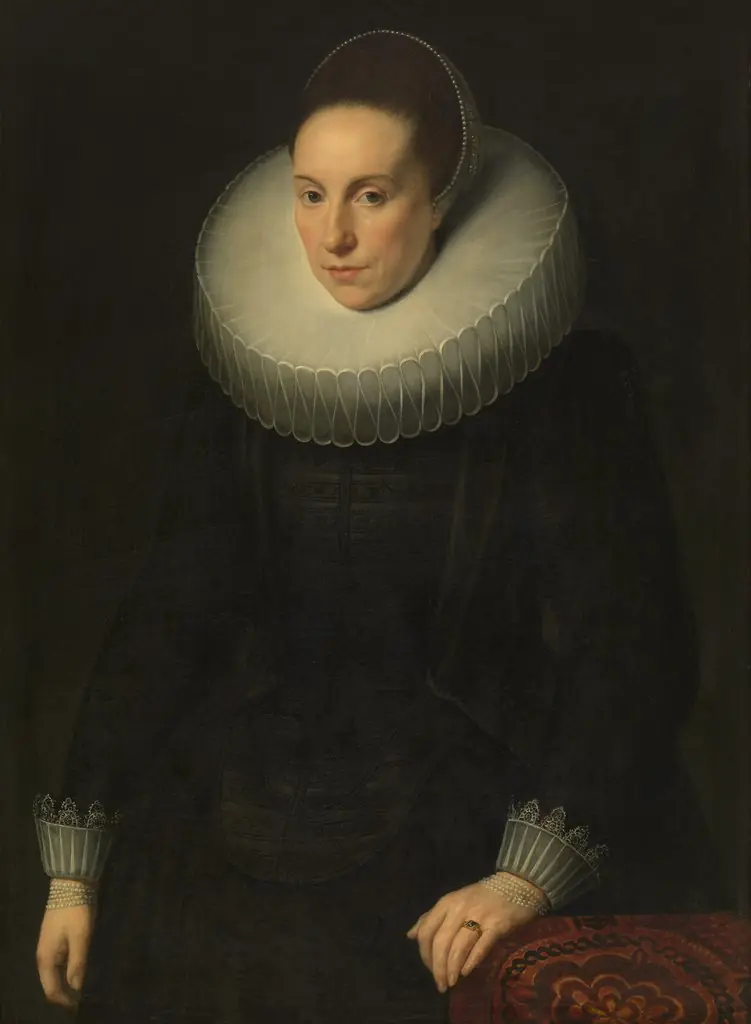 Portret van een vrouw
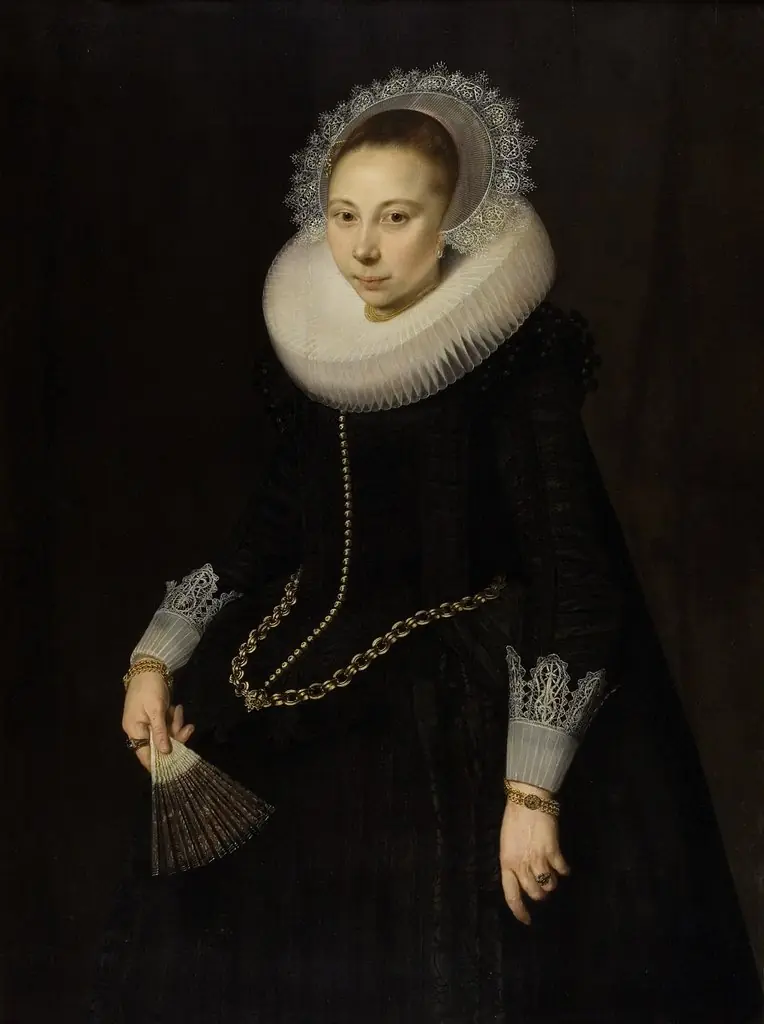 Portrait of Maria Overrijn van Schoterbosch (1599/1600-1638)
 Portrait of Hendrickje Uylenburgh (1600-c. 1682)