Artwork
The Virgin and Saint John the Evangelist
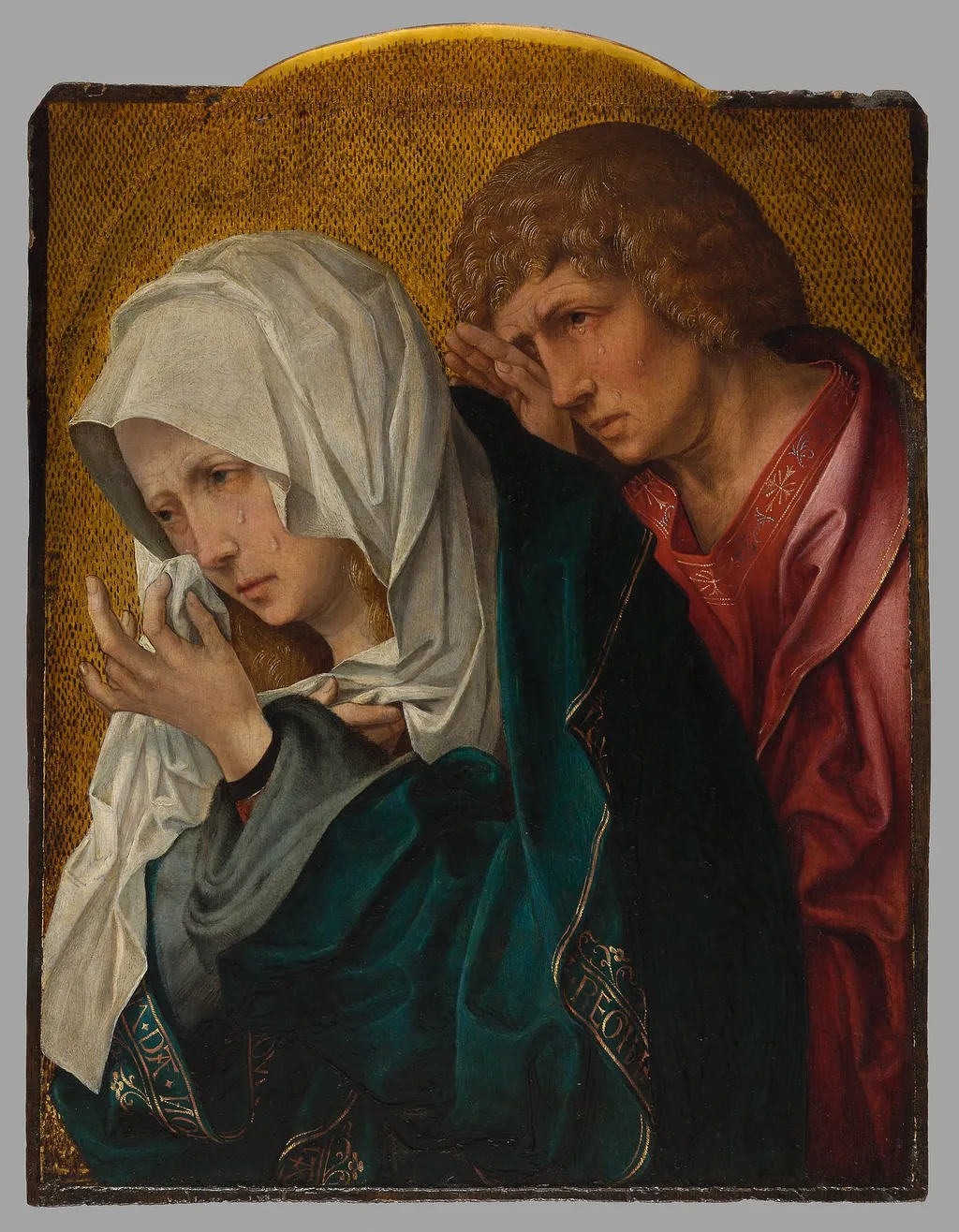
The Virgin and Saint John the Evangelist is an oil painting by the High Renaissance artist Unknown. It dates from 1512 and is held in the collection of the Art Institute of Chicago. The work presents an intimate encounter between two figures rendered in oil.
About this work
Overview
The work presents an intimate encounter between two figures rendered in oil. A woman on the left, veiled in a white headscarf, gently covers her face with a cloth and gazes downward. Opposite her, a man with curly hair wears a red garment edged in gold, his hand resting on his forehead as his eyes are closed. The setting is a dark, textured wall illuminated by a subtle yellow glow at the top.
Subject & Meaning
The composition suggests a moment of private contemplation or prayer, with the two individuals sharing a silent, emotional exchange. The woman's gesture of shielding her face and the man's bowed posture convey humility and reverence, inviting viewers to consider themes of devotion, mourning, or intercessory prayer within a personal, human scale.
Technique & Style
The red robe’s gold trim catches light, adding a subtle decorative element that balances the overall tonal restraint.
The painter employs chiaroscuro, contrasting bright illumination on one side of each face with deep shadow on the other, heightening the three‑dimensionality of the figures. The oil medium allows for smooth blending of flesh tones while preserving the texture of the dark wall background. The red robe’s gold trim catches light, adding a subtle decorative element that balances the overall tonal restraint.
Context
Although the precise origin is unspecified, the work aligns with Baroque sensibilities that favored dramatic lighting and emotional immediacy. The use of a simple interior space and the focus on personal piety reflect the period’s interest in intimate religious scenes, often intended for private devotion rather than public display.
Artist & collection

 Domestic Scene
 Giacomo and Cardinal Marco, investing Andrea, Abbot of San Zeno, with his Benefice
 The Nymph of Fontainebleau
 Portrait of a Woman
 Madonna and Child with Saints in the Enclosed Garden
 Venus and Minerva
 Family Group of Four on Sofa
 Wall painting from Room H of the Villa of P. Fannius Synistor at Boscoreale
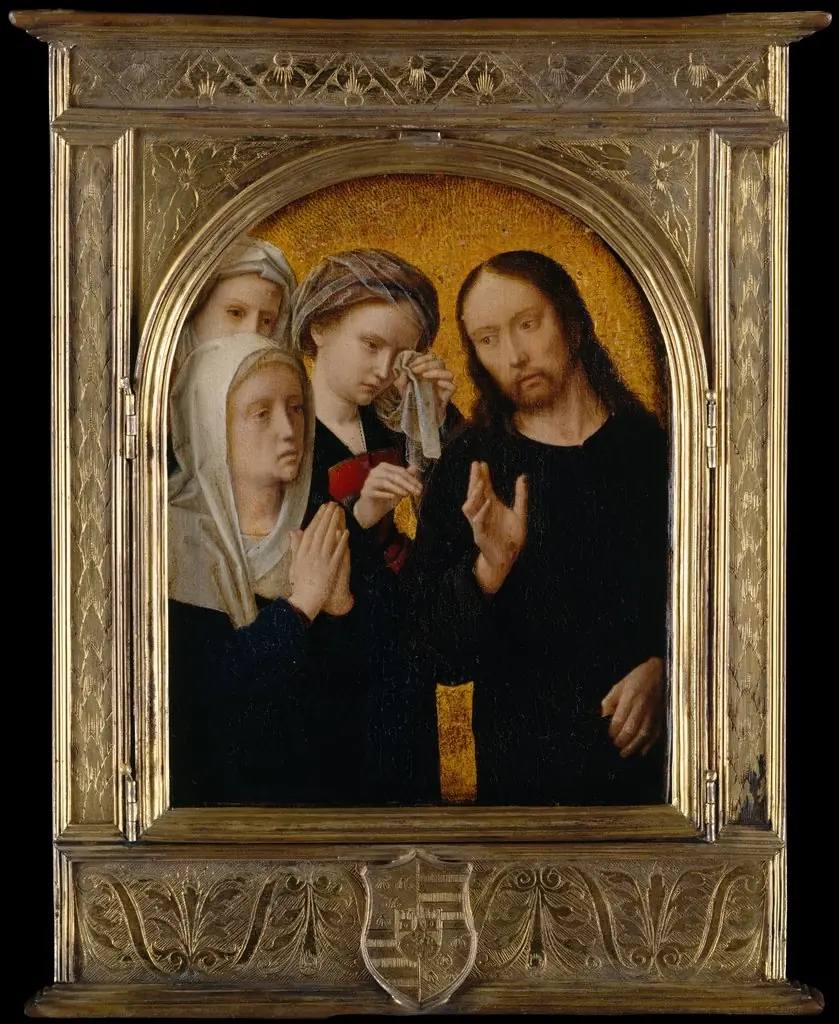 Christ Taking Leave of His Mother
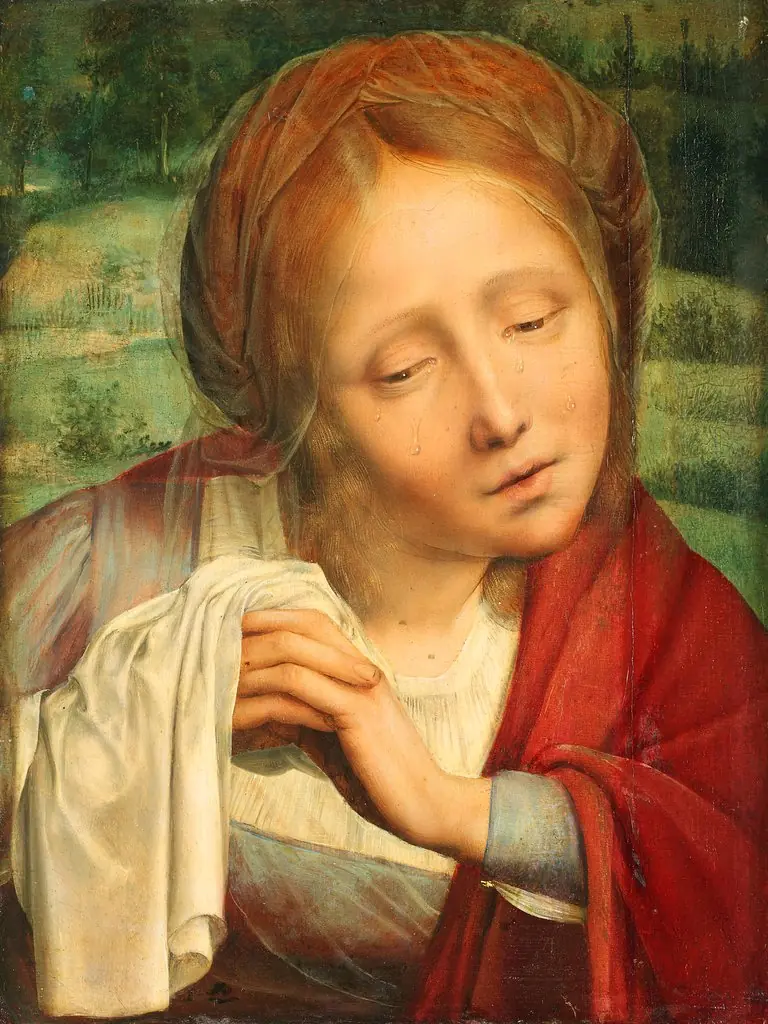 Mourning Woman from a Lamentation
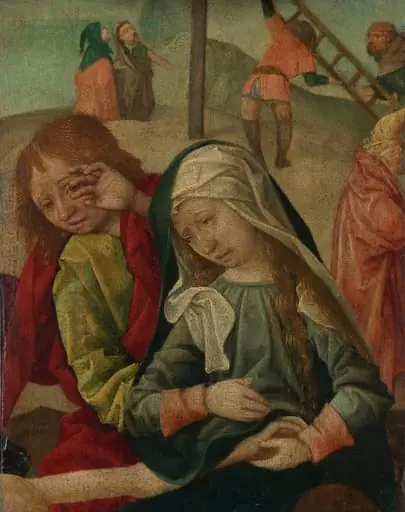 Virgin and Saint John Mourning over the Body of Christ, fragment of a Lamentation of Christ
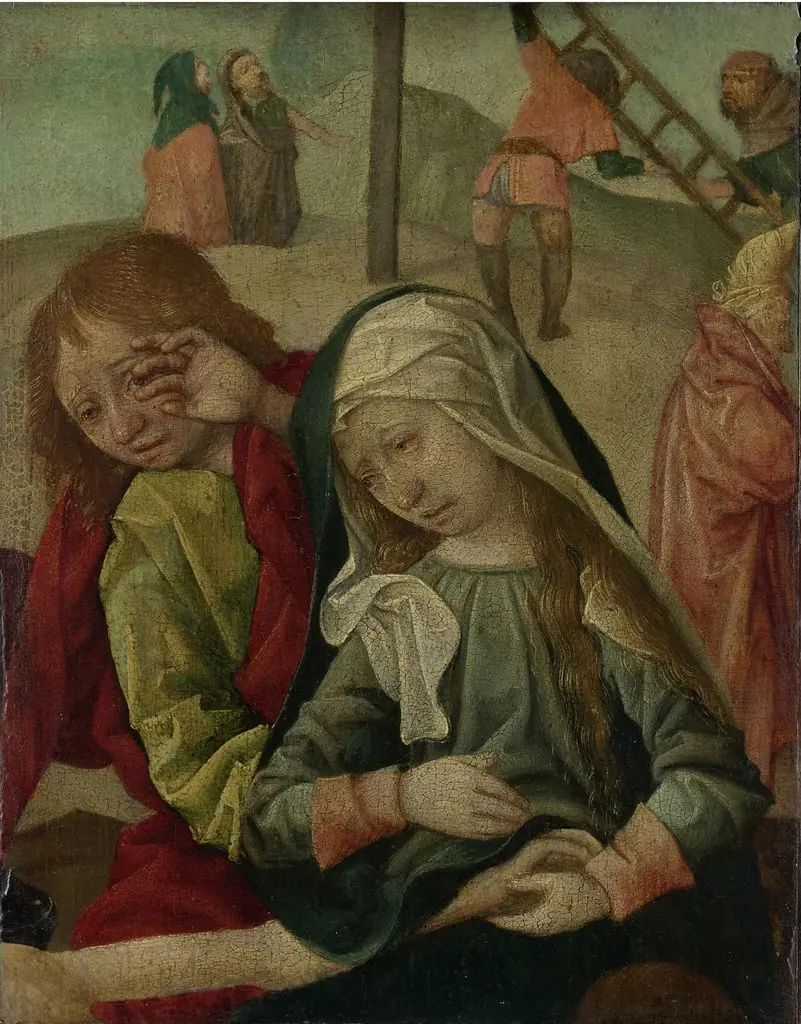 The Virgin and St John lamenting over the body of Christ
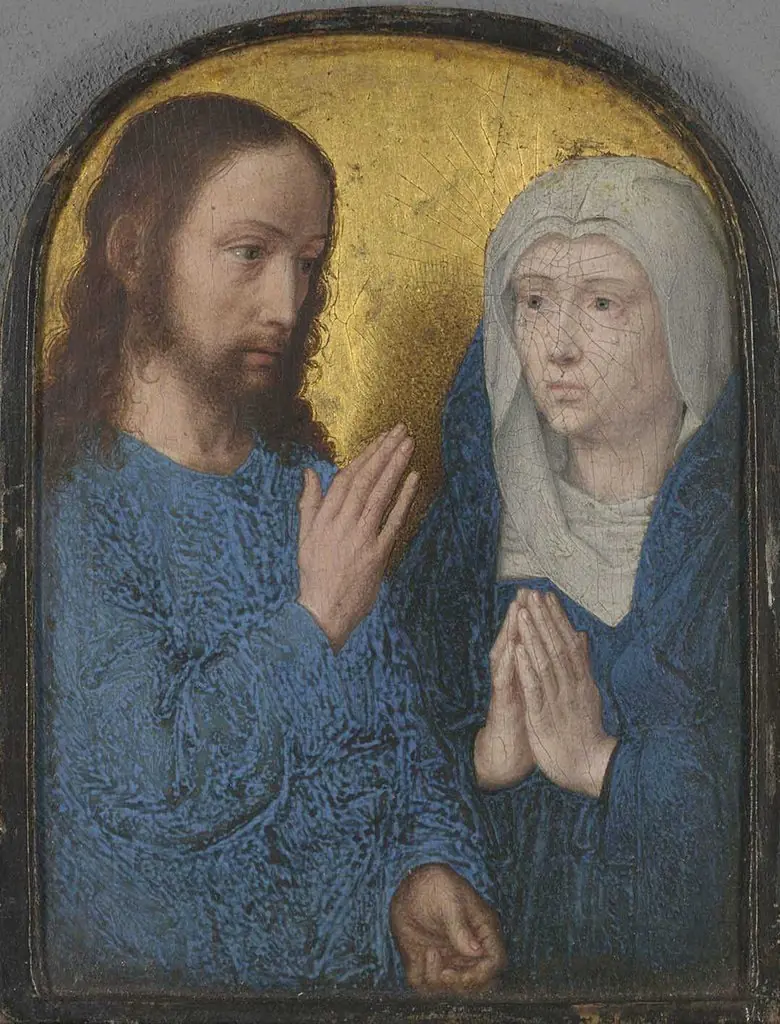 Teil eines Diptychons: Abschied Christi von Maria
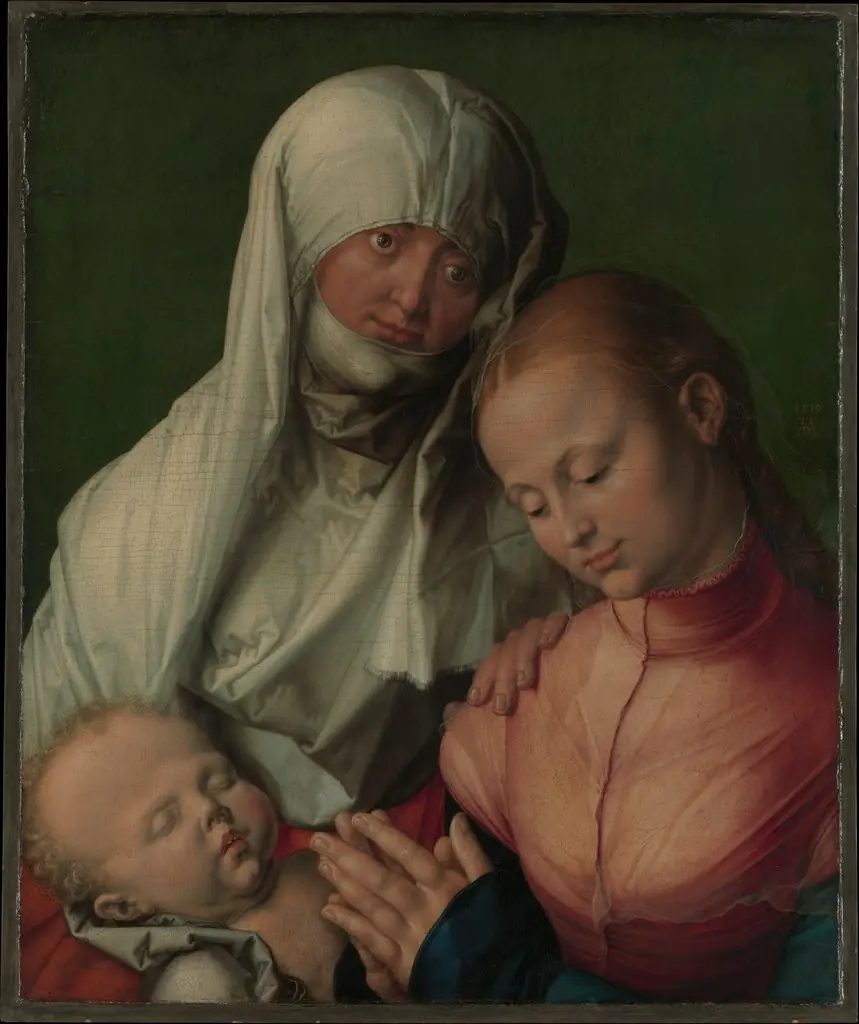 Virgin and Child with Saint Anne
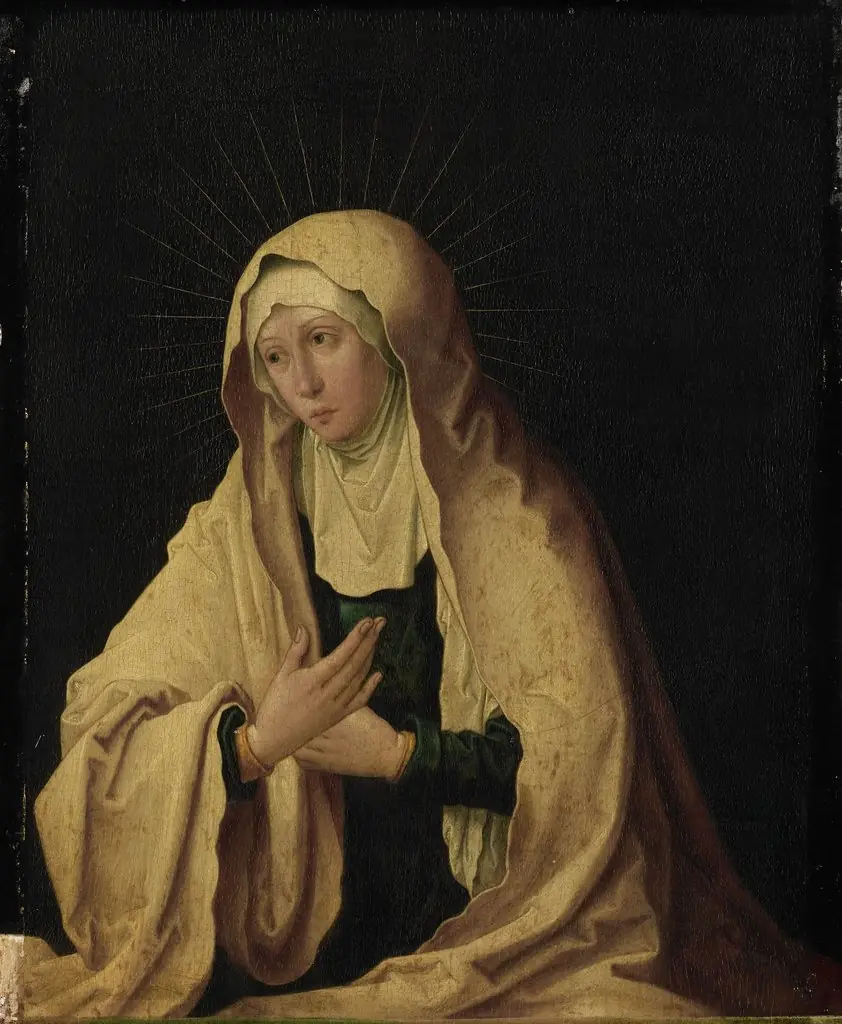 Inner right wing of a diptych with the Virgin as Mater Dolorosa
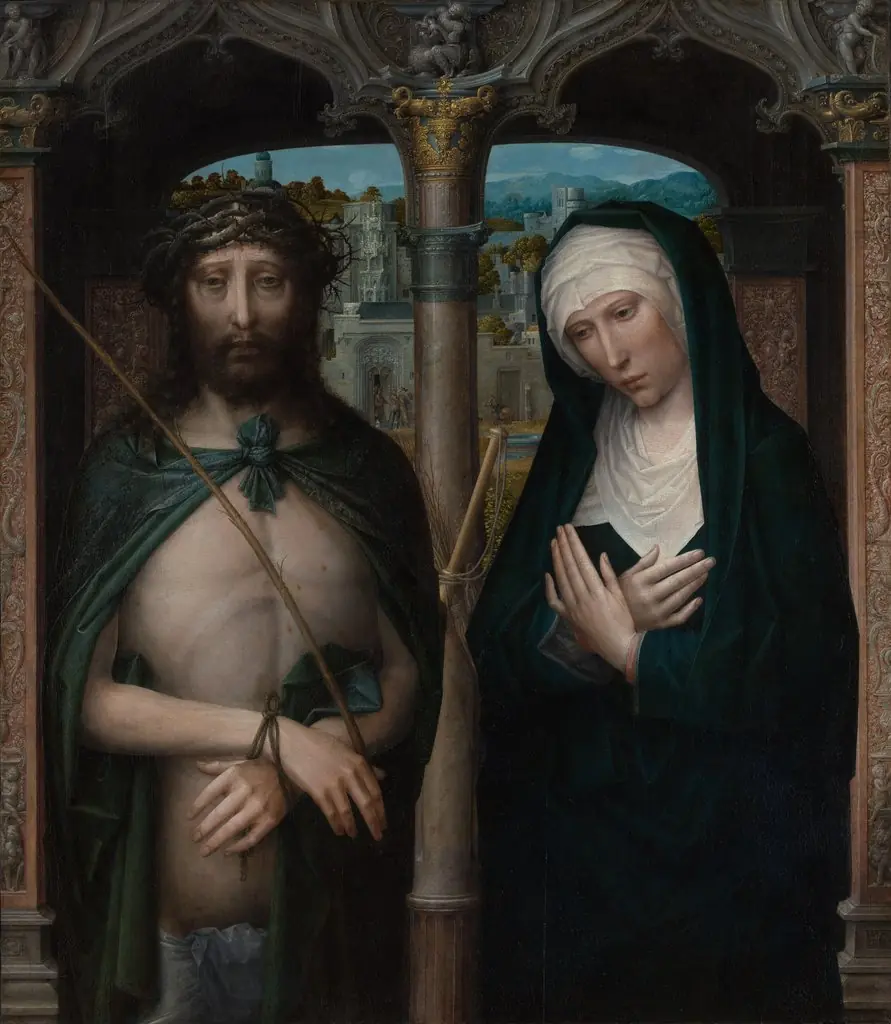 Christ Crowned with Thorns (Ecce Homo), and the Mourning Virgin
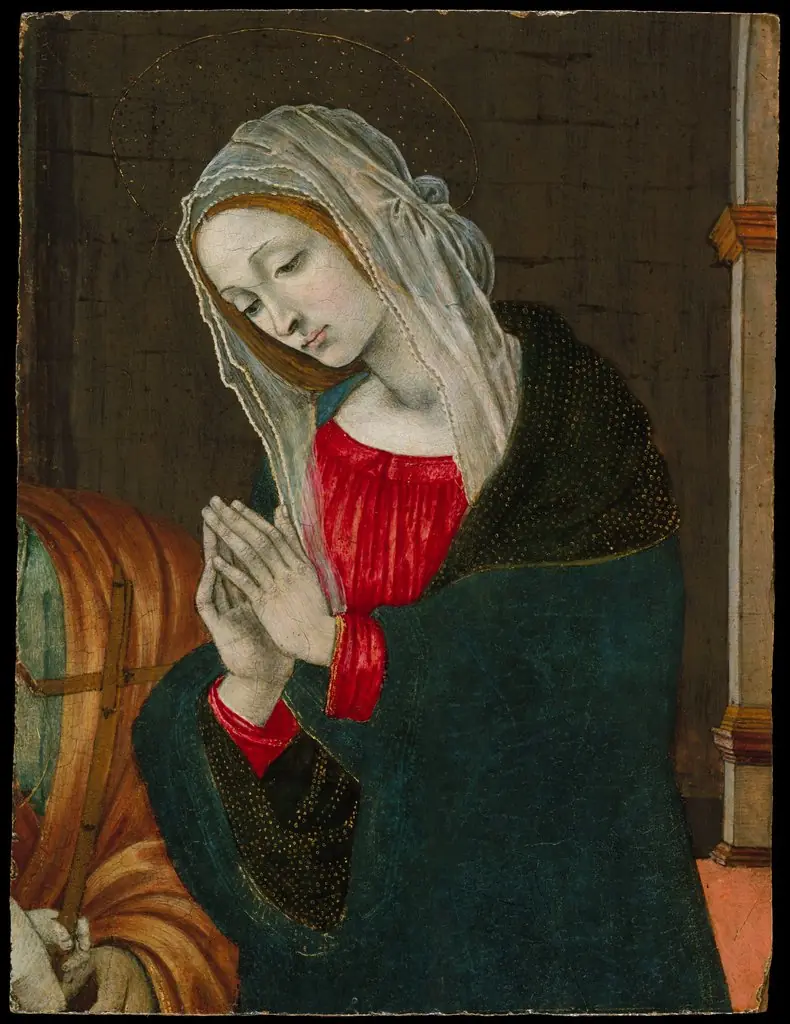 The Virgin of the Nativity
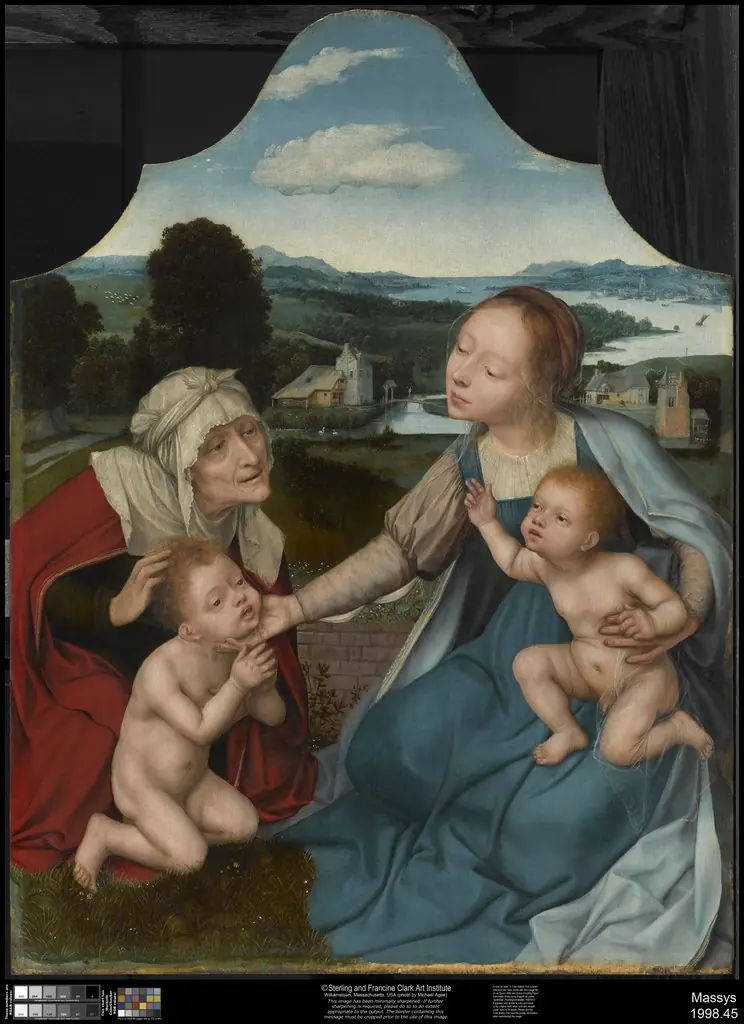 Virgin and Child with Saints Elizabeth and John the Baptist
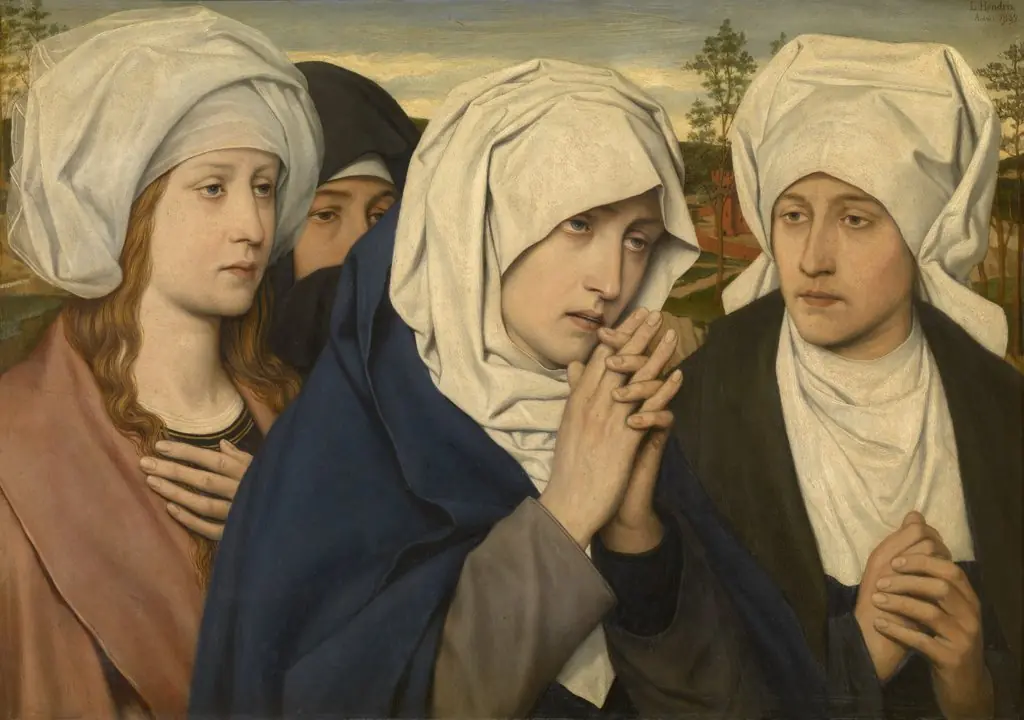 The Holy Women on their Way to Golgotha
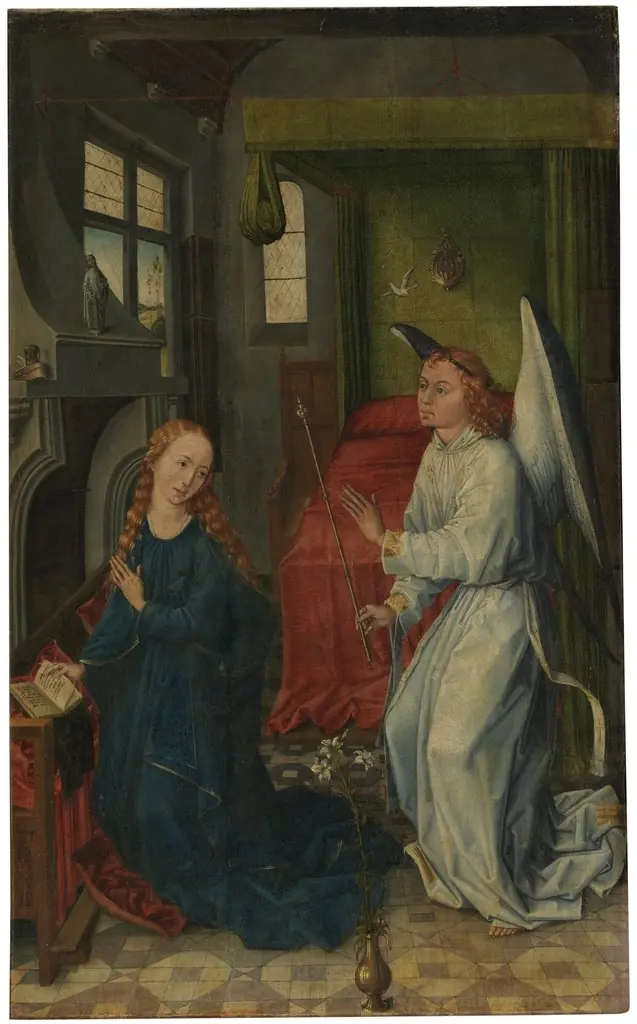 The Annunciation