Artwork
The Supper at Emmaus
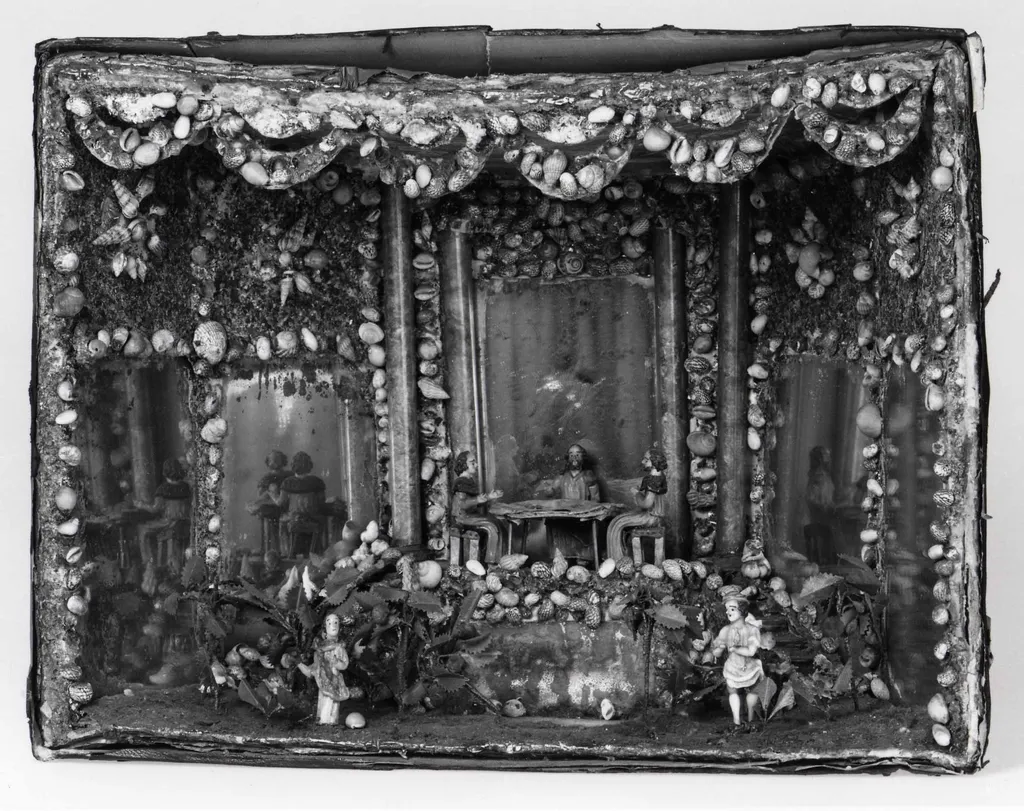
The Supper at Emmaus is an unspecified painting. It dates from 1750 and is held in the collection of the Metropolitan Museum of Art. This painting depicts a dimly lit interior where two figures are present: one seated at a table and another standing nearby.
About this work
Overview
The room's walls are distinguished by their covering of seashells and an uneven, dark texture, contributing to an aged atmosphere.
This painting depicts a dimly lit interior where two figures are present: one seated at a table and another standing nearby. The room's walls are distinguished by their covering of seashells and an uneven, dark texture, contributing to an aged atmosphere. Through a window, a small, elaborately dressed figure can be seen waving, adding an enigmatic element to the scene. The overall impression is one of dramatic contrasts and a sense of antiquity.
Technique & Style
The artist employs a dramatic lighting scheme, characterized by deep shadows and intense highlights, a technique known as chiaroscuro. This approach creates a strong visual impact and enhances the scene's somber mood. The textured surfaces, particularly the seashell-adorned walls and rough edges throughout the composition, contribute to a sense of age and wear. These stylistic choices collectively imbue the painting with a distinct, evocative character.
Subject & Meaning
Titled "The Supper at Emmaus," the painting presents an interior scene with two central figures, though their specific narrative roles are not detailed in the visual description. The choice of a worn, textured environment, combined with the dramatic lighting, suggests a contemplation of time and perhaps spiritual introspection. The small, waving figure observed through the window introduces an external element, creating a subtle tension between the enclosed, ancient interior and the world beyond.
Artist & collection
