Artwork
Kalpa Sutra
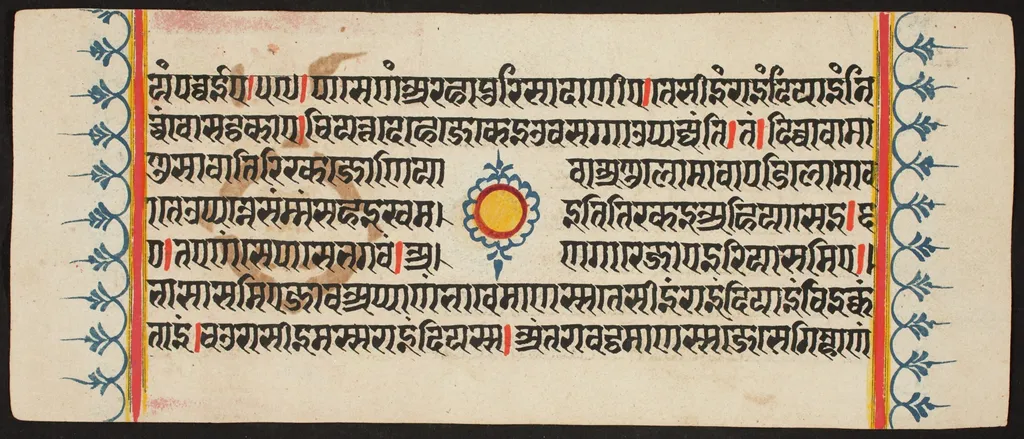
Kalpa Sutra is an unspecified painting by Unknown. It is held in the collection of the Detroit Institute of Arts.
About this work
Overview
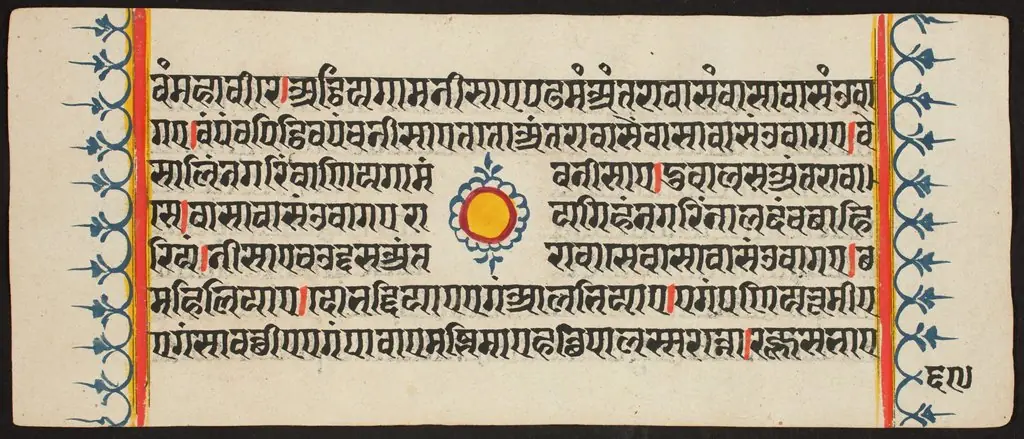
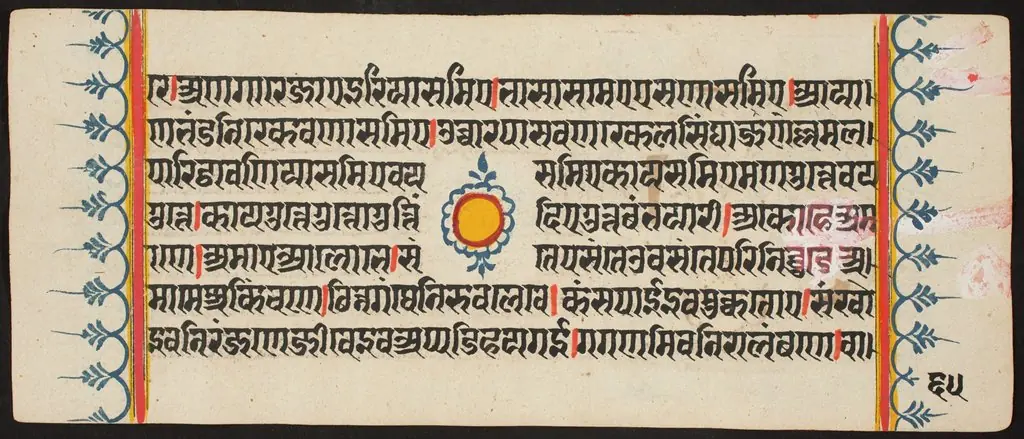
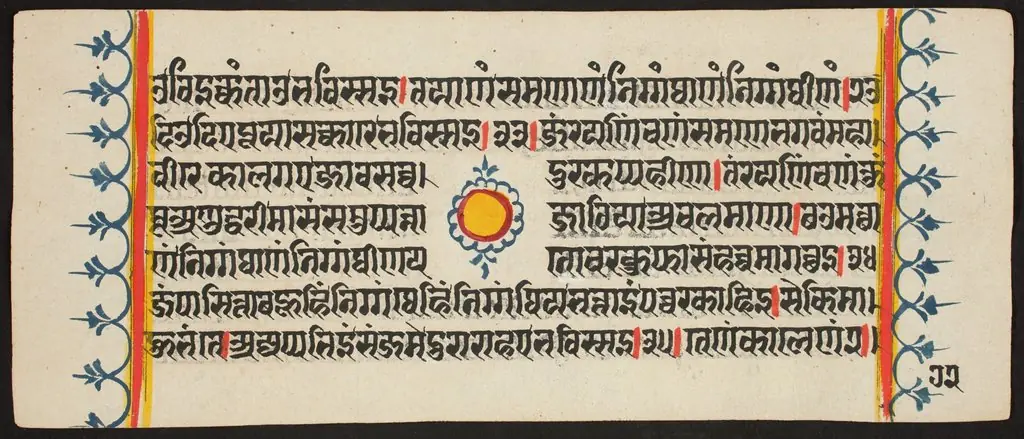
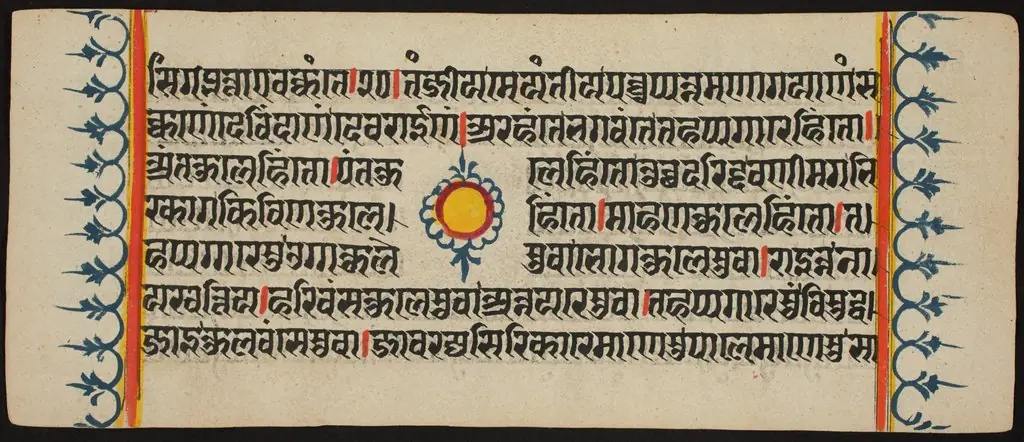
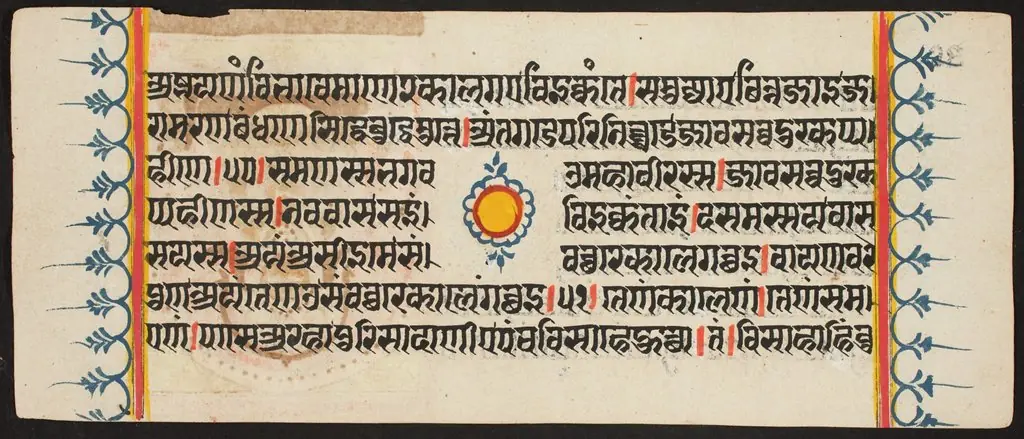
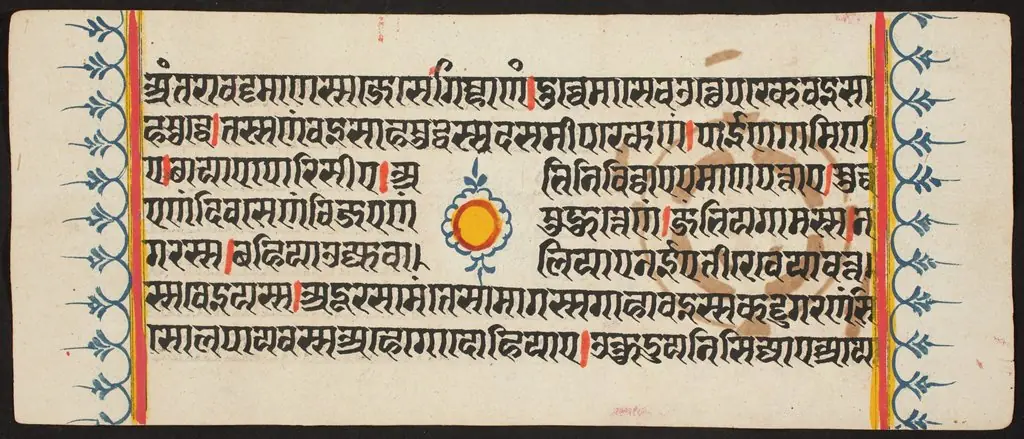
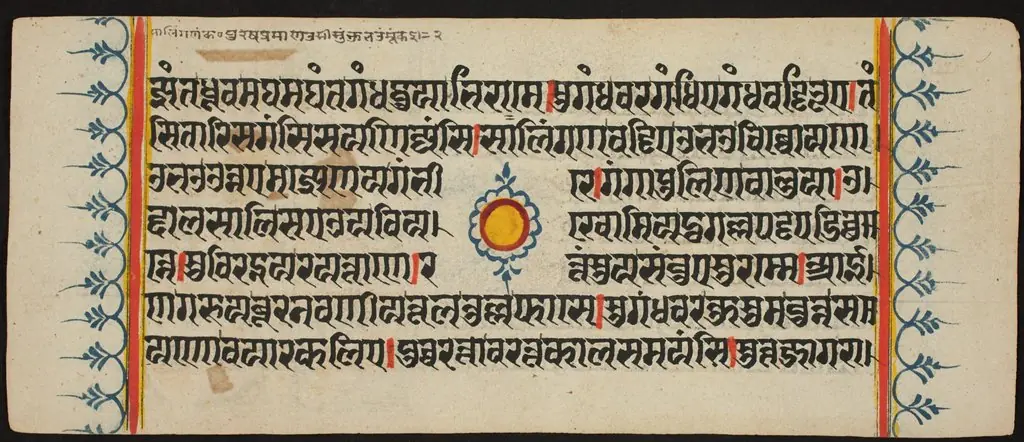
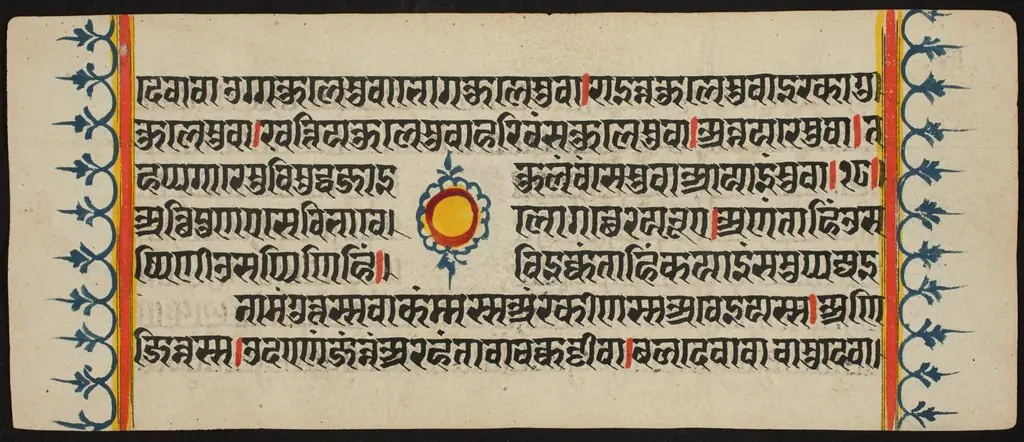
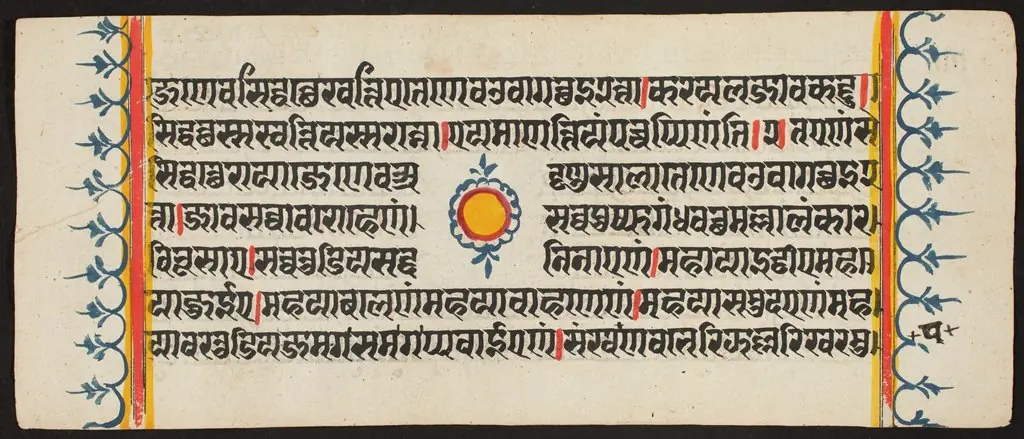
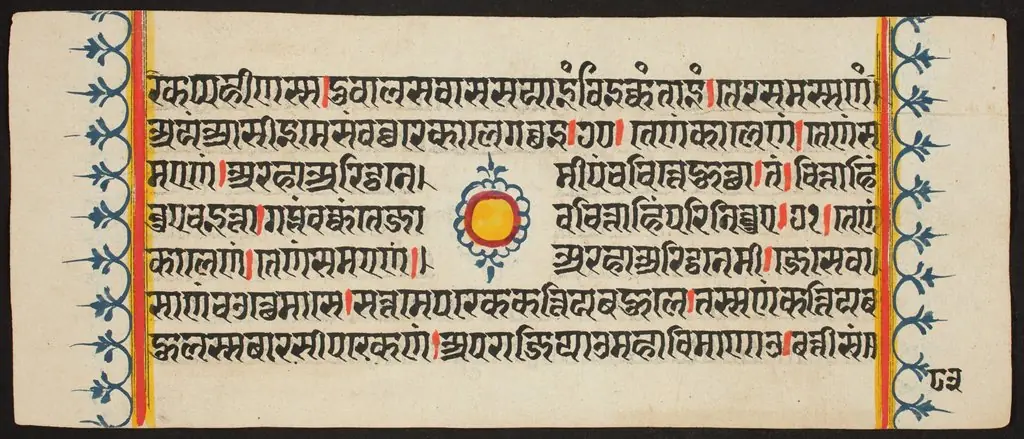
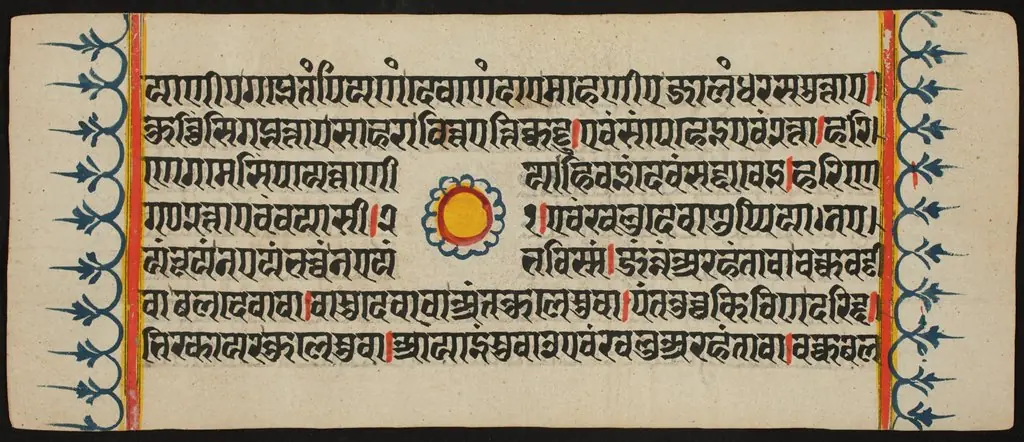
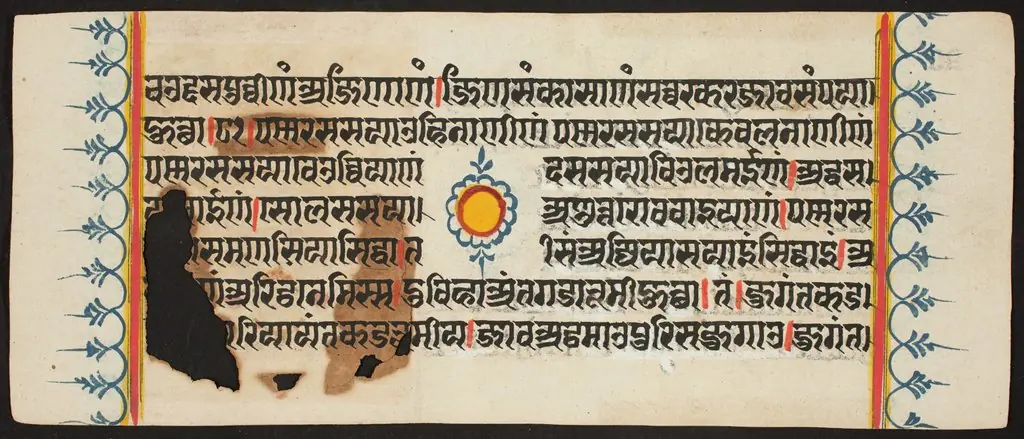
This painted manuscript page originates from the Kalpa Sutra, a Jain religious text. It combines sacred script with ornamental borders, reflecting the devotional value placed on both content and visual presentation. The layout centers on dense black calligraphy, enhanced with red and yellow highlights, framed by stylized botanical motifs that encircle a central yellow disc.
Subject & Meaning
The text is written in Prakrit, the liturgical language of Jainism, containing teachings and biographies of spiritual leaders. The decorative elements—vines, leaves, and the central circle—symbolize cosmic order and spiritual continuity. These motifs do not illustrate narrative scenes but elevate the text’s sanctity through rhythm and symmetry, reinforcing its role in ritual recitation.
Technique & Style
Ink is applied with controlled strokes, while red and yellow pigments, likely derived from mineral sources, are used sparingly for emphasis.
The script is executed in fine, precise brushwork typical of Jain manuscript traditions. Ink is applied with controlled strokes, while red and yellow pigments, likely derived from mineral sources, are used sparingly for emphasis. The floral borders are rendered in flat, repetitive patterns, avoiding naturalism in favor of rhythmic harmony. The central yellow circle may represent the Jain symbol of the universe or a meditative focus.
History & Provenance
Produced in western India, likely between the 14th and 16th centuries, this page was part of a larger codex copied by Jain monks for temple use. Manuscripts like this were meticulously maintained, often passed through monastic lineages. Its survival suggests careful preservation within religious communities, though its specific provenance before modern collections remains undocumented.
Context
Jain manuscript painting emphasized textual fidelity over pictorial storytelling. Unlike broader Indian traditions, Jain illustrators favored ornamental framing over figural scenes, especially in liturgical texts. This page exemplifies a regional aesthetic where decoration served as a visual chant, aiding contemplation and reinforcing the sanctity of the written word.
Legacy
This page represents a sustained tradition of Jain scribal art that persisted for centuries. Its restrained elegance influenced later regional styles of bookmaking in Gujarat and Rajasthan. Though no longer used in active worship, such manuscripts remain vital to scholarly study of Jain theology, paleography, and the material culture of religious practice.
Artist & collection

 Domestic Scene
 Giacomo and Cardinal Marco, investing Andrea, Abbot of San Zeno, with his Benefice
 The Nymph of Fontainebleau
 Portrait of a Woman
 Madonna and Child with Saints in the Enclosed Garden
 Venus and Minerva
 Family Group of Four on Sofa
 Wall painting from Room H of the Villa of P. Fannius Synistor at Boscoreale