Artwork
The Covenant
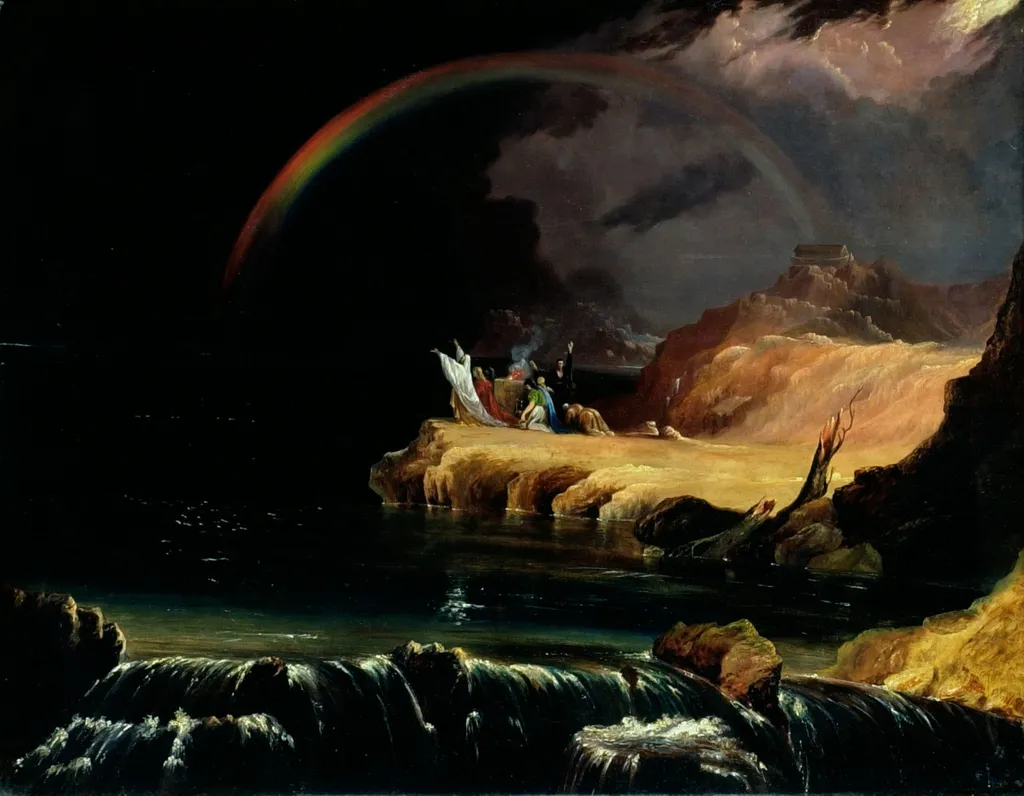
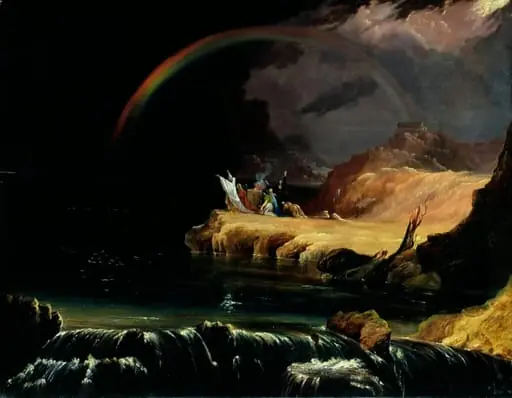
The Covenant is an oil painting by Unknown. It dates from 1843 and is held in the collection of the Art Institute of Chicago. This oil painting presents a moment of quiet reverence in a rugged natural setting.
About this work
Overview
A broad rainbow stretches across a storm-darkened sky, its arc anchored above a cliff where a small group of figures stand in silent observation.
This oil painting presents a moment of quiet reverence in a rugged natural setting. A broad rainbow stretches across a storm-darkened sky, its arc anchored above a cliff where a small group of figures stand in silent observation. The composition emphasizes scale and atmosphere, with the figures rendered small against the vastness of sky and land, reinforcing a sense of awe rather than narrative action.
Subject & Meaning
The rainbow and the group’s upward gaze suggest a symbolic moment, possibly referencing covenant or divine promise. The figures, though indistinct in detail, convey collective stillness, inviting interpretation as witnesses to a transcendent event. The absence of overt religious iconography leaves the meaning open, rooted in emotional response rather than doctrinal clarity.
Technique & Style
The artist employs chiaroscuro to heighten emotional tension, contrasting the deep shadows of the cliffs and clouds with the luminous glow of the rainbow. Layered glazes of oil paint build subtle transitions between light and dark, enhancing the illusion of depth. The brushwork is controlled yet expressive, particularly in the rendering of atmospheric haze and the soft edges of the sky.
History & Provenance
The painting’s early ownership records are incomplete, but it was documented in a private collection by the mid-19th century. It entered a public museum’s holdings in 1923, following a bequest from a collector with an interest in Romantic-era landscapes. Its attribution to the artist has been consistently supported by stylistic analysis and archival correspondence.
Context
Created during a period when landscape painting increasingly carried spiritual or philosophical weight, the work reflects broader 19th-century interests in nature as a vessel for the sublime. It aligns with contemporaneous efforts to evoke emotion through atmosphere rather than narrative, echoing trends seen in the works of Turner and Friedrich, though with a more restrained palette and composition.
Legacy
The painting has not been widely reproduced or cited in major art historical texts, but it remains a quiet example of Romantic-era sensibility in regional collections. Its enduring presence in museum exhibitions underscores its value as a study in mood, light, and the human response to natural phenomena, influencing later artists interested in atmospheric realism.
Artist & collection

 Domestic Scene
 Giacomo and Cardinal Marco, investing Andrea, Abbot of San Zeno, with his Benefice
 The Nymph of Fontainebleau
 Portrait of a Woman
 Madonna and Child with Saints in the Enclosed Garden
 Venus and Minerva
 Family Group of Four on Sofa
 Wall painting from Room H of the Villa of P. Fannius Synistor at Boscoreale
 The Voyage of Life: Manhood
 Expulsion from the Garden of Eden
 The Aegean Sea
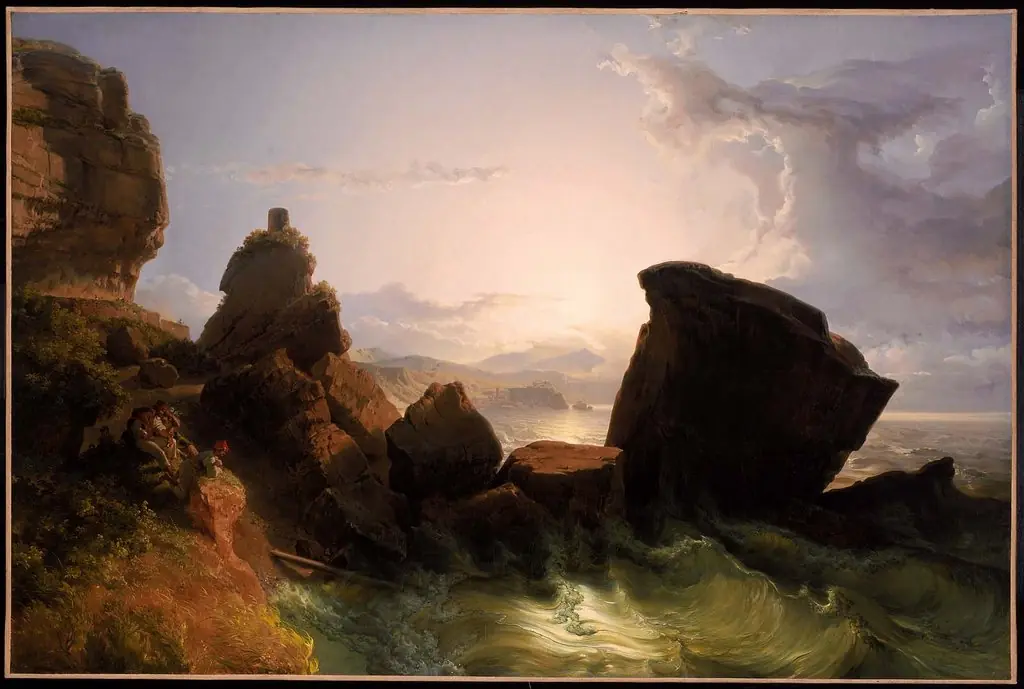 The Bay of Naples
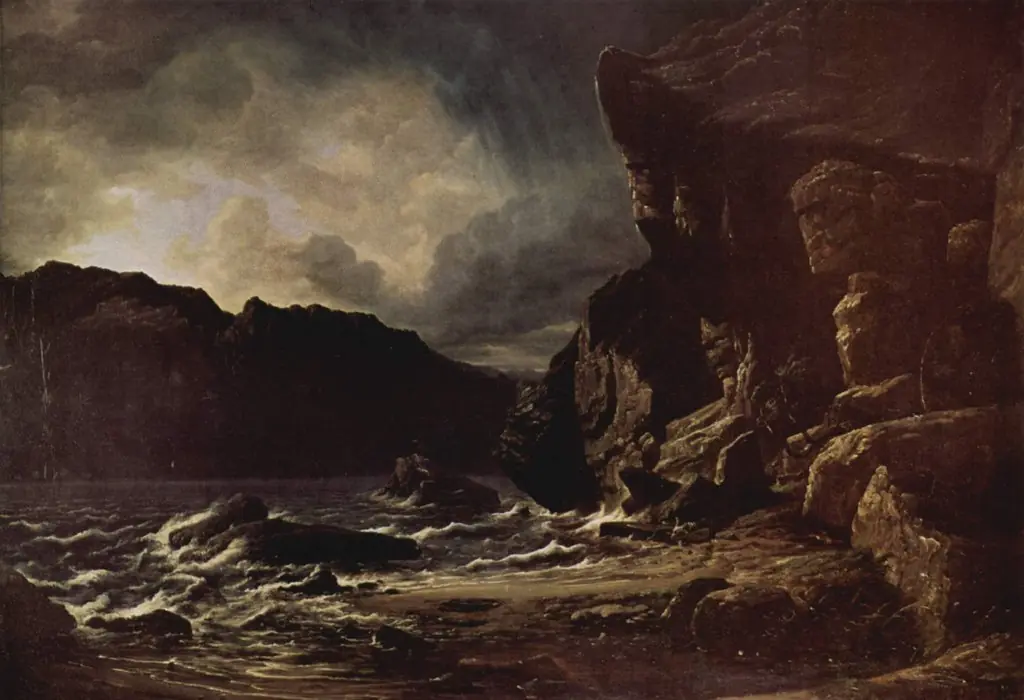 Norwegian Sea
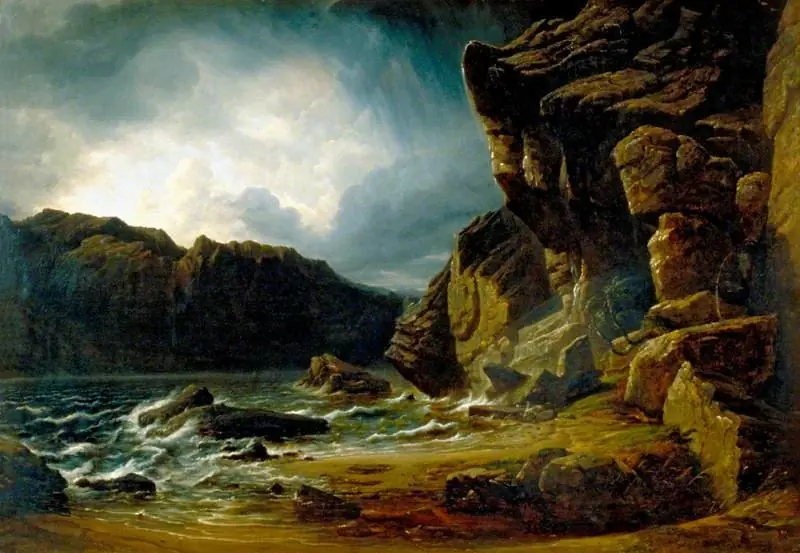 Liensfiord Lake, Norway
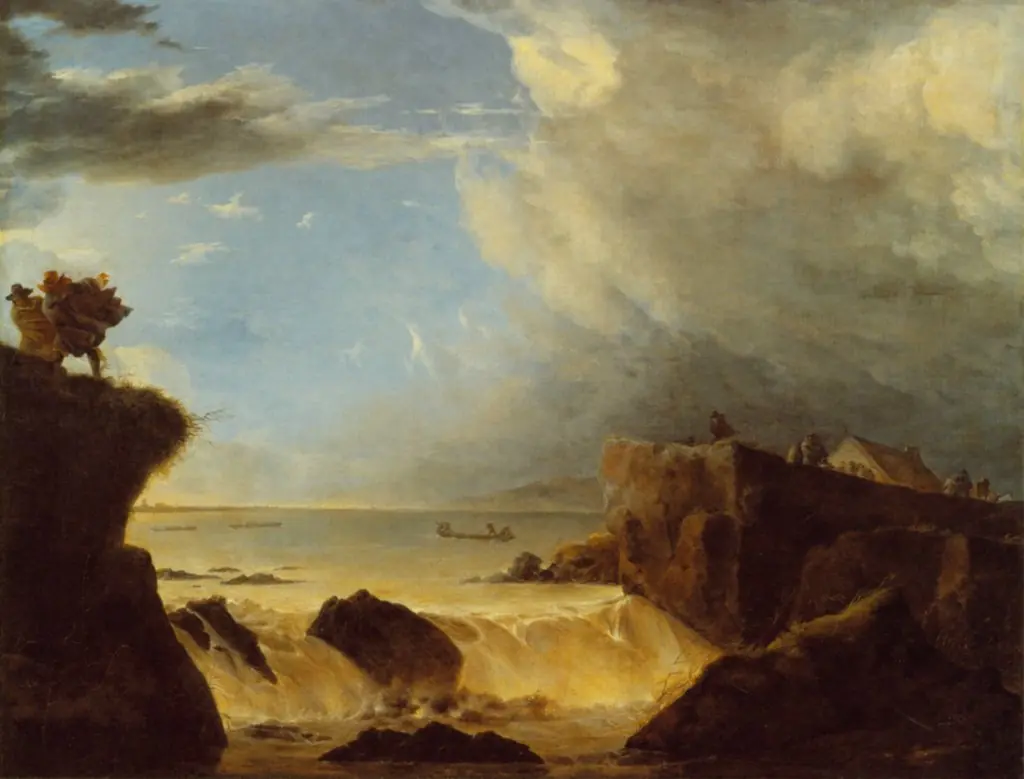 Breach of a Dyke by Storm Surge on March 5 1651
 The Voyage of Life: Old Age
 The Voyage of Life: Childhood
 The Breach of the Sint Anthonisdijk on the Night of 5–6 March 1651
 An Avalanche in the Alps
 The Covenant