Artwork
Monju as a Child
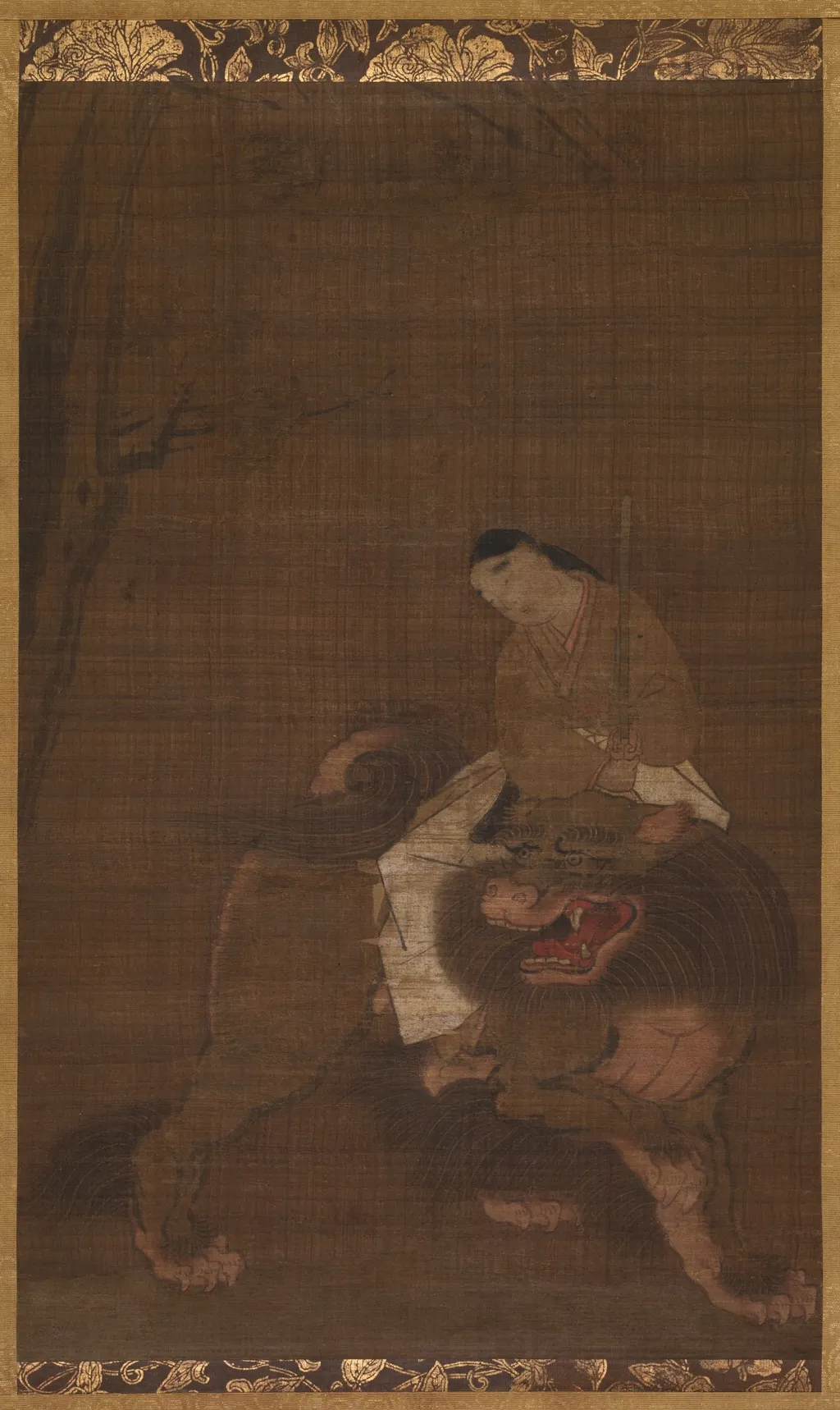
Monju as a Child is an unspecified painting. It dates from 1492 and is held in the collection of the Cleveland Museum of Art.
About this work
Overview
The work titled “Monju as a Child” depicts a youthful figure seated upon a roaring lion. The child is dressed in modest robes, holds a staff, and maintains a composed demeanor despite the animal’s fierce expression. Gold framing at the top and bottom of the panel emphasizes the significance of the scene.
Subject & Meaning
The figure represents the bodhisattva Monju, traditionally associated with wisdom in Buddhist iconography. The juxtaposition of the calm, enlightened child against the untamed lion conveys the triumph of spiritual insight over raw power, a motif common in Asian religious art.
Technique & Style
Rendered in a flat, decorative manner, the painting employs bold outlines and a limited palette, with gold leaf applied to the border. The lion’s fur is depicted with exaggerated, spiky strokes, while the child’s robes are rendered in smooth washes, highlighting a contrast between vigor and serenity.
History & Provenance
The piece originates from a Japanese or Chinese Buddhist tradition, likely dating to the late medieval period when depictions of youthful bodhisattvas were popular. It entered the Cleveland Museum of Art’s collection through a 20th‑century acquisition, though specific donor information is not recorded in the available data.
Context
In Buddhist visual culture, Monju is often shown as a youthful figure holding a staff or scepter, symbolizing the transmission of wisdom. The lion, a symbol of strength and protection, serves as a vehicle that underscores the bodhisattva’s ability to tame and guide powerful forces.
Artist & collection