Artwork
Double-Sided Processional Cross
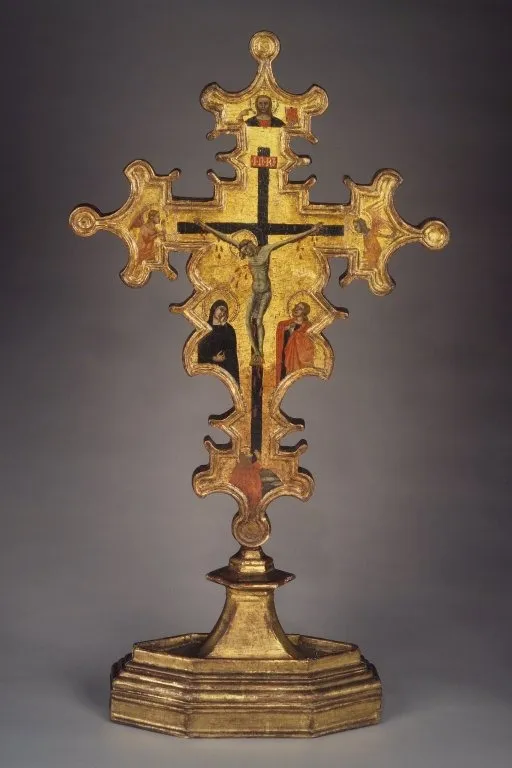
Double-Sided Processional Cross is an unspecified painting by the Byzantine icon painting artist Unknown. It dates from 1450 and is held in the collection of the Brooklyn Museum.
About this work
Overview
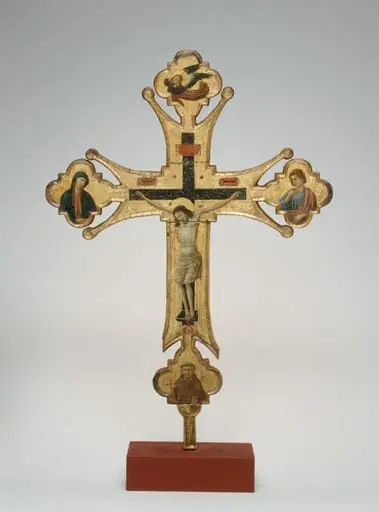
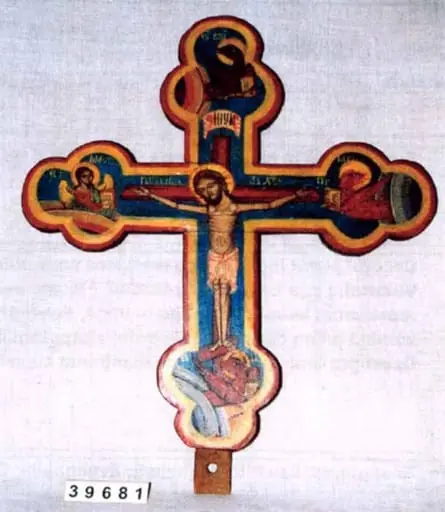
The central cross is rendered in gold with a dark central band, supporting a crucified Christ on one face and likely another sacred image on the reverse.
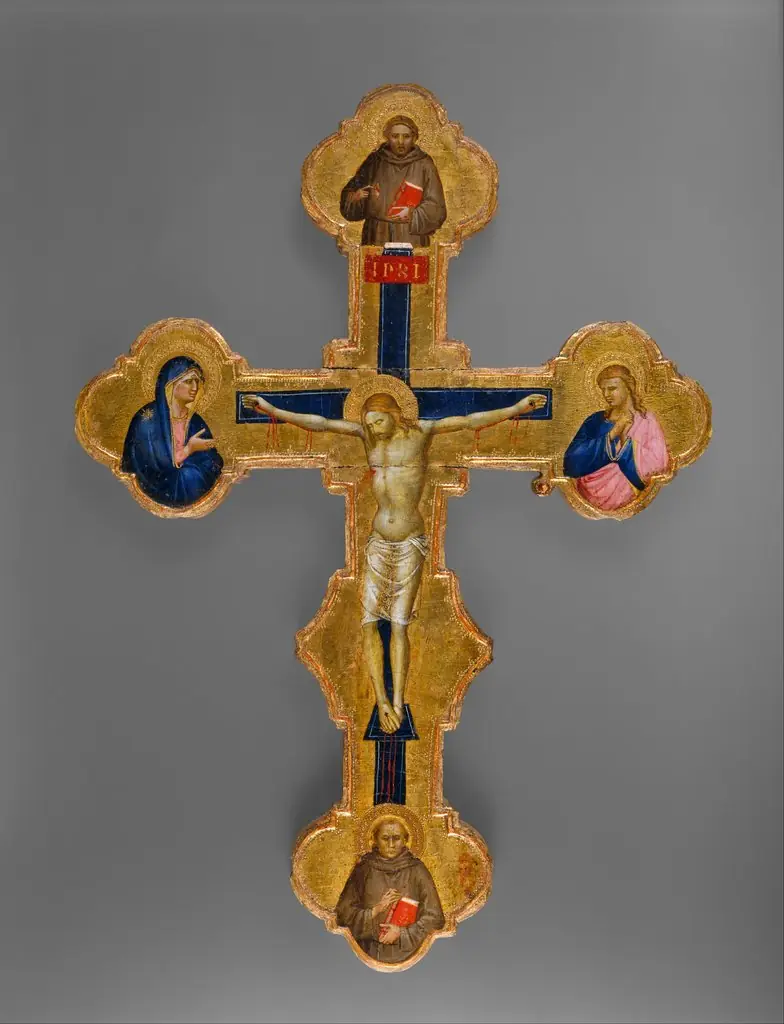
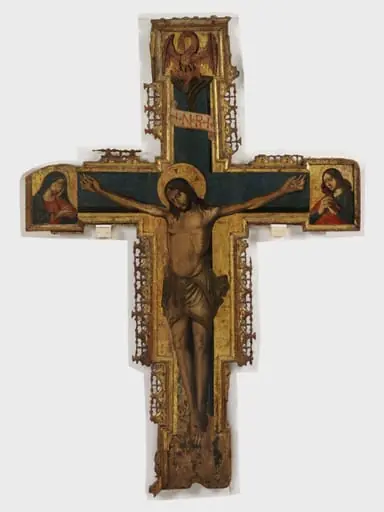
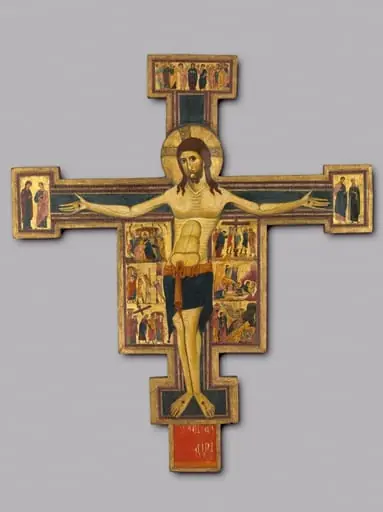
This double-sided processional cross is painted on a flat surface, mimicking the form of a liturgical object carried in religious processions. The central cross is rendered in gold with a dark central band, supporting a crucified Christ on one face and likely another sacred image on the reverse. Four attendant figures flank the cross, arranged symmetrically, their forms stylized and constrained by devotional convention rather than naturalism.
Subject & Meaning
The front face depicts Christ crucified, the focal point of Christian veneration. The four surrounding figures are likely saints or apostles, positioned to emphasize the sacred hierarchy and communal witness to the Passion. Their placement and formal posture reinforce the cross’s role as a vessel of worship, meant to inspire reverence during ceremonial processions in medieval or early Renaissance liturgical practice.
Technique & Style
The painting employs a rigid, hierarchical composition typical of religious art from the period. Figures are rendered in flat planes with limited modeling, using restrained palettes of orange and black against a gold ground. Ornamental details along the cross’s arms suggest metalwork engraving, translated into paint with flowing, linear patterns that enhance its ceremonial presence without illusionistic depth.
History & Provenance
Though specific origins are unrecorded, such objects were commonly produced in monastic or ecclesiastical workshops between the 12th and 15th centuries. Designed for portability, they were carried in processions on feast days. This painted version likely served as a substitute for a metal cross, perhaps in a smaller chapel or for private devotion, reflecting the widespread use of painted simulacra in liturgical contexts.
Context
In medieval Europe, processional crosses were essential to public worship, symbolizing Christ’s presence among the faithful. Painted versions like this one were practical alternatives to costly metalwork, especially in regions with limited resources. Their formal style aligned with broader liturgical aesthetics, where symbolic clarity outweighed individual expression, ensuring immediate recognition and spiritual focus.
Legacy
This work exemplifies the enduring tradition of devotional imagery adapted for ritual use. While later periods favored more naturalistic representations, such painted crosses preserved medieval visual language well into the Renaissance. Today, they serve as artifacts of communal piety, offering insight into how religious authority and belief were materially expressed in everyday worship.
Artist & collection

 Domestic Scene
 Giacomo and Cardinal Marco, investing Andrea, Abbot of San Zeno, with his Benefice
 The Nymph of Fontainebleau
 Portrait of a Woman
 Madonna and Child with Saints in the Enclosed Garden
 Venus and Minerva
 Family Group of Four on Sofa
 Wall painting from Room H of the Villa of P. Fannius Synistor at Boscoreale