Artwork
Crucifix with Scenes of the Passion
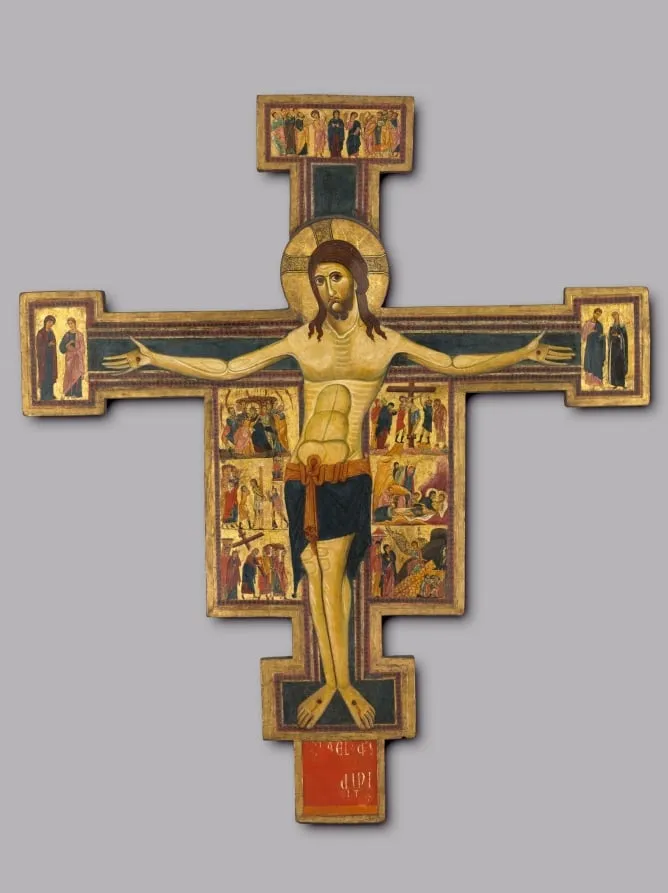
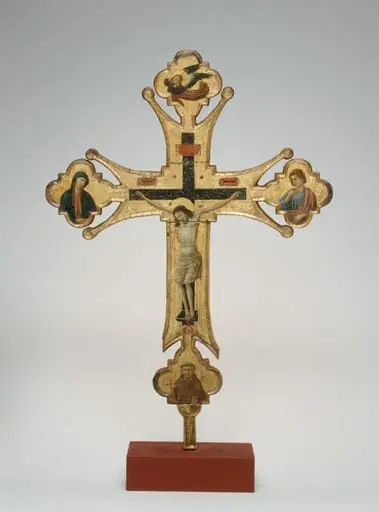
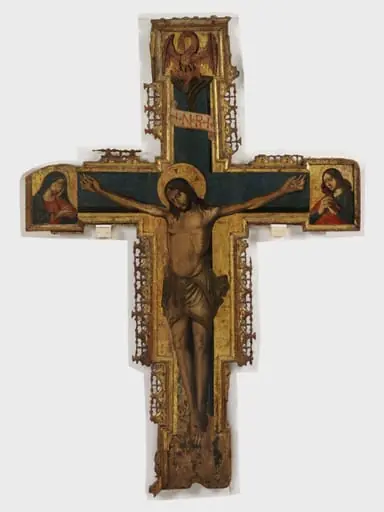
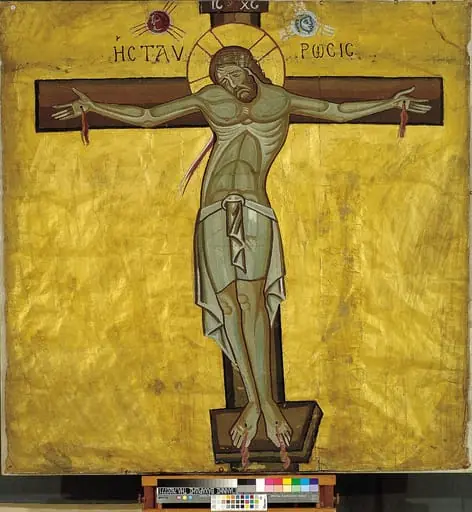
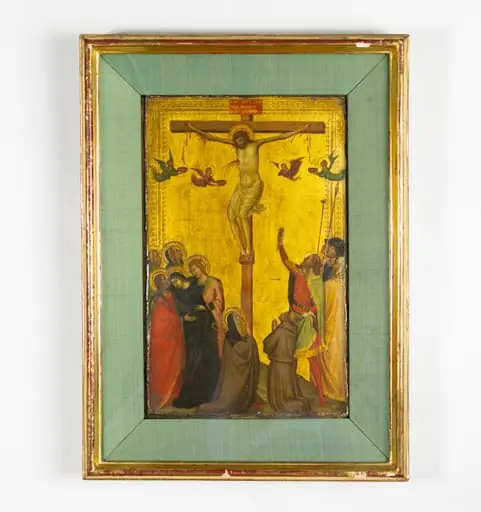
Crucifix with Scenes of the Passion is an unspecified painting by the Byzantine icon painting artist Unknown. It dates from 1235 and is held in the collection of the Cleveland Museum of Art. This 12th- or 13th-century Italian panel painting is a large crucifix, originally suspended above an altar in a church's main apse.
About this work
Overview
This 12th- or 13th-century Italian panel painting is a large crucifix, originally suspended above an altar in a church's main apse. Executed on wood, it combines a central image of Christ on the cross with smaller scenes from his Passion, death, Resurrection, and Ascension.
Subject & Meaning
The crucifix depicts Christ as a living, triumphant savior. Auxiliary scenes on the 'apron' illustrate his Passion (left) and death/Resurrection (right), while terminals feature the Virgin and Saint John (left), and Saints James Major and Bona (right), potentially linking it to Pisa's Church of S. Martino.
Technique & Style
Christ's figure is rendered in a severe, hieratic style, reflecting Pisa's medieval artistic and commercial ties to Byzantium. The use of gold leaf behind figures on a dark wood background creates visual prominence, with bold colors preserved over 800 years.
History & Provenance
The crucifix's exact origin is suggested by the inclusion of Saint Bona, patroness of Pisa, possibly indicating it was created for the Church of S. Martino in Pisa, where her relics were tended by Franciscan nuns. Its current location is The Cleveland Museum of Art.
Context
Large crucifixes like this served as focal points for devotion in Italian churches, symbolizing the Eucharist. Positioned above an altar, it visually connected the sacrament performed below with the narrative of Christ's sacrifice and triumph.
Artist & collection

 Domestic Scene
 Giacomo and Cardinal Marco, investing Andrea, Abbot of San Zeno, with his Benefice
 The Nymph of Fontainebleau
 Portrait of a Woman
 Madonna and Child with Saints in the Enclosed Garden
 Venus and Minerva
 Family Group of Four on Sofa
 Wall painting from Room H of the Villa of P. Fannius Synistor at Boscoreale