Artwork
The Bay of Naples
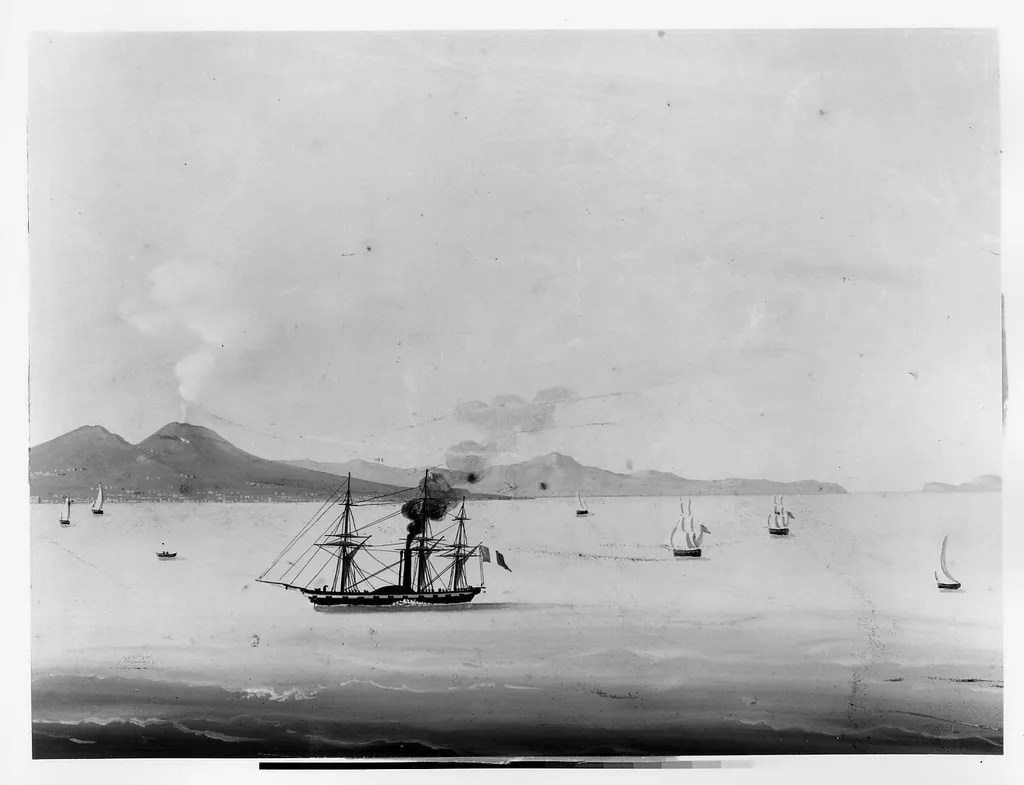
The Bay of Naples is an unspecified painting. It dates from 1835 and is held in the collection of the Metropolitan Museum of Art.
About this work
Overview
The canvas presents a tranquil maritime vista, likely the Bay of Naples, where calm waters stretch beneath a clear sky dotted with sparse clouds. In the distance, a range of mountains rises, providing a sense of scale and depth. Several vessels navigate the foreground, their sails and rigging rendered with careful attention, while sunlight bathes the scene in a warm, diffused glow.
Subject & Meaning
The composition captures a peaceful moment of seafaring life, emphasizing the harmony between nature and human activity. The placid sea and gentle light suggest a timeless, idealized view of coastal trade, while the distant mountains anchor the scene within a recognizable Italian landscape, inviting contemplation of the region’s natural beauty and its historical maritime significance.
Technique & Style
The artist employs chiaroscuro to model forms, using contrasts of light and shadow to give volume to the ships and texture to the water’s surface.
The artist employs chiaroscuro to model forms, using contrasts of light and shadow to give volume to the ships and texture to the water’s surface. Atmospheric perspective is achieved through progressively cooler, less defined tones in the background, enhancing depth. Fine brushwork delineates rigging and sail details, while broader, luminous strokes convey the reflective quality of the sunlit sea.
History & Provenance
Details regarding the painting’s creation date, artist, and ownership trail are not documented in the available record. Consequently, its provenance remains uncertain, and the work is primarily identified by its subject matter and visual characteristics rather than a traced lineage through collections or exhibitions.
Context
Depictions of the Bay of Naples were popular among European painters seeking to illustrate the allure of the Italian coast, especially during the 17th and 18th centuries when Grand Tour travelers circulated images of the region. This work aligns with that tradition, reflecting contemporary interest in combining topographical accuracy with idealized light effects to evoke a serene, picturesque atmosphere.
Artist & collection