Artwork
The Feast of the Gods
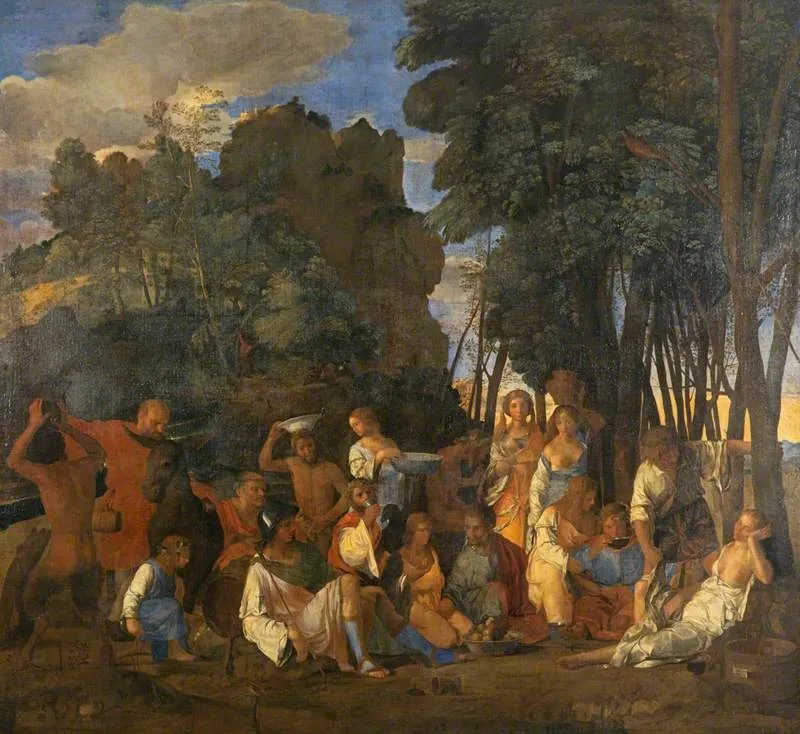
The Feast of the Gods is an oil painting by the Flemish Baroque painting artist Unknown. It dates from 1637 and is held in the collection of the National Galleries Scotland. This oil painting portrays a mythological banquet set within a lush, open woodland.
About this work
Overview
The composition emphasizes naturalism and spatial depth, with figures arranged to guide the viewer’s eye through the scene.
This oil painting portrays a mythological banquet set within a lush, open woodland. Figures gathered beneath a large tree engage in leisurely activities, suggesting a festive occasion. The background reveals a soft, cloud-dappled sky, contrasting with the earthy tones of the foliage. The composition emphasizes naturalism and spatial depth, with figures arranged to guide the viewer’s eye through the scene.
Subject & Meaning
The scene illustrates a gathering of Greco-Roman deities, likely from Ovid’s narratives, celebrating a divine feast. The reclining figure and the attendant holding a jug suggest ritualized hospitality, common in mythological banquets. The relaxed postures and varied attire imply a moment of divine indulgence, reflecting classical ideals of harmony between gods and nature.
Technique & Style
Oil paint is applied with subtle gradations to render skin, fabric, and foliage with quiet realism. The brushwork is refined but unobtrusive, avoiding dramatic contrasts in favor of muted, naturalistic lighting. Figures are rendered with gentle anatomical accuracy, and the landscape is rendered with atmospheric perspective, enhancing the sense of depth without artificial embellishment.
History & Provenance
Commissioned in the early 16th century for a private Italian collector, the work was later acquired by the Este family. It entered the National Gallery of Art in Washington, D.C., in the 20th century through a major bequest. Its documented history includes several Renaissance-era inventories, confirming its continuous presence in elite collections since its creation.
Context
Created during the High Renaissance, the painting reflects humanist interest in classical antiquity and the revival of mythological themes. Artists of the period sought to reconcile pagan narratives with contemporary aesthetics, often blending idealized forms with observed natural details. This work aligns with broader trends in Venetian painting, where color and landscape took precedence over rigid narrative structure.
Legacy
The painting influenced later depictions of mythological feasts in Northern and Italian art, particularly in its integration of figures within a cohesive natural environment. While not widely reproduced in its time, its compositional balance and restrained palette became a reference for 17th-century painters seeking to evoke classical serenity without theatricality.
Artist & collection

 Domestic Scene
 Giacomo and Cardinal Marco, investing Andrea, Abbot of San Zeno, with his Benefice
 The Nymph of Fontainebleau
 Portrait of a Woman
 Madonna and Child with Saints in the Enclosed Garden
 Venus and Minerva
 Family Group of Four on Sofa
 Wall painting from Room H of the Villa of P. Fannius Synistor at Boscoreale
 Predication of Saint John the Baptist
 Midas's Judgement
 Meeting between Esau and Jacob
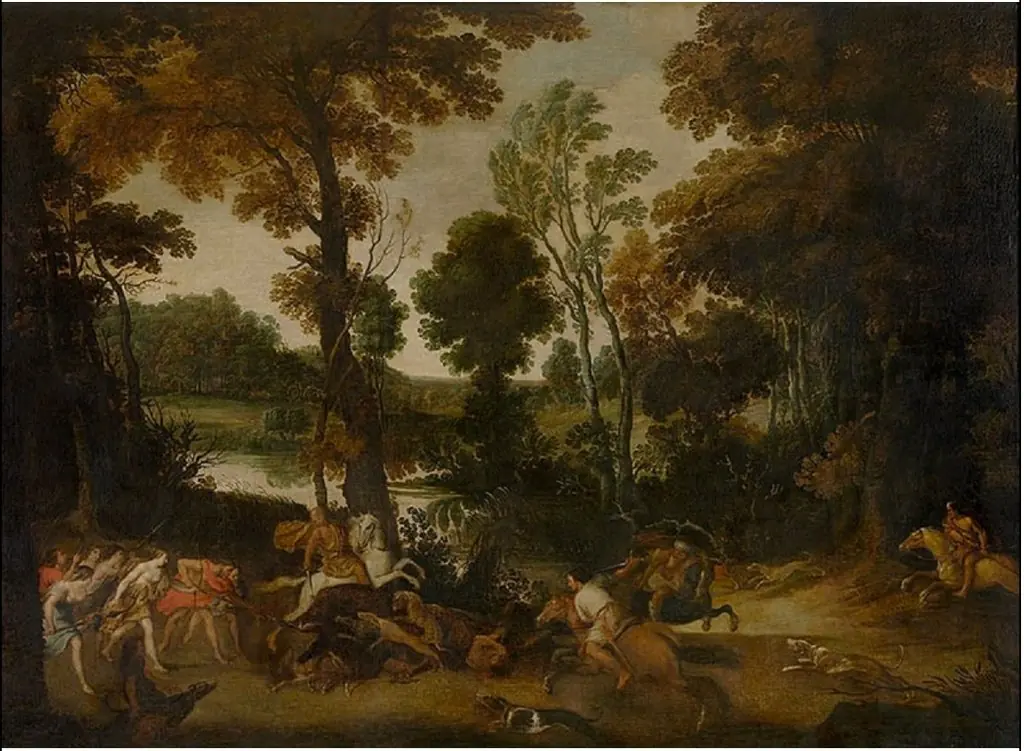 Landscape with Hunt of Meleager and Atalanta
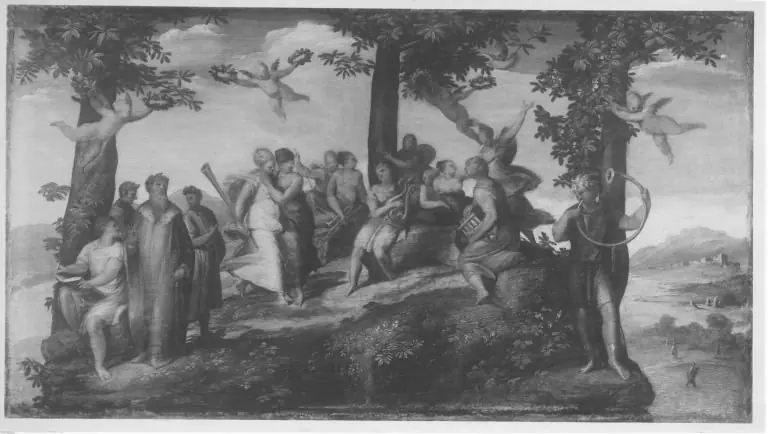 Der Parnass
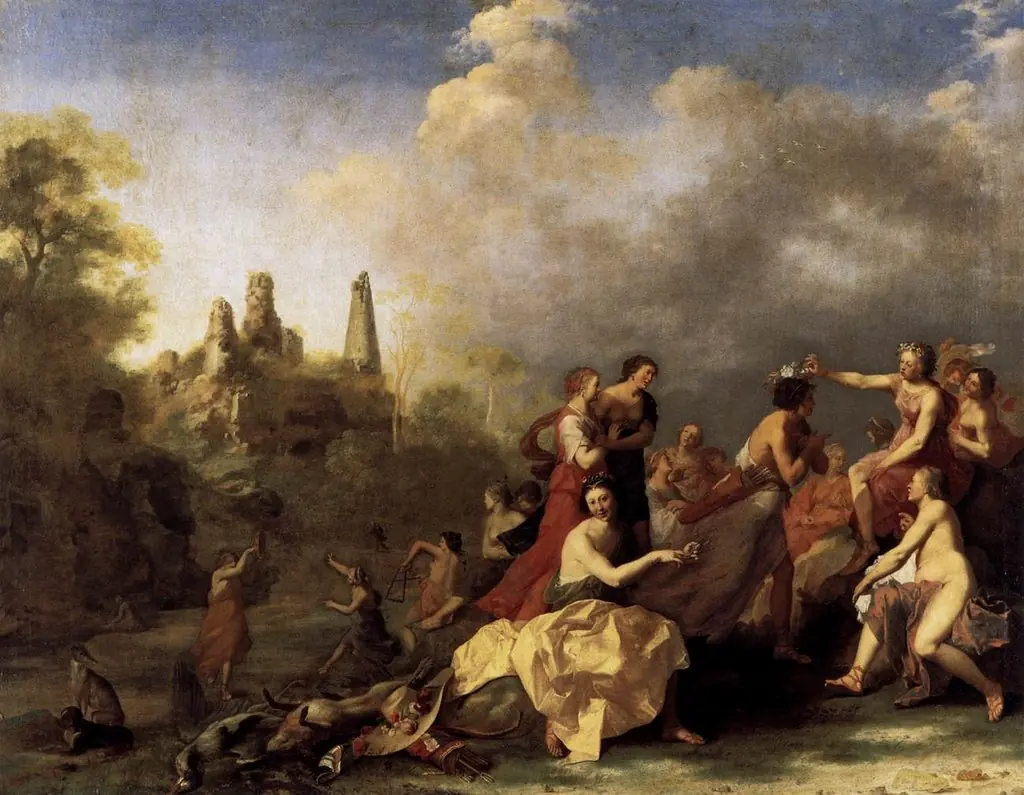 The coronation of Mirtillo after the kissing contest (Guarini, Il Pastor Fido)
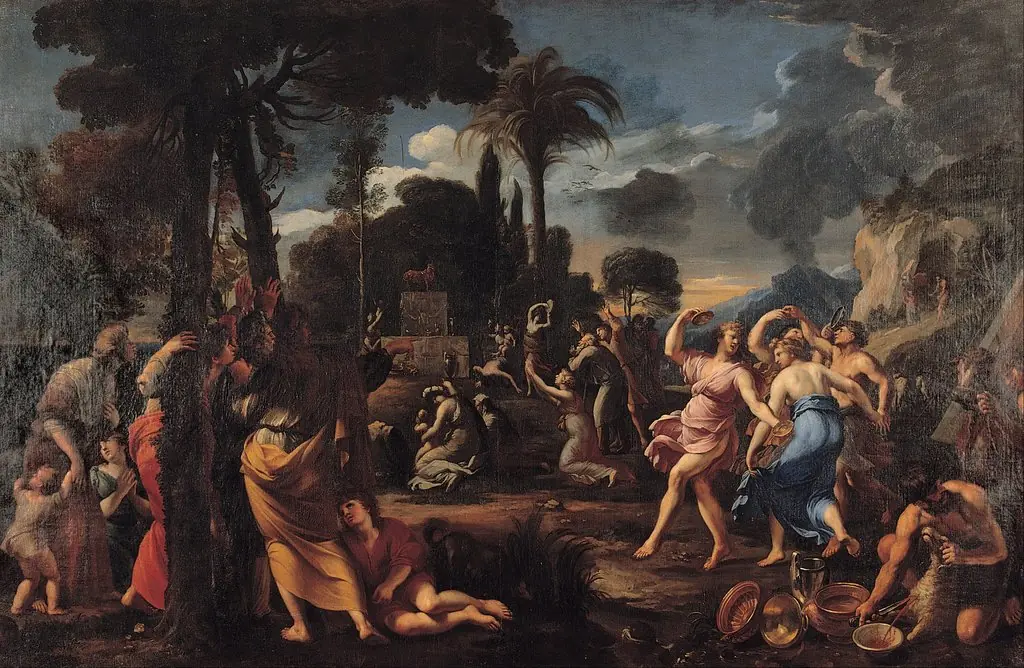 Adoration of the Golden Calf
 Lot flees Sodom
 Apollo in Love with Daphne
 John the Baptist Preaching in the Forest