Artwork
"Akashi", "Channel Buoys" ("Miotsukushi"), "The Wormwood Patch" ("Yomogiu"), "Gatehouse" ("Sekiya"), and "Picture Contest" ("E-awase") chapters from the Tale of Genji (Genji monogatari)
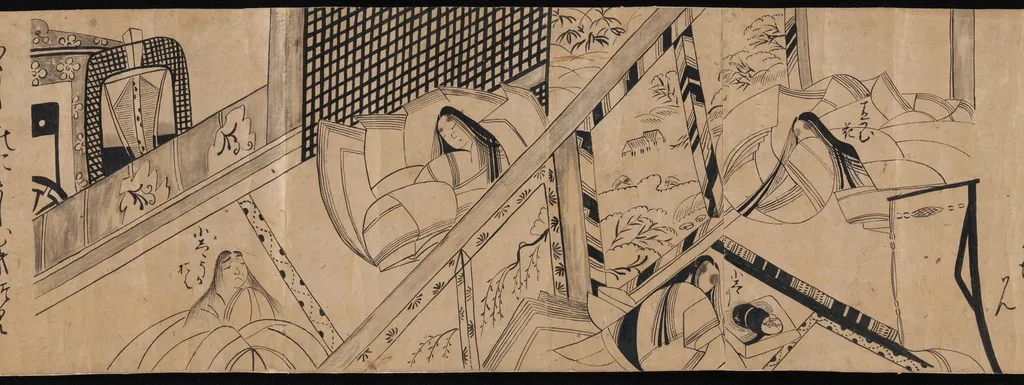
"Akashi", "Channel Buoys" ("Miotsukushi"), "The Wormwood Patch" ("Yomogiu"), "Gatehouse" ("Sekiya"), and "Picture Contest" ("E-awase") chapters from the Tale of Genji (Genji monogatari) is an unspecified painting. It dates from 1492 and is held in the collection of the Metropolitan Museum of Art. The work is a multi‑panel ink drawing that visualizes five episodes from the classic Japanese novel *The Tale of Genja*.
About this work
Overview
The work is a multi‑panel ink drawing that visualizes five episodes from the classic Japanese novel *The Tale of Genja*. Rendered in stark black lines on a light ground, the composition presents interior scenes arranged side by side, each depicting a distinct narrative moment.
Subject & Meaning
Together they illustrate courtly activities and emotional exchanges central to the novel’s plot.
The panels portray: a woman seated beside a latticed window while a man stands nearby (Akashi); a solitary figure reclining on a cushion amid modest furnishings (Channel Buoys); a musician playing a stringed instrument (The Wormwood Patch); a woman holding a fan or scroll (Gatehouse); and a scene of a picture‑making contest (Picture Contest). Together they illustrate courtly activities and emotional exchanges central to the novel’s plot.
Technique & Style
Executed with brush‑drawn black ink, the images rely on bold outlines and flat areas of colour, typical of Japanese narrative scrolls. The lack of shading and the crisp linear quality create a graphic, almost storyboard‑like effect, emphasizing the sequential storytelling rather than realistic depth.
History & Provenance
The series belongs to the tradition of *Genji* illustrated manuscripts that flourished in the Edo period, when aristocratic literature was frequently adapted for visual consumption. The piece is now held by the Metropolitan Museum of Art, which acquired it as part of its collection of Japanese narrative paintings.
Context
*The Tale of Genji* has inspired countless visual interpretations since its composition in the early 11th century. This particular set reflects the Edo‑era aesthetic of combining literary subjects with the flat, decorative approach of ukiyo‑e and yamato-e painting, linking literary culture with popular visual forms.
Artist & collection