Artwork
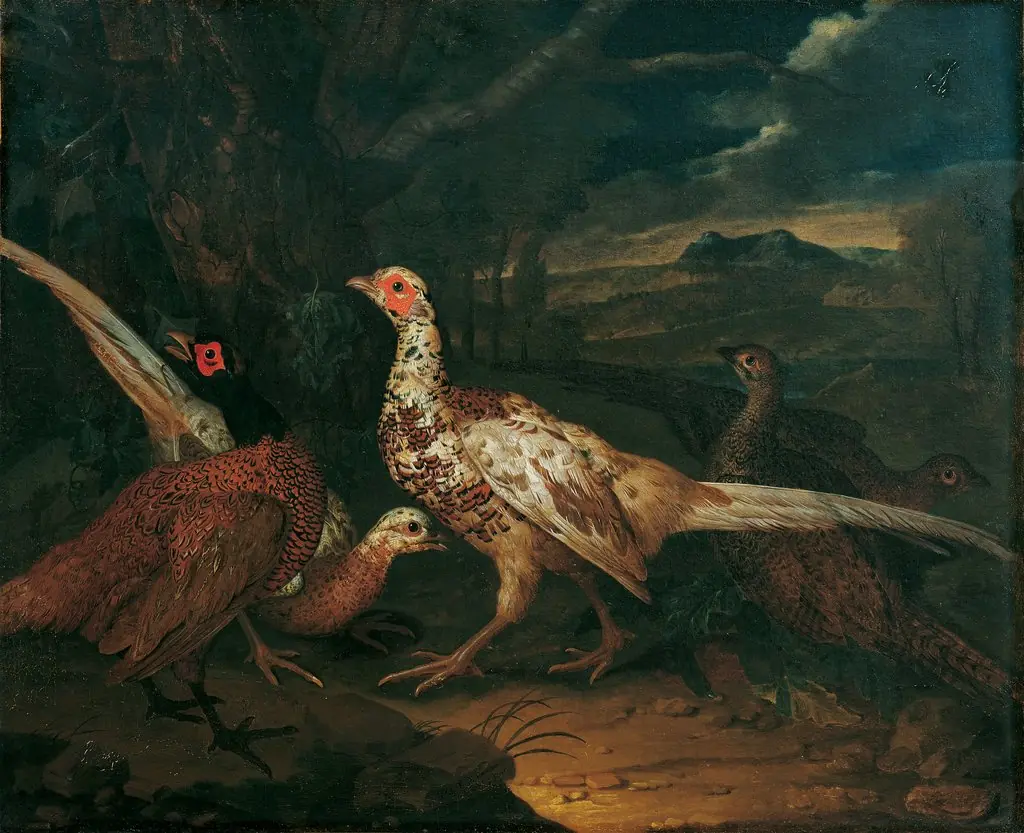
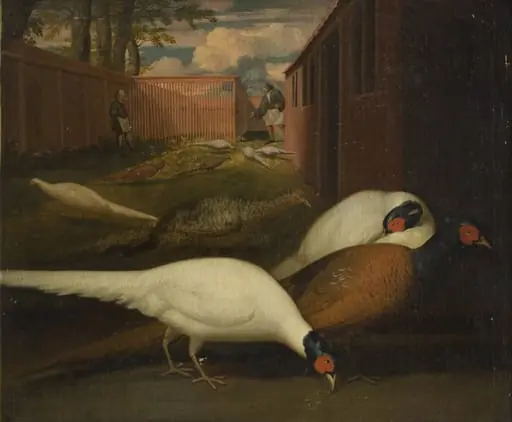
Fasaner i et indelukke
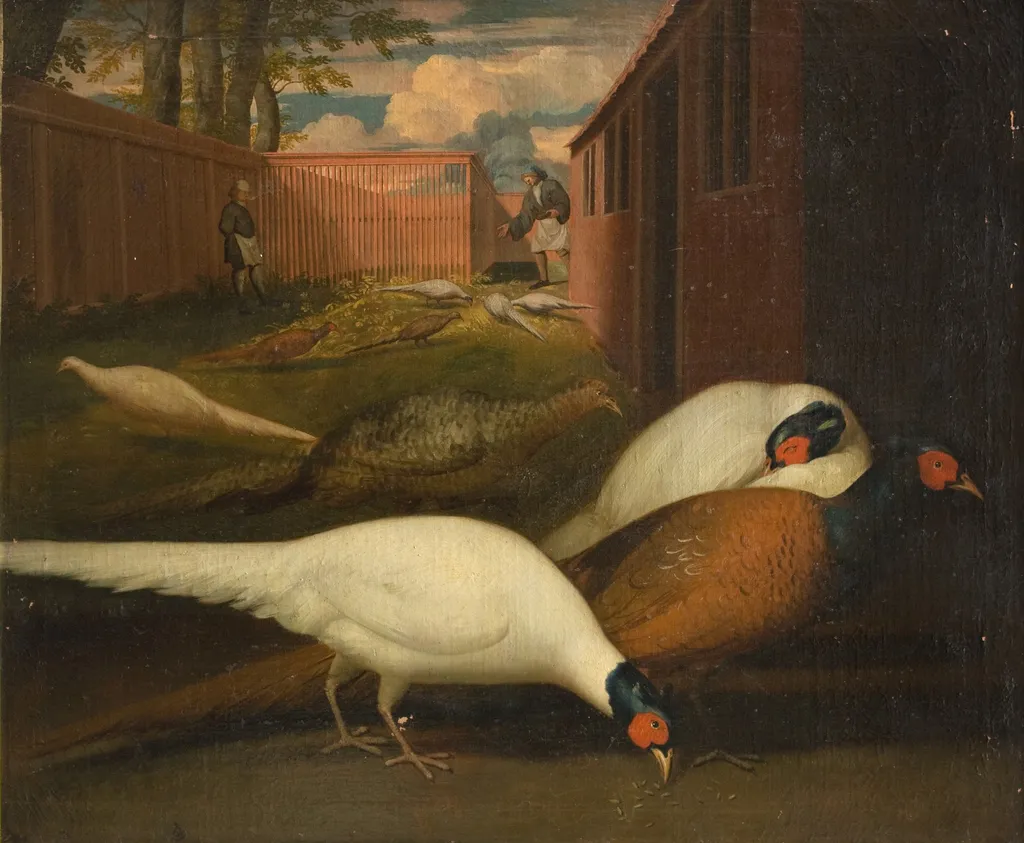
Fasaner i et indelukke is an oil painting by Unknown. It is held in the collection of the Statens Museum for Kunst.
About this work
Overview
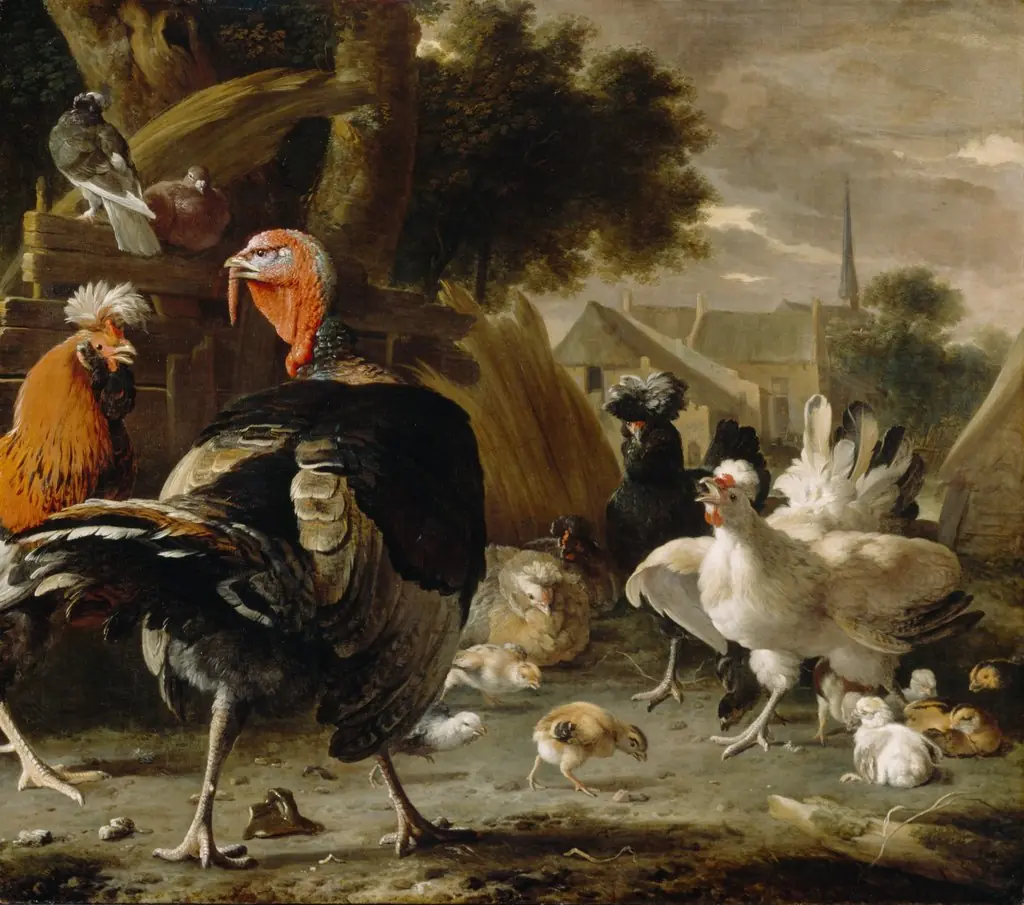
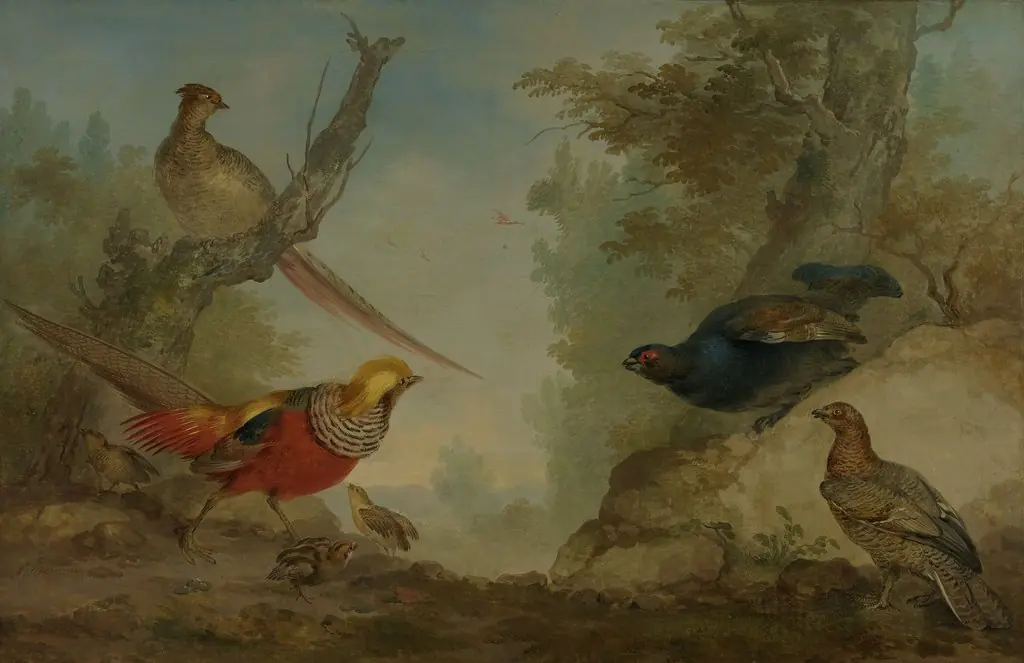
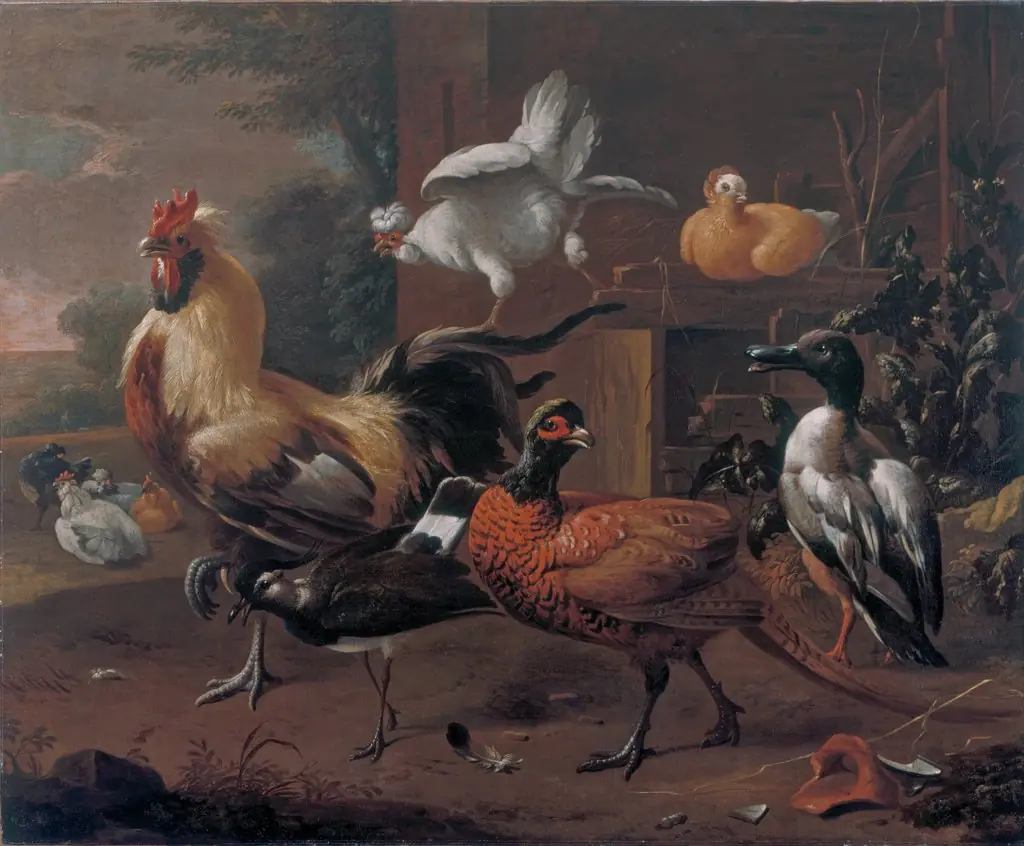
This oil painting portrays a quiet rural scene with pheasants scattered across the foreground, their plumage rendered in shades of white and brown.
This oil painting portrays a quiet rural scene with pheasants scattered across the foreground, their plumage rendered in shades of white and brown. Behind them, two figures appear at a distance—one standing beside a fence with a bag, another visible through a building’s opening, possibly tending to the birds. The composition balances natural elements with human presence, suggesting a moment of daily life in a managed landscape.
Subject & Meaning
The pheasants, both wild-looking and domesticated in their setting, may symbolize the tension between nature and human control. The figures in the background, one holding a bag and another near a structure, imply care or capture, hinting at the birds’ role as game or ornamental animals. The scene avoids drama, instead offering a contemplative view of human interaction with wildlife in a confined space.
Technique & Style
Visible brushwork gives texture to the birds’ feathers and the earth beneath them, conveying movement without idealized smoothness. Greens and browns dominate the palette, layered to suggest depth in the foliage and ground, while white plumage stands out against darker tones. The handling of light and shadow is subtle, with no dramatic contrasts, favoring a naturalistic rendering over theatrical effect.
History & Provenance
The painting resides in the collection of Statens Museum for Kunst, Denmark’s national art museum. Its origins are tied to a 19th-century Danish artist known for rural and animal subjects, though the specific creator remains unconfirmed in public records. It entered the museum’s holdings in the early 20th century, likely through acquisition or donation from a private collection.
Context
Created during a period when Danish artists increasingly turned to everyday rural life, this work reflects a broader interest in depicting nature and agriculture without romanticism. Pheasants were common in estate landscapes, both as game and symbols of status. The painting aligns with a trend of observational realism, avoiding myth or allegory in favor of quiet, unembellished scenes.
Legacy
Though not widely reproduced or studied, the painting contributes to a lesser-known strand of 19th-century Danish art focused on quiet observation of animals and rural labor. Its presence in the national collection underscores its value as a document of period attitudes toward nature and domestication, offering insight into how wildlife was perceived within managed environments.
Artist & collection

 Domestic Scene
 Giacomo and Cardinal Marco, investing Andrea, Abbot of San Zeno, with his Benefice
 The Nymph of Fontainebleau
 Portrait of a Woman
 Madonna and Child with Saints in the Enclosed Garden
 Venus and Minerva
 Family Group of Four on Sofa
 Wall painting from Room H of the Villa of P. Fannius Synistor at Boscoreale