Artwork
Portrait of Cecilia Renata of Austria with a tulip
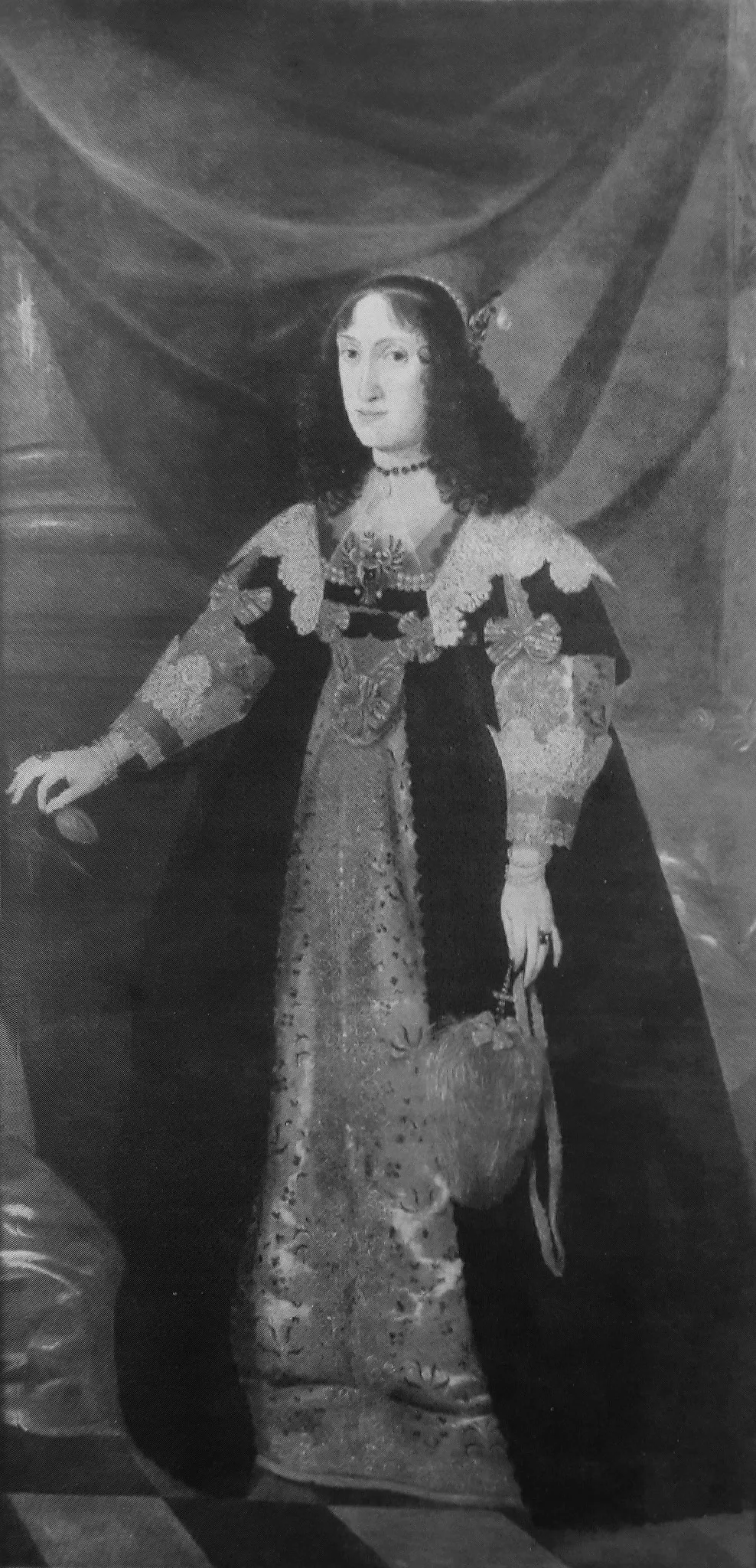
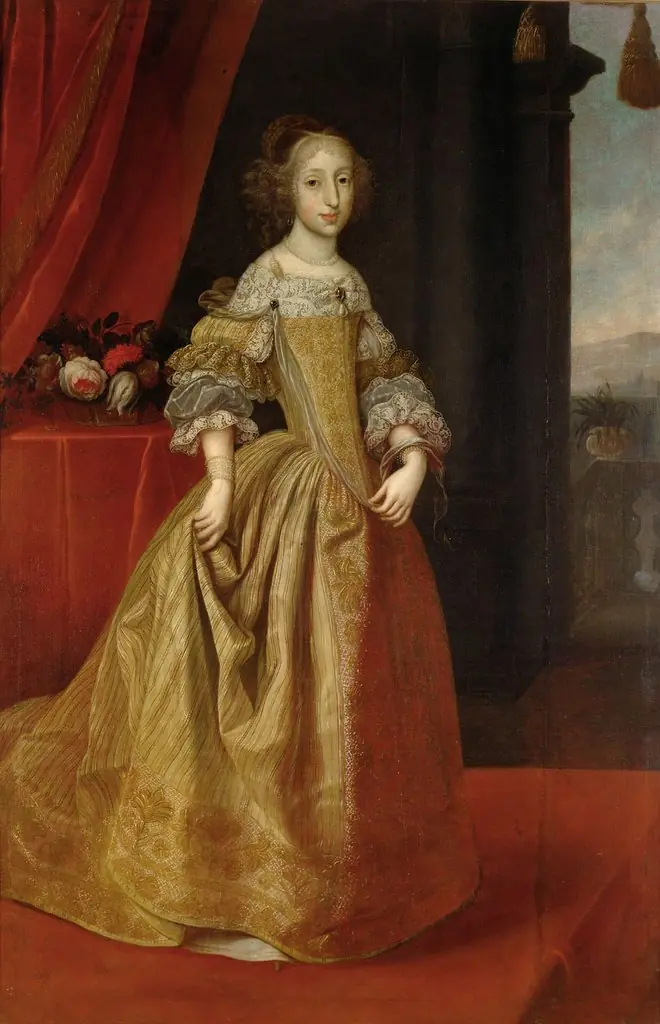
Portrait of Cecilia Renata of Austria with a tulip is an oil painting by the Flemish Baroque painting artist Unknown. It dates from 1640 and is held in the collection of the Bavarian State Painting Collections. This oil painting depicts Cecilia Renata of Austria, a Habsburg archduchess, in a formal yet intimate pose.
About this work
Overview
The composition isolates her figure against a deep, unbroken background, emphasizing her presence through controlled lighting and restrained detail.
This oil painting depicts Cecilia Renata of Austria, a Habsburg archduchess, in a formal yet intimate pose. The composition isolates her figure against a deep, unbroken background, emphasizing her presence through controlled lighting and restrained detail. A single tulip, the only colored element, introduces subtle symbolic contrast. The work exemplifies early 17th-century court portraiture, where dignity and quiet refinement take precedence over ornamental excess.
Subject & Meaning
Cecilia Renata, wife of King Władysław IV of Poland, is portrayed not as a monarch but as a noblewoman of cultivated poise. The tulip, a rare and costly bloom in Central Europe at the time, may allude to her Austrian lineage, where horticultural prestige was linked to dynastic status. The fur pouch suggests wealth and comfort, while the minimal jewelry underscores restraint—a reflection of Habsburg ideals of modesty amid opulence.
Technique & Style
The artist employs chiaroscuro to model the figure with soft gradations of light and shadow, enhancing volume without dramatic contrast. The dark background recedes completely, directing focus to the textures of lace, silk, and fur. Brushwork is precise yet unobtrusive; details like the lace cuffs and the delicate tulip petal are rendered with quiet precision, avoiding theatricality in favor of intimate realism.
History & Provenance
Commissioned during Cecilia Renata’s time in Poland as queen consort, the portrait likely originated in Warsaw or Kraków around the 1630s. It remained in royal collections until the 19th century, after which it entered a private European collection. Its survival through political upheavals and wars suggests it was valued as a personal, rather than political, artifact of the Habsburg-Polish alliance.
Context
In early 17th-century Central Europe, portraiture served both identity and diplomacy. Women of noble rank were often depicted with symbolic objects—flowers, books, or textiles—that conveyed cultural affiliations. The tulip, recently introduced from the Ottoman Empire and prized in aristocratic gardens, carried connotations of rarity and refinement, aligning the sitter with broader European elite tastes.
Legacy
The portrait stands as a quiet example of how Habsburg women navigated public image through understated symbolism. Unlike grand state portraits, this work prioritizes personal presence over political statement. Its preservation offers insight into the private aesthetics of royal women in a period dominated by dynastic spectacle, revealing a preference for subtlety over spectacle.
Artist & collection

 Domestic Scene
 Giacomo and Cardinal Marco, investing Andrea, Abbot of San Zeno, with his Benefice
 The Nymph of Fontainebleau
 Portrait of a Woman
 Madonna and Child with Saints in the Enclosed Garden
 Venus and Minerva
 Family Group of Four on Sofa
 Wall painting from Room H of the Villa of P. Fannius Synistor at Boscoreale
 Bildnis einer Hofdame
 Bildnis einer Fürstin
 Bildnis einer Prinzessin
 Bildnis der Erzherzogin Maria Anna von Österreich
 Portrait of a Lady
 Bildnis der Landgräfin Elisabeth Amalie von Hessen, Gemahlin des Kurfürsten Philipp Wilhelm von Pfalz-Neuburg (1635-1709) (?)
 Infantin Maria von Spanien (?)
 Unbekannte Dame
 Alte Dame
 Portrait of Sophie Dorothea of Prussia
 Portrait of Sophie Dorothea of Prussia
 Portrait of Eleanor Maria Josepha of Austria.